Phobos Sample Return Mission: Japan Launches Bold JAXA MMX Probe 2026
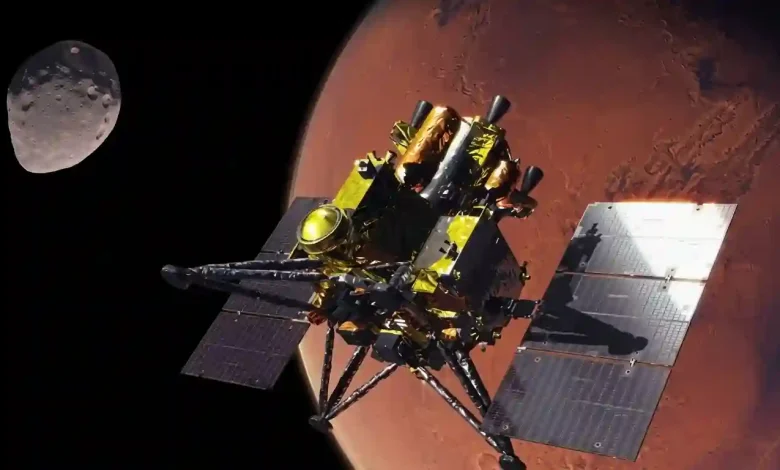
Table of Contents
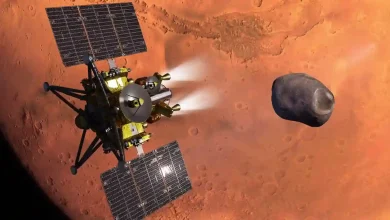
Phobos sample return mission architecture stepped from ambitious concept into deep space reality early Tuesday morning as the Japan Aerospace Exploration Agency successfully lofted the Martian Moons eXploration spacecraft toward the red planet. Piercing through coastal darkness from the Yoshinobu Launch Complex at Tanegashima Space Center, the agency’s flagship H3 launch vehicle performed a flawless ascent, injecting the multi-module probe into an optimized trans-Mars trajectory. If successful across its multi-year operational timeline, the undertaking will establish humanity’s first physical retrieval of regolith from the gravitational well of Phobos, offering an uncorrupted geological record from the dawn of inner solar system accretion.
Phobos Sample Return Mission Overview
The Martian Moons eXploration initiative represents an unprecedented leap in sample return engineering. Whereas past planetary exploration initiatives focused predominantly on the lunar surface or carbonaceous near-Earth asteroids, traveling to the circum-Martian orbit introduces profound orbital and logistical complexities. Phobos, the innermost and largest of Mars’s two natural satellites, hovers barely 6,000 kilometers above the Martian atmosphere. This orbital proximity makes Phobos an extraordinary cosmic catchment basin, capturing debris kicked upward by giant meteoritic impacts upon Mars over billions of years alongside indigenous primitive material.
Understanding the dynamic history of inner solar system rocky bodies requires accessing materials unweathered by terrestrial hydrologic and atmospheric phenomena. Much like astrophysical surveys tracing how a phoenix planet born amid stellar debris illuminates exoplanetary mechanics, retrieving primordial Martian moon regolith provides direct chemical fossils that reveal how terrestrial planets gathered volatile compounds, including prebiotic water and organic compounds, during the chaotic early bombardment epochs.
The Tanegashima Dawn Launch and H3 Rocket Performance
The dawn launch from Kagoshima Prefecture marks a triumphant technical benchmark for Japan’s domestic aerospace industrial base. Propelled by dual LE-9 engines consuming liquid hydrogen and liquid oxygen, bolstered by solid rocket boosters, the H3 launch vehicle operated within tight nominal parameters throughout first-stage combustion, staging, and payload fairing separation. The second stage executed two distinct upper-atmosphere burns, circularizing the orbit before initiating the final trans-Mars injection burn that set MMX upon its interplanetary transfer trajectory.
The successful deployment also cements the H3 platform’s operational reliability on the world stage, demonstrating cost-effective heavylift capacity at a juncture when commercial and government demand for orbital access is surging globally. While commercial efforts like blue origin targets highlight commercial heavy-lift evolution in the Western hemisphere, JAXA’s demonstrated competence reinforces an indispensable sovereign launch capability capable of conducting cutting-edge interplanetary missions independently.
Core Scientific Objectives: Solving the Origin of the Martian Moons
The fundamental scientific mystery driving the MMX expedition centers on the genesis of Phobos and Deimos. Planetary scientists remain divided between two primary hypotheses: the captured asteroid hypothesis and the giant impact hypothesis. The captured asteroid hypothesis posits that Phobos and Deimos are carbonaceous chondrite planetesimals formed in the outer asteroid belt and subsequently trapped by Mars’s gravity during planetary migration. If true, their regolith holds pristine samples from the distant outer solar system.
Conversely, the giant impact hypothesis argues that a protoplanetary collision with Mars ejected huge amounts of crustal debris into circum-planetary orbit, which eventually accreted into the twin moonlets. Under this model, analyzing Phobos regolith is effectively equivalent to conducting an ancient sample retrieval from primordial Mars itself. Deciphering these divergent pathways will reshape modern astrophysical models describing planetary accretion rings and satellite formation mechanics across our solar system and beyond.
International Payloads and the Martian Rover Component
Beyond its complex sample recovery mechanisms, MMX carries an advanced suite of global instrumentation engineered through collaborations between JAXA, France’s CNES, Germany’s DLR, and the United States’ NASA. Foremost among these auxiliary payloads is an ultra-compact four-wheeled rover developed jointly by CNES and DLR, designed to be dropped onto Phobos from an altitude of just tens of meters in the moonlet’s microgravity environment.
Equipped with thermal-infrared radiometers, cameras, and structural Raman spectrometers, the rover will traverse the regolith for months, providing high-resolution ground truth to contextualize orbital imagery. This dual remote-rover architecture mirrors analytical paradigms seen across deep planetary exploration, complementing insights gathered by rovers like how curiosity rover captures compositional stratigraphy on the Martian plains, ensuring that sampled materials are mapped with millimeter-scale geological precision.
Mission Profile and Technical Specifications
The intricate scale of the MMX mission demands unprecedented module choreography across its trans-Mars journey, proximity operations, landing events, and Earth-return transit. The table below delineates the essential structural parameters, payload subsystems, and target milestones of the mission architecture:
| Mission Component | Specifications and Systems | Primary Operational Function |
|---|---|---|
| Launch Vehicle | H3-24L Heavy Configuration | Trans-Mars Injection from Tanegashima |
| Spacecraft Dry Mass | ~2,600 kg (Total wet mass: ~4,000 kg) | Tri-module interplanetary architecture |
| Sample Acquisition Target | Minimum 10 grams collected regolith | Deep coring (2 cm+) and pneumatic air-blast |
| Exploration Rover | CNES/DLR Bimodal Scout (~30 kg) | Microgravity surface locomotion and survey |
| Orbital Scientific Sensors | TENGOO, MIRS, MEGANE, OROCHI | Multi-spectral imaging, gamma-ray, and neutron survey |
| Target Body Arrival | Circum-Martian Insertion | Quasi-Satellite Orbit around Phobos |
| Earth Return Module | High-velocity Thermal Protection Capsule | Direct atmospheric entry and soft terrestrial recovery |
Flight Trajectory and Deep Space Navigation
Traversing the inner solar system requires an intricate heliocentric cruise lasting approximately one year before arrival at Mars. Upon reaching the red planet, the spacecraft’s high-thrust chemical propulsion module will fire to insert MMX into a highly elliptical circum-Martian orbit. Navigators will subsequently lower and shape the orbit through sequential propulsion burns, eventually synchronizing orbital velocity with Phobos.
Operating near Phobos poses extraordinary orbital mechanics challenges. Because Phobos possesses an irregularly shaped, non-spherical gravitational field overwhelmed by the immense gravitational field of Mars, traditional Keplerian circular orbits are unstable. MMX will instead employ quasi-satellite orbits, flying alongside Phobos at variable distances between 100 kilometers and just tens of meters. This requires continuous autonomous optical navigation, dynamically correcting the probe’s thruster burns without waiting for round-trip radio commands from Earth, which can take up to twenty minutes per transmission.
Pneumatic and Coring Surface Sampling Architecture
To safeguard against surface uncertainties such as impenetrable bedrock or loose powdery dust, JAXA equipped MMX with two fully redundant sampling mechanisms. The primary system utilizes a mechanical coring drill mounted on an articulated robotic arm, engineered to bore down at least two centimeters beneath the surface to extract layered stratigraphy unaffected by modern cosmic radiation or space weathering.
Complementing this mechanical drill is a pneumatic collection mechanism integrated into the lander’s landing footpad. Upon surface touchdown, the mechanism fires high-pressure gas bursts into the regolith, driving displaced grains directly into collection canisters through specialized cyclone separators. This dual-redundant methodology reflects modern aerospace lessons where novel launch initiatives, such as how commercial space launch providers insist on layered telemetry and failsafes, eliminate single points of failure in complex orbital regimes.
Sample Preservation and Terrestrial Return Strategy
Once sampling operations conclude, the collected regolith canisters will be hermetically sealed inside an ultra-secure sample return capsule housed atop the propulsion module. The ascent engine will then lift the exploration craft off Phobos, transitioning MMX back into circum-Martian orbit. The mission plan also allocates several months to execute high-resolution flybys of Deimos, the smaller outer moonlet, performing comparative spectroscopy before departing the Martian system entirely.
The return trajectory will involve a major interplanetary propulsion burn to break free of Mars’s gravitational pull and set the Earth-return module upon a homeward transfer orbit. As the spacecraft nears Earth, the sample capsule will detach from the cruise bus, hurtling into the upper atmosphere at hyperbolic speeds exceeding 12 kilometers per second. Utilizing carbon-phenolic ablative thermal shielding and a staged parachute deployment, the capsule will touch down gently in the Australian Outback, where specialized ground recovery teams will transport the sealed canisters into ISO Class 4 planetary protection cleanrooms.
Broader Planetary Science and Exploration Horizons
Japan’s audacious venture to Phobos reflects a maturing multi-polar era of deep-space exploration. Just as reliable heavy launchers exemplified by how spacex falcon 9 launches establish low-Earth orbit infrastructure, high-complexity interplanetary missions pushed by JAXA demonstrate that complex sample return science is no longer the sole preserve of any single spacefaring nation. Concurrently, broader initiatives encompassing orbital observatories like the nancy grace roman space telescope and diverse global launch innovators such as how isar aerospace launches expand micro-launcher networks, are collectively accelerating human cosmic understanding. This international synergy also parallels ambitious lunar south pole exploration, seen where the change 7 lunar mission seeks water ice in perpetually shadowed craters.
Retrieving samples from Phobos will unlock foundational questions about how organic molecules and volatile materials were transported across the solar system, shedding light on the environmental conditions that made Earth hospitable to early life. As JAXA’s MMX begins its solitary voyage across the interplanetary expanse, scientists worldwide await the moment when grains of dust from the edge of Mars finally arrive in human hands, opening an unwritten chapter of cosmic exploration.