5 Key Facts About Nancy Grace Roman Space Telescope: NASA Prepares to Launch
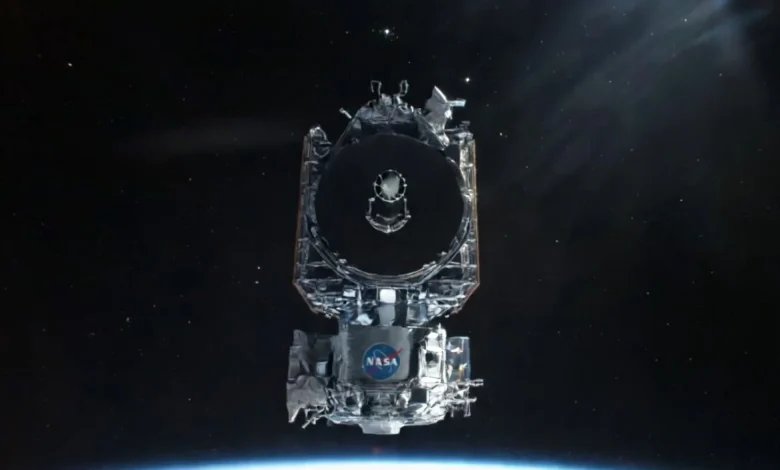
Nancy Grace Roman Space Telescope represents the pinnacle of modern astronomical engineering, officially entering the final months of its pre-launch preparations at NASA’s Goddard Space Flight Center in Greenbelt, Maryland. After nearly two decades of development, a rigorous budget management strategy, and the tireless labor of hundreds of scientists and engineers, NASA’s next-generation observatory is less than three months away from its scheduled launch on August 30, 2026. Setting off from the historic Launch Complex 39A at NASA’s Kennedy Space Center aboard a SpaceX Falcon Heavy rocket, the observatory will journey to the Sun-Earth Lagrange Point 2 (L2), approximately one million miles away. From this highly stable cosmic vantage point, the telescope will embark on a primary five-year mission to reshape our understanding of the universe.
Invested with an estimated $4.3 billion budget, Roman is positioned not just as a successor but as an essential partner to existing space observatories like the Hubble Space Telescope and the James Webb Space Telescope (JWST). While Hubble has offered pinpoint resolution in ultraviolet, visible, and near-infrared wavelengths, and Webb continues to pierce the deep infrared with unmatched sensitivity, Roman introduces a capability that has long been missing from flagship missions: a massive field of view. By capturing panoramas 100 times larger than Hubble’s infrared camera in a single exposure, the Roman telescope is poised to perform cosmic mapping on an unprecedented scale, mapping billions of stars and galaxies to unlock the mysteries of dark energy, dark matter, and planets outside our solar system.
Unraveling the Mysteries of the Cosmos: The Scientific Mandate
The primary scientific goals of the mission focus on three core pillars of modern astrophysics: dark energy, dark matter, and exoplanetary science. Since the late 1990s, scientists have known that the expansion of the universe is accelerating, driven by an unidentified pressure termed “dark energy.” Despite its dominance—constituting roughly 68% of the cosmic energy budget—dark energy remains completely unexplained. Similarly, dark matter, which acts as the invisible scaffolding for galaxies and comprises about 27% of the universe, can only be detected through its gravitational influence. The remaining 5% represents all baryonic (normal) matter, which includes all the stars, planets, and humans in existence.
To address these fundamental mysteries, the telescope will execute extensive surveys across the infrared spectrum. By cataloging the shapes, positions, and distances of hundreds of millions of galaxies, researchers will construct a 3D map of cosmic structure. This map will show how dark energy has influenced the expansion rate of the universe over billions of years, allowing scientists to test competing cosmological models. Furthermore, the telescope’s wide-field surveys will map the distribution of dark matter by analyzing the subtle distortions in light caused by gravitational lensing—the bending of light as it passes through massive, unseen gravitational fields.
Comparative Architecture: How Roman Differs from Hubble and James Webb
Understanding the unique role of this telescope requires looking closely at its design specifications compared to its flagship predecessors. Its primary mirror measures 2.4 meters (7.9 feet) in diameter—exactly the same size as Hubble’s primary mirror. This mirror was originally donated to NASA by the National Reconnaissance Office, which had constructed it for reconnaissance purposes before realizing it could be repurposed for astronomy. However, Roman’s optical system has been completely redesigned to feature a much shorter focal length, enabling a significantly wider field of view than Hubble could ever achieve.
The following table provides a comprehensive overview of how this upcoming observatory stacks up against the historic Hubble Space Telescope and the groundbreaking James Webb Space Telescope:
| Feature/Specification | Hubble Space Telescope | James Webb Space Telescope (JWST) | Nancy Grace Roman Space Telescope |
|---|---|---|---|
| Launch Date | April 24, 1990 | December 25, 2021 | August 30, 2026 (Targeted) |
| Primary Mirror Diameter | 2.4 meters (7.9 ft) | 6.5 meters (21.3 ft) | 2.4 meters (7.9 ft) |
| Field of View (Infrared) | 1x (Baseline) | ~0.01x (Highly Targeted) | 100x larger than Hubble |
| Wavelength Coverage | Ultraviolet, Visible, Near-Infrared (0.1–1.7 μm) | Near-Infrared, Mid-Infrared (0.6–28.3 μm) | Visible to Near-Infrared (0.48–2.30 μm) |
| Orbit Location | Low Earth Orbit (~540 km) | Sun-Earth L2 Point (~1.5M km) | Sun-Earth L2 Point (~1.5M km) |
| Primary Science Focus | General Astrophysics, Deep Fields | Early Universe, High-Sensitivity Spectroscopy | Wide-Field Cosmology, Dark Energy, Exoplanet Census |
As illustrated, while JWST focuses on high-precision “pencil-beam” observations of the deepest, coldest targets in the universe, the upcoming Roman mission is a survey powerhouse. It is designed to catalog massive swathes of the cosmos rapidly. In just a few months, it will image areas of the sky that would have taken Hubble decades to survey, providing a complementary dataset that will guide targeted, high-resolution follow-ups by other instruments.
The Wide-Field Infrared Instrument: Mapping the Sky in High Definition
The primary instrument driving this mapping capability is the Wide-Field Instrument (WFI). The WFI is a 300-megapixel camera that operates across a spectral range of 0.48 to 2.3 micrometers, bridging visible blue light and near-infrared wavelengths. Its focal plane array consists of 18 state-of-the-art HgCdTe (mercury-cadmium-telluride) detectors, which have been built and tested to withstand the harsh radiation environment of deep space. This immense resolution ensures that every single image captured will be packed with millions of individual cosmic structures, from close-by stars to distant, ancient galaxies.
The telescope’s data-gathering capabilities are staggering. WFI is expected to transmit approximately 1.37 terabytes of data back to Earth every single day. This data volume is multiple times greater than that of Hubble and Webb combined, requiring advanced ground systems to process, store, and analyze the incoming streams. To help scientists worldwide harness this information, NASA is implementing an open-data policy where all Roman survey data will be made public almost immediately. This allows research institutions globally to search the data for unexpected phenomena, sparking a new era of collaborative citizen science and rapid astronomical discovery.
The Coronagraph Instrument: Direct Imaging of Alien Worlds
In addition to its wide-field camera, the telescope carries a secondary, highly advanced payload: the Coronagraph Instrument (CGI). The CGI is a technology demonstration that will showcase next-generation methods for direct imaging of exoplanets. Because stars are billions of times brighter than the planets orbiting them, discovering planets through direct imaging has historically been almost impossible. The CGI acts as a starlight suppression system, using complex masks, diaphragms, and active wave-front control to block out a star’s glaring light and reveal the dim planets nearby.
The CGI is equipped with deformable mirrors containing thousands of tiny, computer-controlled actuators that adjust their shapes in real-time. This active optics system corrects for minuscule optical aberrations and path-length changes down to the picometer level, creating a “dark hole” around the target star where faint exoplanets can be observed. If successful, this technology will pave the way for future flagship missions designed to search for bio-signatures in the atmospheres of habitable, Earth-like planets, proving a critical bridge between today’s planetary characterization efforts and tomorrow’s search for alien life.
Unveiling Dark Matter and Dark Energy: Mapping the Unseen Universe
The mystery of dark energy remains one of the greatest challenges in physical science. Roman will attack this problem by using multiple observational strategies, including baryon acoustic oscillations (BAO) and weak gravitational lensing. BAOs are regular, periodic fluctuations in the density of the visible baryonic matter of the universe. By measuring the spatial distribution of galaxies across cosmic time, astronomers can use these ancient acoustic waves as a “standard ruler” to map the expansion history of the cosmos with unparalleled precision.
Simultaneously, the telescope will study weak gravitational lensing. When light from distant galaxies travels toward Earth, it passes through pockets of dark matter. The gravitational pull of this dark matter slightly bends the light, resulting in tiny, systematic distortions in the shapes of the background galaxies. Because these distortions are too subtle to detect on a galaxy-by-galaxy basis, Roman will analyze hundreds of millions of galaxies statistically. By measuring these minute shape alignments across vast fields, scientists can reconstruct the distribution of dark matter throughout cosmic history and observe how dark energy has resisted gravitational collapse over the last 10 billion years.
The Exoplanet Census: Unlocking Thousands of Distant Worlds
Beyond mapping the large-scale structure of the universe, Roman is poised to become one of the most prolific planet-hunting telescopes in human history. It will utilize a technique called gravitational microlensing, which relies on Einstein’s General Theory of Relativity. When a foreground star passes directly in front of a more distant background star, the gravitational field of the closer star acts as a natural lens, magnifying the light of the background star. If the lensing star has a planet orbiting it, the planet’s gravity will create a brief, secondary spike in the magnified light.
Microlensing is highly sensitive to planets that are far from their parent stars, including cold gas giants, ice giants, and even “rogue planets”—worlds that have been ejected from their planetary systems and drift freely through interstellar space. This method perfectly complements existing techniques like the transit method used by NASA’s Kepler and TESS missions, which are highly biased toward planets close to their stars. By conducting a massive microlensing survey of the crowded galactic bulge, Roman will provide the first statistically complete census of exoplanets in the outer regions of planetary systems, helping us understand how planetary systems form, evolve, and survive across the Milky Way.
The Path to Launch and L2 Orbit: Engineering the Mission
The development of Roman has been a remarkable success story for NASA, especially given the historical challenges of major space programs. In a recent press conference, NASA Administrator Jared Isaacman announced that the observatory has been completed ahead of schedule and remains significantly under budget—a rare feat for a flagship scientific mission. The telescope was cleared for final pre-launch testing after completing exhaustive thermal-vacuum and acoustic testing at Goddard Space Flight Center. It is now preparing for transport to Kennedy Space Center, where it will undergo integration with the SpaceX Falcon Heavy rocket launcher.
Upon launching on August 30, the spacecraft will begin a three-month voyage to the Sun-Earth Lagrange Point 2. L2 is a gravitational sweet spot located on the Earth-Sun line, where the combined gravitational pull of the Sun and Earth balances the centrifugal force required to rotate with them. This orbit keeps the telescope in a relatively stable thermal environment and allows it to remain shielded from the heat of both the Sun and Earth, which is critical for maintaining the high sensitivity of its infrared sensors. During its transit, engineers will perform precise trajectory corrections, followed by a multi-month commissioning phase once it arrives to calibrate the optics, align the instruments, and prepare the telescope for science operations.
A Legacy Continued: Commemorating the Mother of Hubble
The naming of this telescope carries deep historical significance. Dr. Nancy Grace Roman, who passed away in 2018, was a trailblazing astronomer and the first Chief of Astronomy in NASA’s Office of Space Science. Widely recognized as the “Mother of Hubble,” she was instrumental in advocating for, planning, and executing the Hubble Space Telescope program during a time when female leadership in science was extremely rare. Her dedication laid the foundation for the entire field of space-based astronomy, demonstrating how getting above the distorting effects of Earth’s atmosphere could revolutionize our understanding of the cosmos.
To honor her legacy, the upcoming mission carries her name and her visionary spirit of exploration. Just as she paved the way for the Hubble telescope to look deeper into space, the Roman Space Telescope will expand our vision broader and wider than ever before. To learn more about the ongoing operations, science goals, and mission timelines, you can visit the official NASA’s Roman Space Telescope Mission Page. As the countdown to August 30 continues, the global scientific community stands on the verge of a new golden age of discovery, ready to witness the cosmos through a lens of unprecedented scale.