Commercial space launches to surge under Trump’s new mandate 2026
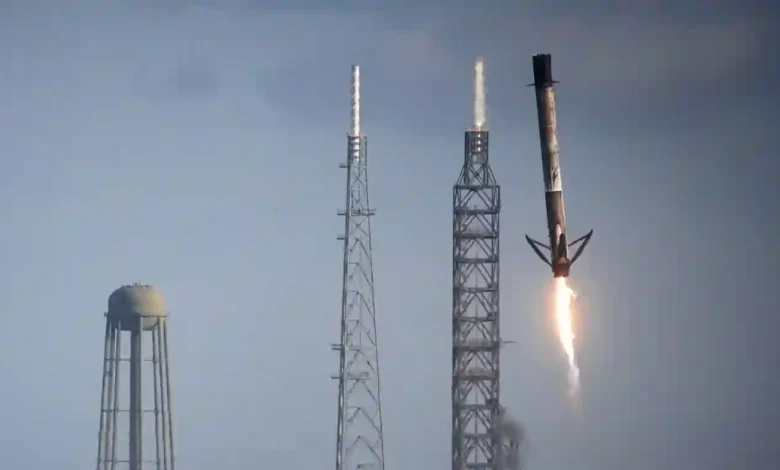
Table of Contents
Commercial space launches are set to undergo a historic, state-sponsored transformation following a sweeping executive action by the White House. On Thursday, August 20, 2026, U.S. President Donald Trump signed a pioneering National Space Transportation Policy memorandum. This directive represents the first major overhaul of American launch policies since 2013, seeking to aggressively dismantle bureaucratic bottlenecks, expand domestic launchpad geography, and secure the nation’s position as the absolute hegemon in the second global space race. This bold administrative move comes amidst shifting evolving political dynamics, reflecting an aggressive deregulation drive focused on securing economic hegemony.
Deconstructing the New National Space Transportation Policy
The newly signed memorandum provides a complete paradigm shift in how the federal government interacts with commercial aerospace entities. Rather than treating private space enterprises as auxiliary sub-contractors, the policy dictates a strict ‘commercial-first’ approach. This means federal departments are directed to refrain from conducting any space transportation activities that might compete with, preclude, or discourage the commercial sector. Just as national initiatives are often molded by strategic executive planning under Trump, this space directive represents an effort to secure deep space exploration through commercial outsourcing.
The policy outlines that affordable, safe, and highly reliable space transportation is not merely a commercial benefit, but a core component of national and economic security. In doing so, the directive mandates an extensive modernization of current launch infrastructures, prioritizing private entities for co-development. By establishing a shared financial and operational framework, the White House expects private aerospace developers to directly invest in and utilize federal assets, bypassing typical public-sector capital constraints.
The Ambitious Path to 1,000 Annual Launches by 2030
To fully grasp the magnitude of the White House’s new directive, one must analyze the historic trajectory of American spaceflight capacity. In 2013, the United States executed a modest 19 successful orbital launches. By 2025, that figure had skyrocketed to 178 launches—a massive tenfold increase driven almost entirely by private sector optimization. The newly established target of 1,000 annual launches and atmospheric reentries by 2030 demands an additional fivefold jump within the next four years. This exponential increase relies heavily on the maturation of fully reusable rocket architectures, rapid launchpad turnaround schedules, and massive commercial satellite constellations.
| Metric Indicator | Historical Baseline (2013) | Recent Performance (2025) | Executive Target (2030) | Core Agency Focus & Strategies |
|---|---|---|---|---|
| Annual Launch & Reentry Volume | 19 successful launches | 178 successful launches | 1,000+ annual flights | Deploying commercial-first reusable launch vehicles |
| Available Reentry Site Network | Highly restricted military ranges | Concentrated coastal facilities | Broadened federal land zones | Identification of multi-user inland sites within 90 days |
| Deep Space Destination Timeline | Low-Earth Orbit focus | Artemis program planning | Active Lunar Base by 2030 | Commercial lunar transport and Mars robotic mapping |
| Regulatory Processing Time | Multi-month structural reviews | Moderate improvements, backlogs | 48-hour high-priority readiness | Streamlined environmental reviews and fast-tracked spectrum allocation |
Federal Land and Reentry Zones: Reclaiming Public Lands for Commercial Space
Achieving a cadence of 1,000 launches per year is a physical impossibility under current geographic limitations. Historically, commercial launches have been funneled through congested federal facilities like Cape Canaveral Space Force Station in Florida and Vandenberg Space Force Base in California. To address this geographic chokehold, the signed memo orders the Secretary of War, NASA, and the Department of the Interior to identify federal land suitable for new independent launch and reentry zones within 90 days. This approach mirrors broader infrastructure strategies, which are often affected by import license regulations and global resource logistics.
By locating new inland and coastal sites across vast federal properties, the administration aims to create specialized ‘reentry corridors’ that minimize conflicts with commercial aviation. These new zones will allow rockets to land safely on domestic soil without disrupting regional airspace. In addition, the memo gives agencies 180 days to establish a streamlined memorandum of understanding to co-develop site upgrades using private capital, establishing a co-investment framework designed to bypass traditional congressional budget battles.
The SpaceX Dominance: Addressing Market Share and Competition
While the White House envisions a diverse commercial ecosystem, the current reality of the American launch sector is heavily centralized. Out of the 178 orbital launches recorded last year, Elon Musk’s SpaceX was responsible for an astonishing 170 missions. Driven by the incredible workhorse capacity of the Falcon 9 and the development of the Starship launch system, SpaceX essentially operates as the backbone of U.S. space access. As the private space economy flourishes, it creates a starkly stratified sector, reminiscent of the rapidly polarizing domestic business landscape seen across several major American metropolitan hubs.
SpaceX’s dominance is further cemented by its ambitious goals. The company has publicly declared long-term objectives to operate thousands of annual launches, aiming to field a massive network of orbital satellites to power everything from global broadband to artificial intelligence data centers. The administration’s mandate is designed to accommodate this hyper-growth, but it also underscores the critical need to prevent a total monopoly that could leave national security assets vulnerable to single-point-of-failure risks.
Opening the Market: Can Competitors Like Rocket Lab Bridge the Gap?
To cultivate a resilient space industrial base, the memorandum stresses the co-development of transportation infrastructure with multiple private-sector partners. Companies like Rocket Lab are uniquely positioned to benefit from this regulatory relief. Known for its highly reliable, small-payload Electron rocket and its upcoming medium-lift Neutron launch vehicle, Rocket Lab offers a viable secondary option for government and civil payloads. Furthermore, protecting advanced rocket propulsion designs and guidance systems is as vital to national interests as monitoring technology security and intellectual property cases in the artificial intelligence domain.
By opening up federal land and accelerating environmental reviews, the government hopes to lower the barrier to entry for smaller launch providers like Blue Origin, United Launch Alliance (ULA), and Stoke Space. If these players can successfully scale their launch frequency, the United States will establish a highly redundant, robust spaceflight network that can easily withstand systemic shocks, technical anomalies, or sudden supply chain disruptions.
Regulatory and Bureaucratic Overhauls: Streamlining Approvals and Frequencies
A primary bottleneck preventing a rapid cadence of rocket launches has long been the complex web of federal licensing and review processes. Multiple agencies, including the Federal Aviation Administration (FAA), the Federal Communications Commission (FCC), and the Department of Transportation (DOT), have historically operated under separate and sometimes conflicting timelines. Under the new policy, the administration orders an unprecedented streamlining of regulations. Critics argue that fast-tracking these environmental clearances must be balanced against safety, similar to how broader government policy impacts on domestic welfare require rigorous public assessment before implementation.
Beyond environmental reviews, the memo mandates that agencies secure sufficient wireless spectrum specifically dedicated to space operations. Modern rocket launches require vast spectrum bands for telemetry, tracking, and control. By guaranteeing dedicated frequency corridors and integrating rocket launch paths into the Federal Aviation Administration’s modernized air traffic control systems, the government plans to enable seamless, simultaneous launches without paralyzing commercial passenger flight paths.
Moon, Mars, and Beyond: Broadening Commercial Role in Deep Space
The policy’s vision extends far past low-Earth orbit. The memorandum explicitly directs NASA to expand its collaboration with commercial space partners to achieve deep-space exploration milestones. Specifically, the directive tasks the NASA administrator with facilitating commercial round-trip transportation to the Moon, supporting commercial robotic access to Mars, and reviewing commercial avenues to safely transport human beings to the Red Planet. While funding these deep-space goals requires massive capital, the domestic economy faces concurrent challenges, from global oil market volatility to municipal budget constraints.
This mandate aligns closely with Trump’s stated objective to land American astronauts on the Moon by 2028 under the Artemis Program and establish a functioning lunar base by 2030. By relying on commercially executed deep-space transport, NASA can delegate complex orbital logistics to private logistics networks, allowing the agency to focus its core scientific budgets on long-term deep space habitation and astrophysical discovery.
Economic and Geopolitical Implications of a Rapidly Expanding Launch Infrastructure
At its core, the National Space Transportation Policy is a strategic document designed to secure American superiority over competing global superpowers. Nations like China have made substantial investments in their own nationalized space infrastructure, aiming to establish alternative orbital constellations and lunar outposts. By unleashing the unbridled capability of U.S. commercial capital, the White House aims to outpacing rivals through sheer launch frequency and technological agility. Just as the nation fortifies its presence in orbital regimes, it must maintain a cautious eye on broader defense priorities across volatile international borders.
The economic ramifications are equally profound. A thriving space transportation sector stimulates a massive domestic aerospace manufacturing supply chain. From precision electronics developed in technology hubs to advanced metallurgy plants, the space boom is expected to create thousands of high-paying engineering, logistical, and technical jobs across the country, further reinforcing the United States’ industrial base.
Conclusion: Charting America’s Path to Absolute Space Dominance
The landmark memorandum signed by President Trump on Thursday signals a dramatic, irreversible shift in the landscape of aerospace logistics. By aiming to facilitate at least 1,000 annual launches and reentries by the decade’s end, the administration has laid down a clear, aggressive roadmap for the future of spaceflight. Securing federal lands, eliminating duplicative regulatory processes, and empowering the commercial-first sector are all vital steps to cementing this ambitious goal. As SpaceX, Rocket Lab, and their contemporaries rise to meet this challenge, the stars are no longer the limit—they are simply the next step in America’s industrial evolution.


2 Comments