NASA commercial crew contracts: Restoring US Space Sovereignty 2026
Table of Contents
NASA commercial crew contracts have fundamentally transformed the structural economics and technical paradigms of human spaceflight. By shifting from a government-owned, government-operated model to a commercial service-procurement strategy, the United States has reclaimed its leadership in low Earth orbit. The scope of these multi-billion-dollar agreements is staggeringly comprehensive: the contract covers preparing astronauts and spacecraft on the ground, launching them, operating the mission in space, bringing crews home, and recovering the capsule. Furthermore, the agreements mandate that providers supply logistical cargo and keep their spacecraft docked at the International Space Station (ISS) as a continuous, reliable emergency escape vehicle.
This paradigm shift represents more than just a logistical update; it is an entirely new philosophy of public-private collaboration. When NASA retired the Space Shuttle fleet, the agency embarked on a mission to build a safe, reliable, and cost-effective domestic pipeline to space. By leveraging the agility and capital efficiency of the private sector, the United States successfully re-established a regular domestic launch capability, changing the geopolitical landscape of space exploration forever.
Introduction
For decades, human spaceflight was exclusively the domain of highly centralized national space agencies. NASA designed, built, owned, and operated every vehicle that carried American astronauts into orbit. However, this model came with monumental fiscal burdens and operational overhead. Following the conclusion of the Space Shuttle era, NASA envisioned a radically different ecosystem. Under the Commercial Crew Program, private aerospace companies would own and operate the hardware, while NASA would act as a primary customer purchasing rides.
This contractual structure has proven highly successful, leading to a vibrant industry where private companies build on NASA’s strict safety standards while implementing commercial efficiencies. The operational rhythm established by these contracts ensures that there is always a spacecraft ready to deploy, operate, or rescue astronauts, which has direct implications for long-duration International Space Station operations.
The Evolution of Commercial Crew Contracts
The genesis of this modern era began with the formal retirement of the Space Shuttle in 2011. Without a domestic launch vehicle, NASA faced a strategic crisis, forcing the agency to purchase seats on the Russian Soyuz spacecraft. To address this vulnerability, NASA initiated the Commercial Crew Transportation Capability (CCtCap) contracts in September 2014.
The agency chose SpaceX and Boeing in 2014 to develop spacecraft capable of carrying astronauts to the space station. SpaceX was awarded $2.6 billion to develop its Crew Dragon capsule, while Boeing received $4.2 billion to engineer the CST-100 Starliner. The varying award amounts reflected the different engineering architectures, legacy experiences, and pricing proposals of the two companies, establishing a competitive environment that incentivized performance and safety. This dual-source procurement strategy was designed to ensure redundancy, meaning if one provider suffered a technical setback, the other could maintain the nation’s launch capabilities without disruption.
Ground Preparation and Astronaut Training
Before a rocket ever ignites, an enormous amount of preparation occurs on the ground. The NASA commercial crew contracts dictate that the commercial partners must manage the complete training syllabus for the crews. This includes configuring highly advanced mission simulators that mirror the exact physical layouts and software interfaces of the respective capsules.
Astronauts undergo intensive training focused on manual flight overrides, emergency ingress and egress, and docking sequences. Ground teams also prepare the spacecraft itself, executing complex vacuum chamber tests, structural integrity checks, and engine static fires. These rigorous procedures take place across various facilities, as companies scale up testing facilities, much like the infrastructure seen at the commercial spaceflight hub located in the south. The goal is to eliminate potential failures long before the crew steps onto the launch pad gantry.
Launch Services and Orbital Operations
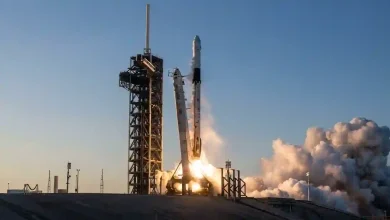
The launch and operational phases of these contracts represent the execution of precision engineering at the highest levels. For SpaceX, this involves the pairing of the Crew Dragon capsule with the workhorse Falcon 9 rocket. This integration is managed with incredible frequency and is a cornerstone of the broader SpaceX launch manifest designed to support deep-space ambitions.
Once the rocket clears the tower, the private provider’s mission control assumes primary responsibility for the spacecraft’s flight path, maneuvering, and autonomous docking with the ISS. Operating the mission in space requires continuous telemetry tracking, thermal management, and life-support monitoring. These flight profiles are executed utilizing highly reliable, reusable orbital launch platforms that drastically reduce the price per kilogram to orbit, setting a new benchmark for corporate-driven aerospace activities.
Safe Return and Capsule Recovery
The mission is far from over once astronauts finish their scientific rotations on the ISS. Bringing crews home safely is arguably the most hazardous phase of the entire mission profile, requiring flawless atmospheric re-entry and thermal protection. The spacecraft must execute a precise deorbit burn, shed its trunk or service module, and orient its heat shield to withstand temperatures exceeding 3,000 degrees Fahrenheit.
After re-entering the upper atmosphere, a sequence of drogue and main parachutes must deploy to decelerate the capsule to a safe landing speed. The contracts specify that the providers must maintain dedicated recovery fleets, including fast-response boats, helicopters, and medical personnel. Whether performing a water splashdown in the Atlantic Ocean or Gulf of Mexico, or a land-based touchdown using airbags in the western United States, the extraction of the crew must occur within a highly restricted window to guarantee astronaut safety and health.
Strategic Objectives: Ending Russian Reliance
The overarching geopolitical goal of the Commercial Crew Program was to give the United States a regular domestic launch capability after NASA retired the space shuttle, ending years of reliance on Russia’s Soyuz spacecraft. For nearly a decade, the U.S. had no independent means of sending its citizens into space, a scenario that presented significant national security and diplomatic vulnerabilities.
Purchasing Soyuz seats not only drained billions of dollars from domestic aerospace development but also subjected American space policy to the shifting tides of international relations. This transition back to domestic launches was championed across multiple presidential terms, reflecting a bipartisan consensus within the overarching national space policy to foster domestic enterprise. Re-establishing this independent pathway has successfully restored U.S. self-reliance in space exploration.
SpaceX Dragon vs. Boeing Starliner
The dual-award strategy implemented by NASA created an interesting contrast in aerospace engineering and philosophy. SpaceX utilized an iterative, software-heavy, and vertically integrated manufacturing pipeline, while Boeing relied on a traditional, deeply audited, subcontractor-network approach. Both approaches have provided valuable lessons for the future of commercial space flight.
| Feature / Attribute | SpaceX Crew Dragon | Boeing CST-100 Starliner |
|---|---|---|
| Initial Contract Value | $2.6 Billion | $4.2 Billion |
| Launch Vehicle | Falcon 9 | Atlas V (Transitioning to Vulcan) |
| Landing Mechanism | Water Splashdown (Parachutes) | Land Landing (Airbags + Parachutes) |
| Crew Capacity | Up to 7 (4 for NASA missions) | Up to 7 (4 for NASA missions) |
| Reusability | Highly Reusable Capsule | Reusable up to 10 missions |
| Control Interfaces | Touchscreen Panels | Physical Switches & Joysticks |
While SpaceX’s Crew Dragon achieved its first crewed flight in 2020 and has since conducted numerous operational rotations, Boeing’s Starliner has faced technical hurdles, highlighting the sheer difficulty of human-rated spacecraft development. Nevertheless, both programs remain crucial to maintaining long-term redundancy in U.S. spaceflight operations.
Emergency Escape Capabilities
An often-overlooked provision of the NASA commercial crew contracts is the requirement for the docked spacecraft to function as a fully operational lifeboat. While attached to the space station, the spacecraft must remain in a low-power, high-readiness state, prepared to support an emergency evacuation of the station’s crew at a moment’s notice.
This lifeboat capability requires the spacecraft to endure the harsh thermal and radiation environment of space for up to 210 days continuously. The automated systems must continuously monitor battery health, pressurization levels, and propulsion systems. In the event of a catastrophic hull breach, solar storm, or ammonia leak on the station, astronauts can retreat to their respective capsules, seal the hatches, and execute an autonomous undocking and return sequence to Earth. This capability is integrated into the wider monitoring networks of other low-altitude projects, similar to the rapid orbital deployments observed with the low Earth orbit constellation networks being developed globally.
Economic and Operational Impacts
The economic ramifications of these commercial contracts are profound. By shifting the financial risks of spacecraft development to the private sector and paying for services rather than hardware, NASA has saved billions of dollars. These savings have allowed the agency to reallocate precious fiscal resources toward deep-space exploration, such as the Artemis lunar program and robotic Mars missions.
Additionally, these contracts have stimulated a massive commercial supply chain. Ground facilities, component manufacturers, and assembly plants have sprung up across the country, requiring precise coordination and advanced payload integration services before rolling out to the pad. This domestic industrial base is now highly robust, providing uninterrupted support for crucial ISS research initiatives and scientific payloads that benefit all of humanity.