Tesla Leads Historic China Recall of 4.3 Million Vehicles
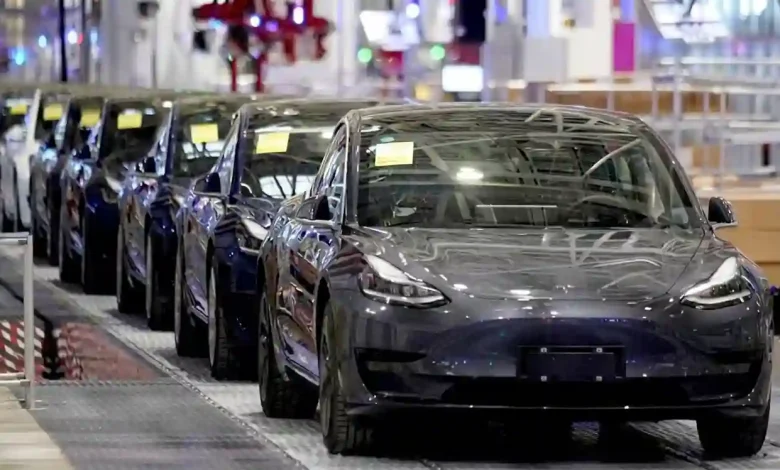
Table of Contents
Tesla has triggered a monumental safety wave across the global automotive sector, joining forces with eight Chinese domestic manufacturers to initiate China’s largest automotive recall to date, affecting approximately 4.3 million vehicles. On Friday, August 21, 2026, the State Administration for Market Regulation (SAMR) in Beijing confirmed that automakers have agreed to recall and retroactively fix door-latching designs. The massive recall centers on emergency mechanical door-release systems and flush-to-body, concealed electronic handles, which regulators warn could trap occupants after a severe crash. As the global automotive market continues to process intense macroeconomic shifts and market updates, this safety crisis serves as a stark reminder of the unintended consequences of high-tech vehicle modernization.
China :The Root Cause: Concealed Handles and Emergency Hazards
Concealed door handles have long been a hallmark of modern electric vehicle (EV) styling. Popularized extensively by Tesla’s lineup, these flush-fitting handles glide into the door panel when the vehicle is in motion, minimizing aerodynamic drag to slightly extend battery range while presenting a futuristic, streamlined aesthetic. However, this minimalist trend introduces deep safety vulnerabilities. In normal circumstances, these electronic latching systems respond instantly to proximity keys or touch sensors. Yet, during catastrophic collisions, the vehicle’s high-voltage or low-voltage electrical systems are often damaged, rendering touch controls completely non-functional. Consequently, occupants must rely on mechanical backup releases, which are often hidden under panels or lack intuitive markings.
China :Electrical System Failures and Passenger Escape Risks
Under extreme impact scenarios, a car’s main battery pack or electrical wiring harnesses can suffer immediate damage or disconnect completely to prevent electrocution or thermal runaway. When this happens, electric door actuators lose all power. If passengers are disoriented, injured, or facing a post-crash vehicle fire, locating a hidden manual latch becomes a life-or-death struggle. Regulators and safety advocates have pointed out that rescue workers outside the vehicle are similarly blocked from opening the doors because the flush exterior handles do not mechanically extend when power is lost. The rapid integration of complex electronics mirrors modern computational shifts; when structural issues arise, manufacturers are forced to halt or redesign systems, just as Nvidia scales back its advanced GPU production lines when system stability bottlenecks are identified. This physical emergency-handling flaw has drawn intense public scrutiny following a series of tragic, high-profile accidents in mainland China, as reported by Reuters in recent safety bulletins.
China :Recall Breakdown: Affected Automakers and Volumes
The recall is heavily dominated by Tesla, but the inclusion of prominent Chinese EV manufacturers demonstrates that this is an industry-wide design crisis rather than an isolated manufacturing error. Tesla alone accounts for approximately 2.98 million vehicles, representing nearly 70% of the total recalled volume. Other significant contributors to this unprecedented safety action include smartphone-maker-turned-automaker Xiaomi, along with fast-growing electric vehicle start-ups Leapmotor and Xpeng, as well as the multinational automotive giant Geely Holding.
| Automaker | Approx. Recalled Vehicles | Key Remedies Implemented | Impacted Models |
|---|---|---|---|
| Tesla | 2,980,000 | Remote OTA update to lower windows post-collision; physical emergency release labels | Imported & China-made Model 3, Model Y, Model S, Model X |
| Xiaomi | 390,000 | Physical warning labels on door pockets; software enhancements | SU7 electric sedan |
| Leapmotor | 371,000 | Manual handle identification decals; power-window controller OTA update | C11, C01, T03, and other EV models |
| Xpeng | 264,000 | Decals for mechanical override switch; software crash logic updates | P7, G6, G9 electric vehicles |
| Geely Holding & Others | 295,000 | Warning label distribution; instructional safety guidelines for owners | Zeekr, Galaxy, and partner platforms |
The contrast in recall volumes highlights the different tiers of market penetration across China’s regions. While high-end tech hubs experience massive vehicle deliveries, other manufacturing zones struggle, reflecting an unequal growth distribution similar to the two-speed economy how Miami struggles to balance luxury asset booms with lower-income retail stagnation.
China :Remedial Strategies: OTA Updates and Manual Labels
Because the mechanical mechanisms of already-manufactured vehicles cannot easily be rebuilt overnight without staggering costs, automakers are employing a multi-tiered mitigation strategy. These solutions range from physical modifications to over-the-air (OTA) software patches. To address the immediate visual confusion, automakers will provide physical stickers, warning labels, and high-visibility markings surrounding the mechanical emergency levers. These manual markers will be installed free of charge to help disoriented passengers quickly identify alternative escape routes when power is lost. Simultaneously, remote software fixes will be pushed to vehicle fleets. In Tesla’s case, the software upgrade is engineered to automatically command the electric window actuators to roll down all windows immediately after a crash sensor detects a severe collision. This ensures that even if doors remain mechanically locked or jammed, passengers can escape through the window frames, and rescuers can pull them out. These safety changes impose unexpected overhead, forcing smaller automotive suppliers to adapt, much like how Padua cafes struggle with sudden regulatory updates or unexpected logistical challenges in their respective local economies.
China :Regulatory Overhaul: China’s 2027 Concealed Handle Ban
In a highly significant regulatory development, China’s State Administration for Market Regulation announced plans to completely prohibit concealed, flush-fitting door handles on all new passenger vehicles starting in 2027. This makes China the first major global automotive market to officially phase out the design. Regulators have stated that passenger safety must take absolute priority over aerodynamic efficiency or cosmetic minimalism. This upcoming prohibition is expected to reshape the engineering drafts of both domestic and foreign manufacturers, sparking a rush to design semi-flush mechanical alternatives that do not rely on electric power to emerge. For international financial markets, the sudden shift in manufacturing directives has triggered investor anxiety. As a result, global automotive and technology stocks experienced rapid selling pressure, and futures slip as S&P 500 benchmarks adjust to the potential long-term capital reallocations required by auto companies to comply with Beijing’s new standards.
China :Economic Fallout and Automotive Market Shocks
This massive safety campaign will require substantial financial resources. Although software-based OTA updates bypass physical dealership overhead, the massive printing, distribution, and dealership coordination of millions of physical warning labels and emergency-release training manuals represents a major operational hurdle. Automakers are being forced to divert capital from advanced research and development into safety compliance. This massive diversion of funds echoes the financial dynamics of the broader technology sector, where massive debt issuance for AI and physical safety infrastructure dominates corporate balance sheets. Furthermore, the supply chains supporting the automotive industry are braced for disruptions. If component manufacturers must suddenly redesign handles and physical cables, the logistics network could face severe friction, akin to how maritime lanes near the Strait of Hormuz suffer from geopolitical disruptions that impact oil and energy shipments globally. Under such conditions, automakers operating in highly restricted or sanctioned markets face even more severe geopolitical and economic pressures, showing that technological safety is intricately tied to global financial and geopolitical stability.
China :Conclusion: Prioritizing Safety in the Digital Auto Era
This unprecedented recall of 4.3 million vehicles in China underscores a critical turning point for the modern automotive industry. For years, the rapid transition to electric, software-defined vehicles encouraged manufacturers to prioritize sleek aesthetics, minimal aerodynamic drag, and futuristic cabins. However, as the regulatory crackdown and public safety campaigns demonstrate, basic mechanical safety cannot be sacrificed for digital novelty. By mandating software updates that lower windows in crashes and pushing for a total ban on hidden handles by 2027, Beijing is establishing a strict safety-first precedent that will likely force global regulators in Europe and North America to re-evaluate emergency exit mechanisms in their own fleets. Ultimately, the successful vehicle of the future must not only be clean and smart but also resilient enough to let its occupants escape in their moment of greatest need.