Starship Rocket Achieves Historic Orbital Milestone in Flight 14
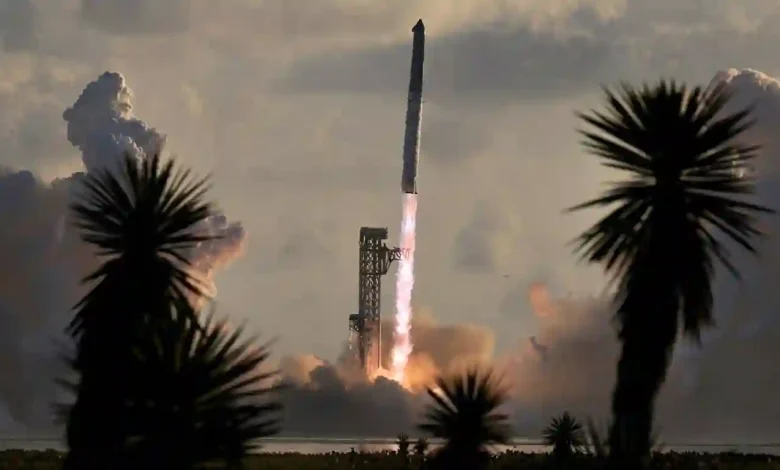
Table of Contents
Starship rocket systems achieved an unprecedented technical benchmark during an ambitious test flight, successfully reaching orbital velocity for the first time while deploying a batch of next-generation Starlink communications satellites. The uncrewed Integrated Flight Test 14 (IFT-14) demonstrated massive gains in upper-stage aerodynamic control, orbital injection accuracy, and complex payload deployment mechanisms. Despite enduring a premature shutdown on one of its Raptor vacuum engines shortly after stage separation—an anomaly that necessitated truncating the mission timeline from ten hours to three—the vehicle executed crucial flight objectives that propel commercial space exploration into a new paradigm.
Starship Rocket Makes Historic Orbital Ascent
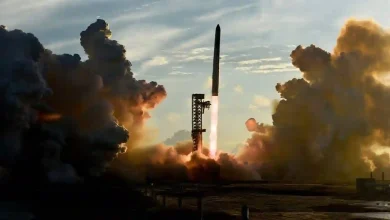
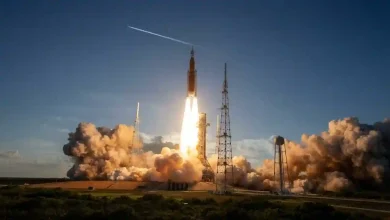
The ascent phase of Flight 14 commenced with the simultaneous ignition of all 33 Raptor engines lining the base of the Super Heavy booster. Rising through the coastal morning atmosphere of Starbase, Texas, the vehicle cleared the launch pad tower within seconds, weathering peak mechanical stresses at maximum aerodynamic pressure (Max-Q). Unlike prior developmental tests that relied on suborbital trajectories to test thermal protection systems, Flight 14 was calibrated to demonstrate orbital capability. The successful delivery of the upper stage into a stable low Earth orbit verified decades of theoretical multi-engine staging physics and reinforced SpaceX’s vision of fully reusable super-heavy-lift vehicles, building on recent insights regarding Starship flight test 14 operational achievements.
Achieving stable orbital dynamics required delicate avionics integration, real-time guidance telemetry adjustments, and persistent thrust calibration across the vehicle’s propulsion matrix. Engineers maintained closed-loop guidance systems throughout the orbital burn, ensuring that velocity vectors aligned precisely with the target insertion window. Reaching true orbital velocity confirms that Starship can bear massive payloads into microgravity without compromising the structural integrity of its stainless-steel propellant tanks.
Flight 14 Architecture and Launch Profile
IFT-14 utilized an upgraded configuration of the Ship upper stage and Super Heavy booster. The architecture incorporated enhanced hot-staging interstage rings designed with dynamic thermal vents to divert searing plume gases during the split-second separation maneuver. The vehicle’s propulsion assembly relies on liquid methane and liquid oxygen (methalox), which generate intense thrust while minimizing internal soot accumulation—a mandatory prerequisite for high-cadence turnaround and rapid reuse.
As commercial entities and aerospace organizations track advancements in high-mass space logistics, initiatives such as orbital computing depend entirely on the high-tonnage lifting capacities validated by Starship’s massive internal payload volume. By mastering the delicate interaction of fluid mass transfers under multi-G ascent profiles, the launch profile proved that super-heavy architecture can operate with fine control despite enormous atmospheric forces.
Successful Next-Generation Starlink Deployment
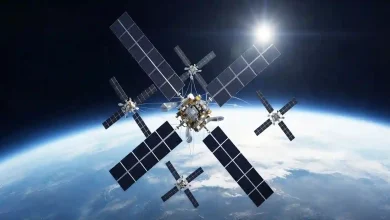
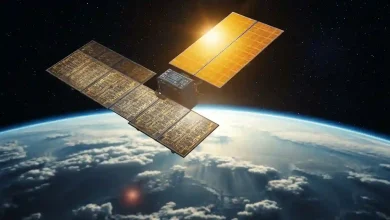
Once settled into its nominal orbit, Starship executed a series of automated payload door demonstrations. Using a specialized internal rack deployment mechanism colloquially known as the “pez dispenser,” the spacecraft successfully ejected multiple next-generation Starlink orbital units into space. These advanced satellites feature wider aperture antennas and higher power generation capacity, designed to augment orbital connectivity networks globally.
The successful release of commercial hardware directly in microgravity confirms Starship’s readiness to operate as a functional cargo transport ship rather than merely an experimental hull. This milestone aligns closely with modern institutional priorities in outer space infrastructure, where enterprises monitor Amazon LEO satellite deployments and related orbital megaconstellations that require economical, high-cadence payload mass delivery systems.
Raptor Propulsion Anomaly and Early Engine Cutoff
Despite reaching orbital insertion, Flight 14 encountered critical telemetry anomalies within its propulsion array. Immediately following the hot-staging event, one of the three center-mounted Raptor sea-level engines experienced an unexpected drop in chamber pressure and abruptly shut down seconds before the scheduled burn termination. Telemetry data indicated that thermal boundary layers near the fuel turbopump breached safety parameters, triggering an automated safety cutoff designed to protect the surrounding engine compartment from catastrophic structural degradation.
The remaining engines adapted dynamically via flight computer compensations, burning longer to make up for the thrust deficit and successfully reaching the required delta-V for orbit. However, operating with an asymmetric thrust profile depleted ullage gas reserves and heightened systemic temperatures. While the vehicle survived the transient shock, the incident highlights persistent engineering hurdles in deep-space rocket propulsion. Similar challenges in advanced guidance and propulsive stability continue to be addressed across government-backed programs such as space weapons US defense initiatives and civilian heavy-lift operations.
Operational Pivot: Truncating the Flight Window
Confronted with the premature engine shutdown and uncertain pressurization dynamics in the propellant header tanks, mission controllers in Hawthorne and Boca Chica enacted contingency protocols. Starship’s original flight profile featured a 10-hour orbital duration intended to evaluate long-duration cryogenic propellant settling, multiple reignition trials of vacuum Raptor engines in zero gravity, and simulated space-to-space propellant transfers.
To safeguard against potential loss of vehicle control, controllers truncated the mission timeline to approximately three hours. By initiating an expedited deorbit sequence over a pre-cleared corridor in the Indian Ocean, SpaceX prioritized high-value flight data acquisition while minimizing systemic risk. The agile operational decision-making mirrored rapid protocols seen in aerospace flight test programs, preventing an off-nominal drift and ensuring that critical sensor streams remained intact throughout atmospheric descent.
Super Heavy Booster Separation and Recovery Dynamics
While the upper stage continued its orbital maneuvers, the Super Heavy booster demonstrated remarkable control during its return leg. Following the hot-staging separation at an altitude exceeding 70 kilometers, the booster flipped gracefully, relit an array of center engines for the boostback burn, and set a return course toward coastal waters. The aerodynamic grid fins steered the 232-foot-tall booster through supersonic deceleration with pinpoint precision.
The continuous refinement of reusable boost stages stands in stark contrast to legacy expendable platforms. While organizations like Boeing Starliner eyes future mission updates and legacy aerospace systems balance elevated procurement costs, SpaceX’s real-time booster reuse testing delivers immediate operational savings. The Super Heavy executed a landing burn over the water, verifying landing clamp alignment software and hydraulic steering responsiveness under intense aero-braking stress.
Mission Summary: Flight 14 Telemetry and Parameters
The operational milestones realized during Integrated Flight Test 14 establish a clear comparative baseline for future test cadences. The comprehensive telemetry summary below contextualizes key parameters achieved during this milestone flight:
| Flight Parameter | Targeted Objective | Actual In-Flight Result | Engineering Assessment |
|---|---|---|---|
| Launch Profile | Clear Starbase Pad Tower cleanly | Nominal tower clearance | Pad deluge system functioned without damage |
| Hot-Staging Phase | Booster/Ship split at ~70km | Clean stage separation | Upgraded interstage thermal ring maintained stability |
| Orbital Insertion | Attain stable low Earth orbit | Nominal orbit achieved | Historic milestone: First time Starship entered full orbit |
| Raptor Performance | Sustained 6-engine upper stage burn | 1 engine shut down early | Safety cutoff saved the vehicle; required burn time extended |
| Payload Integration | Deploy next-gen Starlink units | Successful satellite deployment | Commercial cargo deployment validated in microgravity |
| Mission Duration | 10-hour extended coast phase | Truncated to 3 hours | Conservative abort protocol enacted to ensure safety |
| Booster Recovery | Controlled marine soft touchdown | Substantially complete | Grid fin guidance accurately steered descent trajectory |
The balance of full orbital velocity alongside partial subsystem degradation delivers vital engineering empirical data. These quantitative metrics inform ongoing structural optimizations, guiding how next-generation spacecraft absorb aerodynamic heating and mitigate internal vibration loads during subsequent operational flights.
Implications for Artemis and Deep-Space Exploration
NASA remains a crucial stakeholder in Starship’s orbital maturation curve. Under the Artemis Human Landing System (HLS) contract, NASA relies on a specialized Starship variant to return astronauts to the lunar surface. Demonstrating orbital velocity and payload bay actuation brings SpaceX closer to satisfying NASA’s strict human-rating safety milestones, which are routinely evaluated against broader space science projects including the Nancy Grace Roman Space observatory framework.
Achieving stable orbit is only the opening chapter of the deep-space roadmap. Before a crewed Starship departs for the Moon, SpaceX must master orbital cryogenic refueling—a complex operational dance requiring multiple tanker Starships to ferry thousands of tons of liquid methane and liquid oxygen into low Earth orbit. The truncated mission of Flight 14 prevented in-orbit engine reignition tests, deferring that specific milestone to Flight 15. Nonetheless, institutional partners tracking initiatives like Project Suncatcher and high-mass planetary science programs view Starship’s orbital capability as a transformative development for deep-space logistics.
Regulatory Approvals and the Road to Flight 15
With Flight 14 concluded, attention pivots immediately toward regulatory compliance and telemetry debriefing. The Federal Aviation Administration (FAA) requires comprehensive anomaly investigation reports following any premature engine shutdown or deviations from filed operational plans. SpaceX engineers are currently dissecting turbopump telemetry, exhaust gas temperature fluctuations, and acoustic vibrational data collected during the upper stage burn. Similar regulatory coordination has defined past orbital test programs and commercial launches monitored by commercial space launch agencies.
Starbase production lines are already preparing the hardware for Flight 15. The subsequent vehicle incorporates redesigned fuel manifolds, refined thermal insulation blankets around the engine bay, and improved thrust vector control actuators. By rapidly iterating through physical flight hardware, the aerospace manufacturer intends to resolve the turbopump vulnerabilities unmasked by Flight 14, cementing Starship’s status as a reusable, high-capacity backbone for Earth-to-orbit transportation.