Chang’e-7 Lunar Mission: China’s Hunt for Moon Water
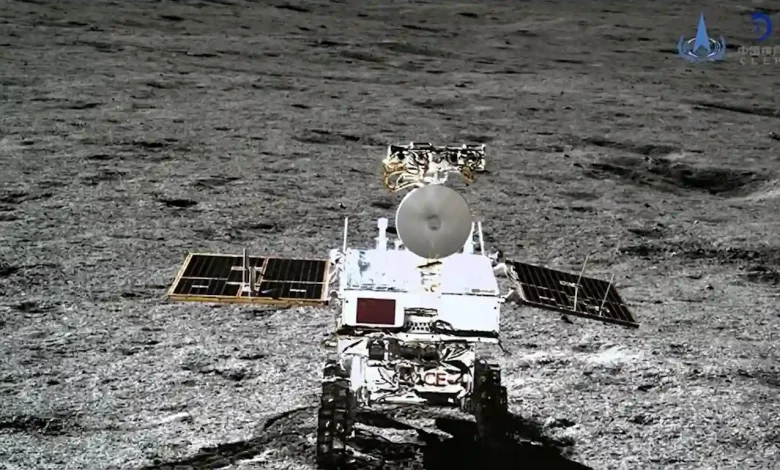
Table of Contents
Chang’e-7 is poised to launch as China’s most technologically complex lunar mission to date, marking a revolutionary shift in how humanity surveys the moon’s resource potential. Developed by the China National Space Administration (CNSA), this uncrewed expedition is designed to explore the rugged and frozen terrain of the lunar south pole. Space scientists are increasingly looking to understand the history of our solar system by studying such extreme environments, drawing parallels with other dramatic cosmic phenomena like how the Milky Way is devoured. The mission represents the crown jewel of the fourth phase of China’s Lunar Exploration Program, which seeks to lay the definitive groundwork for a long-term human presence on our satellite.
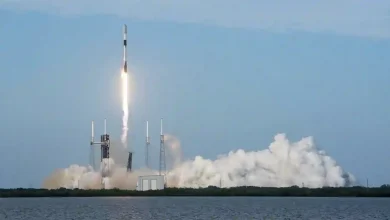
Scheduled to lift off aboard a powerful Long March 5 Y14 rocket from the coastal Wenchang Spacecraft Launch Site in Hainan, the mission targets one of the coldest, most unforgiving places in the solar system. By deploying a sophisticated suite of four highly coordinated spacecraft—an orbiter, a lander, a rover, and a novel hopping probe—China is taking a bold leap to map volatile resources that have been locked in dark lunar craters for billions of years. This multi-vehicle strategy underscores the rapid acceleration of Asian space capabilities in the 21st century.
Core Objectives: Mapping Resources and Seeking Water
The primary scientific and strategic objective of the mission is to search for frozen stores of water and other volatile compounds near the lunar south pole. Unlike earlier missions that focused primarily on surface photography, geological mapping, or scooping loose regolith from sunlit plains, this expedition is a targeted resource prospecting operation. Finding accessible lunar volatiles could drastically reduce the cost of deep-space exploration, laying the foundation for permanent infrastructure on the moon.
The Strategic Importance of Lunar Water Ice
Water ice on the moon is not merely a scientific curiosity; it is the cornerstone of sustainable deep-space exploration. Accessible water can be broken down into hydrogen and oxygen to manufacture rocket fuel, or purified for drinking and oxygen generation in future crewed habitats. Resolving the precise distribution and volume of these resources will fundamentally alter global resource markets, much like how the oil price slipped Friday when industrial forecasts anticipated structural changes in fossil fuel dependencies. Developing a lunar supply chain could completely remove the need to launch heavy water payloads from Earth’s deep gravity well, transforming the moon into a stepping stone for human voyages to Mars and beyond.
A Four-in-One Architecture: Orbiter, Lander, Rover, and Hopper
To achieve its complex set of scientific goals, the spacecraft uses a modular architecture combining four key vehicles into a unified launch payload. This consolidated “four-in-one” design represents a marvel of modern aerospace engineering, maximizing weight distribution and mission redundancies. Unlike previous missions that required individual dedicated communications relays, this fleet will utilize the pre-deployed Queqiao-2 relay satellite, freeing up significant mass for heavier, more specialized scientific equipment on the lander and its secondary probes.
The Innovative Hopping Probe: Jumping into the Dark
Unlike standard rovers that are limited by steep crater walls, the unique hopping probe is engineered to “jump” directly into permanently shadowed regions (PSRs). These deep pits have remained shielded from sunlight for billions of years, creating natural cryogenic traps with temperatures plunging to minus 203 degrees Celsius. Equipped with active shock-absorption systems and small thrusters, the mini-probe will leap into the perpetual cold of the craters, perform in-situ water molecule analysis, and then hop back out into sunlight to recharge its solar batteries. This high-risk, high-reward mechanical design demands massive technical investments, attracting advanced technology valuations similar to Anthropic’s IPO valuation due to the cutting-edge autonomous robotics involved.
Lunar Lander and Rover Deployment
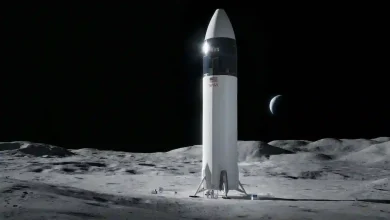
While the hopping probe targets the interior of sunless pits, the lander and its wheeled rover will focus on mapping the surrounding terrain, surface mineralogy, and local magnetosphere. Precision navigation systems are critical for navigating the extreme slopes near the pole. The obstacle avoidance algorithms used on the lander and rover benefit from the rapid evolution of specialized processors, a trend driven by huge capital flows such as Nvidia’s 500B AI fund and Wall Street partnerships. By utilizing advanced laser altimeters and stereo cameras, the surface elements will safely traverse the hazardous regolith to conduct comprehensive chemical analyses.
The Target: Shackleton Crater Rim
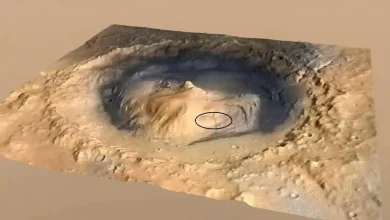
The chosen landing site is a highly competitive, sunlight-grazed peak near the southeast ridge of Shackleton Crater. Shackleton Crater is a massive depression located almost exactly at the moon’s south pole. Its high rim receives near-constant solar illumination, which is ideal for solar power generation, while its ultra-deep interior remains in perpetual darkness, locking temperatures at near-absolute zero. Landing a multi-component probe in such a rugged environment requires unprecedented guidance accuracy. The mission will deploy China’s first landmark navigation system for deep space, allowing the lander to actively compare real-time camera imagery with pre-loaded elevation models to execute a near-bullseye landing.
International Payloads and Global Collaboration
This mission also signals China’s growing leadership in global aerospace governance. It carries scientific instruments from various international partners, including Italy, Russia, France, Egypt, and Bahrain. For example, a laser retroreflector array supported by international partners will help refine precise distances between the earth and the lunar south pole. According to the Planetary Society, such international cooperative frameworks are vital for standardizing future lunar exploration systems. This high level of international coordination requires absolute meticulousness, ensuring all payloads are subjected to rigorous safety protocols comparable to discussions on the childhood vaccine schedule, where absolute consensus and technical precision are paramount for system operations.
Geopolitical Implications of the Lunar Resource Race
The race to secure critical points near the lunar south pole has created a high-stakes geopolitical competition. The strategic sites around the rim of Shackleton Crater are highly limited, with both the United States’ Artemis program and China’s Lunar Exploration Program targeting overlapping coordinate zones. These strategic deployments are a form of high-altitude logistics, representing a long-term strategic deployment, reminiscent of the USS Abraham Lincoln positioning in crucial international corridors to safeguard national sovereignty. The geopolitical undercurrents in space frequently mirror terrestrial standoffs, such as the public and diplomatic theater we witness when major states push back on treaties, or when geopolitical tensions when Iran refutes Trump in international forums, highlighting that outer space is increasingly becoming an extension of terrestrial international relations.
Public Interest and the Space Aesthetic
Beyond the cold calculations of rocket thrust and geostrategic leverage, the quest for water on the moon has captured the global imagination, inspiring a brand-new generation of design, art, and internet trends. For some, the notion of placing a small “hopping” mechanical frog on the frozen moon perfectly aligns with the contemporary, internet-born whimsy-maxxing culture, which champions a lighter, more fantastical, and imaginative approach to technology. This cultural intersection makes space exploration accessible to younger demographics, ensuring public support remains strong for multi-decade, multi-billion-dollar scientific initiatives.
Mission Specifications and Comparative Architecture
The table below outlines the evolution of China’s robotic lunar missions, showcasing the rapid escalation in payload complexity and scientific scope leading up to the current polar expedition.
| Mission Name | Launch Date | Spacecraft Components | Primary Objective |
|---|---|---|---|
| Chang’e 5 | November 2020 | Orbiter, Lander, Ascender, Returner | Near-side sample return |
| Chang’e 6 | May 2024 | Orbiter, Lander, Ascender, Returner | Far-side sample return from SPA Basin |
| Chang’e 7 | August 2026 | Orbiter, Lander, Rover, Hopping Probe | Lunar South Pole resource surveying and water hunting |
| Chang’e 8 | Planned 2028 | Orbiter, Lander, Rover, 3D Printer | In-situ resource utilization technology testing |
The Path to the International Lunar Research Station (ILRS)
The data gathered by this mission will directly feed into the plans for the International Lunar Research Station (ILRS). Co-led by China and Russia, this massive infrastructure project aims to build a fully automated research station near the south pole by the early 2030s. Success with the hopping probe and lander will validate critical technologies, including automated resource mining, legged mobility on sloped surfaces, and power management in extreme temperature variations. In the long run, the ILRS will host rotating human crews, cementing the lunar south pole as the central hub of human lunar activity.
Looking Ahead to 2030
In summary, this mission represents a pivotal moment in human spaceflight. By targeting the water reserves of Shackleton Crater, it could unlock the resources needed for a self-sustaining presence on the moon, transforming it from a distant scientific target to an operational gateway to the solar system. The successful deployment of the lander, rover, and pioneering hopping probe will define the technological standards of the next decade of space exploration, proving that humanity is ready to transition from passive observation to active, sustainable utilization of celestial resources.