Commercial Space Launch Regulations Overhauled by FAA in 2026
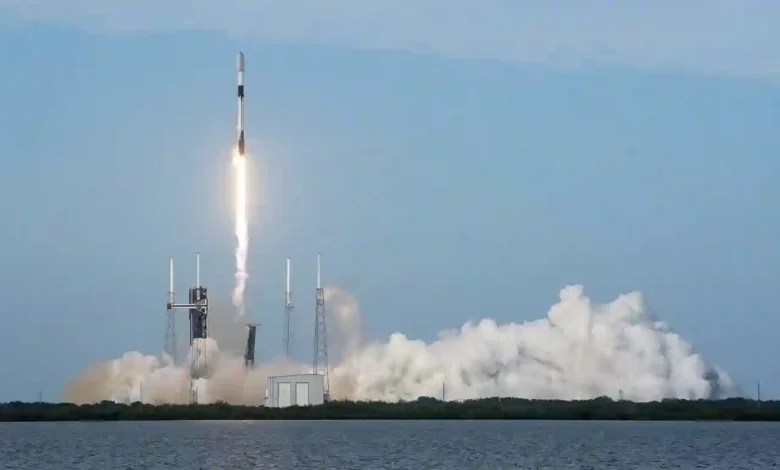
Table of Contents
Commercial space launch regulations represent the legal foundation that governs orbital transportation, orbital logistics, and sovereign access to the upper atmosphere. In a decisive push to align statutory bureaucracy with the accelerating velocity of aerospace engineering, the Federal Aviation Administration (FAA) announced a comprehensive suite of proposed reforms designed to modernize commercial space launches and atmospheric re-entry licensures. By shifting from archaic bureaucratic structures toward modernized digital procedures, the FAA seeks to remove procedural friction while rigorously upholding public safety. This landmark regulatory revision addresses the rapid increase in private orbital missions driven by heavy-lift rockets, small-satellite dispensers, and commercial orbital habitats that have consistently strained federal administrative infrastructure.
The Strategic Mandate Behind Modern Launch Governance
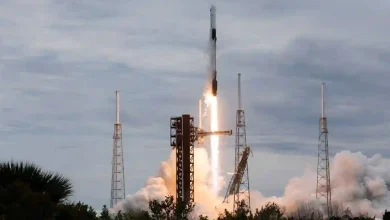
The global launch industry has outgrown the static regulatory mechanisms established under Title 14 of the Code of Federal Regulations, specifically Part 450. Over the past five years, the launch tempo has transformed from occasional government-sanctioned deployments into continuous commercial campaigns occurring on a weekly, if not daily, basis. This operational explosion demands regulatory adaptation. Aerospace ventures navigating complex flight corridors must balance the high cadence of missions like the SpaceX Falcon 9 launches with rigorous safety mandates that ensure national airspace integration remains seamless and zero-defect.
Historically, federal regulators faced severe capacity bottlenecks, leading industry stakeholders to express frustration over processing backlogs that risked stranding flight-ready hardware on seaside launch pads. As the Department of Transportation evaluated the expanding commercial space enterprise, it determined that administrative lag was no longer a negligible delay but a systemic threat to domestic aerospace leadership. The revised framework seeks to resolve this tension by replacing rigid, prescriptive compliance tests with agile, performance-based standards capable of accommodating rapid hardware iterations.
Digital Modernization and Electronic Application Portals
Central to the agency’s newly announced modernization plan is the mandatory migration toward a unified, secure electronic submission architecture. In previous eras, aerospace operators were often required to compile thousands of pages of static documentation, technical schematics, and fragmented digital files distributed across disconnected government offices. This manual paradigm created procedural delays and prevented inter-agency visibility between the FAA, the Department of Defense, and regional range commanders.
Under the updated system, operators will submit and update payload manifests, abort system telemetry designs, and orbital staging parameters through an intuitive, real-time portal. This digital transformation provides programmatic benefits that extend across the entire industrial ecosystem, enabling companies focused on novel propulsion architectures—such as the HyprSpace hybrid rocket program—to submit live engineering changes without triggering complete regulatory resets. The electronic framework establishes end-to-end transparent version tracking, ensuring both agency evaluators and corporate technical officers can trace safety amendments within hours rather than waiting through months of traditional review.
Consolidating Safety Analyses: Moving from Three Filings to One
Perhaps the most substantive technical reform introduced in the proposed rule is the consolidation of safety analyses. Under previous commercial space regulations, an orbital operator was forced to conduct and submit three separate, computationally intensive reviews: flight safety analysis, ground safety assessments, and maximum probable loss estimations. While all three analyses drew from identical core vehicle dynamics, propulsion chemistries, and atmospheric dispersal metrics, their structural separation required redundant mathematical modeling and duplicative legal declarations.
The FAA’s revised directive aggregates these disparate requirements into a single, cohesive System Safety Case submission. This consolidated document integrates launch-site ground handling risks, stage burn trajectories, and re-entry risk corridors into a single mathematical framework. The elimination of redundant data packages is projected to cut thousands of engineering hours previously wasted on administrative reformatting. This unified review architecture allows regulators to evaluate risk holistically, viewing the entire vehicle lifespan from propellant loading through orbital insertion to payload fairing ocean impact.
Flexibility in Demonstrating Equivalent Levels of Safety
A persistent critique of legacy launch governance has been its rigid adherence to specific, historical validation pathways that ignore advancements in computational modeling, autonomous avionics, and high-fidelity flight simulator capabilities. The agency’s proposed rulemaking explicitly tackles this friction by expanding the statutory pathways through which launch operators can establish an Equivalent Level of Safety (ELOS).
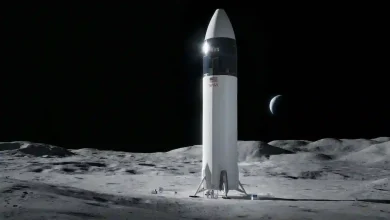
Under the proposed language, operators can deploy advanced, high-resolution simulation telemetry, deterministic automated flight safety systems (AFSS), and real-time algorithmic thrust-vector compensation to prove that their unconventional launch trajectories do not endanger non-participating civilians or ground infrastructure. This flexibility is essential as next-generation space exploration systems, including deep-space cargo platforms and lunar transport programs like the Artemis III lunar lander, encounter distinct propulsion and aerothermal regimes that deviate substantially from legacy expendable ballistic rockets.
Comparative Overview: Legacy Rules vs. Streamlined Standards
To fully appreciate the scope of the FAA’s administrative overhaul, it is helpful to analyze how key operational domains will transform under the newly introduced Part 450 streamlining provisions.
| Operational Dimension | Legacy Regulatory Framework | Proposed Streamlined Framework | Projected Industry Impact |
|---|---|---|---|
| Application Submission | Fragmented multi-format filings, manual document packages | Unified, secure digital application portal | Application turnaround cycles reduced by up to 40% |
| Safety Assessments | Three distinct submissions (Ground, Flight, Loss Estimation) | Consolidated single System Safety Case | Eliminates duplicative mathematical modeling |
| Safety Equivalency (ELOS) | Narrowly defined, historically rigid compliance gates | Flexible, simulation-driven computational verification | Unlocks agile iteration cycles for novel aerospace platforms |
| Telemetry & Sensor Audit | Mandatory standardized mechanical sensors | Acceptance of validated modern sensor suites | Accelerates flight approval for modernized launch vehicles |
| Re-entry Licensures | Bifurcated, separately reviewed mission licenses | Integrated multi-leg launch and recovery approvals | Enables rapid turnaround for orbital asset reuse |
Orbital Cadence and Industrial Competitiveness
The speed of administrative execution directly influences capital allocation across the aerospace and defense sectors. Institutional investors who back orbital infrastructure companies frequently identify regulatory bottlenecks as a primary variable in valuation degradation. As market participants navigate challenging macroeconomic environments—frequently examined alongside shifts where US stocks face fourth quarter contractions and institutional liquidity tightens—regulatory clarity becomes a cornerstone of enterprise resilience.
By shortening the lag time between design freeze and launch clearance, the FAA helps stabilize financial forecasting for private aerospace programs. Capital-intensive hardware testing programs, which historically risked catastrophic stalls following unexpected anomalies—such as the high-profile Starship engine failure during developmental static burns—can now conduct systematic root-cause analyses and update digital applications without restarting multi-year licensing cycles from scratch.
Furthermore, launch site operators and orbital cargo ventures rely on rapid, predictable schedules to fulfill commercial contracts. When an astronaut crew reaches space stations or private microgravity habitats, supply chains must operate without bureaucratic friction. Modernizing procedural standards ensures the commercial marketplace remains capable of sustaining continuous orbital resupply pipelines.
Public Safety, Airspace Management, and Environmental Oversight
While the FAA’s primary objective is streamlining the licensing workflow, the agency has emphasized that safety standards will not be compromised. The deregulation of procedural paperwork does not represent a rollback of rigorous public safety enforcement. The National Airspace System (NAS) remains one of the world’s most congested and meticulously managed operational domains. Every rocket ascent necessitates temporary hazard zone closures across civilian air traffic corridors, creating routing challenges for commercial airlines.
The updated rules integrate launch corridors with modern air traffic control automated decision systems. Rather than closing vast swaths of airspace for several hours based on broad mathematical projections, the FAA’s consolidated safety case leverages precision trajectory tracking to clear restricted corridors rapidly once a vehicle exits controlled airspace. This responsive integration mitigates economic friction across domestic aviation while maintaining high margins of public safety against falling debris risks.
Simultaneously, environmental impact assessments will become more transparent under the electronic submission architecture. By consolidating emissions profiles, acoustic propagation models, and ocean recovery footprint studies into a central digital repository, regulatory authorities and public watchdogs can evaluate the cumulative environmental effects of high-frequency space operations with precision.
The Path Ahead: Launch Modernization in the Next Decade
The proposed regulations represent an inflection point in how national regulatory bodies oversee commercial space infrastructure. With the space domain expanding into orbital manufacturing, deep-space exploration, and sovereign defense missions, traditional procedural governance must adapt to maintain regulatory relevance. In an era where major geopolitical players and domestic industries routinely assess USS George Washington fleet deployments to protect open maritime lanes, maintaining rapid commercial space launch capability is equally critical to national security and global trade dominance.
The public comment period for the FAA’s proposed rulemaking will proceed over the coming months, allowing orbital operators, range safety consultants, and aerospace unions to submit formal feedback. Once finalized, these streamlined protocols are poised to transform the regulatory environment, ensuring that American aerospace firms can test, build, and deploy orbital vehicles with regulatory predictability. Moving from rigid, multi-layered reviews to consolidated digital workflows will establish a modern launch baseline that supports American leadership across orbital transit for decades to come.