Space debris 2026: Mysterious Metal Spheres Wash Ashore in Australia
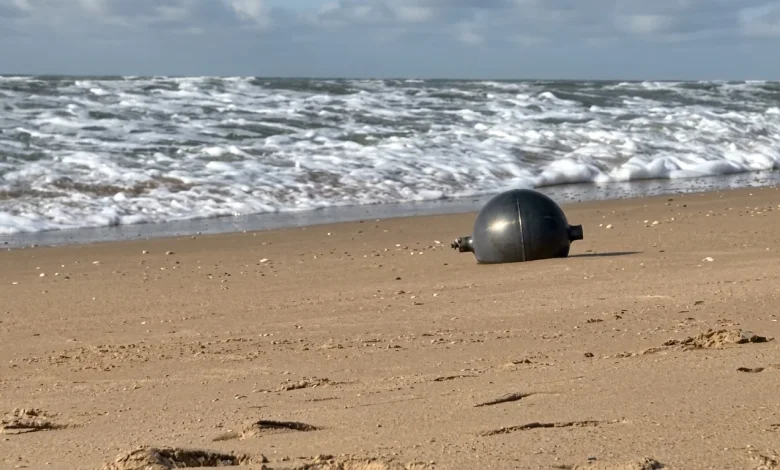
Table of Contents
Space debris has turned a quiet coastal town in Queensland, Australia, into an international hotspot for scientific curiosity. Over a single weekend, six mysterious, highly polished metallic spheres washed ashore on Forrest Beach, about 90 minutes north of Townsville. While the visual resemblance of these objects to the classic science-fiction tropes of alien visitations instantly ignited viral speculation online—with tongue-in-cheek references to the famous 1987 Mel Brooks parody film Spaceballs—the reality is grounded in modern aerospace engineering. The Australian Space Agency (ASA) quickly stepped in, identifying the metallic orbs as spent pressure vessels originating from a foreign rocket launcher that recently crossed back through Earth’s atmosphere from orbit.
Space Debris Discovered: The Metallic Spheres of Forrest Beach
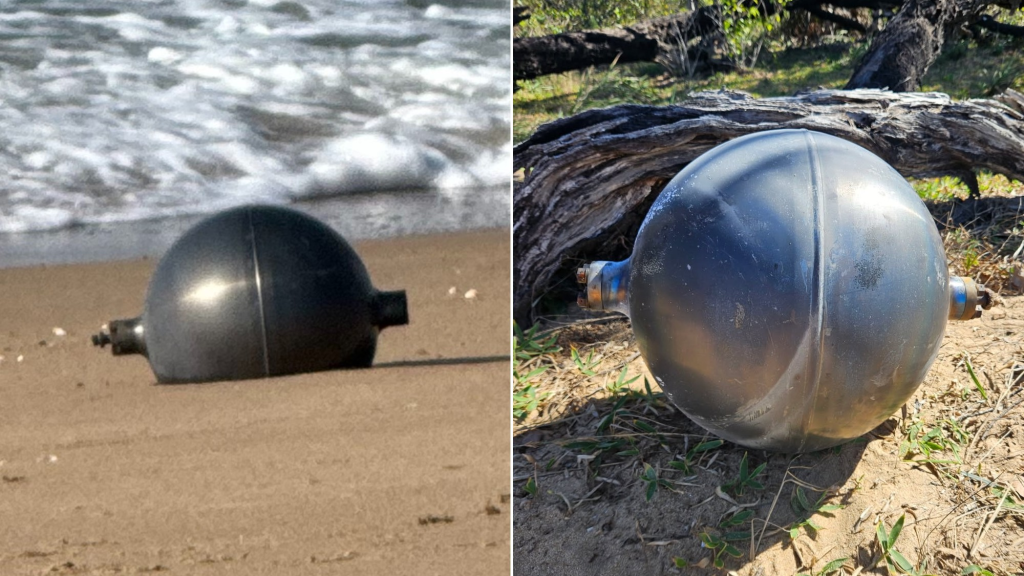
The peaceful coastal stretch of Forrest Beach, known primarily for its sleepy, fishing-town atmosphere, became the staging ground for a highly coordinated hazardous materials operation. Local beachgoers first spotted the strange, basketball-sized metallic spheres lying at the high-tide mark. With their highly reflective, metallic sheens and unique twin nozzles protruding from opposite poles, the objects looked entirely out of place in the natural, pristine beach environment. Local authorities were immediately notified, realizing that the objects could pose an active chemical or physical threat to public safety.
Beach hazards are historically diverse, and municipal emergency planners are trained to expect the unexpected. Whether responding to sudden environmental crises, such as the tragic lightning strike at Fort Myers Beach that claimed a life, or handling unidentified debris of maritime or aerial origin, safety is paramount. Upon receiving reports of the metallic spheres on Forrest Beach, the local police department acted swiftly to seal off access to the sandy shores.
The Initial Discovery and Hazmat Response
The first metallic sphere was discovered by a local crab fisherman who noticed a bright, shiny object glinting in the shallow tide. Recognizing that the sphere looked manufactured and potentially dangerous, he alerted the local police. A quick search of the shoreline over the following days revealed a total of six identical spheres scattered along the coast. Fearing that the items might be pressurized or contain highly toxic propellants, Queensland Fire and Rescue deployed a specialized scientific unit to the scene.
Responders equipped with full hazardous materials (hazmat) gear and breathing apparatuses marched onto the beach to isolate the objects. They established a strict 50-meter (164-foot) exclusion zone around each sphere. This level of rapid structural mobilization is typical for critical incidents. Just as global entities secure regions during massive natural events, such as the twin earthquakes in Venezuela, Australian authorities left no stone unturned in ensuring that the local populace was isolated from any potential toxic gas leaks or pressurized ruptures.
Understanding ‘Space Balls’: What Are Rocket Pressure Vessels?
While the media quickly dubbed the objects “space balls,” aerospace engineers recognize these spheres as COPVs (Composite Overwrapped Pressure Vessels) or titanium propellant tanks. These high-strength containers are integral components of modern rocket propulsion systems. They are designed to store highly pressurized inert gases, such as helium or nitrogen, which are utilized to force liquid fuels into the combustion chambers of rocket engines during flight.
Because these pressure vessels must withstand extreme temperatures, immense structural stress, and high internal pressure, they are fabricated from advanced materials like titanium, carbon fiber, or high-grade alloys. These precise material qualities allow them to frequently survive the incredibly hostile and hot environment of atmospheric re-entry. When a spent rocket stage plummets back to Earth, the aluminum body and lighter components melt away in the intense heat of friction, but these dense, durable spheres often remain intact and plummet down into the oceans, eventually washing onto land.
The Chemical Danger: Hydrazine and Toxic Fuel Hazards
The primary concern during any space debris recovery operation is the potential presence of residual rocket fuel. Many upper stages of orbital rockets utilize hydrazine, a highly effective but intensely toxic and carcinogenic propellant. Even trace amounts of hydrazine vapor can cause severe respiratory damage, skin burns, and long-term systemic poisoning in humans. Consequently, emergency crews must treat all recovered space vessels as active toxic hazards until scientific testing confirms they are safe.
Matt Richardson, a prominent Space Program Director at the University of Southern Queensland, publicly emphasized the dangers associated with these objects. He explained that because the spheres serve as critical fuel-delivery components, they could easily have retained toxic coatings. Thankfully, after extensive testing by Queensland Fire and Rescue’s scientific team, it was determined that the six spheres on Forrest Beach were empty of hazardous liquids and had been “rendered safe” for transport. Five of the spheres were secured inside specialized hazardous material drums, while the sixth was isolated and cleared on-site.
The Australian Space Agency’s Analysis and Investigation
The Australian Space Agency (ASA) took charge of the technical investigation soon after the physical recovery was completed. In an official statement shared on X (formerly Twitter), the ASA confirmed that the objects’ characteristics perfectly align with pressure vessels from an orbital space launch vehicle. The agency noted that their landing trajectory and physical coordinates are consistent with a foreign rocket body that had recently completed its deorbit burns and entered the atmosphere.
The ASA is now collaborating with international space partners to identify the precise launch event and the specific nation responsible for the debris. Tracking space debris is a highly regulated, cooperative global effort. When pieces of hardware fall from orbit, international space treaties, such as the 1972 Liability Convention, dictate that the launching state remains legally and financially responsible for any damages caused by their space objects, as well as the eventual costs of recovery and disposal.
Identifying the Foreign Rocket Body Origin
Though the ASA has not publicly named the country of origin, satellite tracking data suggests several recent orbital launches whose spent stages re-entered the atmosphere over the Pacific and Indian Oceans. These include commercial communication satellite launches and national orbital missions. The distinct design of the spheres—featuring specific weld patterns and polar nozzle attachments—provides unique engineering “fingerprints” that help specialists trace the hardware back to its manufacturer.
This incident highlights the challenges of monitoring and recovering materials that fall from the sky. Tracking physical components in orbit requires extensive radar arrays, similar to the technology utilized to monitor unauthorized terrestrial airspace activities. The management of orbital payloads can be compared to complex security situations, such as when high-tech monitoring equipment detects anomalies, similar to how authorities managed the unauthorized drones seized by the FBI near the FIFA World Cup to ensure stadium and public safety. In both instances, managing the intrusion of foreign objects into domestic territory requires precise detection and legal protocols.
How Forrest Beach Capitalized on ‘Space Junk’ Fever
Forrest Beach is home to a close-knit population of just over 1,300 residents. Prior to the arrival of the metallic spheres, the quiet town was best known as a peaceful getaway where children fished after school. The sudden arrival of international news crews, police cordons, and scientific experts in yellow hazmat suits initially shocked the community. However, once the ASA declared the objects entirely safe, the local reaction quickly shifted from alarm to lighthearted opportunism.
Local businesses wasted no time leaning into the “alien landing” theme to attract curious visitors and tourists who drove in from nearby Townsville. Social media pages for Forrest Beach shops were flooded with memes, alien illustrations, and playful warnings. The sudden spike in foot traffic provided a welcome economic boost to the seaside community, transforming a potential public safety scare into a celebrated local festival of space-themed fun.
The ‘Space Junk Snackbox’ and Local Tourism
One of the most popular local responses came from Lisa Scobie, the owner of the Forrest Beach Takeaway restaurant. As reported by The Guardian, Scobie’s initial concern for public safety quickly gave way to a brilliant marketing opportunity. She created a special menu item named the “Space Junk Snackbox” and promoted it on Facebook with a humorous AI-generated image depicting an alien standing outside her shop holding one of the metallic spheres. The joke was so convincing that some visitors arrived expecting to see the actual space debris sitting on the restaurant’s counter.
Other local businesses followed suit. The Forrest Beach Supermarket jokingly posted on Facebook encouraging residents to “do the smart thing now and panic buy” in response to the “UFO crash”. This good-natured humor helped defuse the tension of the hazmat response and united the town in a shared, unforgettable experience that put their small coastal community on the global map.
The Broadening Problem of Orbital Debris Re-entry
While the Forrest Beach incident ended safely and with plenty of laughter, it underscores a growing international concern: the dramatic accumulation of orbital debris. Commonly referred to as “space junk,” this debris consists of defunct satellites, spent rocket stages, and fragmented hardware orbiting Earth at speeds exceeding 27,000 kilometers per hour. As space exploration and commercial satellite launches accelerate, the frequency of uncontrolled re-entries is expected to rise sharply.
The vast majority of space debris is designed to burn up completely upon re-entry, or is steered into the “Spacecraft Cemetery”—a remote area of the southern Pacific Ocean known as Point Nemo. However, uncontrolled re-entries cannot always be steered. When large rocket bodies decay naturally from orbit, their landing locations are highly unpredictable. While the oceans cover more than 70% of the planet’s surface, making a water landing statistically probable, the landing of six intact vessels on a public Australian beach demonstrates that land impacts are a very real, ongoing hazard.
How Space Junk Tracking Works Internationally
The monitoring of falling objects is a highly sophisticated branch of global defense and scientific coordination. Organizations such as the United States Space Command, the European Space Agency, and Australia’s own space monitoring stations work continuously to track thousands of objects larger than a softball. By utilizing advanced radar, optical telescopes, and orbital modeling, these groups calculate “decay windows”—the estimated time frames during which an object will fall back to Earth.
Unfortunately, predicting the exact landing site of space debris remains incredibly difficult due to variables like atmospheric drag, solar activity, and the tumbling motion of the falling object. Often, scientists can only narrow down the impact corridor to a swath of land thousands of miles long, leaving local emergency services to respond on the ground once an object actually lands or washes ashore.
Comparison of Recent Space Debris Landing Incidents
To put the Forrest Beach discovery into perspective, it is useful to look at how other prominent space debris incidents have played out across Australia and the globe. The table below highlights key details of recent notable re-entry events.
| Year | Location Found | Identified Object Type | Likely Origin Country | Safety Threat / Actions Taken |
|---|---|---|---|---|
| 2026 | Forrest Beach, QLD, Australia | 6 Metallic COPV Fuel Spheres | Foreign Rocket (Under Investigation) | Low; 50m exclusion zone, hazmat tested, secured in drums |
| 2023 | Green Head, WA, Australia | Large Metallic Cylinder / Fuel Tank | Indian Space Research Organisation (ISRO) | Low; cordoned off, identified as Polar Satellite Launch Vehicle stage |
| 2022 | Snowy Mountains, NSW, Australia | Charred Carbon-Fiber Segment | SpaceX Crew Dragon Trunk | Low; confirmed non-toxic, left deep impact in farmland |
| 2021 | Washington State, USA | Composite Overwrapped Pressure Vessel | SpaceX Falcon 9 Second Stage | Low; landed on private property, left a 4-inch dent in soil |
| 2020 | Ivory Coast, West Africa | Metal Pipes and Structural Beams | Chinese Long March 5B Rocket | Moderate; damaged several local structures, no injuries reported |
Public Safety Guidelines for Encountering Space Objects
As the frequency of orbital launches increases, the Australian Space Agency has issued strict, clear directives for the general public regarding the discovery of potential space debris. While the spheres found at Forrest Beach were ultimately declared safe, the official stance remains highly cautious. Citizens should never assume that a piece of fallen hardware is harmless.
First and foremost, anyone who spots suspected space junk must maintain a safe distance and immediately contact local emergency services. Debris should never be touched, moved, or opened. Apart from the severe risk of toxic chemical contamination from fuels like hydrazine, these objects can also possess sharp, jagged edges from structural tearing during re-entry, or they may remain highly pressurized and capable of exploding. By allowing trained experts with proper monitoring equipment to secure the site, communities can continue to enjoy their beautiful coastlines safely while contributing to the global scientific effort to track and manage our orbital footprint.