Venezuela Shaken by Twin Earthquakes 2026: Emergency Declared
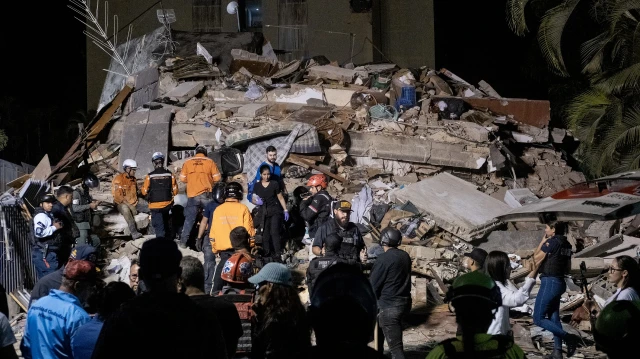
Table of Contents
Venezuela is currently grappling with the catastrophic aftermath of back-to-back earthquakes that struck the nation shortly after 6 p.m. local time on Wednesday, June 24, 2026. Ranked among the most powerful seismic disturbances to impact the country in over a century, these twin temblors have shattered vital infrastructure, triggered widespread panic, and left communities in ruins. Initial assessments report at least 32 fatalities and more than 700 individuals injured, though government officials warn that the true toll is expected to rise steeply as rescue teams access collapsed structures and reach isolated regions.
Acting President Delcy Rodríguez took to state television late Wednesday night to declare a national state of emergency, describing the unfolding situation as a profound tragedy. The dual shocks of 7.2 and 7.5 magnitude have triggered a global response. U.S. President Donald Trump and the State Department, along with major international humanitarian organizations, have pledged immediate assistance to help Venezuela navigate what is rapidly developing into a severe humanitarian disaster.
The Seismic Event: Back-to-Back Twin Tremors
The geological instability that culminated in Wednesday evening’s disaster underscores the active tectonic boundary that defines northern South America. Venezuela sits at the junction of the Caribbean Plate and the South American Plate, a strike-slip plate boundary that is historically prone to high-energy ruptures. However, the occurrence of two massive events in such quick succession represents a rare and highly destructive phenomenon.
According to the United States Geological Survey (USGS), the first earthquake—initially recorded as a magnitude 7.1 before being upgraded to 7.2—struck at approximately 22:04 GMT (shortly after 6 p.m. local time). Less than sixty seconds later, while residents were still reeling from the violent initial shaking, a second and even stronger magnitude 7.5 earthquake rumbled through the exact same region. The shallow depth of both events—measuring between 10 and 22 kilometers—severely amplified the ground acceleration, creating violent vertical and horizontal shaking that proved too intense for many of Caracas’s older concrete structures.
Micro-Analysis of Magnitude and Epicenter
Seismological data indicates that the epicenter of the first 7.2 magnitude earthquake was positioned just west of the coastal town of Morón, about 168 kilometers west of the capital city of Caracas. The second, more destructive 7.5 magnitude tremor was centered roughly 16 kilometers southwest of Morón at an incredibly shallow depth of 10 kilometers. This shallow epicenter focused the seismic energy directly upward, shaking the coastal corridor and transmitting intense waves through the mountainous terrain toward Caracas and as far away as neighboring Colombia and Brazil’s Amazon basin.
Destruction in Caracas and the Capital Region
In the capital city of Caracas, the sudden arrival of the seismic waves shortly after 6 p.m. transformed the evening commute into a scene of utter chaos. Glass windows from commercial establishments shattered onto the pavements, and several multi-story residential buildings in the eastern metropolitan area suffered partial or total structural collapse. Areas such as Los Palos Grandes and Altamira—dense hubs characterized by residential apartments, corporate offices, and foreign embassies—were enveloped in thick plumes of white concrete dust as buildings swayed violently.
Terrified residents poured into open parks and streets, clinging to one another as they watched structural facades crumble. To prevent catastrophic fires, authorities immediately cut off natural gas lines to affected sectors, while the Caracas metro system and local train lines were suspended. The sudden loss of public transportation left thousands stranded, forced to navigate darkened streets amid continuous, frightening aftershocks.
The Closure of Simón Bolívar International Airport
Among the most critical infrastructure failures occurred at the country’s primary aviation gateway. Acting President Delcy Rodríguez announced that Simón Bolívar International Airport, located in Maiquetía along the central coast, sustained severe structural damage and has been closed indefinitely. Reports from the airport detail deep fissures running across the runways, collapsed ceilings within the passenger terminals, and structural damage to the air traffic control tower.
The closure of Maiquetía airport presents an immense logistical bottleneck. As the primary point of entry for international cargo and rescue teams, its incapacitation means that emergency medical personnel and foreign rescue squads will face severe delays, forced to rely on secondary airports or hazardous overland routes through landslide-prone mountain passes.
Declaration of a State of Emergency by President Delcy Rodríguez
Addressing the nation on state television, acting President Delcy Rodríguez delivered an emotional but firm address, officially declaring a national state of emergency. She implored the public to remain calm, avoid staying inside structurally compromised buildings, and show solidarity in the face of what she characterized as one of the nation’s darkest hours.
“We ask the population to remain calm and united,” Rodríguez stated. She urged citizens to report structural hazards and trapped survivors using a government-designed mobile application and requested that all health care professionals nationwide immediately report to local hospitals to handle the influx of trauma patients. Furthermore, the Ministry of Education announced the indefinite cancellation of school classes, designating intact school buildings as emergency community shelters and aid collection centers.
La Guaira: Ground Zero of the Disaster
While damage is widespread across several northern states, the coastal state of La Guaira, located just north of Caracas, has suffered the brunt of the seismic energy. Rodríguez officially designated La Guaira as a “disaster zone,” noting that dozens of apartment complexes and residential homes had collapsed, burying occupants beneath tons of concrete debris. Emergency crews in the region are working under extreme conditions, utilizing heavy machinery and search dogs to locate survivors amid unstable rubble and recurring aftershocks.
International Response: Trump Administration Pledges Urgent Aid
Despite years of diplomatic friction and complex geopolitical dynamics, the scale of the human tragedy has prompted a rapid humanitarian response from the United States. U.S. President Donald Trump, along with the State Department, quickly issued a public pledge of unconditional humanitarian and disaster relief assistance to the Venezuelan government. The State Department announced it is preparing to deploy specialized search-and-rescue teams, structural engineers, and cargo planes loaded with water, food, and temporary shelters.
The financial mechanisms of this emergency aid allocation have renewed domestic focus on the Trump administration’s broader foreign aid policies. Some political commentators point out that the swift mobilization of emergency federal funding for Venezuela stands in contrast to domestic friction over previous fiscal decisions, notably the controversial grants halted by Trump administration deemed unconstitutional by federal courts, which highlighted the ongoing debate surrounding executive authority over allocated funds.
Geopolitical Context of US Humanitarian Assistance
The logistical coordination of bringing aid from the United States to Venezuela must navigate a highly militarized Caribbean maritime corridor. This situation is particularly complex because U.S. military strikes escalate in Caribbean amid drug war deaths mount, creating a tense atmosphere for search-and-rescue flights and naval vessel deployments. Furthermore, the geopolitical environment is highly complex. Observers have wondered whether Washington’s strategic focus could be diverted, given recent reports that the munitions stockpile US empty arsenal leaves Trump zero options in other global conflicts, prompting the administration to prioritize soft-power humanitarian interventions like this seismic response.
Immediate Challenges: Power Grid Outages and Infrastructure Failure
As darkness fell on Wednesday night, rescue efforts were severely hampered by a near-total collapse of the local power grid across the capital and central coastal states. The violent shaking tripped safety systems at major power plants and damaged transmission lines, leaving millions of residents in the dark. Water treatment plants and distribution systems were also taken offline to prevent contamination from ruptured mainlines, leaving many urban centers without running water.
Telecommunication infrastructure suffered massive overloads and physical damage. Cellular towers were knocked out of service or rendered useless by the sheer volume of calls as panicked citizens tried to verify the safety of their relatives. Without electricity, hospitals in Caracas and surrounding regions have been forced to rely on emergency backup generators to power intensive care units and operate on critically injured patients.
Medical Crisis and Disaster Relief Logistics
With more than 700 people injured and dozens still trapped under collapsed buildings, Venezuela’s healthcare network is facing unprecedented strain. Trauma wards are inundated with patients suffering from severe crush injuries, head trauma, and acute fractures. Global non-profit organizations, including Direct Relief, are actively coordinating with local healthcare networks and the Pan American Health Organization (PAHO) to mobilize shipments of emergency medical kits, surgical supplies, and antibiotics.
Coordinating a localized medical response will require a seamless exchange of epidemiological data. However, this occurs at a time when WHO data access concerns rise as US navigates global health information gaps, raising questions about how quickly global health institutions can align their response frameworks with Venezuelan authorities to address immediate health emergencies and prevent waterborne disease outbreaks in displaced communities.
Comparative Analysis of Major Venezuelan Earthquakes
To contextualize the scale of Wednesday’s disaster, it is helpful to compare the 2026 Morón Twin Earthquakes with previous major seismic events that have reshaped Venezuela’s history:
| Seismic Event | Date | Magnitude (Mw) | Epicenter Location | Primary Infrastructure Impact | Emergency Status & Aid Response |
|---|---|---|---|---|---|
| Morón Twin Quakes (Current) | June 24, 2026 | 7.2 & 7.5 | Morón / Coastal Venezuela | Caracas Airport closed; La Guaira collapsed buildings; subway suspended. | National State of Emergency; Trump administration & global agencies pledge help. |
| Yaguaraparo Earthquake | August 21, 2018 | 7.3 | Yaguaraparo, Sucre State | Structural cracks in Caracas high-rises; limited localized damage. | No national emergency; localized responses and structural assessments. |
| Caracas Earthquake | July 29, 1967 | 6.6 | Litoral Central / Caracas | Multiple high-rise apartment collapses in Altamira; severe damage. | Widespread regional emergency; major international recovery effort. |
What Lies Ahead for Venezuela’s Recovery Path
Rebuilding from a disaster of this magnitude will require a sustained, multi-year commitment from both the Venezuelan government and the international community. The priority in the coming hours remains the preservation of life through active search-and-rescue operations. Once the immediate search phase concludes, the monumental task of restoring the electrical grid, municipal water systems, and repairing the structural integrity of Simón Bolívar International Airport must begin.
As seismic experts warn of a high probability of major aftershocks, the resilience of northern Venezuela’s infrastructure will continue to be tested. The sudden alignment of international relief efforts, particularly from the United States, represents a unique geopolitical moment where humanitarian necessity overrides political divisions, offering a glimmer of hope to a nation confronting its most severe natural disaster in a generation.