Lightning strike at Fort Myers Beach Kills Man and Injures 3
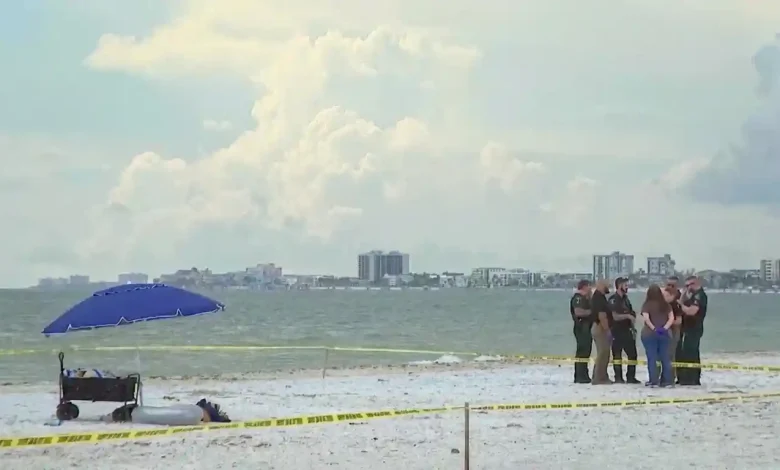
Table of Contents
Lightning strike at Fort Myers Beach, Florida, has tragically resulted in the death of a 51-year-old man and caused injuries to three of his family members during what was meant to be a peaceful, relaxing afternoon on the Gulf Coast. The heartbreaking incident unfolded on the afternoon of Friday, July 3, 2026, casting a somber shadow over the entire southwest Florida community. It has served as a stark, powerful, and painful reminder of the immense dangers associated with rapid summer storms in the Sunshine State. Local emergency services responded with extreme urgency to the scene, but despite the brave and heroic interventions of a bystander who performed immediate cardiopulmonary resuscitation and deployed an automated external defibrillator, one life was tragically lost. The three surviving family members were transported to a regional medical facility, where they continue their recovery in stable condition. This tragic event has reignited crucial conversations surrounding beach safety, the physical nature of electrical storms on open water, and the critical importance of immediate emergency response protocols during severe weather hazards.
Lightning Strike at Fort Myers Beach: The Fatal Friday Afternoon Incident
On the afternoon of Friday, July 3, 2026, emergency crews in Lee County, Florida, were dispatched to a highly urgent and distressing scene on the shoreline of Fort Myers Beach. According to official statements released by local public safety officials and the Fort Myers Beach Fire Control District, a single, powerful bolt of lightning struck the ocean, impacting multiple individuals who were enjoying the water. The day had started as a typical, warm southwest Florida summer day, with residents and visitors flocking to the popular white-sand coastline to escape the heat and enjoy the Gulf. However, the region’s notoriously unpredictable meteorological patterns quickly shifted, bringing in a fast-moving, severe thunderstorm that caught beachgoers completely off guard. Within moments, the atmosphere turned deadly as a direct cloud-to-water strike hit the immediate vicinity where the family was wading, illustrating the rapid onset of coastal storm systems.
Timeline of the Tragedy on the Shore
The timeline of the incident illustrates how rapidly a pleasant beach day can devolve into an absolute emergency. Around mid-afternoon on Friday, localized storm cells began developing along the southwest coast of Florida. While many beachgoers monitored the distant dark clouds, the rapid pace of the storm’s progression left little time for safe evacuation. At approximately the time of the strike, the four individuals were in the shallow ocean water, completely exposed to the open sky. Witnesses reported a sudden, deafening clap of thunder simultaneously accompanied by a massive flash of lightning that struck directly into the water. In an instant, the electrical current surged through the conductive seawater, incapacitating all four swimmers and throwing nearby onlookers into a state of panic as they realized the scale of the emergency.
Emergency Services and Rapid Response Efforts
Upon receiving multiple frantic 911 calls from witnesses on the beach, the Fort Myers Beach Fire Control District immediately dispatched emergency medical services (EMS) and fire rescue crews to the specific coordinates of the strike. When rescue crews arrived at the scene, they found a chaotic environment. One of the victims was completely unresponsive on the sand, surrounded by a crowd of distressed bystanders. Fire department personnel immediately took over life-saving measures, while additional paramedics assessed the three other injured victims. Realizing the severity of the neurological and cardiovascular trauma typically caused by such a high-voltage discharge, emergency crews quickly prepared all four victims for immediate medical intervention, transitioning the unresponsive male to advanced cardiac life support while transporting the remaining family members to a regional trauma center.
Identifying the Victims: Viktar Kiryk and His Family
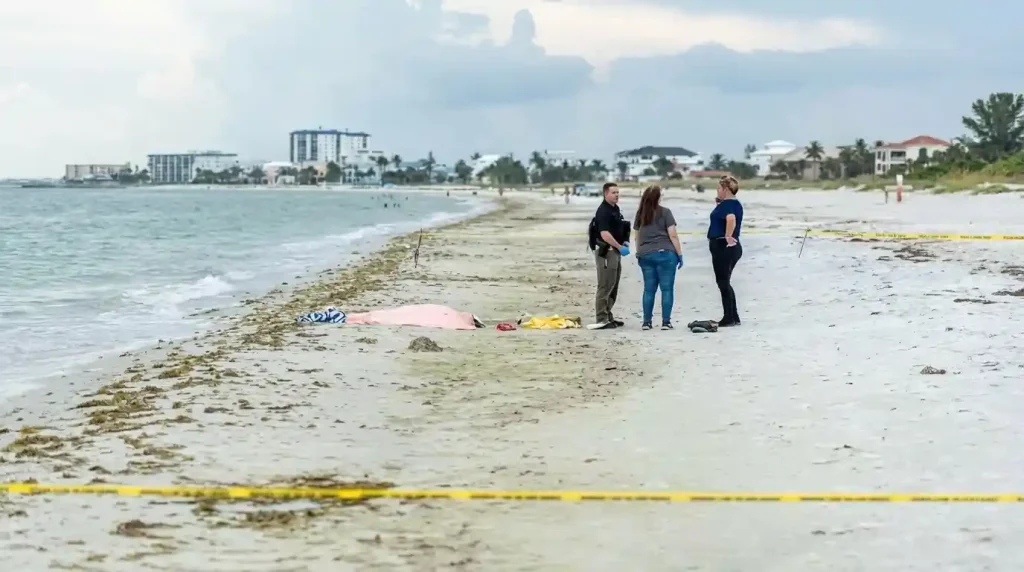
On Saturday, July 4, 2026, the Lee County Sheriff’s Office officially released the identity of the deceased victim. The individual was identified as 51-year-old Viktar Kiryk. According to law enforcement officials, Kiryk had been enjoying the afternoon in the ocean water with his family when the storm arrived. The sheriff’s office confirmed that the three other individuals injured in the lightning strike were direct members of Kiryk’s immediate family. Fortunately, medical reports from the hospital indicated that the three surviving family members had stabilized and were in stable condition, though they continued to receive close monitoring for potential secondary complications of electrical shock. The sudden loss of Viktar Kiryk has devastated his loved ones and prompted an outpouring of condolences from both local residents and municipal officials in the town of Fort Myers Beach, highlighting the deep community impact of this tragedy.
The Science of Oceanic Lightning Strikes and Water Safety
To fully comprehend why this incident was so devastating, it is necessary to examine the underlying physics of electrical discharges in marine environments. Lightning is a massive electrostatic discharge that occurs between the atmosphere and the earth, carrying tens of millions of volts of electricity and reaching temperatures hotter than the surface of the sun. When a lightning bolt strikes the surface of the ocean, the water does not act as a simple insulator; rather, the highly conductive dissolved salts in seawater allow the electrical current to propagate rapidly across the surface, creating a wide danger zone that can injure or kill individuals far from the actual point of impact.
Why Being in the Water During a Storm is Extremely Dangerous
Seawater is an excellent conductor of electricity due to its high concentration of sodium and chloride ions. When lightning strikes the ocean, the electrical discharge does not travel deep into the ocean depths in a straight line. Instead, the current spreads horizontally across the surface of the water in all directions. Anyone wading, swimming, or floating near the surface within a significant radius of the strike point becomes an accidental conduit for this electrical energy. Because the human body is also largely composed of water and electrolytes, the electricity easily transitions from the seawater into the body, wreaking havoc on the nervous system, halting cardiac rhythms, and causing severe internal and external thermal burns.
Understanding the Behavior of Lightning on Open Water
On an open beach, there are very few tall structures to divert an electrical discharge. A person standing in the water or walking along the flat, sandy shore essentially becomes the tallest point in the immediate area, making them a prime target for a cloud-to-ground lightning strike. Furthermore, the boundaries where water meets land are particularly volatile during storms due to the thermal dynamics of coastal air currents. Moist, warm air rising off the Gulf of Mexico rapidly collides with cooler inland air masses, fueling the sudden expansion of cumulonimbus clouds. These clouds quickly generate massive static charges, leading to localized, highly intense lightning strikes that can occur even before any rain begins to fall.
First Aid Protocols for Lightning Strike Victims
The immediate moments following a lightning strike are absolutely critical to a victim’s survival. Unlike typical electrical accidents involving high-voltage power lines, a lightning strike does not leave a residual electrical charge in the victim’s body. This means it is entirely safe for bystanders to touch the victim and begin administering first aid immediately. Knowing the proper protocols can mean the difference between life and death for someone whose heart has been stopped by an atmospheric discharge.
The Critical Role of Bystander CPR and Automated External Defibrillators (AEDs)
In the tragic incident involving Viktar Kiryk, a courageous bystander immediately sprang into action. Recognizing that Kiryk was unresponsive and pulseless, the bystander deployed an automated external defibrillator (AED) and began performing cardiopulmonary resuscitation (CPR) before the arrival of professional emergency crews. Although these efforts ultimately proved unsuccessful in saving Kiryk’s life due to the catastrophic nature of his injuries, medical experts emphasize that immediate bystander CPR is the single most effective way to keep a lightning victim alive. Lightning strikes frequently cause a condition known as cardiopulmonary arrest, where the electrical shock acts as a massive “reset” that stops both the heart and the lungs. Bystander CPR keeps oxygenated blood flowing to the brain, while an AED can analyze the heart’s rhythm and deliver a shock to help restore a normal heartbeat. Prompt action by bystanders remains the gold standard of wilderness and beachside emergency response.
Florida’s Status as the Lightning Capital of the United States
The state of Florida is widely recognized as the lightning capital of the United States, experiencing more lightning strikes per square mile than any other state in the country. The unique geography of the Florida peninsula, surrounded by the warm waters of the Gulf of Mexico and the Atlantic Ocean, creates the perfect breeding ground for severe afternoon thunderstorms, particularly during the hot summer months. According to historical meteorological data, Florida consistently records the highest number of annual lightning-related injuries and fatalities in the nation. The incident at Fort Myers Beach is a somber addition to these statistics, highlighting that no one is immune to the volatile elements of the subtropics. This high concentration of activity requires both long-time residents and visiting tourists to maintain a constant state of vigilance whenever storm clouds begin to gather on the horizon.
Crucial Storm Safety Protocols: “When Thunder Roars, Go Indoors”
In the wake of this tragedy, both the Fort Myers Beach Fire Control District and the Lee County Sheriff’s Office have urged the public to strictly adhere to established storm safety protocols. The most important rule promoted by the National Weather Service is incredibly simple yet highly effective: “When thunder roars, go indoors.” Many people mistakenly believe they are safe as long as it is not actively raining, but lightning can strike up to 10 miles away from the core of a thunderstorm, a phenomenon often referred to as a “bolt from the blue.” If you can hear thunder, you are close enough to the storm to be struck by lightning, and you must immediately evacuate the water and seek shelter inside a fully enclosed building or a metal-topped vehicle.
Community and Municipal Response to the Tragedy
The town of Fort Myers Beach, located approximately 25 miles north of Naples on the southwest coast of Florida, expressed deep sorrow over the tragedy. In a statement posted to social media, municipal leaders extended their heartfelt thoughts, prayers, and support to the Kiryk family, their loved ones, and everyone affected by the devastating event. The timing of the incident, occurring just before the busy July Fourth holiday weekend, prompted local officials to closely monitor the local weather and issue proactive safety warnings to the thousands of visitors arriving for holiday celebrations. By sharing educational resources and increasing safety signage along the coastline, the town hopes to prevent similar tragedies in the future and ensure that beachgoers are fully equipped with the knowledge needed to stay safe during Florida’s volatile summer storm season.
Summary of Beach Lightning Safety Guidelines
To help visualize the difference between safe behaviors and dangerous myths during a thunderstorm at the beach, the following table outlines the essential actions that every visitor should take to protect themselves and their families:
| Action/Scenario | Dangerous Misconceptions | Correct Safety Protocol |
|---|---|---|
| Hearing distant thunder | Believing you are safe because the storm is far away and it is not raining yet. | Evacuate the water immediately and seek shelter in an enclosed building or vehicle. |
| Seeking immediate shelter | Hiding under a beach umbrella, open-air picnic pavilion, or a tall palm tree. | Go inside a substantial building with plumbing and wiring, or a metal-topped car. |
| Assisting a victim | Fearing that touching a lightning strike victim will electrocute you. | Touch the victim immediately; they carry no charge. Call 911, apply an AED, and begin CPR. |
| Waiting out the storm | Returning to the water or the beach as soon as the heavy rain stops. | Wait at least 30 minutes after hearing the last rumble of thunder before returning outside. |
Ultimately, the loss of Viktar Kiryk and the injuries sustained by his family members serve as an enduring, painful lesson on the raw and unpredictable power of nature. While Florida’s beaches offer incredible natural beauty and recreation, they also demand a high degree of respect and situational awareness. By prioritizing safety, understanding the rapid lifecycle of summer storms, and taking immediate action at the first sign of lightning, beachgoers can protect themselves and their loved ones from experiencing similar, preventable tragedies.