Thessaloniki flight window blowout 2026: Passenger pulled back in mid-air
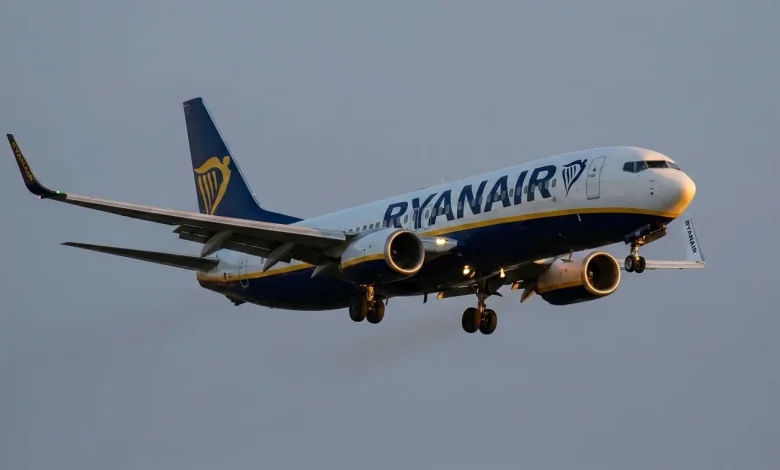
Table of Contents
Thessaloniki flight window blowout incidents represent some of the most bone-chilling events in the annals of commercial aviation. On a Friday morning flight bound from Thessaloniki, Greece, to Memmingen, Germany, passengers aboard a Malta Air flight—a subsidiary of Europe’s largest budget carrier, Ryanair—witnessed a harrowing mid-air survival struggle. A 61-year-old male passenger was partially sucked out of a cabin window after the pane dislodged shortly after takeoff. Thanks to the rapid reflexes and heroic intervention of those sitting nearby, the man was pulled back into the safety of the cabin, preventing what could have been a catastrophic tragedy.
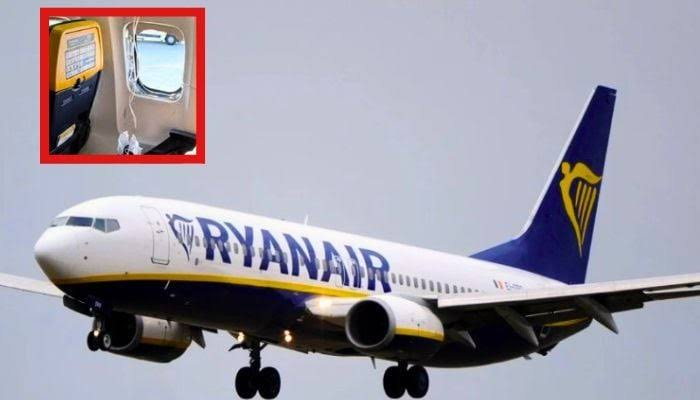
The aircraft, a Boeing 737-800, was climbing through approximately 15,000 feet when an apparent uncontained engine failure on the right side released high-speed debris. A piece of this debris struck and shattered the passenger window, immediately decompressing the pressurized cabin. In the chaos that followed, the immediate physical force of the escaping air pulled the passenger’s head, neck, and shoulders out into the freezing slipstream. The event has sent shockwaves through the aviation industry, putting a spotlight on maintenance standards, aircraft component resilience, and cabin safety protocols.
Thessaloniki flight window blowout: The Terrifying Mid-Air Crisis
The sudden decompression of an aircraft is a violent and disorienting event. Passengers aboard Malta Air Flight FR1879 described a peaceful morning transition that turned into an absolute nightmare within a fraction of a second. For those seated in the immediate vicinity of the blowout, the physical reality was instantaneous. As the cabin pressure equalized with the thin, high-altitude atmospheric pressure outside, a hurricane-force draft rushed toward the newly created opening.
A passenger named Christina recounted the event to local radio stations, describing a noise resembling a massive tire burst, followed by immediate pressure drops and descending altitude. Yellow oxygen masks deployed from the ceiling as screaming and panic filled the cabin. In the middle of this chaos lay a 61-year-old Serbian tourist, whose upper body was violently drawn through the broken window frame. The seat belt he was wearing, combined with the desperate grasp of his wife and nearby travelers, were the only barriers keeping him from falling to his death.
How the Incident Unfolded Above the Aegean Sea
Flight FR1879 departed Thessaloniki Airport at 6:12 AM local time, slightly behind schedule. As the aircraft climbed over the northern regions of Greece toward North Macedonia, its internal cabin pressure was steadily increasing relative to the rapidly dropping atmospheric pressure outside. At around 15,000 to 16,000 feet, the right engine (Engine No. 2, a CFM56 turbofan) suffered an uncontained mechanical failure.
Uncontained engine failures are highly dangerous because they involve high-energy components escaping the armored engine cowling. In this instance, shrapnel from the disintegrating compressor or fan blades sliced directly into the fuselage. One specific piece of debris made direct contact with the acrylic window pane adjacent to the 61-year-old passenger, shattering it completely. The cabin atmosphere, pressurized to simulate a comfortable altitude of about 6,000 feet, violently sought equilibrium with the thin, sub-zero external air. This pressure differential acted like a massive vacuum, pulling anything not securely anchored toward the breach.
The Heroic Response of Fellow Passengers
Survival in a rapid decompression event relies heavily on the physical intervention of those nearby. When the window blew open, the 61-year-old passenger’s head and shoulders were instantly dragged outside. His wife immediately reacted by grabbing onto his legs. Her screams alerted neighboring passengers who, despite their own terror and the deafening roar of wind rushing past the aircraft at over 300 miles per hour, unbuckled and lunged forward to assist.
Working together in a pressurized cabin filled with condensation fog and hanging masks, the passengers managed to pull the man back through the window frame. They held him down in the aisle, shielding him from the freezing air and debris while others secured themselves. The collective courage of these passengers undoubtedly saved his life, turning a potential mid-air fatality into a successful rescue.
Immediate Flight Crew Action and Emergency Landing
Up in the cockpit, the pilots faced a double emergency: an engine failure and sudden cabin decompression. Training protocols for such events are highly structured. The flight crew immediately initiated an emergency descent, dropping the aircraft to 6,000 feet to ensure passengers could breathe safely without oxygen masks.
With the damaged engine shut down and the cabin stable at a lower altitude, the pilots declared an emergency and coordinated a return flight path to Thessaloniki. To land safely, the heavy aircraft needed to burn off fuel to lower its weight. The pilots entered a holding pattern for roughly 30 minutes before executing a textbook emergency landing at Thessaloniki Airport around an hour after departure. Emergency medical services were waiting on the tarmac to receive the injured passenger.
Injuries Sustained by the 61-Year-Old Passenger
The physiological toll of being partially ejected from a cruising aircraft is severe. The 61-year-old passenger was rushed to a local Greek hospital immediately upon landing. According to hospital officials, the man suffered significant neck and shoulder trauma caused by the physical strain of being pulled against the rigid window frame, as well as friction burns.
Friction burns in high-altitude environments are caused by a combination of factors: the sheer force of the high-velocity slipstream and the extreme cold. At 15,000 feet, the outside air temperature can drop well below freezing, and exposure to wind speeds of hundreds of miles per hour can freeze skin and cause severe windburns in seconds. Furthermore, the physical force of being dragged through a jagged, broken acrylic and metal frame caused significant soft-tissue damage. Remarkably, despite these painful injuries and extreme psychological shock, the passenger’s condition was stabilized.
Aviation Safety Analysis: How a Cabin Window Dislodges
To understand why a passenger window would dislodge, it is necessary to examine aircraft construction. Commercial airline windows are multi-layered structures designed to withstand immense pressure differentials. They consist of an outer pane, a middle pane (which has a tiny breather hole to manage pressure), and an inner scratch-resistant plastic cover.
Under normal circumstances, these panes are held in place by heavy-duty retainers and rubber seals, which are secured to the aircraft’s aluminum frame. However, the integrity of these windows can be compromised by external impacts. In this case, the window did not simply fail due to internal wear; it was structurally compromised by flying engine debris. When high-speed metal shrapnel hits the acrylic pane, it creates micro-cracks that instantly propagate under the pressure differential, causing the window to disintegrate or dislodge from its mounts.
Understanding Cabin Depressurization Dynamics
Depressurization is classified into two types: explosive (happening in less than 0.5 seconds) and rapid (happening over several seconds). The Malta Air incident appears to have been an explosive/rapid decompression event. When a window fails, the air inside the cabin expands rapidly to match the lower pressure outside.
This sudden expansion causes a drop in temperature, condensation of moisture (resulting in a sudden fog inside the cabin), and a loud bang. Physically, any loose objects—including passengers not wearing seatbelts—are drawn toward the opening. The pressure differential at 15,000 feet is roughly 6 to 7 pounds per square inch (PSI). While this may sound small, when applied across the surface area of an entire human body, it generates hundreds of pounds of physical force, making it nearly impossible for an individual to resist without mechanical restraint.
Aircraft Maintenance and Window Assembly Integrity
Uncontained engine failures are among the most heavily investigated events in aviation due to their high potential for catastrophic hull damage. The CFM56 engines powering the Boeing 737 NG series are known for their reliability, but they require rigorous maintenance schedules to detect micro-fractures in the titanium fan blades.
Investigators from the Hellenic Civil Aviation Authority (HCAA) and the U.S. National Transportation Safety Board (NTSB) are analyzing the engine fragments to identify why the compressor blade failed. They will look closely at maintenance logs to determine if routine inspections failed to detect metal fatigue or stress corrosion cracking. This investigation is critical to identifying whether this was an isolated maintenance issue or a broader fleet-wide concern.
Comparing Cabin Failures to Other Transportation Safety Hazards
While aviation incidents like this are incredibly rare, they remind us of the sudden and violent potential of environmental and physical forces. This sudden vulnerability parallels other tragic, unpredictable events like the fatal lightning strike at Fort Myers beach, showing how quickly circumstances can shift in the face of immense physical energy. However, unlike natural disasters, commercial aviation is heavily engineered to survive single-point failures, which is why the aircraft was able to land safely despite losing an engine and a cabin window.
To provide context on how rare and severe these cabin failures are, we can compare this Malta Air incident to past historical precedents that involved window blowouts or mid-air cabin breaches:
| Flight & Date | Aircraft Type | Primary Cause | Passenger Impact & Outcome |
|---|---|---|---|
| Malta Air FR1879 (July 10, 2026) | Boeing 737-800 | Uncontained engine failure; debris shattered cabin window | 1 passenger partially sucked out; pulled back by passengers; survived with minor/moderate injuries |
| Southwest Airlines 1380 (April 2018) | Boeing 737-700 | Engine fan blade failed; debris shattered cabin window | 1 passenger partially sucked out; pulled back by passengers; unfortunately succumbed to injuries |
| British Airways 5390 (June 1990) | BAC One-Eleven | Incorrectly sized bolts on cockpit windscreen | Pilot partially sucked out; held by cabin crew; survived with frostbite and fractures |
Regulatory Inspections and Safety Recalls in Modern Engineering
Ensuring safety in the skies is a multi-front battle. Beyond mechanical integrity, regulators must also secure airspace from modern external hazards. For instance, recent actions like drones seized by FBI agents near high-profile venues show that threat monitoring requires a comprehensive and constant framework across both security and mechanical maintenance. When physical components fail mid-flight, regulatory bodies like the European Union Aviation Safety Agency (EASA) and the Federal Aviation Administration (FAA) step in to issue Emergency Airworthiness Directives (EADs).
When aviation parts fail, the reaction must be swift and systemic. Just as other consumer safety organizations quickly elevate warnings—such as when the FDA implements an Utz potato chips recall due to potential risks—aviation regulators must immediately inspect fleets to isolate the defect and prevent widespread danger. If investigators determine that the CFM56 engine components are prone to premature failure under certain conditions, airlines worldwide will be ordered to perform immediate ultrasonic scans of their engine blades.
Legal and Financial Implications for Malta Air and Ryanair
Following the rescue of the passenger, attention has turned to the potential legal liabilities faced by Malta Air and its parent company, Ryanair. Under the Montreal Convention, which governs international carriage by air, airlines are strictly liable for proven damages up to a certain threshold in the event of passenger injury or death on an international flight. This liability exists regardless of whether the airline was negligent, provided the incident occurred on board the aircraft or during boarding/disembarking.
For the injured Serbian tourist, compensation claims will likely cover medical bills, rehabilitation for physical trauma, and substantial damages for psychological trauma and PTSD. Furthermore, if investigators uncover that maintenance crews overlooked signs of engine wear or deferred necessary inspections, the airline could face massive civil penalties and deeper damage to its brand reputation. For more on international aviation regulations and commercial industry news, visit the Reuters Aerospace & Defense portal.
Conclusion: Rebuilding Passenger Confidence After Aviation Trauma
The Thessaloniki flight window blowout is a stark reminder of the physical forces involved in high-altitude travel. While the incident was terrifying, the outcome highlights the resilience of modern aircraft design and the capacity for quick action. The Boeing 737-800’s structural integrity allowed it to fly safely with a damaged engine and a blown-out window, proving that commercial jets are built to withstand severe damage.
Ultimately, the heroic actions of the passengers and the professionalism of the flight crew prevented a tragedy. As investigators analyze the mechanical causes behind this uncontained engine failure, the aviation industry will use these findings to update maintenance checks, improve window durability, and ensure that safety remains the absolute priority for commercial travel.