Graham Platner Drops Out 2026: Full Maine Senate Race Analysis
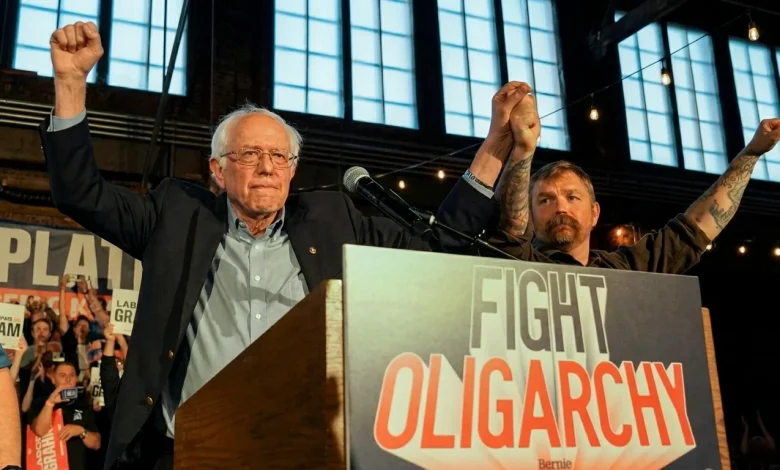
Table of Contents
Graham Platner, the embattled Democratic nominee for the U.S. Senate in Maine, officially submitted his withdrawal papers on Friday, July 10, 2026, putting an end to a high-stakes campaign that had imploded under the weight of severe personal scandals. By formally withdrawing from the race just days before the strict statutory deadline, he has paved the way for the Maine Democratic Party to scramble to select a replacement nominee to face off against the long-term incumbent Republican Senator, Susan Collins. This move ends a week of intense political drama in Maine and nationwide, as progressive organizers, party strategists, and national leaders held their breath to see if the controversial candidate would make his exit official or risk locking the party out of a crucial battleground seat.
The Official Withdrawal: Mechanics of the July 13 Deadline
The formal paperwork submitted on Friday ended days of uncertainty. Earlier in the week, Graham Platner had released a lengthy, bitter video on social media announcing his intention to suspend his campaign operations. However, as election officials and political strategists know all too well, a public announcement on social media is not a legally binding withdrawal. Under Maine election statute, a candidate who won their party’s primary must file a signed, written statement of withdrawal with the division of elections in order to be formally removed from the ballot.
The timing of this filing was of paramount importance. According to Maine state law, a candidate must officially withdraw by 5:00 PM on the second Monday in July—which falls on July 13, 2026—for their name to be removed from the ballot and to allow their political party to nominate a replacement. Had Platner missed this deadline, or had he decided to remain on the ballot out of defiance, the Maine Democratic Party would have been stuck with a compromised candidate whose campaign had already lost all national funding and endorsements, effectively handing the crucial Senate seat to Susan Collins. The confirmation of the receipt of Platner’s letter by the Maine Secretary of State’s Office on Friday afternoon breathed a massive sigh of relief into the Democratic establishment, allowing them to shift their focus from crisis management to the complex process of choosing a replacement.
The Rise and Fall of a Populist Oyster Farmer
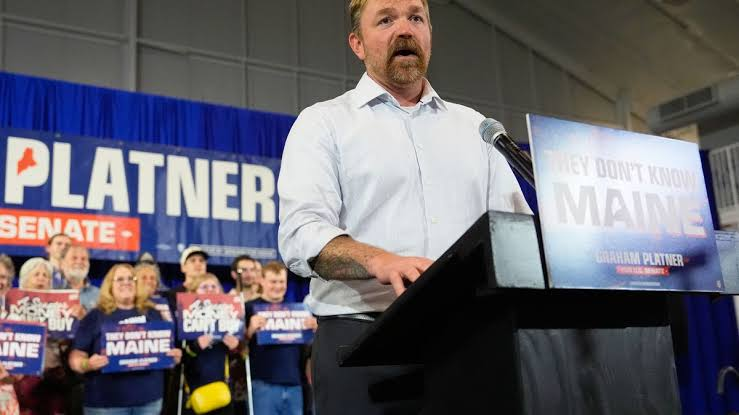
To understand the magnitude of this sudden political collapse, one must examine the unorthodox and meteoric rise of the candidate. Graham Platner was not a traditional politician. A Marine Corps veteran who served multiple combat tours in Iraq and Afghanistan, Platner returned to coastal Maine and built a business as an oyster farmer in Blue Hill. Leveraging his background as a working-class veteran, he launched his Senate campaign in August 2025 with a fiery brand of economic populism that targeted the “billionaire class” and the “political establishment”.
His platform championed single-payer healthcare, union expansion, drastic cuts in military aid, and aggressive measures to address housing affordability. This message resonated deeply with a broad segment of the electorate that felt abandoned by moderate Democrats. Platner managed to channel rural dissatisfaction and economic anxieties into an insurgent campaign that shocked the political landscape by securing the Democratic nomination in the June 9 primary. He won over 150,000 votes, the highest primary turnout for a Democratic Senate candidate in Maine history. This populist surge had many progressives believing that a unique, authentic voice could successfully challenge Susan Collins, especially given earlier polls showing that Graham Platner leads Susan Collins in epic Maine polling surveys. However, the very characteristics that made him an appealing anti-establishment candidate would also prove to be his undoing.
From Progressive Darling to Embroiled Candidate
In the weeks following his primary victory, Platner became a central figure in national political discourse. Progressive heavyweights, including Senator Bernie Sanders, offered their endorsements, seeing Platner as a potential blueprint for how Democrats could compete in rural, working-class America. For a brief period, the campaign enjoyed massive momentum, raising millions of dollars in small-dollar donations from across the country. Yet, the rapid transition from a local populist movement to the national spotlight brought an unprecedented level of scrutiny. Behind the scenes, opposition researchers and investigative journalists were digging into Platner’s past, uncovering a series of deeply troubling controversies that the candidate’s campaign was ill-prepared to handle. As the scandals began to surface, the once-promising populist movement rapidly transformed into a political nightmare for the Democratic Party.
A Litany of Controversies: From Reddit to the Totenkopf Tattoo
The downfall of Graham Platner did not happen overnight; rather, it was the culmination of a steady trickle of damaging revelations. The first major blow came when journalists uncovered years-old comments made by Platner on Reddit. In these posts, he appeared to dismiss rape in the military, used homophobic slurs, criticized rural Americans, and endorsed political violence. Although Platner attempted to apologize by dismissing them as the reckless comments of a younger man coping with PTSD after his military service, the remarks alienated key progressive groups and suburban voters.
The controversy deepened when photographs emerged showing a prominent tattoo on Platner’s chest: the Totenkopf, a skull-and-crossbones symbol widely associated with Nazi-era SS units. Platner vehemently denied any fascist sympathies, claiming he was entirely unaware of the symbol’s historical context when he got the tattoo while intoxicated on military leave. While some loyal supporters accepted his explanation, the imagery was toxic to a national audience and became a constant distraction on the campaign trail. This situation highlighted a broader volatility in Senate races similar to other high-stakes national primary shifts, such as when Barry Moore wins Alabama GOP Senate runoff campaigns and altered the party’s general election prospects.
The Final Blow: Severe Allegations of Sexual Assault
Despite the mounting controversies, Platner’s core progressive supporters remained steadfast, arguing that his economic message was powerful enough to overcome his personal liabilities. That calculation changed dramatically on July 6, 2026, when Politico published a devastating report detailing allegations from a former girlfriend who accused Platner of sexually assaulting her in 2021. The woman alleged that Platner, while heavily intoxicated, forced her to have sex despite her repeated, explicit demands for him to stop.
The reaction was swift and devastating. Within hours, national and local Democratic leaders withdrew their endorsements. Senator Bernie Sanders publicly called for Platner to step aside, stating that the allegations were too severe to ignore. Faced with a complete collapse of institutional support, financial resources, and volunteer networks, Platner realized his path to victory had been completely obliterated. While he continued to deny the allegations, calling them a coordinated smear campaign orchestrated by the political establishment, he admitted in his withdrawal message that the campaign could not move forward under the current circumstances.
What the Maine Election Law Says: The July 27 Nomination Deadline
With Graham Platner’s official withdrawal secured, the focus now shifts to the statutory framework governing how his replacement will be selected. Under Maine Election Law (specifically Title 21-A, Section 374-A), the state’s political parties are given the authority to fill ballot vacancies resulting from a candidate’s withdrawal, provided that withdrawal occurs before the second Monday in July. Because Platner filed his paperwork on Friday, July 10, the first condition of the law has been met.
The statute dictates that the political party now has until 5:00 PM on the fourth Monday in July—which is July 27, 2026—to officially name and submit their replacement nominee to the Secretary of State. Interestingly, Maine law does not specify the method or process the party must use to select this new candidate; it merely mandates that the replacement must be a “qualified person”. This lack of statutory prescription gives the Maine Democratic Party complete control over the nominating process, but it also creates a logistical challenge: how to fairly and transparently select a nominee to represent over 150,000 primary voters in just over two weeks.
| Key Date / Candidate | Details / Status | Significance in the Maine Senate Race |
|---|---|---|
| July 10, 2026 | Official Withdrawal Filed | Graham Platner formally withdrew from the ballot, ending speculation of a reversal. |
| July 13, 2026 (5:00 PM) | Statutory Ballot Deadline | The absolute deadline under Maine law to withdraw and allow a party replacement. |
| July 27, 2026 (5:00 PM) | Nomination Replacement Deadline | The final date for the Maine Democratic Party to officially submit its new candidate. |
| Troy Jackson | Former Maine Senate President | A leading progressive who secured over 50 endorsements immediately after the withdrawal. |
| Nirav Shah | Former Maine CDC Director | A widely respected public health official who planned a statewide town hall tour. |
| Shenna Bellows | Maine Secretary of State | A former gubernatorial candidate who officially entered the race on July 9, 2026. |
The Scramble to Find a Replacement Nominee
To address this challenge, the Maine Democratic Committee voted to hold an emergency nominating convention. This convention, set to take place within the next two weeks, will feature approximately 600 delegates. The majority of these delegates will be local party officials, county committee members, and state leaders. This small, elite group will bear the immense responsibility of selecting a candidate who can unite the party’s progressive and moderate wings, raise millions of dollars almost overnight, and mount a credible campaign against Susan Collins with only a few months left before the general election in November.
The suddenness of the vacancy has triggered a frantic behind-the-scenes lobbying campaign. Candidates must effectively run three campaigns simultaneously: rebuilding a donor network, appealing to the general electorate, and directly persuading the 600 delegates who hold the keys to the nomination. It is a grueling, pressure-cooker environment that will test the political acumen of anyone who steps forward.
Top Contenders Vying for the Nomination
Several prominent Maine Democrats have already declared their candidacy or are actively testing the waters. Among the top contenders is former Maine Senate President Troy Jackson, a progressive heavyweight who secured over 50 endorsements from local leaders within 24 hours of Platner’s initial withdrawal announcement. Jackson, who has long championed working-class issues, is seen by many progressives as the natural successor to Platner’s populist movement, though some moderates worry his past support for Platner could be a political liability.
Another major contender is Dr. Nirav Shah, the former director of the Maine Center for Disease Control and Prevention. Shah gained widespread popularity in Maine for his calm, science-based leadership during the pandemic and has already announced plans to embark on a statewide town hall tour to make his case to delegates. Additionally, Maine Secretary of State Shenna Bellows, who previously ran for the U.S. Senate in 2014, officially entered the race on July 9, bringing valuable statewide campaign experience and established name recognition to the field.
The Broader Battle for Senate Control
The outcome of the Maine Senate race has profound national implications. Currently, the U.S. Senate is narrowly divided, with Republicans holding a 53-47 majority. For Democrats to regain control of the upper chamber, they must secure a net gain of four seats. Given the challenging electoral map, party leaders have long identified Maine as an absolute must-win battleground. This high-stakes environment means that every Senate seat is subject to intense national scrutiny, especially as partisan battles continue to shape Washington, like when Trump halts Clayton DNI hearing sparks Senate controversy.
The chaos surrounding Platner’s campaign has undoubtedly given Republicans a temporary advantage, allowing Susan Collins to position herself as a stable, experienced leader amid Democratic disarray. However, national Democratic strategists believe that if the party can quickly unite behind a strong, scandal-free replacement nominee at the July convention, they still have a viable path to victory in a state that has historically favored independent-minded candidates.
Can Democrats Still Unseat Susan Collins?
Unseating Susan Collins has been a long-term goal for Maine Democrats. Collins, who has served in the Senate for nearly thirty years, has built a reputation as a moderate Republican capable of winning cross-over support. While her popularity dipped in recent years due to controversial national votes, she remains a formidable campaigner with a highly sophisticated political apparatus. The upcoming election will serve as a ultimate test of whether Maine’s changing demographics and political realignment will finally tip the scales in favor of a Democratic challenger, or if the Republican incumbent will once again leverage her deep roots in the state to secure another term. The next three weeks will decide not only the future of the Democratic Party in Maine but could very well determine the balance of power in Washington for years to come.