Donald Trump Warns Iran of ‘Decapitation’ in High-Stakes Ultimatum 2026
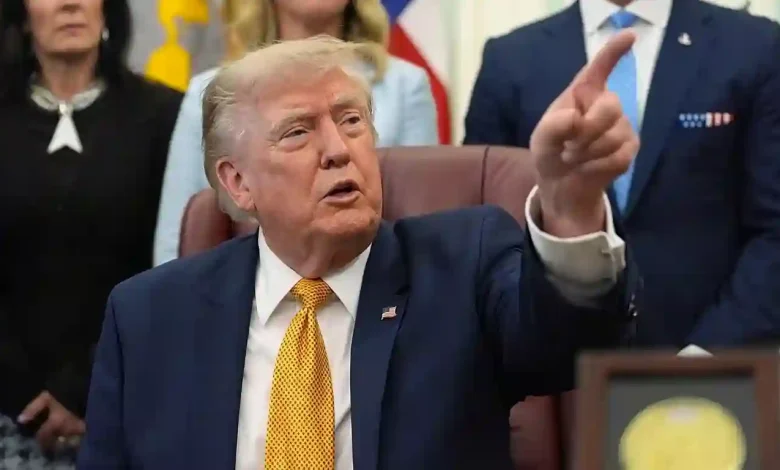
Table of Contents
Donald Trump has delivered a blistering “last chance” warning to the Iranian leadership, stating that they face a final window of opportunity to sign a new, comprehensive nuclear deal before the United States resumes severe military actions. Speaking from the White House on Monday evening, the U.S. president made it clear that the current pause in military operations should not be mistaken for a permanent retreat. The announcement followed a day of deeply contradicting claims between Washington and Tehran, raising critical questions about the true state of communication between the two adversaries. As the Iran war Day 155 progressed, the White House was forced to balance the competing demands of direct confrontation and back-channel negotiation. Trump’s latest ultimatum represents a familiar tool in his diplomatic playbook—using maximum pressure and the threat of total devastation to force an opponent to the negotiating table. However, foreign policy analysts are questioning the efficacy of such threats, noting that Trump has issued similar ultimatums to Iran before, only for both nations to fall back into cycles of escalation.
The White House Ultimatum: Analyzing Donald Trump’s “Last Chance” Warning
The core of the current crisis lies in the psychological warfare and strategic brinkmanship deployed by the Trump administration. In his address, the president made it clear that he expects rapid concessions from Tehran. He framed the upcoming discussions as an absolute final opportunity for the Iranian regime to choose diplomatic reintegration over devastating military action. This hardline rhetoric is designed to exploit Iran’s deep economic vulnerabilities, which have been compounded by months of intense maritime friction and economic blockades. The administration is demanding a complete overhaul of the previous agreements, insisting on intrusive verification protocols, the permanent dismantlement of enrichment capabilities, and the termination of regional proxy influence. Critics argue that by setting such a high bar, the United States may be closing the door to realistic diplomatic compromises, transforming talks into a choice between submission and warfare.
The Canceled Strike: “The Biggest Attack Since World War II”
The drama reached a fever pitch following Trump’s revelation that he had canceled what he termed “the biggest attack since World War II” on Sunday night. According to the president, the planned operation was so massive that there would have been “little left” of the targeted Iranian military infrastructure. This claim of a near-total destruction campaign came at a highly delicate juncture. Just hours before, the sudden decision where Trump cancels Iran strikes sent shockwaves through the military command structure and international financial markets alike. Trump explained that the decision to stand down was not a sign of weakness, but a conscious choice to allow diplomacy a chance. The pause in hostilities was reportedly requested by key Middle Eastern allies, including Saudi Arabia, Qatar, and the United Arab Emirates, who fear the catastrophic fallout of a full-scale regional war. This sudden de-escalation effort came as Trump halts Iran attacks to provide regional partners with a window for diplomacy, although the underlying tensions remain at an all-time high.
Inside the Reversal: Who Advised the President?
The diplomatic leverage exerted by regional players was crucial in stopping the strike. High-ranking diplomatic sources confirm that Saudi Crown Prince Mohammed bin Salman and other Gulf leaders communicated directly with the White House, arguing that a strike of such magnitude would permanently shatter the global energy supply and ignite a multi-front conflict that would engulf the entire Middle East. According to Trump, even some unnamed Iranian officials made indirect appeals for a reprieve. While the White House insists that these appeals are proof of the success of its maximum pressure campaign, the Iranian government has vehemently denied making any such requests. This clash of narratives highlights the intense psychological and informational warfare accompanying the physical conflict.
Strait of Hormuz Conflict and the “Wall of Steel”
A primary focal point of this standoff is the ongoing Strait of Hormuz conflict, which controls the flow of millions of barrels of oil daily. Trump boldly claimed to reporters that the United States and Iran had reached an imminent agreement to reopen the strategic shipping route under safe-passage protocols. He described the current maritime blockade maintained by the United States Navy as a “Wall of Steel,” emphasizing that absolutely nothing gets through to Iran unless Washington wills it. In Trump’s view, the reopening of this vital choke point is inextricably linked to a broader agreement on the complete denuclearization of Iran. The United States has insisted on keeping the pressure high, asserting that the naval blockade will continue until Tehran complies with all U.S. security demands or faces “total surrender.”
Oman’s Diplomatic Mediation Strategy
While the White House painted a picture of direct agreements, Iran’s foreign ministry presented a vastly different reality. On Monday morning, Iranian officials clarified that no direct negotiations were taking place with the United States. Instead, Tehran confirmed it was engaging in intensive discussions with the Sultanate of Oman. The primary focus of these talks is not a grand nuclear bargain with Washington, but rather a practical, temporary security arrangement to establish a safe transit route through the Strait of Hormuz geography. Oman has historically played the role of a quiet, neutral mediator in Middle Eastern conflicts, and its current diplomatic shuttle mission is seen as the last remaining bridge between the warring parties. By dealing exclusively through Muscat, Iran hopes to bypass direct concessions to Trump while mitigating the severe economic pressure of the blockade.
Dissecting the Information War: Trump’s Rhetoric vs. Tehran’s Denials
When Iran denies Trump claims of direct negotiations, it underscores a massive gap between the public rhetoric of both nations. Trump reacted with fury to the Iranian denials, taking to his social media platforms to brand the Iranian leadership as “unbelievably duplicitous.” He accused Tehran of privately begging for talks while publicly posturing to maintain domestic support. Trump went on to dismiss Iran’s assertions of maritime sovereignty as “the usual blather,” reiterating that the U.S. Navy remains in absolute control of the waters. This ongoing information war was also detailed on Iran war day 156, showing how critical narratives are constructed to influence global public opinion and maintain domestic political leverage in both countries.
Geopolitical Impacts and Regional Alliances
The broader geopolitical implications of this brinkmanship are profound. Gulf allies find themselves in an incredibly precarious position, caught between their reliance on U.S. security guarantees and the immediate threat of Iranian retaliation. Amid these threats, regional powers have taken precautions, preparing for a potential Iranian military retaliation plan targeting American assets and allied infrastructure across the region. The threat of cyberattacks, asymmetric proxy strikes, and disrupted energy markets has forced global markets to price in a permanent risk premium. Furthermore, the escalating situation prompted several diplomatic security alerts across Middle Eastern capitals, warning Western citizens of heightened risks and potential flashpoints as the diplomatic window threatens to close permanently.
Comparative Analysis of Claims
To understand the complexity of the current situation, it is useful to look at the direct contradictions between the statements coming out of Washington and those issued by Tehran. The following table highlights the key points of divergence in this high-stakes diplomatic standoff.
| Strategic Dimension | United States Narrative (Trump) | Iranian Narrative (Tehran) |
|---|---|---|
| Direct Negotiations | Occurring actively right now; claims Iran “begged” for talks. | Categorically denies direct talks; insists negotiations are only mediated via Oman. |
| Strait of Hormuz Control | Fully blocked and monitored by the US Navy’s “Wall of Steel.” | Seeking to establish joint, temporary safe maritime shipping routes with Oman. |
| Military Escalation Status | Postponed “biggest strike since WWII” to offer a last chance before “decapitation.” | Dismisses US claims of a requested pause; remains prepared to resist military pressure. |
| Nuclear Demands | Demands full denuclearization of Iran as a condition for lifting the blockade. | Stresses the nuclear program is civilian; rejects unilateral US demands under pressure. |
What Lies Ahead: Deal, Surrender, or Direct Decapitation?
The critical question moving forward is whether these opposing positions can be reconciled before the diplomatic pause expires. Trump’s administration has made it clear that the current blockade and maximum pressure campaign will remain in place until a “good” deal is secured or Iran chooses “total surrender.” If negotiations mediated by Oman and other regional partners fail to yield a breakthrough, the threat of “decapitation” strikes on Iran’s leadership and critical infrastructure remains on the table. For Iran, the strategy appears to be one of endurance, betting that the political and economic costs of an ongoing blockade will eventually force the U.S. to offer concessions. As both sides dig in, the margin for error grows dangerously thin, and the threat of the “biggest attack since World War II” continues to hang over the region.