Iran war Day 156: Strait of Hormuz Crisis Deepens as Strikes Escalate
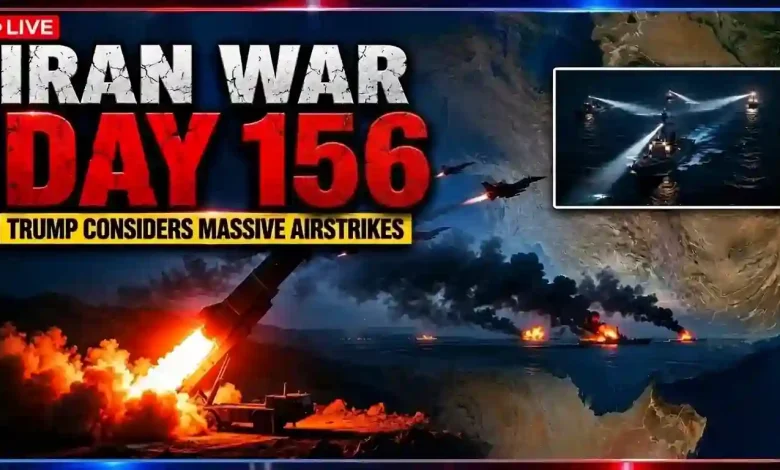
Table of Contents
Iran war developments have entered a critical, highly volatile phase as hostilities officially cross into their 156th day, leaving the international community in a state of heightened anxiety. Following the intense exchange of military assets observed during the previous hours of Iran war day 155, the strategic posture of both sides has hardened significantly. What began as localized border skirmishes and targeted maritime incidents has snowballed into a multi-theater conflict without a clear path to resolution. Over nearly five months of sustained hostilities, both Iran and its primary international adversaries have engaged in a series of highly synchronized military campaigns that have severely degraded regional defense networks, upended global energy markets, and reshaped alliances in the Middle East. The long-term implications of this ongoing war are profound, affecting not only regional stability but also the strategic calculus of major global powers.
Introduction to Day 156: A Conflict Without an Exit
The transition into Day 156 represents a grim milestone. What analysts initially projected to be a swift, high-intensity containment campaign has instead mutated into a war of attrition. Military installations, precision-strike drone hubs, and deep-underground storage facilities are now being targeted daily with increasingly sophisticated armaments. In this complex theater, the division of power has become blurred, with non-state actors and state-sponsored proxy networks acting in coordination with state militaries to carry out strikes across vast distances. The resilience of domestic defense industries on both sides has prolonged the duration of the war, as supply lines have adapted to continuous bombardment. International efforts to introduce a stabilization mechanism have repeatedly faltered, overshadowed by aggressive rhetoric and the tactical realities of the battlefield.
The Military Dimension: Targeting Missile and Drone Infrastructure
In terms of military operations, the current phase of the war is characterized by a heavy focus on neutralizing strategic deep-strike capabilities. Western coalition forces, alongside regional allies, have executed consecutive waves of aerial strikes designed to cripple weapon manufacturing centers. Specialized munitions have targeted fortified hangars and subterranean missile silos located deep within Iranian territory. Security sources indicate that these campaigns are aimed specifically at neutralizing offensive drone launching units before they can be deployed against commercial vessels in the Persian Gulf and adjacent waterways.
Precision Strikes on Tactical Assets
Recent military actions have targeted crucial manufacturing sites, with an emphasis on disrupting Iranian energy infrastructure and command-and-control capabilities. The coalition’s tactical shift toward neutralizing early-warning radars and communication relays has temporarily disrupted coordination among frontline units. However, these attacks have not occurred in a vacuum; retaliatory strikes have regularly penetrated sophisticated defense umbrellas, demonstrating the persistent vulnerability of even the most heavily fortified bases in the region. Observers note that the high consumption rate of precision-guided missiles has put pressure on global defense supply chains, forcing military planners to carefully prioritize their targets.
Retaliatory Offensives and Air Defense Capabilities
In response to the relentless aerial bombardment, the Iranian defense command has relied heavily on its domestic engineering capabilities. The public sphere has witnessed a sharp escalation in patriotic rhetoric, while diplomatic channels have frozen. In official communiqués, Iran accuses the US of executing an unprovoked aggression designed to destabilize the sovereign authority of Tehran. To counter coalition superiority in the skies, defense technicians have rolled out modified surface-to-air missile systems, while military reports have analyzed how Iran adapts ballistic missiles to evade modern ship-borne interception arrays. This tactical evolution has made it increasingly difficult for naval forces to guarantee the safety of shipping lanes in the Gulf of Oman and the southern Red Sea.
The Strait of Hormuz: A Chokepoint of Global Proportions
A primary point of vulnerability in the current global economic landscape is the Strait of Hormuz. Representing the vital corridor through which approximately one-fifth of the world’s liquid petroleum passes daily, any sustained disruption in this narrow passageway carries catastrophic economic risks. Throughout the conflict, naval operations in the strait have transitioned from minor security patrols to full-scale naval blockades and active counter-mine sweeps. The persistent presence of hostile fast-attack craft and low-flying kamikaze drones has forced commercial container ships to take elongated, expensive routes around the Cape of Good Hope, bypassing the Middle East entirely.
Economic Ramifications of a Blockade
The threat of a complete closure of the Strait of Hormuz has sent shockwaves through international financial institutions. Oil futures have fluctuated wildly, reflecting the market’s deep anxiety over potential supply shocks. In a bid to secure these vital maritime lanes, international naval coalitions have escalated their presence, resulting in a de facto US blockade on Iran within the immediate Persian Gulf waters. This strategic choking of Iranian imports and exports is designed to deplete the economic resources sustaining the war effort, yet it also threatens to spark a broader humanitarian crisis as civilian goods become collateral damage in the economic crossfire.
Summary of Active Conflict Sectors
The following table provides an overview of the primary operational zones in the conflict on Day 156, detailing the key military focus, estimated intensity levels, and the immediate economic risks associated with each sector:
| Operational Sector | Primary Military Focus | Conflict Intensity Level | Immediate Economic Risk |
|---|---|---|---|
| Persian Gulf / Strait of Hormuz | Maritime Interdiction, Mine Sweeping, Drone Defense | Critical | Extreme (Global Oil Supply Volatility) |
| Central Iranian Highlands | Subterranean Missile Silos & Drone Assembly Sites | High | Moderate (Regional Industrial Damage) |
| Gulf of Aden / Bab el-Mandeb | Anti-Ship Missile Neutralization, Convoy Escort | High | Severe (Global Trade Routing Delays) |
| Western Border Regions | Proxy Command Hubs, Air Defense Batteries | Moderate | Low (Localized Infrastructure Impact) |
Diplomatic Stalemate: The Elusive Quest for a Ceasefire
On the political front, negotiations have yielded virtually no tangible results, leaving the international diplomatic corps in a state of frustration. Multiple foreign offices have attempted to broker temporary ceasefires, only to see these fragile agreements collapse before implementation can begin. The primary obstacle remains the deeply entrenched positions of the main belligerents. While coalition partners demand a complete cessation of asymmetric proxy actions and the dismantling of advanced missile programs, Tehran insists on the immediate withdrawal of foreign naval vessels from its territorial waters and the lifting of all punitive trade restrictions.
Regional Intermediaries and Backchannel Diplomacy
The lack of direct communication channels has amplified the risk of catastrophic miscalculation. In several international forums, analysts have noted that the escalation of Trump’s war in Iran has left little room for compromise, as the administration’s policy of maximum military pressure collides with Iran’s doctrine of strategic resistance. Neutral nations in the region have attempted to act as intermediaries, but their efforts have been undermined by successive military strikes. Each new operational flare-up further erodes the trust required to initiate formal talks, culminating in a continuous cycle of a US-Iran ceasefire collapse whenever a diplomatic breakthrough appears to be within reach.
The Strategic Impasse and the Future of Regional Security
As the conflict enters the latter half of its sixth month, the overarching picture is one of a strategic impasse. Neither side possesses the military capability to deliver a decisive, conflict-ending blow without risking an all-out global war, yet neither is willing to back down and accept the political cost of a perceived defeat. The prolonged fighting is actively rewriting the geopolitical rulebook, showing how regional conflict redefined Middle Eastern geopolitics and pushed traditional allies into new, defensive configurations. Security frameworks that have stood for decades are being dismantled as countries seek individual security guarantees in an increasingly anarchic regional environment.
For global policy planners, the immediate priority remains containment. Ensuring that the war does not spill over into neighboring states or trigger a broader international confrontation is a task of utmost urgency. However, containment alone cannot solve the underlying geopolitical grievances that fueled the outbreak of hostilities. Until a viable diplomatic framework is established that addresses the security concerns of all parties involved, the cycle of strike and counter-strike is expected to continue, casting a long shadow of instability over global markets and international security for the foreseeable future.
References: