Iran Denies Peace Talks With US Despite Trump Claims 2026
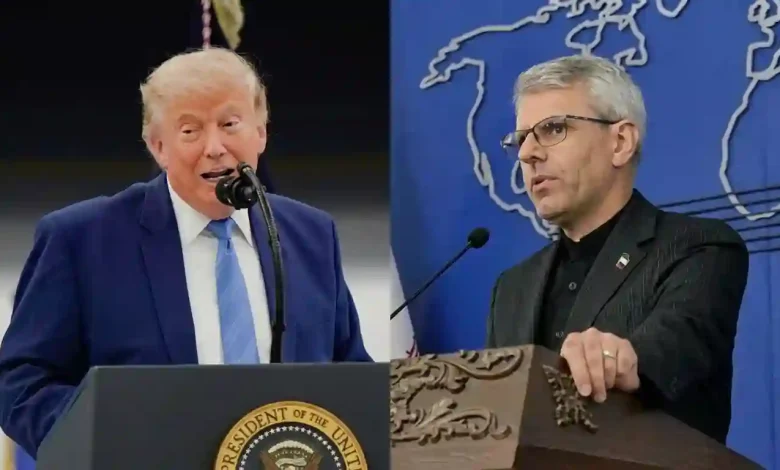
Table of Contents
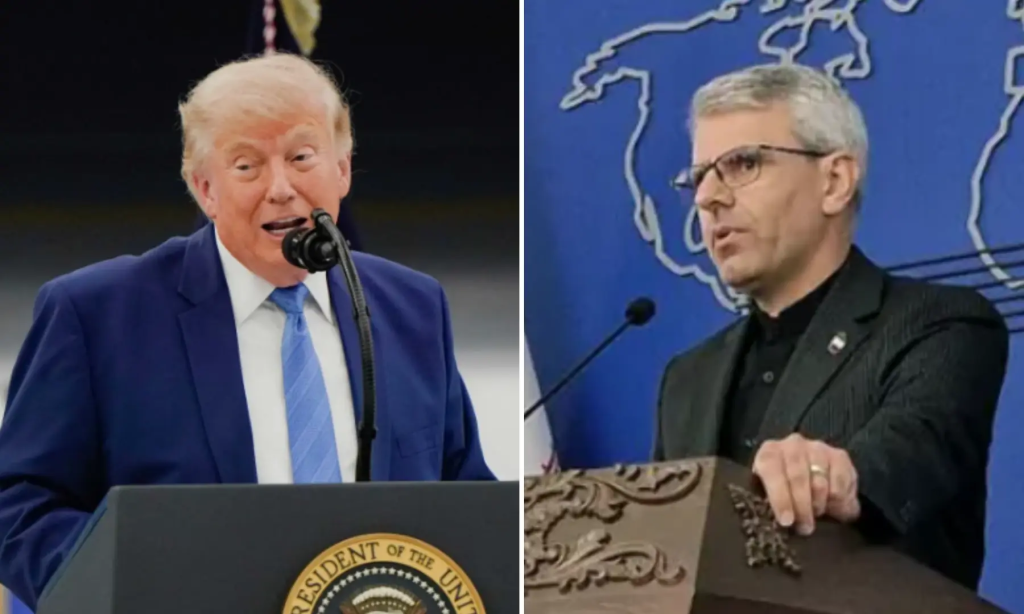
Iran, represented by its Foreign Ministry, has flatly denied that negotiators plan to meet with their US counterparts on Monday in the latest blow to Donald Trump’s hopes of an imminent end to the war. The diplomatic denial directly contradicts claims made by the U.S. President on Sunday evening, where he asserted that negotiations would resume this afternoon following his decision to halt a massive military attack. Iranian Foreign Ministry spokesperson Esmaeil Baghaei clarified that Tehran is not engaged in any active talks with Washington, highlighting a profound disconnect between the two nations as they navigate their sixth month of intensive regional conflict.
Instead of direct communication with the White House, Tehran has turned its diplomatic attention to regional mediation. Officials confirmed that previous instances where Iran rejects peace talks have often been followed by backchannel efforts, but the current focus remains on bilateral coordination with Muscat. Baghaei stated that Iran is currently in discussions with Oman about securing a temporary safe route through the Strait of Hormuz. Reaching an agreement with Oman, however, is not considered sufficient to reopen the strategic strait, as the general maritime situation will remain unchanged while U.S. “aggression” and economic blockade tactics continue to target Iranian interests.
The Diplomatic Disconnect: Contrasting Statements from Washington and Tehran
The confusion surrounding the proposed Monday talks highlights the vastly different narratives coming out of Washington and Tehran. Speaking to reporters aboard Air Force One en route to Joint Base Andrews in Maryland, President Donald Trump claimed that conversations with Gulf allies, including Saudi Arabia and the United Arab Emirates, had prompted him to shelf what he described as the “biggest attack since World War II.” According to Trump, Iran had “asked very strongly” for a deal to avoid these strikes, stating that they wanted to make a deal regarding both the Strait of Hormuz and the long-term “denuclearization” of the Islamic Republic.
Tehran quickly debunked this framing. Iranian Foreign Ministry spokesperson Esmaeil Baghaei addressed the media in a televised press conference, stating unequivocally that “no negotiations are taking place with the American side.” He clarified that members of the Iranian negotiating delegation remain inside the country, and that there are no immediate plans to send or receive diplomatic envoys to meet with U.S. counterparts. From Tehran’s perspective, the claims made by the U.S. executive branch serve more as a public relations tool to project strength and diplomatic initiative than a reflection of actual, structured diplomatic engagements on the ground.
The Strategic Standoff: Oman’s Role in Navigating the Strait of Hormuz
While direct dialogue with the United States remains frozen, the role of regional intermediaries has become increasingly vital. Iran has long utilized the Sultanate of Oman as a primary diplomatic channel, and current efforts are centered on negotiating a specialized maritime safety mechanism. As the Strait of Hormuz conflict escalates, endangering global energy security, Tehran and Muscat are attempting to draft a temporary safe-passage framework designed to protect merchant shipping from active combat zones.
The proposed framework involves merging shipping lanes into a single, temporary two-way transit corridor. Under this plan, inbound and outbound lanes would be systematically managed by both coastal states to avoid accidents or military miscalculations. However, achieving this security is not simple. Iranian officials have made it clear that while they are cooperative, they will not accept any joint management model that dilutes their sovereignty or places the waterway under international surveillance. Instead, Tehran insists on holding decisive authority over key sections of the shipping routes, viewing the security of the strait as an exclusive regional responsibility.
The Dual-Lane Proposal: Technical Specifications of the Omani Safe Route
The technical discussions between Tehran and Muscat aim to establish a temporary shipping corridor that integrates both southern Omani waters and northern Iranian territorial waters. Under the proposed model, the waterway would function as a single consolidated highway with strict entry and exit lanes. This structure is intended to prevent naval blockades from completely cutting off oil shipments, which has previously sent shockwaves through global markets. However, the proposal has run into significant friction, as Iran recently rejected an Omani proposal for a 50-50 joint administration model, arguing that such an arrangement does not adequately address Tehran’s national security concerns.
Why the Oman Deal is Insufficient for Reopening the Strait
Reopening the Strait of Hormuz to normal pre-war traffic requires much more than a bilateral transit agreement between two neighboring Gulf states. Baghaei emphasized that even if Muscat and Tehran finalize their temporary shipping mechanism, the waterway cannot return to its normal status while the underlying causes of the war remain active. The primary obstacle is the ongoing naval blockade and military operations led by the United States and its partners. So long as Iranian ports remain under threat and U.S. warships maintain an active offensive posture, any safety corridor will remain highly volatile and vulnerable to sudden closure.
| Issue Point | U.S. Perspective (President Trump) | Iranian Perspective (Spokesperson Baghaei) |
|---|---|---|
| Monday Negotiations | Active bilateral negotiations are set to begin on Monday afternoon to end the war. | No talks are occurring with the U.S.; delegations remain in Tehran. |
| Strait of Hormuz Status | Reopening requires a broad nuclear deal and total cessation of Iranian blockade actions. | Reopening requires the U.S. to stop “aggression” and end its naval blockade. |
| Role of Oman | Oman is seen as part of regional pressure to open shipping lanes. | Oman is a direct partner for a bilateral, temporary safe-passage shipping corridor. |
| Diplomatic Mediators | Prefers direct negotiations or Gulf partner backing (Saudi Arabia, UAE, Qatar). | Recognizes Pakistan as the primary mediator, in coordination with Qatar. |
Inside the Decision to Halt the “Biggest Attack Since World War II”
The latest diplomatic standoff occurred immediately after President Trump announced that he had canceled planned strikes against Iranian infrastructure. Over the weekend, reports surfaced that the U.S. Central Command (CENTCOM) had finalized operational plans for a series of highly destructive strikes aimed at Iranian energy hubs, defense facilities, and critical military infrastructure. These operations, which Trump noted would have been the most massive since the Second World War, were reportedly called off at the eleventh hour to allow diplomatic efforts another chance to succeed.
This decision to halt the attacks followed a pattern of escalating and de-escalating military tension. Just weeks prior, after intense airstrikes against Iran entered a ninth day, military commanders on both sides had braced for a broader, uncontained conflict. The strategic and financial stakes of these operations have been immense, especially as the US bombed Iran for an eleventh night, driving military expenditures into the tens of billions of dollars and taxing regional air defense networks to their limits. The pause, therefore, was welcomed by international observers, even if the promised talks failed to materialize on Monday afternoon.
Pressure from Regional Allies: Saudi Arabia, UAE, and Qatar
The diplomatic leverage that led to the cancellation of the planned strikes did not originate from direct U.S.-Iran communication, but rather from intense lobbying by Washington’s Gulf partners. Leaders in Saudi Arabia, the United Arab Emirates, and Qatar actively intervened, urged by the catastrophic consequences a full-scale war would have on regional infrastructure. Saudi Crown Prince Mohammed bin Salman and Qatari officials held urgent telephone conferences with President Trump, requesting a 24-hour window to explore backchannel diplomatic avenues before launching irreversible military action. These nations understand that any widespread conflict would inevitably draw in neighboring states and potentially devastate global trade.
Economic Repercussions and the Plunge in Global Oil Prices
Global financial and commodity markets responded instantly to the erratic diplomatic developments. Following Trump’s Sunday night announcement that talks were set to resume, crude oil prices fell sharply, reflecting market optimism that a diplomatic breakthrough was near. Brent crude, which had surged past $100 per barrel in July amid fears of an escalating war, dropped over five percent to trade around $83.50 a barrel. Similarly, West Texas Intermediate (WTI) fell below $80, providing a temporary sigh of relief to energy-dependent economies worldwide.
However, the relief was tempered when the Iranian Foreign Ministry released its official rebuttal on Monday morning. While oil prices did not immediately claw back all their losses, market analysts warned that the lack of actual bilateral engagement could trigger renewed volatility. Investors remain highly sensitive to the status of the Strait of Hormuz, through which more than one-fifth of global oil consumption passes daily. The persistent disconnect between Trump’s optimistic rhetoric and Tehran’s rigid denials indicates that the threat of sudden supply disruptions remains high.
The History of the 2026 War: A Six-Month Timeline of Escalation and Ceasefire Attempts
The conflict between the United States, Israel, and Iran began on February 28, 2026, when a series of surprise strikes targeted military and command infrastructure across Iran. In the months that followed, the conflict transitioned through various phases of high-intensity combat and fragile diplomatic pauses. A brief U.S.-Iran conflict pause in the spring offered hope of a comprehensive ceasefire, but the agreement collapsed when maritime security issues and proxy attacks resurfaced in the Persian Gulf.
Throughout June and July, both nations engaged in rapid escalations, with policymakers debating whether backchannel diplomacy could successfully bridge the gap between Washington’s demands for denuclearization and Tehran’s demands for sovereignty and sanctions relief. The failure of these backchannels led directly to the renewal of hostilities, marking a severe phase in the ongoing fighting between the United States and Iran. Each cycle of violence has progressively hardened the diplomatic positions of both sides, making the prospect of a negotiated settlement increasingly elusive.
Geopolitical Outlook: Mediators and Safe Pathways
As the conflict enters its sixth month, the diplomatic architecture has become highly complex and fragmented. With direct negotiations currently ruled out by Tehran, the international community must rely on alternative mediators to manage the crisis. Iran has pointed out that Pakistan serves as its primary mediator, with active cooperation from Qatar, rather than any European or Western intermediaries. These diplomatic channels are tasked with preventing minor naval incidents in the Persian Gulf from escalating into a regional conflagration.
The current impasse stems from a deep-seated lack of trust, particularly when Iran accused the US of violating its commitments under previous agreements and attempting to impose a unilateral blockade. Until Washington is willing to address Iranian concerns regarding economic sovereignty and naval aggression, the temporary safe-passage corridors negotiated with Oman will remain nothing more than stopgap measures. For a permanent peace to be achieved, both parties must move past unilateral declarations and commit to a mutually recognized, mediated framework that addresses the core security concerns of all regional stakeholders.