Hamas disarmament agreement 2026: Trump Announces Historic Gaza Peace Plan
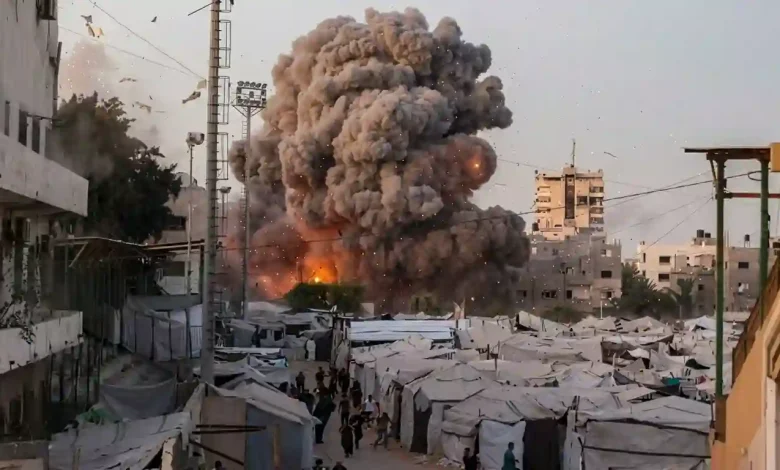
Table of Contents
Hamas disarmament agreement protocols have been reached in what is being hailed as a historic breakthrough for Middle Eastern diplomacy, US President Donald Trump announced late Thursday. The declaration, which comes after months of intensive backchannel negotiations, outlines a comprehensive multi-phase peace plan designed to conclusively bring an end to the protracted war in Gaza. According to a senior Hamas official who spoke directly with CNN, the militant organization has agreed to the terms of the deal brokered by the specialized Board of Peace, stressing that their cooperation remains contingent on Israel strictly upholding its reciprocal obligations.
Hamas :Introduction to the Gaza Peace Breakthrough
This remarkable breakthrough was broached during a time when the U.S.-Iran conflict escalates after a thirteenth night of heavy military exchanges, illustrating the fragile geopolitical ecosystem in which this agreement must be nurtured. Despite the persistent skepticism from regional hardliners, the diplomatic framework offers a glimmer of hope to a territory that has been frozen in humanitarian purgatory for months. The agreement aims to dismantle the offensive infrastructure of militant groups while simultaneously laying down a clear runway for the reconstruction of Gaza, the rehabilitation of its displaced population, and the establishment of a sovereign administrative structure.
Hamas :Inside the Multi-Phase Disarmament Plan
The newly unveiled 14-point roadmap provides a detailed structural framework for transitioning Gaza from an active warzone to a stabilized territory. At its core, the plan details a phased process for the complete disarmament of Hamas and other armed groups within the enclave. Rather than requiring an immediate, absolute surrender of weaponry, the agreement institutes a structured timeline. In the initial phases, heavy weaponry—including long-range rocket systems, mortars, and anti-tank guided missiles—will be systematically collected and stored under the direct control of an independent verification committee.
The plan establishes that as each phase of disarmament is verified, Israeli Defense Forces will execute corresponding withdrawals from designated sectors of the Gaza Strip. The ultimate goal is the complete transfer of civilian and security authority to a technocratic Palestinian government, supported by an International Stabilization Force (ISF) working in tandem with newly trained local civil police forces. These intricate milestones are being tracked closely on Iran war day 151, as combatants and mediators assess the stability of regional security agreements and look for any structural precedents that could be applied to broader Middle Eastern conflicts.
Hamas :The Role of the Board of Peace
Central to the successful negotiation of this roadmap has been the Board of Peace, an international diplomatic organ established under the auspices of the Trump administration. Designed to serve as an impartial arbiter and mediation platform, the Board of Peace has worked tirelessly in Cairo and Doha to bring opposing factions to the negotiating table. Led by seasoned diplomatic commanders, the Board has draft-engineered safety protocols that satisfy Hamas’s demands for administrative autonomy while addressing Israel’s core security requirements. The Board’s persistent efforts have managed to bridge historically irreconcilable differences, even as observers around the globe look for signs that U.S.-Iran hostilities ease under the weight of backchannel diplomacy. By providing a neutral buffer and a formal dispute-resolution mechanism, the Board of Peace seeks to ensure that minor violations of the ceasefire do not cascade into a total collapse of the peace plan.
Hamas :Israel’s Obligations and Security Guarantees
While Hamas has formally accepted the text of the disarmament plan, the viability of the agreement rests entirely on Israel’s willingness to fulfill its reciprocal obligations. Under the terms of the roadmap, Israel must cease all offensive operations, halt the expansion of military outposts within the Gaza Strip, and commit to a complete withdrawal of its forces in lockstep with verified disarmament milestones. Furthermore, Israel is obligated to facilitate the entry of humanitarian aid, construction equipment, and engineering teams necessary to rebuild destroyed infrastructure.
However, the plan faces significant political headwinds inside Israel. Prominent members of Prime Minister Benjamin Netanyahu’s far-right coalition have quickly voiced fierce opposition to any agreement that permits a phased withdrawal or acknowledges Hamas’s political input, claiming that total military eradication is the only viable path. This internal political friction suggests that implementing the deal will require immense diplomatic pressure from Washington, especially during a time when a broader U.S.-Iran conflict pause remains elusive, leaving Israel highly sensitive to security threats along its peripheral borders.
Iranian Escalation in the Gulf: The Kuwait Air Base Strike
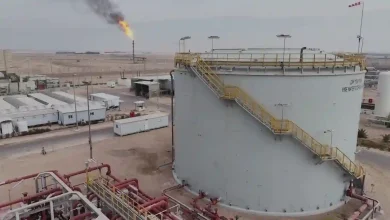
While diplomacy has carved out a fragile path forward in Gaza, the wider region remains plagued by severe military escalations. In a stark reminder of the volatile regional security landscape, Iranian forces launched a series of drone strikes targeting the strategic Ahmed Al-Jaber Air Base in Kuwait early Friday morning. According to official reports from Iranian state media, the attack was executed by the Islamic Revolutionary Guard Corps (IRGC) and specifically targeted fighter aircraft hangars, satellite communication installations, and major equipment warehouses.
The Kuwaiti military quickly confirmed that its air defense units had detected and intercepted the hostile aircraft. Kuwait’s defense spokesperson noted that the successful interception prevented any human casualties, though falling shrapnel and debris caused notable material damage on the base. The strike represents a dramatic expansion of the conflict theater, demonstrating that local peace initiatives are constantly threatened by wider regional rivalries. This escalatory behavior has dashed any immediate expectations of localized de-escalation, proving that regional security cannot be achieved in a vacuum.
Hamas :Details of the Interception over Kuwait
The interception over Kuwait highlights the advanced defense networks currently deployed in the Gulf state to protect joint military assets. Defense Ministry Spokesperson Col. Saud Abdulaziz al-Atwan stated that the military’s early warning systems detected multiple incoming hostile unmanned aerial vehicles (UAVs) at dawn, initiating a coordinated air defense response. The Ahmed Al-Jaber Air Base serves as a vital logistics, surveillance, and operational hub for United States Central Command (CENTCOM) forces in the region, making it a high-value target for Iranian retaliatory operations.
Tehran claimed the attack was a direct response to a US strike on Qeshm Island in the Strait of Hormuz, which reportedly killed three civilians. The willingness of Iran to directly strike targets in Kuwait underscores the high-stakes nature of the ongoing geopolitical proxy war, demonstrating that the current structural barriers to U.S.-Iran diplomacy remain deeply entrenched and highly resistant to peaceful overtures.
Unclaimed Drone Attacks in Egypt
Compounding the regional instability is a series of unclaimed drone strikes that have targeted critical infrastructure across North Africa. Earlier this week, Egyptian authorities reported a mysterious drone strike on a Mediterranean port facility. Although no nation or military faction has officially claimed responsibility for the strike, regional intelligence analysts suspect that proxy groups operating under the influence of regional powers are utilizing low-cost loitering munitions to test air defense readiness and signaling capabilities. Egyptian President Abdel Fattah el-Sisi issued a stern warning, declaring that such acts of aggression threaten to engulf the entire region in an uncontrollable spiral of violence. The economic ramifications of these attacks are immediate and global, with global oil prices hitting milestone levels of $100 per barrel, threatening to trigger global economic shockwaves that could undermine domestic recovery efforts in Western and Asian economies alike.
Hamas :Comparative Regional Dynamics: Peace vs. Escalation
The divergent paths of diplomacy in Gaza and kinetic warfare in the Persian Gulf present a complex puzzle for international policymakers. While one sub-region moves closer to a negotiated ceasefire, another descends further into active warfare. This disconnect highlights the polycentric nature of the Middle Eastern security crisis, where progress on one front does not necessarily translate to stability on another. To understand the complex web of interactions, it is useful to examine the operational status across different regional conflict sectors:
| Conflict Zone | Main Actors | Current Status / Milestones | Key Strategic Challenges |
|---|---|---|---|
| Gaza Strip | Hamas, Israel, Board of Peace | Disarmament agreement announced; pending enforcement | Israeli cabinet opposition; verifying arms decommissioning |
| Kuwait | Iran, Kuwait, United States | Interceptions over Ahmed Al-Jaber; high military alert | Defending vital infrastructure; risk of direct US military engagement |
| Jordan | Iran, Jordanian Armed Forces | Air defense interceptions of Iranian missiles | Maintaining border sovereignty; handling spillover from Iraq/Syria |
| Strait of Hormuz | IRGC, US Navy, Merchant Shipping | Interdiction of commercial tankers; naval standoffs | Securing international shipping lanes; stabilization of global energy markets |
As the data illustrates, the regional landscape is characterized by a stark dichotomy. Although public rhetoric from both military headquarters remains aggressive, bilateral communications remain active in neutral capitals, highlighting the ongoing effort to prevent localized flare-ups from degenerating into an all-out, multi-state conflagration.
Geopolitical Ramifications and International Reactions
The international response to the announced Gaza disarmament agreement has been a mixture of cautious optimism and deep-seated skepticism. Key regional mediators, including Qatar and Turkey, have praised the diplomatic efforts of the Board of Peace, calling the roadmap a realistic framework for ending the humanitarian catastrophe in Gaza. European diplomats have also signaled their willingness to contribute to the proposed International Stabilization Force, provided that both Israeli and Palestinian leadership formally ratify the agreement.
However, the path forward is heavily obstructed by broader geopolitical rivalries. This progress is particularly notable given Tehran’s refusal to engage in comprehensive peace talks on other fronts, suggesting that Iran may continue to utilize its network of proxy forces to disrupt any U.S.-led diplomatic initiatives that exclude its strategic interests.
The Fragility of the Gaza Ceasefire
Even under the most optimistic scenarios, the proposed ceasefire and disarmament framework is incredibly fragile. Decades of deep-seated mistrust between the IDF and Hamas cannot be erased by a single diplomatic document. Hardliners on both sides possess the capability and motivation to sabotage the agreement. For Hamas, the complete relinquishment of its military arsenal represents an existential risk, especially if Israel fails to provide ironclad guarantees against future targeted assassinations or incursions. On the other hand, the Israeli leadership faces intense domestic pressure to avoid any concessions that could be perceived as a victory for Hamas, making the political cost of compliance exceptionally high for the ruling coalition.
The United States’ Diplomatic Balancing Act
The Trump administration’s Middle East strategy is currently walking a highly perilous tightrope. By championing the Board of Peace’s efforts in Gaza, Washington is attempting to project the image of a global peacemaker capable of resolving intractable conflicts. Simultaneously, however, the United States is deeply engaged in active military deterrence against Iran in the Gulf, deploying carrier strike groups and conducting retaliatory airstrikes. This dual-track approach of aggressive military containment on one side and delicate diplomatic mediation on the other creates significant friction, as actions in the Gulf inevitably reverberate through the negotiation rooms of Cairo and Doha.
Future Outlook for Middle Eastern Stability
As the region navigates the opening days of August 2026, the contrast between the diplomatic breakthrough in Gaza and the military escalation in Kuwait underscores the highly volatile state of the Middle East. The successful implementation of the Hamas disarmament agreement could serve as a historical turning point, transforming Gaza from a flashpoint of violence into a model for post-conflict reconstruction and governance.
However, the success of this plan remains hostage to the broader geopolitical chess match playing out between the United States, Israel, and Iran. If the escalation in the Gulf continues unabated, the resulting military and economic shockwaves could easily derail the fragile peace in Gaza, plunging the region back into a state of total, unrestricted warfare. Only time will tell if the diplomatic architecture established by the Board of Peace is resilient enough to withstand the severe geopolitical storms on the horizon.
Authority Citations