Lindsey Graham Escalates Rhetoric on Iran Conflict in 2026
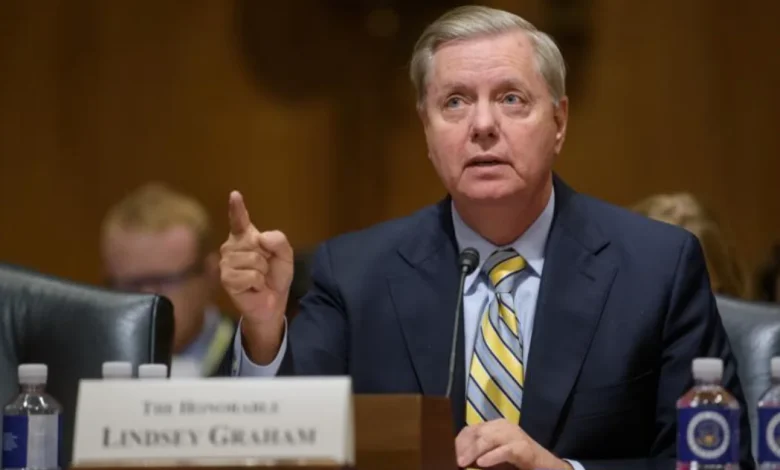
Lindsey Graham has consistently positioned himself as one of the most reliable weathervanes of the ongoing conflict with Iran, pointing squarely and unabashedly toward maximum military escalation. As the geopolitical landscape shifts and diplomatic channels attempt to cool the boiling tensions in the Middle East, the senior Senator from South Carolina has maintained a rigid trajectory of hawkish demands. Far from serving as a measured strategic thinker in times of international crisis, he operates more akin to a political mood ring for whatever maximalist, interventionist position is available at any given moment. His recent actions and statements throughout early 2026 highlight a troubling pattern of promoting perpetual warfare without offering viable exit strategies or acknowledging the catastrophic humanitarian and economic tolls that such conflicts inevitably exact on the global stage.
Lindsey Graham: The Architect of Middle Eastern Escalation
For decades, the political brand of the Senator has been intricately tied to a neoconservative vision of American foreign policy that relies heavily on preemptive military action and regime change. In the context of the current Iran war, this ideology has been on full display. Rather than advocating for de-escalation or supporting allied efforts to contain the fallout, he has consistently demanded that the United States military be deployed in its most aggressive capacity. This approach ignores the nuanced realities of modern asymmetric warfare and the fragile balance of power in the Persian Gulf. By constantly shifting the goalposts and moving from one extreme demand to another, he ensures that the discourse surrounding the conflict remains focused on violent resolution rather than diplomatic negotiation. The arc of his involvement in this specific crisis can be traced back to the early rumblings in February, progressing through the outbreak of hostilities in March, and culminating in his aggressive rejection of the recent ceasefire agreement.
Analyzing the February Israel Visit and Regime Collapse Predictions
In February 2026, as intelligence reports indicated rising tensions and potential military flare-ups, Graham embarked on a highly publicized visit to Israel. It was during this trip that the foundational rhetoric for the impending war was firmly established. In a move that blended bizarre political theater with serious geopolitical signaling, he promoted a ‘Make Iran Great Again’ hat, drawing direct parallels to populist domestic slogans while advocating for the total collapse of the current regime in Tehran. During press briefings, he confidently predicted an imminent regime collapse, severely underestimating the entrenched power structures of the Islamic Revolutionary Guard Corps (IRGC). Furthermore, he declared that United States military action must commence in ‘weeks, not months.’ This artificial timeline served to box diplomatic negotiators into a corner, creating a self-fulfilling prophecy where military confrontation became the only politically acceptable outcome for hardliners in Washington. By framing the conflict as an existential necessity that required immediate kinetic action, he effectively neutralized moderate voices calling for restraint and careful intelligence assessment.
The March Offensive: Kharg Island and Economic Opportunism
When the war officially began in March, the rhetoric shifted from ideological regime change to a jarring display of economic opportunism and tactical overreach. Demonstrating a startling detachment from the grim realities of combat, he proclaimed that the United States would ‘make a ton of money’ from the conflict. This statement shocked even seasoned political analysts, as it stripped away the traditional moral justifications for war and replaced them with blatant resource extraction motives. His primary tactical demand was for United States Marines to execute an amphibious assault to seize Kharg Island, Iran’s most critical oil export terminal. The logistical nightmare of occupying a heavily fortified island in the middle of a contested waterway was entirely glossed over in his public statements. Military experts repeatedly warned that such an operation would result in massive casualties and trigger unprecedented retaliatory strikes against American assets across the region. Yet, the call to seize Kharg Island became a rallying cry for the most extreme factions advocating for total dominance over Middle Eastern energy infrastructure.
Expanding the Conflict: Threats to Saudi Arabia and Cuba
Never one to confine a war to a single theater, the Senator’s March declarations quickly spiraled into threatening neighboring nations and bizarrely distant adversaries. Furious that Saudi Arabia opted to maintain a neutral stance to protect its own vulnerable energy infrastructure, he publicly threatened the Kingdom, demanding they join the coalition or face unspecified consequences. This alienating tactic risked fracturing the fragile anti-Iran alliance that the State Department had spent years cultivating. Even more baffling was his sudden teasing of Cuba as the next target for American military pressure, attempting to tie the Caribbean nation into the broader narrative of a global anti-American axis. This expansionist rhetoric demonstrated a fundamental lack of strategic discipline. A comprehensive analysis of this period highlights how these provocations contribute directly to the huge cost of the Iran war, driving up defense spending and destabilizing global markets.
| Timeline | Event / Action | Rhetorical Stance | Strategic Implication |
|---|---|---|---|
| February 2026 | Visit to Israel, Promotes Hat | Regime collapse imminent; action in weeks | Accelerated timeline for war, undermining diplomacy |
| March 2026 | War Begins, Kharg Island Demand | U.S. will ‘make a ton of money’; Seize oil assets | Shifted focus to resource control; alienated allies like Saudi Arabia |
| April 2026 | Ceasefire Announced | Deal is ‘troubling’; Demands zero enrichment | Rejection of peace efforts; push for continuous escalation |
The April Ceasefire Backlash: Why Graham Rejects Diplomatic Solutions
Last week, when international mediators finally announced a hard-fought ceasefire agreement to halt the devastating exchange of missiles and airstrikes, the immediate reaction from the hawkish wing was overwhelmingly negative. Graham immediately took to national television to call the deal ‘troubling’ and demanded exhaustive congressional reviews aimed at torpedoing the agreement. His opposition is rooted in a fundamental rejection of any diplomatic solution that leaves the current Iranian government intact, regardless of the concessions made. By insisting on absolute victory in an asymmetric conflict, he ignores the reality that prolonged warfare only deepens regional instability. His efforts to dismantle the peace agreement echo warnings from regional leaders who fear the ceasefire with Iran could end quickly if Washington fails to honor the negotiated terms. The demand for congressional review is widely seen as a stalling tactic designed to buy time for political opposition to mobilize, ensuring that the wheels of the war machine remain greased.
The Demand for Zero Enrichment and Uranium Confiscation
Yesterday, the rhetoric reached a dangerous new crescendo. Threatening that ‘all hell’s about to break loose on this regime’ if ongoing talks fail, he outlined a set of impossible ultimatums. Chief among these is the demand for absolutely zero uranium enrichment on Iranian soil and the immediate handover of Iran’s 900 lbs of highly enriched uranium to the United States. Nuclear experts universally acknowledge that demanding zero enrichment is a non-starter for Tehran, a poison pill designed specifically to guarantee that diplomatic talks collapse. While there were promising backchannel discussions regarding Iran abandoning program for peace, the insistence on total capitulation and the physical confiscation of nuclear material by American forces leaves no room for face-saving compromises. This hardline stance perfectly aligns with the broader Iran nuclear standoff strategies pushed by extreme elements who prefer military destruction of nuclear sites over internationally monitored containment.
Graham’s Historical Pattern: From Iraq to the Current Iran War
To understand the current posturing, one must examine the historical pattern of his foreign policy advocacy. He has never met a Middle East war he did not want to expand. Over twenty years ago, he was one of the loudest and most influential voices championing the invasion of Iraq. During that era, he promoted flawed intelligence, promised swift victories, and predicted that American troops would be welcomed as liberators. The resulting decades of insurgency, the rise of extremist terror groups, and the loss of thousands of American lives and trillions of dollars have seemingly done nothing to temper his enthusiasm for regional intervention. He has never been held accountable for the catastrophic strategic failures of the Iraq War. Instead of reflecting on past miscalculations, he applies the exact same flawed methodologies to the current crisis with Iran. The underlying assumption remains identical: that overwhelming American military force can cleanly surgically alter complex sociopolitical landscapes without severe blowback.
The Danger of Maximalist Positions in U.S. Foreign Policy
The core issue with operating as a mood ring for maximalist positions is that it strips United States foreign policy of its necessary flexibility and nuance. Strategic thinking requires the ability to balance competing interests, recognize the limitations of hard power, and leave avenues open for adversaries to de-escalate without facing total humiliation. By continuously advocating for the most extreme options available—whether it is seizing sovereign territory like Kharg Island, threatening neutral allies, or demanding the total surrender of nuclear capabilities—he creates an environment where moderation is viewed as weakness. According to leading foreign policy experts, this brand of hyper-aggressive grandstanding actively endangers national security by forcing adversaries into corners where they feel they have nothing left to lose, thereby increasing the likelihood of catastrophic asymmetric attacks against American interests globally.
Political Consequences and Lack of Accountability in 2026
As the conflict in 2026 continues to evolve, the political consequences of this relentless push for escalation are becoming increasingly apparent. The domestic constituency is growing weary of endless Middle Eastern entanglements, yet figures like the Senator remain insulated from electoral backlash due to highly partisan district mapping and massive defense industry campaign contributions. This lack of accountability creates a dangerous feedback loop where hawkish rhetoric is rewarded financially and politically, regardless of its disastrous real-world outcomes. Until the political system demands a rigorous accounting of past foreign policy failures and insists upon a strategy that prioritizes diplomacy and long-term stability over short-term militaristic posturing, the cycle of escalation, war, and regional devastation will continue unchecked. The current Iran crisis is merely the latest canvas upon which this destructive ideology is being painted, with the lives of countless service members and civilians hanging in the balance while politicians safely demand that all hell break loose.