Blockade Ultimatum: Iran Threatens Total Trade Halt
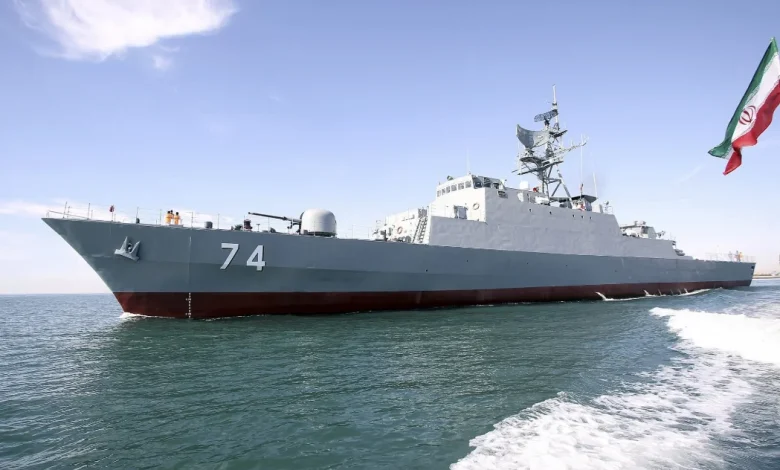
Blockade rhetoric has reached unprecedented levels in the Middle East as the Commander of Iran’s Khatam al-Anbiya Headquarters delivered a stark and uncompromising ultimatum to the United States and its international maritime allies. During a highly publicized military address broadcast across state media, the senior Iranian military official categorically stated that the Islamic Republic will absolutely not permit any export or import activity across the critical waterways of the Persian Gulf and the Sea of Oman if the ongoing American naval blockade persists in its current form. Furthermore, the sweeping declaration emphasized that Iranian armed forces are fully prepared and strategically positioned to aggressively halt all commercial trade flowing through the Red Sea. In what is widely considered the most severe and direct warning issued during the current tense geopolitical standoff, the Commander articulated that any continuation of the American naval blockade would be treated by policymakers in Tehran not merely as a hostile economic measure, but as an explicit, undeniable prelude to violating the fragile ceasefire agreement that is currently holding the wider region back from all-out war. This profound escalation in rhetoric underscores the extreme volatility characterizing the Middle East’s geopolitical landscape today. The explicit and calculated naming of the Gulf, the Sea of Oman, and the Red Sea in a single sweeping threat effectively places the world’s most vital energy and commercial shipping routes squarely in the crosshairs of potential military conflict. Global markets, diplomatic corridors, and military headquarters around the world are now forced to rapidly re-evaluate their strategic postures, operational deployments, and economic forecasts in light of this unambiguous Iranian red line.
The Khatam al-Anbiya Ultimatum Analyzed
The Khatam al-Anbiya Central Headquarters is the highest operational military command in Iran, responsible for designing, coordinating, and executing joint operations across both the regular Islamic Republic of Iran Army (Artesh) and the Islamic Revolutionary Guard Corps (IRGC). When a statement of this magnitude originates directly from the Commander of Khatam al-Anbiya, it is stripped of standard political grandstanding and must be viewed as highly actionable military doctrine. The precise phrasing used in this ultimatum—specifically linking the continuation of the American blockade to a “prelude to violating the ceasefire”—is a meticulously constructed diplomatic and military tripwire. By framing the U.S. maritime interdictions as an offensive maneuver rather than a defensive security measure, Tehran is establishing a legal and moral justification within its own strategic framework to resume hostilities on its own terms. This narrative shift places the burden of escalation entirely on Washington and its coalition partners, effectively forcing the United States to choose between maintaining its blockade and risking the collapse of an incredibly delicate armistice.
Strategic Chokepoints Under Threat
To fully grasp the gravity of the Iranian Commander’s statements, one must analyze the geographical and economic realities of the waterways explicitly threatened: the Persian Gulf, the Sea of Oman, and the Red Sea. The Persian Gulf is the undisputed beating heart of global energy extraction, surrounded by the world’s most prolific oil-producing nations. The only exit from this body of water is the Strait of Hormuz, a notoriously narrow chokepoint that seamlessly transitions into the Sea of Oman. From there, vessels navigate toward the Arabian Sea and the broader Indian Ocean. Conversely, the Red Sea serves as the indispensable superhighway connecting Asian manufacturing hubs and Middle Eastern energy suppliers to European consumer markets via the Suez Canal. By explicitly threatening to paralyze all three of these interconnected maritime zones, Iran is not merely signaling a localized disruption, but rather a coordinated, multi-theater strategy capable of effectively severing the maritime spine of the globalized economy. The sheer scale of this threat demands immediate attention from international security apparatuses.
Ceasefire Violations and Diplomatic Fragility
The current ceasefire, negotiated through exhaustive back-channel diplomacy involving regional mediators like Oman and Qatar, was intended to freeze the escalating cycle of retaliatory strikes and asymmetrical warfare that had deeply unsettled the region. However, the agreement was built on a deeply fragile foundation of mutual distrust and highly conditional concessions. The Iranian perspective, as articulated by the Khatam al-Anbiya command, insists that a ceasefire cannot practically exist if economic strangulation continues via naval blockades. In Tehran’s strategic calculus, military kinetic action and economic warfare are fundamentally indistinguishable. Therefore, intercepting Iranian commercial vessels, blocking proxy supply lines, or restricting dual-use imports under the guise of an international maritime coalition is perceived as a direct breach of the agreed-upon cessation of hostilities. This interpretation leaves almost zero diplomatic maneuvering room, meaning any minor naval confrontation in these contested waters could spark a catastrophic regional conflagration.
Economic Repercussions of a Disrupted Maritime Corridor
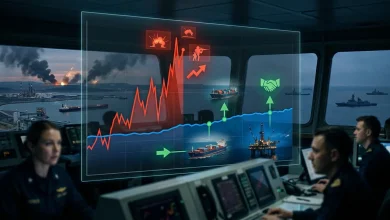
The immediate macroeconomic implications of a total trade halt in these strategic waters are virtually unfathomable in their severity. If Iran were to execute its threat and heavily contest or close the Gulf, the Sea of Oman, and the Red Sea simultaneously, the resulting shock to global supply chains would instantly dwarf the disruptions witnessed during previous shipping crises or even the peak of pandemic-era logistical failures. Energy markets would be the first to experience catastrophic volatility. With millions of barrels of crude oil and massive volumes of liquefied natural gas (LNG) trapped behind a military blockade, the resulting supply deficit would trigger aggressive price spikes, driving rampant inflation across advanced and developing economies alike. European industrial sectors, already grappling with long-term structural energy challenges, would face immediate rationing. Furthermore, container shipping rates would astronomicalize as maritime logistics conglomerates are forced to reroute entire fleets around the Cape of Good Hope permanently, drastically increasing transit times, fuel consumption, and insurance premiums. This cascading failure would directly impact consumer goods, raw materials, and global food security.
| Maritime Chokepoint | Estimated Daily Trade Volume | Strategic Global Importance | Primary Iranian Threat Vectors |
|---|---|---|---|
| Strait of Hormuz (Gulf to Sea of Oman) | 21 Million Barrels of Oil; 20% of Global LNG | The single most critical energy artery on Earth; irreplaceable for global energy stability. | Naval mines, IRGC fast attack craft, coastal defense cruise missiles, drone swarms. |
| Bab el-Mandeb (Red Sea) | 6.2 Million Barrels of Oil; 12% of Total Global Trade | The critical gateway linking Asian manufacturing to European markets via the Suez Canal. | Houthi proxies, anti-ship ballistic missiles, loitering munitions, direct hijackings. |
| Gulf of Oman | Mixed Commercial Transit & Refined Products | The vital open-water transition zone linking the heavily congested Gulf to the Arabian Sea. | Midget submarines, long-range maritime strikes, specialized naval interdiction teams. |
American Naval Posture and Coalition Responses
The United States military, primarily operating through the U.S. Naval Forces Central Command (NAVCENT) and the Bahrain-based 5th Fleet, maintains a formidable and highly sophisticated presence across these contested waters. The overarching objective of the American naval blockade—often characterized by Washington as a maritime security and freedom of navigation operation—has been to systematically degrade the smuggling of advanced conventional weapons, illicit petroleum products, and financial resources that fuel militant proxies throughout the broader Middle East. Following the latest declarations from Khatam al-Anbiya, the Pentagon is likely intensifying intelligence, surveillance, and reconnaissance (ISR) flights, while accelerating the deployment of carrier strike groups and guided-missile destroyers to strategic choke points. International partners are also feeling the immense pressure. Recognizing the severe limitations of acting unilaterally, Western powers are actively coordinating complex multinational responses. For instance, detailed analyses regarding the Hormuz crisis defense missions led by key European leaders demonstrate the desperate necessity of burden-sharing among NATO allies. Despite these efforts, sustaining an indefinite, high-intensity maritime blockade in the face of relentless, asymmetrical threats from a highly motivated regional power presents profound logistical and tactical challenges for the U.S. Navy and its coalition partners.
Broader Geopolitical Implications for the Middle East
A sudden transition from a tense ceasefire to a full-blown maritime blockade conflict would fundamentally violently restructure the geopolitical architecture of the Middle East, violently pulling neighboring states and global superpowers into the vortex of war. Nations such as Saudi Arabia, the United States Arab Emirates, and Kuwait rely absolutely on unimpeded access to the Persian Gulf and the Sea of Oman for their economic survival and national security. An Iranian blockade would force these states to rapidly rethink their strategic alignment, potentially demanding aggressive American intervention or, conversely, capitulating to Iranian demands to avoid the total destruction of their fragile domestic economies. The ripple effects extend deeply into Asia. China, the world’s largest energy importer, finds its economic engine overwhelmingly dependent on Middle Eastern fossil fuels. As detailed in recent assessments of the China energy crisis and Middle East oil import collapse, Beijing simply cannot afford a prolonged disruption in the Strait of Hormuz. Similarly, India’s economic growth trajectory is intrinsically linked to stable maritime corridors. The recent statements by the Iran oil ambassador to India outlines supply amid strait crisis highlight the intense diplomatic scrambling occurring in New Delhi as they attempt to secure energy guarantees from Tehran amidst the escalating chaos. This multi-polar dynamic ensures that any conflict in these waters will immediately globalize.
The Military Dimensions: Khatam al-Anbiya’s Capabilities
While the United States Navy possesses unparalleled conventional firepower, Iran’s military strategy, heavily influenced by Khatam al-Anbiya doctrine, relies on an advanced, highly lethal asymmetrical warfare model specifically designed to exploit the vulnerabilities of large, expensive surface combatants operating in confined littoral waters. Iran does not need to achieve naval supremacy to effectively close the Strait of Hormuz or paralyze the Sea of Oman; it only needs to raise the risk of transit to an unacceptable level for commercial operators. The IRGC Navy (IRGCN) utilizes a sprawling network of highly maneuverable, heavily armed fast attack craft capable of launching coordinated swarm attacks. Furthermore, Iran possesses one of the most diverse and expansive arsenals of anti-ship ballistic missiles (ASBMs) and coastal defense cruise missiles (CDCMs) in the world, heavily fortified in underground bunkers along its vast, mountainous southern coastline. The threat is compounded by thousands of advanced naval sea mines and a growing fleet of indigenous loitering munitions (kamikaze drones) that can saturate the air defenses of modern destroyers. Independent defense researchers at the Center for Strategic and International Studies have long warned that attempting to forcefully break a determined Iranian maritime blockade would require an immense, bloody, and protracted military campaign that extends far beyond simple naval skirmishes, likely requiring massive kinetic strikes on Iranian sovereign territory.
How Global Markets Are Pricing in the Escalation
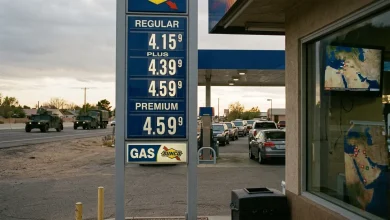
Financial markets, notoriously allergic to geopolitical uncertainty, are reacting with extreme volatility to the Khatam al-Anbiya ultimatum. Energy futures, particularly Brent crude and European benchmark natural gas prices, have exhibited significant upward pressure as algorithmic trading platforms and institutional investors aggressively price in the rising probability of a catastrophic supply shock. Insurance premiums for vessels navigating through the High-Risk Areas (HRAs) of the Persian Gulf, the Sea of Oman, and the Red Sea have surged, with some underwriters completely refusing to provide coverage for particular flag states or cargo profiles. This massive increase in maritime transit costs acts as a regressive global tax, aggressively squeezing corporate profit margins and ensuring that inflationary pressures remain entrenched in Western economies. Furthermore, defense contractors and aerospace equities are experiencing a surge as nations frantically seek to procure advanced anti-ship defense systems and maritime patrol assets. The economic reality is stark: a prolonged disruption of these essential waterways could easily trigger a massive global recession. As experts debate the long-term financial fallout, extensive studies regarding a trillion-dollar Iran war and its massive cost serve as a harrowing reminder of the devastating economic toll that a failure of maritime deterrence will inevitably exact upon the global community.
De-escalation Scenarios: Is a Diplomatic Off-Ramp Possible?
Despite the severe and categorical nature of the Khatam al-Anbiya Commander’s threats regarding the Gulf, Sea of Oman, and Red Sea, intense behind-the-scenes diplomatic maneuvering is currently underway in a desperate attempt to engineer a viable off-ramp for both Washington and Tehran. De-escalation will require profound political courage and significant concessions from both sides, an exceptionally difficult prospect given the highly polarized domestic political environments in both the United States and Iran. A potential diplomatic breakthrough might involve a carefully choreographed, reciprocal de-escalation where the U.S. quietly relaxes its most stringent maritime interdictions and allows a heavily monitored flow of certain civilian goods and frozen financial assets to reach Tehran. In exchange, Iran would be required to publicly reaffirm its commitment to the broader ceasefire, drastically reduce the provocative maneuvers of the IRGCN fast attack craft, and demonstrably rein in the aggressive maritime strikes conducted by its regional proxies in the Red Sea. Oman, historically the most successful and trusted intermediary in U.S.-Iran relations, is reportedly hosting frantic, indirect discussions aimed at solidifying this exact framework. However, as the rhetoric from Khatam al-Anbiya demonstrates, the timeline for diplomacy is rapidly compressing. If a mutually acceptable compromise is not reached imminently, the world must prepare for a devastating closure of its most critical maritime arteries, plunging the international community into an unprecedented era of economic and military crisis.