Iran Nuclear Standoff: Mossad Post-War Strategy Revealed
Iran stands at the epicenter of a geopolitical earthquake, with its nuclear program continuously drawing the intense scrutiny of international intelligence agencies, most notably Israel’s Mossad. For decades, the global community has questioned why Tehran refuses to abandon its nuclear ambitions despite crippling economic sanctions, international isolation, and the persistent threat of military strikes. The answer, deeply embedded in the strategic calculus of the Middle East, was recently illuminated by stark revelations from the Mossad chief regarding Israel’s post-war strategy. The candid admission that Israeli intelligence planned thoroughly for operations to continue their impact well after active fighting subsided offers a profound window into the covert shadow war defining the region. This enduring conflict is not merely about uranium enrichment; it is a fundamental struggle for deterrence, sovereignty, and regional hegemony in an environment where the rules of conventional warfare are frequently rewritten by asymmetric tactics and unacknowledged nuclear arsenals.
Iran Nuclear Ambitions in the Face of Israeli Intelligence
The persistence of the Iranian nuclear initiative cannot be understood in a vacuum. It is heavily influenced by the constant, looming presence of Israeli intelligence operations aimed at systematically dismantling Tehran’s capabilities. Over the years, the world has witnessed a relentless campaign of espionage, sabotage, and targeted actions designed to paralyze Iran’s nuclear infrastructure. The Islamic Republic views its nuclear program not just as an energy project, but as a critical element of national pride and a necessary deterrent against existential threats. The intelligence apparatus of Israel has historically operated on the Begin Doctrine, a strategic mandate which dictates that Israel will not allow any regional adversary to acquire weapons of mass destruction. This doctrine has driven the Mossad to execute some of the most sophisticated covert operations in modern history, forcing Tehran to drive its nuclear facilities deep underground, such as the heavily fortified Fordow enrichment plant, and to develop an expansive network of counter-intelligence measures. Understanding this dynamic is crucial for assessing how Tehran is rebuilding its missile capabilities and fortifying its defensive posture during any tactical pause in direct military confrontations.
The Mossad Chief’s Post-War Strategic Revelations
The recent statements from the Mossad chief provide chilling insight into the long-term planning of Israeli intelligence. He explicitly noted, “We did not expect the mission to be completed immediately once the fighting subsided. However, we did plan, and planned thoroughly, for our operation to continue and make its impact felt even in the period following the strikes in Tehran.” This declaration strips away any illusion that a ceasefire or a pause in kinetic military action equates to an end to hostilities. Instead, it highlights a strategic pivot from overt airstrikes to a sustained, psychological, and physical covert war. The Mossad’s strategy involves embedding sleeper cells, corrupting supply chains for nuclear components, and maintaining a constant state of paranoia within the ranks of Iran’s top scientists and military leaders. By ensuring that the impact of their operations is felt long after the smoke has cleared, Israel aims to degrade Iranian morale and slow down the enrichment process through continuous, unpredictable friction. This psychological warfare is just as critical to the Mossad’s objectives as the physical destruction of centrifuges, creating an environment where Iranian scientists must constantly fear for their safety and the integrity of their work.
The Immediate Impact of Tehran Strikes
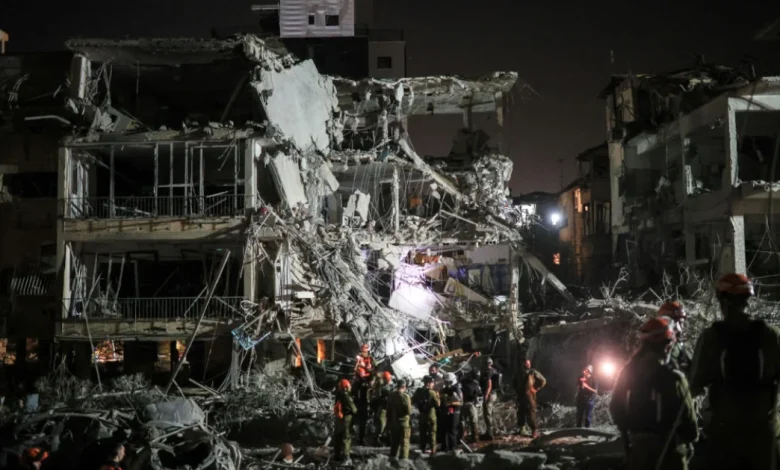
When military strikes occur in or around Tehran, the immediate physical damage to infrastructure is often accompanied by a profound shockwave through the nation’s political and military hierarchy. These strikes are designed to be surgical, targeting specific nodes of the nuclear and missile development networks to cause maximum developmental delays with minimal collateral damage that could trigger an uncontrollable regional war. However, the true impact extends far beyond shattered concrete and destroyed machinery. Each strike exposes vulnerabilities in Iran’s air defense systems and counter-intelligence networks, forcing the Islamic Revolutionary Guard Corps (IRGC) to expend massive resources on internal investigations and security overhauls. The disruption to the supply chain of critical materials necessary for uranium enrichment can set the program back by months, if not years. Furthermore, these strikes serve as a stark, undeniable message of Israel’s reach and intelligence penetration, reinforcing the Mossad chief’s assertion that the operational impact is meticulously designed to linger and fester within the Iranian defense establishment.
| Strategic Element | Iran Strategy | Israel Strategy |
|---|---|---|
| Nuclear Doctrine | Civilian program claims; high-level enrichment for deterrence hedging. | Nuclear ambiguity; unacknowledged arsenal; strictly outside international treaties. |
| Intelligence Approach | Asymmetric regional proxies, counter-espionage, infrastructure hardening. | Preemptive sabotage, targeted assassinations, extensive covert infiltration. |
| Treaty Compliance | Signatory to global non-proliferation treaties (with heavily disputed compliance). | Non-Signatory; actively rejects international oversight of its nuclear facilities. |
| Post-War Posture | Rebuilding strategic stockpiles and reinforcing deeply buried underground facilities. | Continuous psychological and physical covert operations deep inside enemy territory. |
Asymmetric Warfare and Deterrence in the Middle East
The conflict between Israel and Iran is the quintessential modern example of asymmetric warfare. Lacking a conventional air force capable of matching Israel or the United States, Iran has cultivated a formidable network of proxy militias across the Middle East, including Hezbollah in Lebanon, Hamas in Gaza, and the Houthis in Yemen. This “Axis of Resistance” serves as Iran’s forward defense, allowing Tehran to project power and deter direct attacks on its soil by threatening Israel’s borders and international shipping lanes. In response, Israel utilizes its technological superiority, precision strike capabilities, and unmatched intelligence apparatus to systematically degrade this proxy network and strike directly at the Iranian head of the octopus. This delicate balance of terror dictates the tempo of the Middle East, where every action is carefully weighed against the potential for an uncontrollable escalation. The deterrence model here is not based on mutually assured destruction in the traditional Cold War sense, but rather on mutually assured disruption, where both sides possess the capability to inflict unacceptable economic and civilian pain upon the other.
Israel’s Unacknowledged Nuclear Arsenal and the NPT
To fully comprehend why Iran steadfastly refuses to dismantle its nuclear program, one must examine the glaring paradox of the Middle Eastern nuclear landscape: Israel’s own unacknowledged nuclear arsenal. While Iran is subjected to intense international scrutiny, crippling sanctions, and constant threats of military action over its enrichment activities, Israel maintains a policy of “nuclear ambiguity”—neither confirming nor denying its possession of nuclear weapons. However, it is a globally recognized open secret that Israel possesses a substantial nuclear deterrent, developed outside the purview of the Treaty on the Non-Proliferation of Nuclear Weapons (NPT). Israel is not a signatory to the NPT, and thus its facilities, such as the Negev Nuclear Research Center near Dimona, are not subject to inspections by the International Atomic Energy Agency (IAEA). From the perspective of policymakers in Tehran, this represents an intolerable double standard. Iranian leadership frequently leverages this hypocrisy in their domestic and international messaging, arguing that they are being punished for exercising their rights under a treaty that their primary regional adversary outright ignores. This deep-seated perception of systemic unfairness fuels Iranian resolve and provides a potent ideological justification for continuing their nuclear advancements regardless of the diplomatic cost.
Why Tehran Refuses to Abandon Uranium Enrichment
Beyond the rhetoric of unfairness, Tehran’s refusal to abandon uranium enrichment is rooted in a fundamental survival calculus. The Iranian regime has closely observed the fate of other nations that capitulated to Western demands to dismantle their weapons of mass destruction programs. The most prominent example is Libya’s Muammar Gaddafi, who voluntarily surrendered his nascent nuclear program only to be overthrown and killed years later with the backing of Western military intervention. Conversely, they observe North Korea, a nation that successfully crossed the nuclear threshold and, as a result, effectively immunized itself against direct forced regime change by foreign powers. For Iran, uranium enrichment—even if kept just below the threshold of weapons-grade material—provides a crucial “nuclear hedge.” It allows them to maintain a breakout time short enough to deter preemptive strikes while theoretically remaining within the bounds of civilian application claims. Giving up this leverage would, in the eyes of the Supreme Leader and the IRGC, equate to strategic suicide, leaving the nation defenseless against an adversary that openly boasts of its ongoing covert operations within Iranian borders.
Covert Operations and the Shadow War Timeline
The timeline of the shadow war between Iran and Israel reads like a complex espionage thriller, spanning multiple decades and continents. This covert conflict has escalated significantly since the early 2000s, coinciding with the international exposure of Iran’s clandestine nuclear facilities at Natanz and Arak. The Mossad, often operating in alleged collaboration with Western intelligence agencies, has orchestrated a relentless campaign to thwart Iran’s progress. This history includes the dramatic 2018 heist where Mossad agents infiltrated a warehouse in Tehran and smuggled out tens of thousands of documents detailing the historical military dimensions of the Iranian nuclear project. Such operations not only humiliate the Iranian security apparatus but also provide the international community with actionable intelligence to justify continued sanctions and isolation. The “post-war” strategy mentioned by the Mossad chief is merely the latest chapter in this ongoing saga, ensuring that the pressure on Iran’s nuclear establishment never wanes, regardless of the broader diplomatic climate.
Sabotage, Cyber Attacks, and Assassinations
The tools of this shadow war are diverse and devastating. Cyber warfare has played a pivotal role, most famously with the deployment of the Stuxnet computer worm, which physically destroyed Iranian centrifuges by causing them to spin out of control while feeding false sensor data to facility operators. This watershed moment in cyber warfare demonstrated that kinetic effects could be achieved through digital means. Physical sabotage of power grids, industrial accidents at chemical plants, and mysterious explosions at missile bases have also been frequent occurrences, keeping the Iranian regime in a constant state of high alert. Perhaps the most chilling aspect of this campaign has been the targeted assassinations of high-ranking Iranian nuclear scientists and military figures. The brazen daylight assassination of Mohsen Fakhrizadeh, the alleged architect of Iran’s military nuclear program, using a remote-controlled satellite-linked machine gun, stands as a stark testament to the Mossad’s operational reach. These assassinations are designed to decapitate the intellectual leadership of the nuclear program, creating a brain drain fueled by terror.
Global Ramifications of a Prolonged Escalation
The continuous escalation of this covert and occasionally overt conflict has severe global ramifications that extend far beyond the borders of the Middle East. The strategic waterways adjacent to Iran, particularly the Strait of Hormuz, are vital arteries for global energy supplies. Any significant escalation threatens to disrupt the flow of oil and natural gas, sending immediate shockwaves through global markets. The interconnected nature of the modern global economy means that a shadow war in Tehran can directly lead to warnings of a financial crisis fueled by broader U.S.-Iran conflicts. Furthermore, the conflict frequently bleeds into the maritime domain, with shadow operations targeting commercial shipping associated with both Israeli and Iranian interests, thereby raising insurance premiums and complicating international trade logistics. The global community watches with bated breath, knowing that a miscalculation by either the Mossad or the IRGC could ignite a regional conflagration with disastrous economic consequences.
Economic and Diplomatic Consequences
The diplomatic fallout of this endless standoff is equally profound. It strains alliances and complicates international relations on a massive scale. As Iran feels increasingly cornered, it frequently lashes out through its proxies, leading to aggressive IRGC targeting declarations against perceived adversaries across the region. This aggressive posture forces Western powers to continuously deploy military assets to the region to protect their interests and allies, draining resources and political capital. The situation frequently leads to severe disruptions, including NATO airspace closures impacting military logistics and commercial aviation. Diplomatically, the failure to resurrect a viable nuclear agreement leaves the international community without a verified framework to monitor Iran’s activities, increasing reliance on intelligence estimates and the preemptive covert actions detailed by the Mossad chief. This cycle of distrust and retaliation makes achieving a lasting, comprehensive peace practically impossible.
The Future of the Middle Eastern Strategic Balance
Looking ahead, the strategic balance in the Middle East remains dangerously precarious. The Mossad chief’s candid admission regarding the continuous, thoroughly planned nature of their post-war operations ensures that the shadow war will persist indefinitely. Iran, driven by a deep-seated belief in the necessity of its nuclear hedge against an unacknowledged nuclear-armed adversary, will continue to enrich uranium and bury its facilities ever deeper. The international community must grapple with the reality that traditional diplomatic tools and conventional military threats have thus far failed to resolve this fundamental clash of survival strategies. The future will likely see an intensification of asymmetric tactics, cyber warfare, and localized proxy conflicts as both Israel and Iran seek to outmaneuver one another without triggering a direct, all-out war. In this volatile environment, understanding the true motivations, the historical grievances regarding the NPT, and the ruthless covert strategies employed by both sides is essential for comprehending why the Iranian nuclear crisis remains one of the most intractable and dangerous geopolitical flashpoints of our time.