Lebanon Dismisses Trump Claims of Upcoming Israel Phone Call
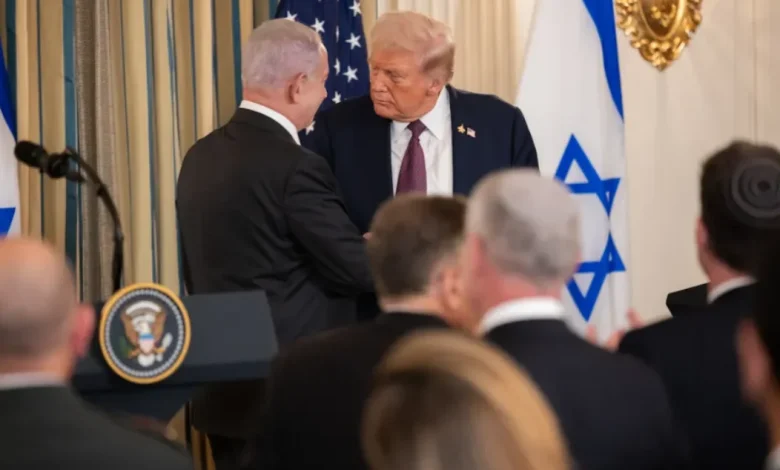
Lebanon officials have categorically denied any knowledge of impending diplomatic contact with Israel, plunging international peace efforts into a state of profound confusion. This swift and decisive rebuttal comes merely hours after former U.S. President Donald Trump, currently maintaining immense influence over ongoing geopolitical narratives, boldly declared that leaders from both nations were scheduled to engage in direct dialogue today. The sheer magnitude of this claim cannot be overstated, considering that the two nations technically remain in an active state of war, separated by heavily fortified borders and decades of intractable conflict. This discrepancy between Washington’s political rhetoric and Beirut’s official stance exposes critical flaws in modern backchannel diplomacy, highlighting the perils of unilateral announcements in one of the world’s most volatile regions.
The Trump Announcement: What Was Said and When
During a widely broadcast press engagement early this morning, Trump shocked the international community by asserting that a breakthrough phone call between the highest echelons of Lebanese and Israeli leadership was imminent. Speaking with characteristic confidence, he framed the alleged upcoming conversation as a historic milestone, suggesting that intense behind-the-scenes negotiations had finally yielded fruit. The declaration sent immediate shockwaves through global financial markets and diplomatic corridors alike, prompting a frenzy of media speculation.
However, the announcement lacked essential details. There was no clarification regarding whether the purported contact was intended to be mediated by third parties, such as the United States or European allies, or if it was expected to be a direct line of communication. In the highly nuanced sphere of Middle Eastern geopolitics, the distinction between mediated indirect talks and direct bilateral engagement is astronomical. Historically, whenever these two nations have engaged—such as during the maritime border dispute resolution—it has always been strictly through intermediaries. The suggestion of direct leadership-level talks bypassed decades of established regional protocols, leaving seasoned diplomats scrambling to verify the validity of the claims through official diplomatic channels and intelligence reports.
Lebanon Responds: Diplomatic Confusion Reaches New Heights
In stark contrast to the optimistic narrative emanating from the United States, official sources in Beirut were quick to pour cold water on the proposition. A high-ranking Lebanese official, speaking on the condition of anonymity due to the extreme sensitivity of the subject matter, stated emphatically that the government is “not aware” of any scheduled communication with Tel Aviv. This rapid denial was clearly intended to preempt any domestic unrest, as the mere suggestion of normalizing ties or engaging in friendly dialogue with Israel is a deeply polarizing and legally perilous concept within Lebanese borders.
Internal Divisions Within the Lebanese Government
The swift denial also underscores the fragile architecture of Lebanon’s internal politics. The nation operates under a complex sectarian power-sharing system, where foreign policy decisions must navigate a labyrinth of competing interests. Significant political factions maintain strict anti-normalization stances, making any unilateral move toward dialogue by a single government official tantamount to political suicide. If a leader were to secretly arrange a call with Israeli counterparts without achieving broad consensus among the powerful domestic factions, the resulting backlash could easily precipitate a collapse of the current caretaker government. Therefore, maintaining plausible deniability—or, in this case, absolute ignorance—is not just a diplomatic strategy; it is a fundamental survival mechanism for politicians operating in Beirut.
Historical Precedent of Miscommunications in the Middle East
This incident is far from the first time that Western leaders have publicly misjudged or prematurely announced developments in the Levant. History is replete with instances where the desire for a swift diplomatic victory overshadowed the meticulous groundwork required for sustainable peace. Unlike the Abraham Accords, which involved nations without shared borders or immediate existential conflicts with Israel, the Lebanese-Israeli dynamic is fraught with immediate, kinetic threats. Miscommunications of this scale can inadvertently escalate tensions, as military forces on both sides of the Blue Line may misinterpret political posturing as a preamble to unexpected tactical shifts. For further context on how misaligned international communications affect local realities, observers often rely on global news outlets such as Reuters Middle East coverage, which continually tracks the fallout of such diplomatic dissonance.
Summary of Diplomatic Postures
To fully grasp the current state of confusion, it is helpful to analyze the distinct, often contradictory positions held by the principal actors involved in today’s news cycle. The table below outlines the stated positions and underlying motivations of each party.
| Entity/Actor | Public Statement regarding Talks | Underlying Strategic Motivation |
|---|---|---|
| Donald Trump / U.S. Sources | Asserted that direct talks between the leaders would happen today. | Projecting diplomatic power, dominating the news cycle, and pressuring regional actors into action. |
| Lebanese Official Government | Explicitly “not aware” of any upcoming contact or scheduled dialogue. | Maintaining internal political stability, avoiding factional backlash, and strictly adhering to anti-normalization laws. |
| Israeli Government | No official confirmation or immediate denial (Strategic Silence). | Preserving tactical ambiguity, keeping adversaries guessing, and observing the political fallout in Beirut. |
Regional Ramifications: How Neighboring Countries View the Chaos
The reverberations of this diplomatic misstep extend far beyond the borders of the two countries in question. Regional powers heavily invested in the Levant’s stability—or lack thereof—are closely monitoring the situation. For instance, Iranian leadership views any attempt by the United States to unilaterally broker regional dialogues with profound suspicion. In recent weeks, tensions have already reached boiling points due to intersecting conflicts. The overarching geopolitical chess game is highly sensitive to unauthorized statements, especially considering that excluding Lebanon from broader regional ceasefires has previously been cited by regional actors as a definitive trigger for escalated hostilities.
Israel’s Silence: A Strategic Move or Bureaucratic Delay?
Interestingly, the response from Jerusalem has been notably muted. While Beirut scrambled to deny the claims, Israeli officials have largely maintained a wall of silence. This lack of immediate confirmation or denial is a classic tenet of Israel’s doctrine of ambiguity. By neither validating Trump’s claims nor supporting Lebanon’s denials, Israel effectively forces its neighbors to expend political capital reacting to hypothetical scenarios. Furthermore, the Israeli government is currently navigating its own complex domestic pressures and strategic military objectives. Confirming a call could project a willingness to compromise that might alienate right-wing coalitions, while denying it could embarrass a powerful American ally. Thus, silence remains the most pragmatic, albeit frustrating, approach for international observers.
U.S. Influence in Middle Eastern Diplomacy Under the Current Administration
The underlying mechanics of this confusion point to a broader critique of how modern American influence is being wielded in the region. Diplomacy by sudden public declaration has increasingly replaced the slow, quiet, and methodical backchannel negotiations that traditionally characterized U.S. State Department efforts. When a prominent American political figure announces a major development before the participating nations have formally agreed to the public messaging, it forces sovereign governments into highly defensive postures.
Evaluating Washington’s Unilateral Announcements
Unilateral announcements carry profound risks. They can unintentionally derail genuine, secretive progress by forcing clandestine negotiations into the harsh light of public scrutiny prematurely. We have witnessed similar diplomatic breakdowns recently across the region. A poignant example of this dynamic can be seen in how the broader failed negotiations in the region often trace their collapse back to premature media leaks or unauthorized political posturing that fundamentally eroded trust between negotiating parties.
The Impact on Ongoing Ceasefire and Partition Negotiations
At the heart of the current anxiety is the ongoing, deeply complex effort to establish sustainable ceasefires and operational security zones. The rumor of direct talks threatens to upset the delicate balance of these indirect negotiations. If Lebanese officials are perceived by their domestic constituencies as secretly capitulating or bypassing established indirect negotiation frameworks (often facilitated by European or UN mediators), the legitimacy of any future agreements is instantly compromised. This is incredibly critical in light of recent controversies, such as the leaked partition plan demanding three zones, which already placed the Lebanese government under immense public and factional pressure to hold a firm line against concessions.
Furthermore, this diplomatic circus plays directly into the hands of those who argue that international mediation is inherently flawed. When high-profile announcements turn out to be baseless or severely uncoordinated, it reinforces the narrative that external powers are detached from the gritty realities on the ground. This sentiment was echoed strongly when it became apparent that structural miscommunications were a primary factor leading to situations where U.S.-Iran peace talks collapse due to uncompromising peripheral demands.
Economic and Security Fallouts of Diplomatic Missteps
The consequences of such public diplomatic disjointedness are not merely political; they have immediate economic and security impacts. Financial markets in the Middle East, particularly those tied to Lebanese sovereign debt and regional energy sectors, are notoriously hyper-sensitive to geopolitical news. A false dawn of peace can lead to volatile market fluctuations, punishing local economies that are already teetering on the brink of collapse. For Lebanon, an economy struggling with hyperinflation, currency devaluation, and structural decay, the introduction of geopolitical false hope only serves to destabilize foreign investment prospects further.
On the security front, military commands are forced to increase their readiness levels in response to unexpected diplomatic announcements. A rumored leader-level phone call can trigger immediate shifts in military deployments, as armed factions prepare for either a sudden ceasefire implementation or a preemptive strike designed to derail the supposed talks. The physical security of border communities is thus carelessly gambled upon the accuracy of a press conference held thousands of miles away.
Conclusion: Navigating the Murky Waters of Middle East Diplomacy
The stark contradiction between the American assertion of impending direct talks and Lebanon’s unequivocal denial serves as a masterclass in the complexities of Middle Eastern diplomacy. It highlights a recurring theme where the aggressive, optics-driven strategies of Western political figures collide violently with the intricate, survival-oriented realities of Levantine politics. As long as the gap remains between what is declared in Washington and what is politically viable in Beirut, true peace will remain elusive. The international community must learn that sustainable diplomatic breakthroughs require patience, absolute coordination, and a profound respect for the precarious domestic situations of all involved nations, rather than relying on headline-grabbing announcements that ultimately dissolve upon contact with reality.