Asim Munir Brokers US-Iran Truce: Heads to Washington
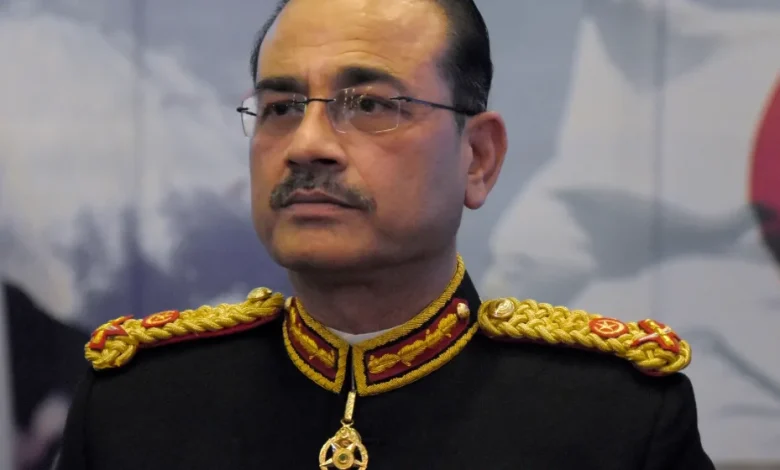
Asim Munir, the Chief of Army Staff of Pakistan, has emerged as the definitive architect of what is already being called the most critical diplomatic breakthrough of 2026. After days of intense, high-stakes shuttle diplomacy that culminated in a historic ceasefire between the United States and Iran, General Munir is reportedly returning from a highly sensitive trip to Tehran today and is scheduled to land in Washington tomorrow. The geopolitical landscape of the Middle East and South Asia has been effectively reshaped by his direct intervention. What started as back-channel communication escalated into the full-scale Islamabad talks, entirely orchestrated by the Pakistani military leadership. In a period defined by terrifying brinkmanship, where global markets teetered on the edge of unprecedented chaos, Munir’s personal coordination of the truce stands out as a masterclass in modern military diplomacy.
The Diplomatic Mastery Behind the Islamabad Talks
The decision to host the defining rounds of negotiations in Islamabad rather than traditional diplomatic hubs like Doha or Muscat signifies a massive paradigm shift in regional diplomacy. Pakistani Army Chief Asim Munir recognized early on that the usual channels were increasingly compromised by widening regional polarization. By offering Islamabad as a strictly neutral, highly secure venue, Pakistan leveraged its unique position: it is one of the very few major Muslim-majority nations that maintains an extensive, deeply rooted military alliance with the United States while concurrently sharing a massive, highly sensitive border with Iran.
During the critical phases of the Islamabad talks, General Munir effectively sequestered the negotiating teams from the relentless pressure of international media and proxy interference. His approach was defined by pragmatism, stripping away the ideological grandstanding that typically stalls US-Iran dialogues. According to diplomatic insiders, Munir personally mediated the most contentious points regarding naval positioning in the Strait of Hormuz and the scaling back of rapid deployment forces. He utilized his deep understanding of military strategy to translate political grievances into actionable, verifiable military stand-downs, presenting both Washington and Tehran with a framework where mutual de-escalation did not equate to a public loss of face for either superpower.
Tehran Negotiations and Pre-Washington Briefings
Before heading to the United States, Asim Munir understood that securing ironclad guarantees from Tehran was the prerequisite for any productive dialogue in Washington. His visit to the Iranian capital today was not merely ceremonial; it was a grueling, multi-hour strategic alignment session with the highest echelons of Iran’s political and military command. During these meetings, Munir had to navigate an environment fraught with deep-seated mistrust towards Western intentions, further inflamed by recent regional provocations.
A critical point of leverage during these Tehran negotiations was mitigating the severe economic and trade threats that had recently dominated headlines. The international community was already bracing for catastrophic disruptions, specifically following the blockade ultimatum where Iran threatens a total trade halt, an action that would have paralyzed global shipping lanes. Munir reportedly convinced Iranian leadership that suspending this blockade was the necessary goodwill gesture required to ensure the Americans remained at the negotiating table. By securing this concession, Munir transformed the atmosphere from one of impending economic warfare to one of cautious diplomatic engagement, providing him with the exact geopolitical ammunition he needs for his pivotal meetings in Washington tomorrow.
Orchestrating the U.S.-Iran Truce Amidst Global Crises
The broader context of this ceasefire cannot be overstated. Prior to Munir’s intervention, the trajectory between Washington and Tehran was pointing almost irreversibly toward a massive, kinetic conflict. Defense analysts across the globe had been modeling the sheer devastation of a direct military confrontation, mapping out scenarios that involved massive collateral damage across the Gulf States and severe interruptions to global energy supplies.
The financial stakes were equally apocalyptic. Just weeks prior to the Islamabad talks, leading economists issued dire warnings regarding the immense global financial burden a full-scale war would trigger. As highlighted by the widely discussed trillion-dollar Iran war cost estimations, a conflict would not only bankrupt regional economies but plunge the entire Western world into a deep, prolonged recession. General Munir used these stark economic realities as a core component of his mediation strategy, reminding both American defense officials and Iranian strategists that a hot war in 2026 would yield no true victor, only mutually assured economic destruction. His ability to fuse military deterrence with macroeconomic foresight was instrumental in finalizing the parameters of the truce.
A Delicate Balance of Regional Powers
Navigating the complex web of Middle Eastern rivalries requires an acute understanding of how a single geopolitical move impacts neighboring states. The U.S.-Iran truce engineered by Asim Munir inevitably alters the calculus for Saudi Arabia, Israel, and the United Arab Emirates. Munir’s strategy involved quiet consultations with Riyadh to ensure that the ceasefire framework did not trigger anxieties regarding Iranian proxy empowerment. By ensuring that the Islamabad talks included verifiable limitations on advanced weaponry transfers across the region, Pakistan successfully walked a diplomatic tightrope.
Furthermore, Munir had to assure allied nations that Pakistan’s active mediation did not signify a pivot away from its traditional Gulf partners, but rather an elevation of Pakistan’s role as the ultimate stabilizing force in the Islamic world. The delicate balance achieved here underscores a profound evolution in Pakistan’s foreign policy, driven heavily by its military leadership, pivoting from regional containment to active, global conflict resolution.
Detailed Timeline of the Mediation Efforts
To fully grasp the magnitude of this diplomatic achievement, one must examine the rapid, intense sequence of events that unfolded over the past fortnight. The speed at which General Munir maneuvered between capitals highlights the urgency of the crisis and the unprecedented access he commanded on both sides of the conflict.
| Date (2026) | Location | Action / Diplomatic Milestone | Outcome Achieved |
|---|---|---|---|
| April 2 | Islamabad | Initial back-channel communications established. | Mutual agreement to pause imminent naval escalations. |
| April 7 | Islamabad | Formal covert talks begin between US and Iranian envoys. | Framework for the temporary ceasefire drafted by Pak military. |
| April 12 | Islamabad | High-level delegations review the final terms. | The “Islamabad Accord” principle agreement reached. |
| April 16 | Tehran | COAS Asim Munir meets Iranian Supreme Leadership. | Final Iranian sign-off and suspension of blockade threats. |
| April 17 | Washington | Scheduled arrival of Asim Munir for Pentagon briefings. | Anticipated formal US ratification of the de-escalation protocols. |
This timeline serves as a testament to the rigorous, exhaustive nature of modern shuttle diplomacy, where mere hours can dictate the difference between peace and a regional conflagration.
Economic Repercussions and Energy Market Stability
Beyond the immediate military relief, the ceasefire orchestrated by Asim Munir has generated profound shockwaves across global energy markets. In the days leading up to the Islamabad talks, oil futures had skyrocketed to historic highs, driven by the terror of a closed Strait of Hormuz. Speculators and global powers alike were scrambling to secure reserves. The instability had inadvertently created massive windfalls for other global players; for instance, reports emerged showing how Russia’s oil revenues doubled amidst the panic, complicating global sanction regimes.
With the announcement of the U.S.-Iran truce, crude prices immediately registered a sharp, stabilizing decline. Market analysts are explicitly crediting the Pakistani-brokered deal for averting a catastrophic global energy crisis. General Munir’s diplomatic triumph has thus translated directly into measurable economic relief for developing nations and industrialized powers alike, proving that strategic military diplomacy can serve as the ultimate stabilizer for volatile global commodities.
Strategic Implications for Pakistan’s Global Standing
The successful mediation of this conflict marks a watershed moment for Pakistan’s international standing. For years, the global narrative surrounding Islamabad has heavily focused on internal economic struggles and border security issues. However, by stepping into the void left by paralyzed international institutions, Pakistan has effectively rebranded itself as an indispensable mediator in global geopolitics. Asim Munir has demonstrated that the Pakistan Armed Forces possess not just formidable tactical capabilities, but sophisticated strategic vision capable of resolving the world’s most intractable conflicts.
This elevation in status brings substantial long-term benefits. It repositions Pakistan as a primary interlocutor for the West in the broader Middle East, potentially unlocking new avenues for strategic partnerships, technological exchange, and economic investment. Experts at the Council on Foreign Relations have frequently noted that military-led diplomacy often succeeds where civilian efforts falter, primarily because military leaders can offer hard security guarantees—exactly what Munir achieved between the Pentagon and the IRGC.
The Intersection of Military Leadership and Geopolitics
The role of the military in executing high-stakes foreign policy is vividly illustrated by General Munir’s current mission. Unlike traditional diplomats who must constantly defer to political capitals for mandate approvals, top-tier military commanders often possess the authoritative latitude to make binding, real-time security commitments. Munir utilized this authority to bypass bureaucratic inertia.
His approach involved speaking the mutual language of threat assessment and strategic deterrence. By communicating with U.S. CENTCOM commanders and Iranian generals on a peer-to-peer level, Munir bypassed the ideological rhetoric that usually poisons U.S.-Iran relations, focusing strictly on operational realities, troop deployments, and the mathematical certainties of mutual destruction if the truce failed.
Looking Ahead to the Washington Agenda
As General Asim Munir boards his flight to Washington, the agenda awaiting him is historically dense. Tomorrow’s meetings at the Pentagon and the State Department are not victory laps; they are rigorous working sessions designed to cement the fragile truce into a lasting diplomatic framework. Munir will present the specific guarantees extracted from Tehran today, demanding reciprocal de-escalation commitments from the United States military apparatus.
The political climate in Washington presents its own unique challenges. Munir will have to navigate a deeply divided American political landscape where hawkish voices continue to demand aggressive posturing. He arrives in the shadow of intense congressional pressure, where figures who have escalated rhetoric on the Iran conflict will heavily scrutinize the terms of the Islamabad-brokered deal. Munir’s task is to provide absolute, verifiable assurance that the ceasefire aligns perfectly with American national security interests while preventing any political faction from derailing the progress achieved.
Long-Term Security and Nuclear De-escalation Goals
Ultimately, the true measure of Asim Munir’s mediation will be its longevity. The immediate goal is the prevention of war, but the overarching strategic objective is to create a sustainable mechanism for continuous U.S.-Iran dialogue. Washington will likely look to Islamabad to serve as the permanent guarantor of this new security paradigm. There are already whispers in diplomatic circles that the success of the Islamabad talks could lay the foundational groundwork for a renewed, more robust nuclear de-escalation treaty in the coming years.
In securing this historic truce, General Asim Munir has not only pulled the Middle East back from the brink of absolute disaster but has also indelibly etched Pakistan’s name into the annals of premier global peacemakers. As the world watches his diplomatic maneuvering in Washington tomorrow, it is clear that the geopolitical center of gravity has momentarily shifted to a visionary military leader who understood that in 2026, the greatest victory is the war that never happens.