Starlink Scandal: South African Politician Caught Lying
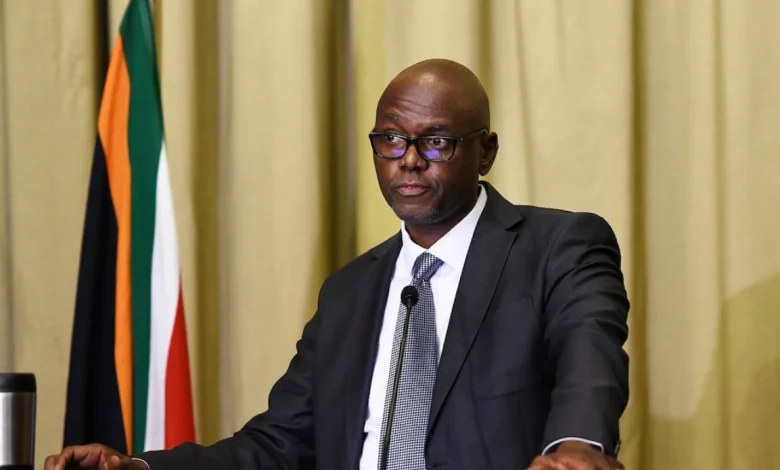
Starlink finds itself at the center of a massive political scandal in South Africa, exposing a deep-seated web of corporate protectionism, governmental failure, and blatant misinformation. A senior South African politician, Khusela Diko, the parliamentary communications chair, has recently been caught outright lying about the capabilities and impact of the satellite internet service in order to protect legacy mobile network operators (MNOs). Diko publicly claimed that the low-earth orbit satellite service “doesn’t move the needle” regarding the dire state of school connectivity in the country. However, a rigorous examination of the underlying data, historical context, and financial realities tells a completely different, much darker story.
The Shocking Rejection of Free Satellite Internet
The controversy ignited when it was revealed that an extraordinary offer to provide free, high-speed satellite internet to thousands of rural schools was deliberately turned away by state officials. In a nation where educational resources are already stretched to their absolute limits, the rejection of a turnkey technological solution borders on administrative sabotage. The satellite provider formally offered to connect 5,000 rural schools completely free of charge. This unprecedented corporate social responsibility initiative would have instantly bridged the digital divide for hundreds of thousands of learners. Instead of embracing the opportunity, government officials, spearheaded by rhetoric from parliamentary leaders like Khusela Diko, dismissed the proposition entirely.
Khusela Diko’s Controversial Move The Needle Claim
During parliamentary sessions addressing the abysmal state of the nation’s digital infrastructure, Khusela Diko made the audacious claim that deploying these satellite terminals “doesn’t move the needle.” To understand the sheer absurdity of this statement, one must look at the hard mathematical facts. Currently, South Africa has approximately 16,000 public schools that operate completely off the grid when it comes to internet access. If a private entity offers to seamlessly connect 5,000 of these institutions, that single initiative would eradicate over 31% of the national educational connectivity deficit overnight. In any statistical or developmental framework, solving nearly a third of a national crisis instantaneously is the very definition of moving the needle. Diko’s conscious decision to downplay this massive technological intervention points directly to a hidden agenda aimed at preserving the lucrative status quo enjoyed by established telecommunications giants.
Behind the Scenes: Protecting Mobile Network Operators
The telecommunications landscape in South Africa is dominated by a powerful oligopoly of mobile network operators. These massive corporations have spent decades building deep financial and political ties with the state. By dismissing disruptive satellite technology, politicians like Khusela Diko are effectively acting as a shield for these legacy MNOs. The existing cellular networks thrive on government tenders and state-subsidized infrastructure projects. If a low-earth orbit satellite company demonstrates that it can bypass the entire terrestrial infrastructure supply chain—laying fiber, erecting massive steel towers, and trenching through communities—the traditional telecommunications operators stand to lose billions in future state contracts. The political establishment recognizes that introducing a vastly superior, decentralized internet service provider directly threatens the established financial ecosystem that has long enriched politically connected contractors.
The $61,000 Rural Tower vs. Free Satellite Terminals
The economics of rural connectivity expose the core of this scandal. Traditional mobile network operators rely on cellular towers to beam data to surrounding communities. The construction of a single rural cellular tower in South Africa currently costs approximately $61,000 (over 1.1 million South African Rand). Once built, this hyper-expensive piece of infrastructure typically serves just one primary school in its immediate vicinity, assuming the local terrain permits a clear signal. Furthermore, these towers require constant electricity, a massive vulnerability in a country plagued by severe, systemic power outages known locally as load shedding. Furthermore, these isolated towers are frequently subjected to vandalism and battery theft. In stark contrast, a satellite terminal operates independently of the terrestrial power grid and local fiber lines. The hardware is a fraction of the cost, requires minimal power, and can be mounted securely on a school roof in under an hour. When a politician argues in favor of a $61,000 single-school solution over a completely free, infinitely scalable satellite alternative, the economic irrationality can only be explained by deeply rooted political lobbying.
South Africa’s 12-Year School Connectivity Failure
The current scandal is merely the latest chapter in a long, tragic history of state-sponsored digital failure. Over 12 years ago, the South African government launched an ambitious policy framework called “SA Connect.” The primary mandate of this initiative was to achieve 100% broadband connectivity for all government facilities, focusing heavily on health clinics and public schools. The deadlines set out in the original gazetted documents have come and gone. The initial targets for 2016 were missed, the revised targets for 2020 were ignored, and as we look at the landscape today, 16,000 schools remain stranded in the digital dark ages.
Broken Promises and Billions Over Budget
The execution of the SA Connect program has been an unmitigated disaster characterized by chronic delays, gross incompetence, and severe financial overruns. The state apparatus partnered with mobile network operators to roll out the terrestrial connectivity, resulting in projects that are currently billions of Rand over budget. Taxpayer money has been funneled continuously into the coffers of telecom monopolies under the guise of connecting the unconnected, yet the results remain functionally non-existent for the most marginalized rural communities. Khusela Diko’s attempt to obfuscate these failures by attacking a free satellite alternative is a desperate political maneuver designed to distract the public from a decade of gross financial mismanagement. This ongoing systemic failure parallels other massive global supply chain and infrastructure collapses, echoing the complex bottlenecks seen in the China economic cracks exposed by commodity shocks, where systemic inefficiencies drain national resources.
Comparing Starlink to Traditional Mobile Network Deployment
To truly grasp why the rejection of the satellite proposition is so devastating to South African learners, a direct technical and financial comparison between traditional rural telecom infrastructure and the proposed satellite technology is required.
| Deployment Metric | Traditional Mobile Network Tower | Low Earth Orbit Satellite Terminal |
|---|---|---|
| Initial Hardware & Installation Cost | ~$61,000 USD per tower location | ~$2,500 USD (Enterprise Unit – Offered Free) |
| Deployment Timeline | 6 to 18 Months (Permitting, Trenching, Building) | Under 2 Hours (Plug and Play Installation) |
| Vulnerability to Local Power Grid Failures | Extremely High (Requires large backup generators) | Extremely Low (Can run on minimal solar power) |
| Geographic Coverage Restraints | Limited to line-of-sight and ground terrain | 100% Universal Coverage across the country |
| Primary Financial Beneficiary | Legacy Telecom Monopolies and Contractors | The End-User (Schools, Teachers, and Students) |
Why the Government Rejected Connect 5,000 Schools
The official line touted by the government to justify the rejection of the satellite service centers around complex telecommunications regulations. The Independent Communications Authority of South Africa (ICASA) strictly mandates that any company seeking a national operating license must have a minimum of 30% ownership by Historically Disadvantaged Individuals (HDI). Because the parent company of the satellite network operates as a globally integrated entity without localized equity carve-outs, it does not meet this specific regulatory threshold. However, critics argue that this regulatory mechanism is frequently weaponized by politicians to protect local monopolies. In a national crisis where millions of children are being denied fundamental educational rights, clinging to an inflexible equity rule while rejecting a massive, free infrastructural gift demonstrates a profound failure of leadership. The government has mechanisms to grant emergency exemptions or specialized educational licenses, yet they actively chose not to utilize them, proving that the barrier is purely political, not insurmountable law.
Regulatory Hurdles and Empowerment Regulations
While the goal of economic empowerment in South Africa is historically vital, its application in the telecommunications sector has often resulted in the enrichment of a tiny elite rather than broad-based community upliftment. The politicians defending the telecom status quo argue that allowing foreign entities to operate without local equity partners undermines national transformation goals. Yet, the brutal irony remains that by blocking an innovative satellite internet system, the state is permanently disempowering an entire generation of rural youth who cannot participate in the modern digital economy. The rigid adherence to these rules in the face of the 12-year SA Connect failure serves as the ultimate indictment of politicians like Khusela Diko, who prioritize boardroom optics over classroom realities.
The Real Victims: 16,000 Unconnected Schools
The ultimate tragedy of this political grandstanding is the profound human cost. In the modern world, internet access is not a luxury; it is a fundamental pillar of education. By keeping 16,000 schools offline, the South African government is ensuring that millions of students graduate without basic digital literacy. These learners are cut off from global research, online educational platforms, digital textbooks, and modern software training. Teachers are unable to access national educational portals, download curriculum updates, or participate in remote training. The refusal to connect these schools sentences rural students to a lifetime of economic disadvantage, perpetuating the very inequality that the government claims its empowerment policies are designed to dismantle.
Market Reactions and the Future of Satellite Internet in Africa
The global technology sector has reacted with a mix of shock and dismay to the South African government’s stance. As the broader aerospace industry continues to rapidly expand, with massive logistical operations scaling globally, as documented in our comprehensive SpaceX Starship launch 2026 mission analysis, the refusal to adopt ready-made solutions looks increasingly archaic. Furthermore, the disruption caused by low earth orbit satellites is fundamentally altering the global telecommunications market. The technological shifts driving this evolution are similar to the aggressive market pivots seen in the latest Apple 2026 innovation news, where legacy systems are continuously rendered obsolete by agile, scalable alternatives. Elon Musk’s digital footprint continues to aggressively challenge state regulatory frameworks worldwide, expanding far beyond his social media endeavors detailed in the Twitter 2026 complete algorithmic shifts. As neighboring African nations rapidly license and deploy satellite services to connect their own rural populations, South Africa risks falling catastrophically behind, anchored to the costly, inefficient, and highly politicized terrestrial networks of the past. The lies spun by Khusela Diko and her parliamentary colleagues will eventually be fully dismantled by the relentless march of technological progress, but until then, 16,000 South African schools remain unjustly left in the dark.