Iran Warns Excluding Lebanon From Ceasefire Risks New War
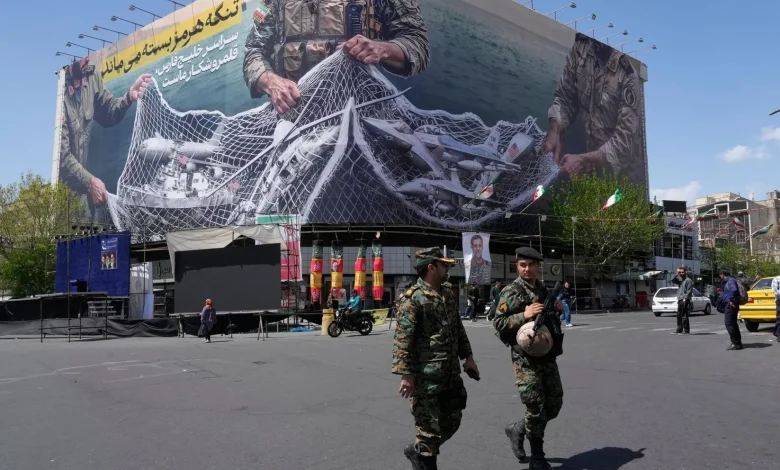
Iran has delivered a stark and unequivocal message regarding the ongoing Middle East peace process, cautioning that any ceasefire agreement failing to include Lebanon will inevitably lead to a resurgence of hostilities. According to a groundbreaking report from Kan News, diplomatic channels have been flooded with explicit warnings from Tehran. These messages emphasize that decoupling the Lebanese theater from broader regional ceasefire initiatives is a catastrophic miscalculation that will destabilize the entire region. The intricate web of alliances and proxy networks meticulously cultivated over decades means that a fragmented approach to peace is virtually impossible to sustain. As negotiators attempt to draft frameworks for de-escalation, this latest development throws a massive wrench into diplomatic efforts, forcing international stakeholders to drastically reevaluate their strategies and confront the reality of a multi-front conflict.
The Core of the Warning: Geopolitical Implications
The geopolitical landscape of the Middle East is fundamentally defined by interconnected conflicts and strategic alliances. When Tehran issues a warning of this magnitude, it is not merely political posturing; it is a reflection of a deeply ingrained military and diplomatic doctrine. The principle of the unity of fronts dictates that an attack or a ceasefire on one front must inherently involve all interconnected allies. By demanding the inclusion of Lebanon in any comprehensive ceasefire agreement, Tehran is reinforcing its protective umbrella over its most crucial regional ally, Hezbollah. This strategy ensures that hostile actors cannot isolate and neutralize individual components of the resistance axis one by one. The implications of this are vast, meaning that international diplomats cannot simply solve one border dispute without addressing the entire regional architecture.
Kan News Report Analysis
The original reporting by Kan News shed crucial light on the behind-the-scenes maneuvering that often dictates the pace of Middle Eastern diplomacy. According to their sources, the warnings were transmitted through intermediary nations, highlighting the severity and formality of the message. The Kan News broadcast indicated that Iranian officials view the attempt to separate the Gaza and Lebanese arenas as a deliberate tactic to weaken their allies strategically. The report further elaborated that intelligence assessments corroborate the readiness of allied forces in Lebanon to escalate their military campaigns if a bilateral ceasefire is imposed elsewhere while leaving the northern front exposed. This level of investigative journalism by Kan News provides essential context for understanding why current negotiations have stalled and why international envoys are expressing mounting frustration.
Regional Stability at Stake
Regional stability is precariously balanced on a knife-edge. The interconnected nature of Middle Eastern geopolitics means that a localized flare-up can rapidly cascade into a massive regional conflagration. The insistence that Lebanon be a core component of any ceasefire recognizes this fragile reality. If a truce is implemented in the southern theaters but active combat continues in the north, the resultant power vacuum and military concentration will inevitably draw in neighboring states, including Syria and potentially Iraq. The ripple effects would disrupt vital maritime trade routes, destabilize global energy markets, and trigger a widespread security crisis that extends far beyond the immediate borders of the conflict zone. Therefore, securing regional stability mandates a holistic approach that simultaneously addresses the grievances and security parameters of all involved parties.
Lebanons Critical Role in the Middle East Equation
Lebanon has historically served as both a flashpoint and a barometer for broader Middle Eastern tensions. Its unique demographic composition, complex political structure, and strategic location on the Mediterranean coast make it an indispensable piece of the regional puzzle. Ignoring Lebanon in peace talks is tantamount to ignoring the epicenter of the regions most potent military and political dynamics.
Hezbollah and the Northern Front
At the heart of the Lebanese equation is Hezbollah, a formidable military and political entity that wields significant influence over the nations domestic and foreign policy. Armed with an extensive arsenal of precision-guided munitions, anti-tank missiles, and a highly disciplined fighting force, Hezbollah represents the most significant immediate deterrent and threat in the northern theater. The Iranian warning explicitly hinges on Hezbollahs operational doctrine, which explicitly links the tranquility of the Lebanese border to broader regional resolutions. If international mediators attempt to finalize a ceasefire that marginalizes Hezbollahs demands or leaves them vulnerable to preemptive strikes, the organization has demonstrated both the capability and the willingness to initiate a massive sustained bombardment. Consequently, the northern front remains the most volatile and critical arena that must be pacified through inclusive diplomatic frameworks.
Economic and Political Fragility
Beyond the military dynamics, Lebanon is grappling with one of the most severe economic and political crises in modern history. The collapse of the national currency, hyperinflation, and political paralysis have left the state fundamentally weakened and highly susceptible to external pressures. A renewed outbreak of large-scale fighting would completely obliterate the fragile remnants of the Lebanese economy, precipitating a catastrophic humanitarian disaster. The internal stability of Lebanon is directly tied to the cessation of regional hostilities. By demanding Lebanons inclusion in the ceasefire, there is a strategic acknowledgment that a failed Lebanese state would create unmanageable security voids, leading to increased radicalization and uncontrollable refugee outflows that would severely impact Europe and neighboring nations.
International Reactions and the Ceasefire Negotiations
The uncompromising stance emanating from Tehran has triggered a flurry of diplomatic activity across global capitals. Negotiators from the United States, the European Union, and the United Nations are scrambling to recalibrate their peace proposals to prevent the collapse of the entire mediation process. The realization that a piecemeal approach is no longer viable has forced a dramatic shift in international negotiating tactics.
Israeli Perspectives and Security Concerns
For the Israeli defense establishment, the prospect of a comprehensive ceasefire that inherently links multiple fronts presents profound strategic dilemmas. Israel has traditionally preferred to compartmentalize its security challenges, dealing with each threat vector individually to prevent enemies from coordinating multi-front assaults. The demand to include Lebanon in the ceasefire is viewed with immense skepticism, as Israeli strategists fear it legitimatizes the unity of fronts concept. Furthermore, residents of northern Israel demand absolute security and the enforcement of UN Security Council Resolution 1701, which mandates the withdrawal of militant forces north of the Litani River. Reconciling these stringent security requirements with the demands for a holistic regional ceasefire remains one of the most intractable challenges facing international diplomats today.
The United States and Western Diplomatic Efforts
The United States, operating as the primary broker in these high-stakes negotiations, finds itself navigating an increasingly perilous diplomatic minefield. US envoys, including Amos Hochstein, have conducted extensive shuttle diplomacy to find a mutually acceptable formula. The Biden administration recognizes that a failure to secure a comprehensive ceasefire will likely draw American military assets deeper into the conflict, a scenario Washington is desperate to avoid during an election cycle. Western diplomatic efforts are currently focused on designing parallel but technically separate agreements that satisfy the demand for an inclusive ceasefire without formally binding the different theaters together in a legally restrictive treaty. This diplomatic sleight of hand is incredibly complex and requires immense political capital to execute successfully.
Data Table: Key Actors in the Ceasefire Negotiations
| Key Actor | Primary Strategic Objective | Stance on Lebanese Ceasefire Inclusion | Preferred Negotiation Outcome |
|---|---|---|---|
| Iran | Preserve resistance axis, project regional power, maintain deterrence. | Mandatory. Warns of renewed regional fighting if Lebanon is excluded. | Comprehensive, multi-front agreement. |
| Israel | Dismantle immediate threats, secure northern and southern borders. | Skeptical. Prefers isolated, bilateral agreements to prevent front linkage. | Separation of arenas, enforcement of UN Resolution 1701. |
| Lebanon (Hezbollah) | Military survival, political dominance, solidarity with allied fronts. | Mandatory. Refuses to halt operations independently of other theaters. | Cessation of all hostilities concurrently. |
| United States | Prevent regional war, stabilize energy markets, protect allied interests. | Pragmatic. Seeking a formula that appeases all sides through parallel deals. | De-escalation via complex shuttle diplomacy. |
The Threat of Renewed Fighting: What It Looks Like
If the warnings conveyed via Kan News materialize and diplomatic efforts fail to produce an inclusive ceasefire, the ensuing conflict will dwarf previous engagements in both scale and ferocity. The mechanics of modern warfare in the Middle East guarantee that any renewed fighting will involve advanced technology, massive civilian disruption, and profound global economic shocks.
Escalation Scenarios
An escalation scenario in the absence of a Lebanese ceasefire inclusion would likely begin with an intense intensification of cross-border artillery and rocket fire. This would rapidly evolve into the deployment of precision-guided ballistic missiles targeting critical infrastructure, including power grids, desalination plants, and major military installations deep within enemy territory. Concurrently, naval assets in the Eastern Mediterranean and the Red Sea would face severe threats from anti-ship missiles and explosive-laden drone swarms, effectively blockading crucial international shipping lanes. Ground incursions, characterized by grueling urban combat and complex subterranean warfare, would further drain military resources and exponentially increase casualty rates. The utilization of cyber warfare to cripple communication networks and financial institutions would serve as a constant backdrop to the kinetic military operations, creating a truly multi-dimensional battlespace.
Civilian Impact and Humanitarian Crisis
The human cost of renewed fighting would be utterly catastrophic. Millions of civilians on both sides of the border would be subjected to relentless bombardments, forcing mass evacuations and generating a refugee crisis of unprecedented proportions. In Lebanon, where the medical and emergency infrastructure is already on the brink of total collapse due to the economic crisis, the inability to treat mass casualties would result in unimaginable suffering. The destruction of civilian infrastructure, including schools, hospitals, and residential neighborhoods, would violate core tenets of international humanitarian law and leave generational scars. The international community would be overwhelmed by the logistical nightmare of delivering humanitarian aid to active combat zones where supply lines are routinely targeted and destroyed.
Future Prospects for a Comprehensive Ceasefire
Despite the dire warnings and the immense complexities involved, a pathway to a comprehensive ceasefire still exists, provided that all major stakeholders demonstrate a willingness to compromise and prioritize long-term stability over short-term tactical advantages. This requires a paradigm shift in how international diplomacy is conducted in the region.
Integrating Multi-Front Diplomacy
Future diplomatic success relies entirely on the integration of multi-front diplomacy. Mediators must abandon the outdated concept of isolated bilateral agreements and embrace a holistic framework that addresses the security concerns of all interconnected actors simultaneously. This involves establishing back-channel communications with non-state actors and their state sponsors to ensure that no critical faction is left out of the consensus-building process. Guaranteeing the simultaneous implementation of ceasefire protocols across different theaters is the only viable method to satisfy the demands highlighted in the Kan News report while preventing any single actor from exploiting a temporary lull in fighting to rearm and reposition.
Long-Term Strategies for De-Escalation
Securing a temporary ceasefire is merely the first step; maintaining it requires robust long-term strategies for regional de-escalation. This includes the deployment of strengthened international peacekeeping forces with expanded mandates and stricter enforcement capabilities to monitor border regions effectively. Furthermore, substantial international economic investment is required to stabilize fragile states like Lebanon, providing alternative economic opportunities that reduce the appeal of militant mobilization. Establishing a permanent regional security forum where historical adversaries can engage in continuous dialogue, manage disputes, and build mutual trust is essential. Ultimately, acknowledging the interconnected nature of the Middle East, as emphatically warned by Tehran, is the fundamental prerequisite for transforming a fragile ceasefire into enduring regional peace.