Blockade Speculation: Why Trump’s Iran Posturing Mirrors Venezuela but Fails
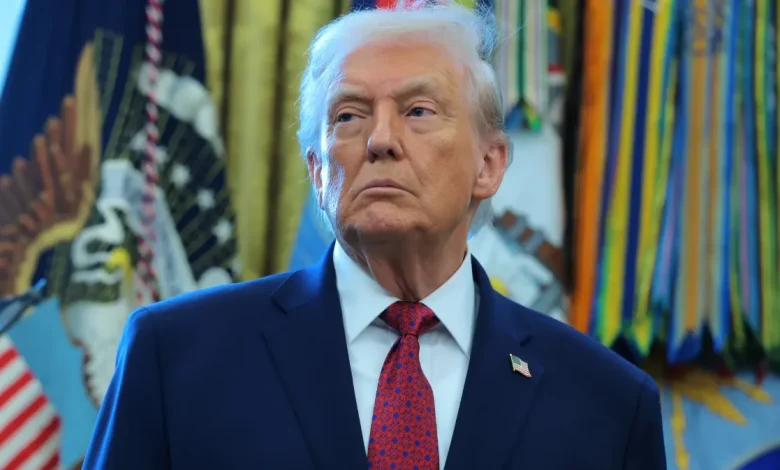
Blockade rhetoric is once again dominating the global geopolitical discourse following a highly controversial social media maneuver. Donald Trump recently reposted a detailed article highlighting the aggressive naval blockade he authorized during his previous tenure, a strategic move that successfully brought Venezuela to its knees and ultimately facilitated the snatching of Nicolas Maduro. The resurfacing of this specific military accomplishment has sent shockwaves through international diplomatic circles, with intelligence analysts, energy sector executives, and political commentators intensely wondering if this is a calculated telegraphing of his impending strategy for the Islamic Republic of Iran. While the historical parallel presents a compelling narrative of absolute maritime dominance, there is one monumental, undeniable problem with this comparison: it is quintessential paper tiger posturing. The operational, economic, and geopolitical situation in Iran is massively different and infinitely more complex than the collapse of the Venezuelan regime.
The Venezuela Blueprint vs. The Iranian Reality
When analyzing the success of the South American strategy, one must understand the unique vulnerabilities of the target. The Venezuelan blockade worked primarily because the nation was already suffocating under the weight of catastrophic internal mismanagement, hyperinflation, deeply decayed petroleum infrastructure, and total regional isolation. The military intervention was less of a strategic conquest and more of an inevitable conclusion to a decades-long systemic rot. Comparing this fragile, isolated state to Iran requires a suspension of geopolitical reality.
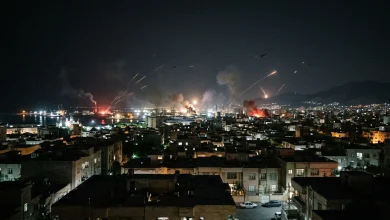
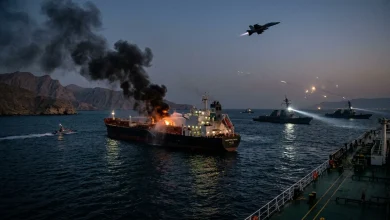
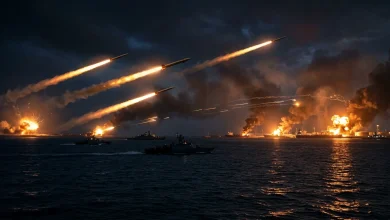
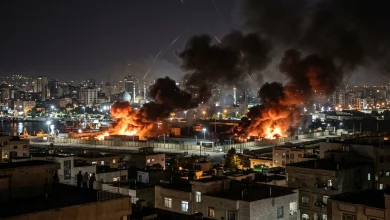
Iran is an entirely different adversary. The Islamic Republic possesses one of the most sophisticated asymmetric naval capabilities in the world, specifically designed to counter conventional naval blockades. Their coastline stretches for thousands of miles along some of the most critical maritime choke points on the planet. Unlike Venezuela, which passively absorbed the economic pressure, Iran maintains a highly aggressive defensive posture. They command a vast network of proxy forces across the Middle East and possess advanced anti-ship ballistic missiles, drone swarms, and fast-attack submarine fleets. Attempting to replicate the Maduro playbook against Tehran would not result in a quiet surrender; it would instantly ignite a regional conflagration that no amount of carrier strike groups could easily contain without sustaining severe casualties and collateral damage.
Kharg Island and the Vulnerability of Global Oil Markets
The core argument for a prospective blockade hinges on paralyzing Iran’s economic lifeblood. Yes, both Venezuela and Iran possess massive, world-leading oil reserves, but Iran is actively using its geographical dominance to inflict severe economic harm on the rest of the world. Through proxy harassment and direct intervention, Iran has repeatedly demonstrated its ability to choke off the Strait of Hormuz, effectively holding global energy supplies hostage. Trump’s theoretical counter-move would be to blockade Kharg Island, the hyper-critical terminal where Iran exports over 90% of its crude oil. On paper, severing this artery seems like a definitive death blow to the Ayatollah’s regime.
But what happens the day after a Kharg Island blockade is established? Oil prices, which have already spiked dramatically thanks to Iran choking the Strait of Hormuz, would instantly skyrocket into unprecedented territory. Global energy markets operate on razor-thin margins of supply and demand. Removing millions of barrels of Iranian crude from the daily global supply chain would trigger immediate panic buying, sending the price per barrel soaring well past crisis levels. We have already witnessed the profound volatility of these markets; as recent shifts in global oil market fluctuations have shown, energy shocks inevitably trickle down to the everyday consumer, grounding logistics and crippling international commerce.
The Ripple Effect on Russian Energy Dominance
Perhaps the most glaring strategic paradox of executing an Iranian blockade lies thousands of miles to the north, in Moscow. If the United States successfully removes Iranian oil from the global market, a massive vacuum is created. To prevent a total collapse of Western economies due to hyper-inflated energy costs, the Trump administration would find itself in a terrible diplomatic bind: it would have to tacitly allow, or even encourage, the continued and expanded purchase of Russian oil.
This reliance on Russian crude would inadvertently strengthen Vladimir Putin’s economic position at a crucial juncture in global history. According to historical production metrics frequently cited by the U.S. Energy Information Administration (EIA), shifting demand toward Russian exports directly pads the Kremlin’s war chest. Therefore, blockading Iran essentially functions as an economic stimulus package for Russia, buying Putin invaluable time and resources to sustain his prolonged and devastating campaign in Ukraine. Trading one authoritarian adversary’s economic collapse for another’s triumph is a net-negative for global stability.
Strategic Dilemmas for China and India
Any comprehensive analysis of an Iranian blockade must account for the primary consumers of Tehran’s sanctioned crude: China and India. Both of these economic juggernauts rely heavily on the discounted oil provided by the Islamic Republic to fuel their massive, energy-hungry industrial sectors. If Trump were to order a total naval blockade of Kharg Island, he would not just be confronting the Iranian Revolutionary Guard; he would be directly antagonizing Beijing and New Delhi.
Are these rising global superpowers simply going to accept severely diminished oil supplies and accept astronomically higher global oil prices just so that an American President can look strong on the domestic political stage? The answer is an unequivocal no. A blockade would likely accelerate their efforts to bypass the U.S. dollar entirely, pushing them to secure energy resources through alternative, non-Western financial mechanisms. This would drastically accelerate current international currency market dynamics, potentially dethroning the petrodollar and permanently weakening America’s ability to wield financial sanctions as a weapon of statecraft. Beijing and New Delhi would view the blockade as a direct assault on their sovereign economic security, forcing them into a tighter, anti-Western coalition with Tehran and Moscow.
Domestic Fallout: U.S. Economy and Inflation Spikes
While the geopolitical consequences are severe, the domestic fallout within the United States renders the blockade scenario entirely toxic. The U.S. economy is currently experiencing its highest inflation rate in two years. American consumers are already exhausted by the rising cost of living, soaring grocery bills, and relentless housing costs. Introducing a massive, self-inflicted oil supply shock into this fragile economic ecosystem would be political suicide.
Higher crude prices translate immediately to higher prices at the pump, which in turn spikes the cost of transporting every single consumer good across the country. We are already seeing the downstream effects of poor energy management through rising utility and electricity bills under the current administration. Adding a $150 or $200 barrel of oil to this equation would likely push the United States into a deep, grinding recession. For an administration that prides itself on economic prosperity and lower taxes, actively initiating a global energy crisis that impoverishes the American middle class is a contradictory and self-destructive policy.
Comparing the Geopolitical Checkmate: A Data Perspective
To truly understand why the comparison between these two nations is fundamentally flawed, we must look at the objective data surrounding both scenarios. The operational matrix below illustrates the vast chasm between a decaying South American regime and a heavily armed Middle Eastern regional power.
| Strategic Factor | Venezuela (Maduro Scenario) | Iran (Kharg Island Scenario) |
|---|---|---|
| Military Capability | Severely degraded, low morale, obsolete equipment. | Highly advanced, proxy networks, formidable missile arsenal. |
| Global Oil Impact | Negligible. Production had already collapsed pre-blockade. | Catastrophic. Removing 90% of Iranian exports spikes global prices. |
| Geopolitical Allies | Isolated; nominal support from Russia and Cuba. | Deeply integrated with Chinese energy needs and Russian strategy. |
| Retaliatory Threat | Minimal to non-existent beyond domestic borders. | High probability of asymmetric warfare in the Strait of Hormuz. |
| U.S. Domestic Risk | Low. Broad bipartisan support with zero economic blowback. | Extreme. Guaranteed domestic inflation and severe recession risks. |
This data clearly demonstrates that while the overarching concept of a naval blockade remains the same, the application of that tool against Iran carries a multiplier of risk that simply did not exist in the Caribbean theater.
Paper Tiger Posturing or Imminent Threat?
When all these factors are meticulously weighed against one another, a clear picture emerges. The reposting of the Venezuela article is designed to project strength, to satisfy a domestic political base that craves decisive, muscular foreign policy, and to rattle the cages in Tehran. However, true strategic implementation is constrained by the immovable realities of global economics. Posturing on social media is entirely free; executing a full-scale naval blockade in the Persian Gulf would cost the administration more political and economic capital than it is willing—or able—to pay.
Furthermore, the systemic risks associated with a potential military miscalculation cannot be overstated. Prominent financial institutions have clearly mapped out the disastrous outcomes of such an escalation, echoing the dire Bank of England warnings regarding a U.S.-Iran war. A blockade is an act of war, and once the first shot is fired, the administration loses all control over the narrative and the global economy. Until the U.S. can fully insulate its economy from global oil shocks, completely decouple from the repercussions of Chinese and Indian energy demands, and nullify the threat of Russian energy hegemony, the concept of an Iranian blockade will remain exactly what it is today: dangerous, high-stakes paper tiger posturing.