Péter Magyar Wins Hungary Election: Oil Policy Stance Shocks EU
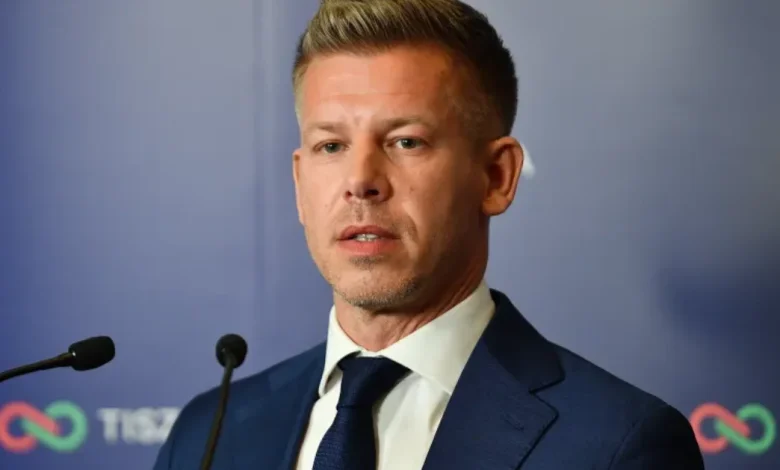
Péter Magyar has officially secured a monumental victory in Hungary’s latest parliamentary elections, reshaping the political trajectory of Central Europe in 2026. The charismatic leader, who initially galvanized a massive opposition movement on the promise of domestic reform, anti-corruption measures, and restoring democratic norms, is already making international headlines for his foreign policy declarations. While many in the European Parliament anticipated a sharp pivot toward Western integration and a complete departure from the nationalist policies of the previous administration, Magyar’s inaugural policy statements regarding energy security have sent shockwaves through the continent. Defying the expectations of progressive European coalitions, the newly elected leader unequivocally stated that Hungary will not stop buying Russian oil. This pragmatic, albeit highly controversial, stance indicates that the fundamental realities of Hungarian energy infrastructure and economic survival may override the ideological aspirations of Brussels.
Péter Magyar Claims Victory in Historic Hungarian Election
The rise of the Tisza Party represents one of the most significant political shifts in recent Hungarian history. For over a decade, Viktor Orbán’s Fidesz party dominated the political landscape, often clashing with the European Union over rule-of-law disputes, media freedom, and an increasingly cozy relationship with Moscow. Magyar’s campaign brilliantly capitalized on voter fatigue, economic stagnation, and institutional frustration, successfully uniting a fractured electorate. However, governing a landlocked nation heavily dependent on inherited infrastructure presents immediate challenges that campaign rhetoric cannot magically solve. Despite running as an agent of change, Magyar’s transition from an opposition firebrand to the ultimate decision-maker necessitates complex geopolitical maneuvering.
The Political Shift from Viktor Orbán
Observers who predicted an immediate cessation of Eastern European energy dependencies are now forced to reconcile Magyar’s domestic reform agenda with his unapologetically realist foreign policy approach. His strategy suggests an administration that separates domestic democratic restoration from international economic pragmatism, a duality that is proving difficult for European diplomats to digest. Unlike his predecessor who often wielded energy policy as a weapon of defiance against Western liberal democracies, Magyar frames his decisions purely through the lens of empirical economic necessity, creating a far more complex diplomatic challenge for European leadership.
Controversial Stance on Russian Oil
At the heart of the emerging diplomatic friction is Magyar’s declaration that Hungary will continue its procurement of Russian crude. The European Union has spent the past several years aggressively diversifying its energy portfolio, pouring billions of euros into liquid natural gas (LNG) terminals, renewable energy grids, and alternative pipeline routes to isolate the Russian economy. Against this backdrop, Magyar’s insistence on maintaining the status quo for Hungary’s energy imports is viewed by many in Brussels as a betrayal of European solidarity. Yet, from the perspective of Budapest, the policy is framed around national survival. The newly elected administration argues that ideological boycotts cannot warm homes or power factories, especially when alternative energy sources remain prohibitively expensive or logistically unfeasible for a nation without maritime ports.
Prioritizing the Safest and Cheapest Energy Sources
Magyar recently articulated his administration’s guiding principle for energy procurement: Hungary will seek the safest and cheapest oil regardless of its origin. This bluntly transactional approach strips away the moral and geopolitical dimensions that have characterized European energy policy since the escalation of the conflict in Ukraine. The Hungarian energy sector, dominated by the MOL Group, operates refineries that are specifically calibrated to process Russian Ural crude, which is delivered directly via the Druzhba (Friendship) pipeline network. Reconfiguring these highly complex industrial facilities to refine lighter, sweeter crude from alternative global markets would require a massive capital injection and years of technical overhauls. Furthermore, substituting direct pipeline deliveries with alternative supplies adds exorbitant transit fees and premiums. By prioritizing the safest and cheapest sources, Magyar is essentially shielding the Hungarian consumer from the profound inflationary pressures that have plagued other European economies attempting rapid energy transitions. The interconnected nature of these costs reflects the broader economic dynamics seen when global oil plunges and market shifts alter the financial reality of import-dependent nations.
Raising Eyebrows in Brussels
The reaction from the European Union headquarters has been a mixture of dismay and urgent diplomatic recalibration. High-ranking officials within the European Commission had quietly celebrated Magyar’s electoral success, interpreting it as the definitive end of Hungary’s role as the EU’s internal disruptor. The rapid realization that Magyar intends to maintain the controversial energy lifelines to Moscow has resulted in raising eyebrows in Brussels and beyond. European leaders are now grappling with the uncomfortable reality that structural economic dependencies often transcend partisan politics. If a self-proclaimed reformist government cannot untangle itself from Russian energy, it raises profound questions about the viability of the EU’s long-term energy isolation strategy.
Conflicts with European Union Energy Directives
The core of the dispute lies in the European Union’s REPowerEU initiative and successive sanctions packages designed to permanently cripple Russia’s hydrocarbon export revenues. While landlocked nations like Hungary, Slovakia, and the Czech Republic were granted temporary exemptions from the initial embargoes to allow time for infrastructure adjustments, the expectation was a gradual but definitive phase-out. Magyar’s rhetoric suggests a permanent normalization rather than a temporary necessity. This stance directly challenges the authority of EU energy directives and sets the stage for protracted legal and political battles. The European Commission holds significant leverage, including the withholding of crucial cohesion funds and pandemic recovery grants. To understand these high-stakes geopolitical maneuvers, one can draw parallels to the complexities observed in breakdowns in international peace negotiations, where economic leverage and national security often collide.
The Future of Sanctions on Russia
Perhaps the most contentious element of Magyar’s early policy framework is his explicit hope that the European Union lifts all economic sanctions on Russia once the war in Ukraine formally concludes. For many Western and Northern European nations, the sanctions regime is viewed not merely as a wartime necessity, but as a long-term containment strategy designed to permanently limit Russia’s military-industrial capacity. The prevailing sentiment in Warsaw, the Baltic capitals, and Scandinavia is that normalizing relations with Moscow post-conflict would be a catastrophic strategic error. Magyar, conversely, envisions a rapid return to economic pragmatism. He argues that the European industrial base is suffering irreparable harm due to artificially inflated energy costs and the loss of Eastern markets.
Anticipating Post-War Trade Resumption
By advocating for the eventual lifting of sanctions, Magyar is positioning Hungary as a potential bridge for post-war economic reconciliation. This perspective is rooted in a highly transactional worldview where long-term European prosperity depends on access to cheap Eurasian raw materials. The Hungarian leader contends that once a ceasefire is achieved and territorial disputes are frozen or resolved, maintaining an economic iron curtain across the continent will only serve to impoverish European citizens while pushing Russia further into alternative alliances. This shifting global dynamic is reminiscent of other major realignments, such as the shifting regional agreements heavily influenced by emerging superpowers. Magyar’s foresight, while deeply unpopular in Brussels, resonates with industrial sectors across Europe that have been quietly lobbying for an eventual normalization of trade relations to remain globally competitive.
Analyzing the Economic Impact on Hungary and the EU
To comprehend the gravity of Magyar’s energy decisions, it is crucial to analyze the stark economic differences between Russian oil dependence and alternative market sourcing. The table below outlines the critical metrics driving Hungary’s controversial stance.
| Energy Sourcing Metric | Russian Oil Supply (Druzhba Pipeline) | Alternative Supply (Adriatic Pipeline) |
|---|---|---|
| Cost per Barrel | Significantly discounted (Ural crude) | Premium pricing (Brent crude + transit) |
| Transit Security | Direct pipeline connection, historically stable | Vulnerable maritime and third-party bottleneck routes |
| Refinery Compatibility | High (MOL refineries explicitly optimized for Urals) | Low (Requires multi-billion dollar infrastructure overhaul) |
| EU Compliance | Exemptions heavily scrutinized and politically toxic | Fully compliant with broader European energy directives |
| Inflation Impact | Stabilizes domestic consumer fuel and utility prices | Triggers immediate inflationary spikes across sectors |
As the data clearly indicates, abandoning the established supply chains would result in a massive economic shock to the Hungarian economy. The cost of living would surge, industrial output would contract, and the newly elected government would likely face immediate domestic unrest. Magyar’s calculation is that absorbing the diplomatic wrath of Brussels is a worthwhile price to pay for maintaining domestic economic stability. The broader European Union, however, views this table not as an excuse, but as an indictment of Hungary’s failure to invest in energy diversification over the past decade. Independent assessments by international energy monitors confirm that while the transition is costly, it is technically viable over a multi-year horizon if the political will exists.
Navigating Geopolitical Complexities in 2026
As the global landscape continues to evolve in 2026, the intersection of domestic elections and international security has never been more volatile. Magyar’s victory and subsequent policy declarations underscore the profound tension between ideological foreign policy and raw economic survival. The world is watching how the European Union will handle a member state that aligns with core European democratic values internally but vigorously pursues its own nationalist agenda externally. This phenomenon is not isolated to Central Europe; it mirrors massive global changes, akin to the geopolitical shifts and market impacts currently reshaping transatlantic relations and global trade architectures. Hungary’s position serves as a critical test case for the limits of European integration and the enforcement mechanisms available to Brussels.
Strategic Autonomy vs. European Unity
The fundamental debate triggered by Péter Magyar’s election centers on the concept of strategic autonomy. Can a European member state unilaterally declare its own energy security parameters without fatally undermining the collective unity of the bloc? Magyar firmly believes that true European strength lies in the economic resilience of its individual nations, rather than enforced compliance with centralized mandates that disproportionately harm peripheral economies. As he continues to advocate for the safest and cheapest oil and the eventual dissolution of the Russian sanctions regime, he establishes himself as a pragmatic, albeit disruptive, force in European politics. His tenure will undoubtedly force a painful reckoning within the European Union regarding the realistic pace of the green transition, the long-term containment of Russia, and the acceptable boundaries of national sovereignty within an increasingly fractured global order.