Airstrikes against Iran Enter 9th Day After Peace Talks Collapse
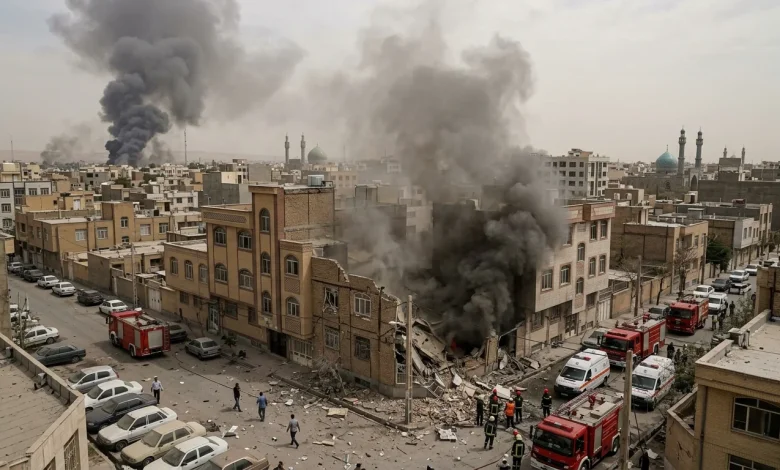
Table of Contents
Airstrikes against Iran have entered a critical ninth consecutive day of intensive military bombardment by the United States following the dramatic collapse of high-stakes peace negotiations. The rupture in diplomacy has plunged the Persian Gulf into its most volatile security crisis in decades, centering on a disputed draft memorandum of understanding (MoU) designed to govern navigation and commercial traffic through the highly strategic Strait of Hormuz. With naval blockades, retaliatory drone attacks, and heavy casualties on both sides, the confrontation has transitioned from tactical exchanges into a state of active, theater-wide warfare. As the airstrikes against Iran enter ninth day of sustained engagement, the geopolitical landscape of the Middle East stands at a dangerous crossroads, threatening global energy corridors and regional stability.
The Collapse of the Strait of Hormuz MoU
The core catalyst for the resumption of hostilities was the sudden failure of a 14-point memorandum of understanding (MoU) that had been negotiated with international mediation. The preliminary pact, which was initially hailed as a landmark diplomatic achievement, was scheduled to be officially signed in Switzerland. The agreement proposed a permanent cessation of military operations across all regional fronts and aimed to end the maritime blockade of Iranian ports in exchange for reopening the critical shipping lanes of the Strait of Hormuz. However, deep-seated disagreements regarding cargo inspection protocols, verification of weapons-smuggling bans, and the presence of international patrol fleets quickly derailed the final implementation stages.
During high-level technical talks in Doha, negotiations stalled when both Washington and Tehran accused each other of violating the interim ceasefire. Secretary of State Marco Rubio criticized Tehran for utilizing the strategic waterway as political leverage, stating that Iran was weaponizing the strait to pressure international trade partners. As the maritime agreement dissolved, both nations officially suspended the MoU, setting the stage for a rapid escalation of tactical bombing campaigns and direct military engagements.
Casualty Reports: Kurdistan and Jordan
The human cost of this multi-front confrontation has risen sharply, marked by tragic incidents affecting personnel across several neighboring countries. U.S. Central Command (CENTCOM) recently confirmed that an American service member was killed during a controlled detonation of an Iranian drone in the Kurdistan Region of Iraq. This highly technical operation went wrong when the drone’s salvageable explosive payload detonated prematurely, highlighting the severe risks that explosive ordnance disposal teams face in the active theater.
Simultaneously, forensic recovery units operating at Muwaffaq Salti Air Base in Jordan discovered unidentified human remains amidst the rubble left by a devastating Iranian strike that occurred last Friday. That initial strike had already resulted in the confirmed deaths of two service members: 1st Lt. Tyler James Feehan, 25, of Ewa Beach, Hawaii, and Pvt. Isabella Gonzales, 19, of Carrollton, Texas. Military forensic specialists are currently conducting DNA profiling and dental comparisons to determine the identity of the recovered remains, and CENTCOM has not yet specified whether the deceased is another U.S. soldier or local support staff. These tragic losses have contributed to a political environment where us troops killed regional tensions surge to unprecedented levels, causing deep domestic and congressional debates regarding the long-term presence of American forces in the region.
Tactical Progression of the Bombing Campaign
The transition from diplomatic engagement to active warfare occurred in rapid, daily phases, with each wave of attacks increasing in physical target depth. Following the highly coordinated sixth night of US attacks, which focused heavily on early-warning radar arrays and coastal air-defense command nodes, military strategists aimed to degrade Iran’s capability to track incoming aircraft. When those strikes failed to bring Tehran back to the negotiating table, the campaign expanded dramatically.
By the time the iran airstrikes escalate us launches 7th night commenced, the list of military targets grew to include hardened missile storage bunkers, internal logistics lines, and command centers deeply embedded in western and southern Iran. Over the weekend, the aerial campaign extended past the immediate littoral zones of the Persian Gulf, reaching northern administrative centers like Tabriz. Strategic targets have now broadened to include civilian infrastructure supporting military logistics, such as bridges and primary electrical grids, alongside a civilian nuclear power facility under construction in Darkhovin. Although the White House denies hitting civilian targets intentionally, the heavy use of precision munitions near urban centers has drawn severe criticism from international humanitarian groups.
Strategic Analysis of U.S. Central Command
From an operational standpoint, the coordinated strikes on Iran by US Central Command are engineered to achieve complete maritime dominance in the Persian Gulf and the Gulf of Oman. By utilizing carrier-based aircraft from the U.S. Navy and long-range stealth bombers deployed from strategic regional bases, CENTCOM has executed a doctrine of systematic degradation. The immediate military objective is to strip the Islamic Revolutionary Guard Corps (IRGC) of its anti-ship missile batteries and drone launch sites, which have repeatedly threatened commercial shipping in the area.
President Donald Trump emphasized that these intensive airstrikes were carried out “in honor” of the dead military personnel, signaling to domestic audiences that Washington would maintain an aggressive posture. CENTCOM officials assert that all strikes are heavily vetted to minimize non-combatant casualties, yet the expansive target list suggests an effort to impose massive economic and operational costs on Tehran to force a return to the negotiating table under strict, non-negotiable terms.
The Regional Response and Naval Countermeasures
In response to the air campaign, Iran has mobilized its maritime and conventional forces, utilizing asymmetrical tactics to counter superior U.S. airpower. This defensive posture is heavily reliant on a combination of fast-attack naval craft, smart sea mines, and swarming drone technology designed to disrupt U.S. Navy movements and restrict access to the Persian Gulf. This rapid escalation has effectively resurrected the naval blockade and port bans that have historically choked off Iranian energy exports and crippled the country’s domestic economy.
As the Iran US conflict escalates, regional neighbors find themselves caught in a complex web of security alliances and economic risks. Countries like Qatar, Oman, and Kuwait have issued urgent statements condemning the military strikes and calling for immediate ceasefires, fearing that the conflict could expand to involve their own territories or critical resource-sharing fields. The IRGC has warned neighboring states that allowing U.S. forces to use their airspace for operations against Iran would make them legitimate targets for retaliatory strikes, adding to the extreme anxiety of regional leaders.
Historical Timeline of the Conflict
The current hostilities represent the culmination of months of deteriorating relations, punctuated by short-lived ceasefires and brief diplomatic openings. Understanding the progression of this conflict requires analyzing the key milestones and casualties that have shaped the path to the current ninth day of continuous bombing. The following data table details the timeline of major escalations and critical incidents that have occurred during this military campaign:
| Conflict Phase / Date | Location / Target Zone | Key Tactical Developments | Strategic Outcomes & Casualties |
|---|---|---|---|
| February 28, 2026 | Persian Gulf Coastlines | Initial outbreak of hostilities; U.S. and Israel launch joint defensive operations against Iranian coastal installations. | Triggered widespread regional mobilization; initial casualties reported on both sides. |
| June 17, 2026 | Geneva / Zurich, Switzerland | Drafting and announcement of the 14-point memorandum of understanding (MoU). | Temporary ceasefire established; global oil prices temporarily decline. |
| July 17, 2026 (Friday) | Muwaffaq Salti Air Base, Jordan | Direct Iranian drone and missile strike targeting U.S. coalition base installations. | Two U.S. service members killed; unidentified remains later recovered from the site. |
| July 18-19, 2026 | Iraqi Kurdistan / Central Iran | Controlled detonation of captured Iranian drone; target list expands to Tabriz and southern electricity grids. | One U.S. explosive ordnance disposal specialist killed; severe infrastructure damage in Iran. |
| July 20, 2026 (Ninth Day) | Darkhovin & Strait of Hormuz | Bombing of Darkhovin nuclear site and vital bridges along the strait. | Complete collapse of the peace framework; re-imposition of total port bans. |
Humanitarian and Civilian Impact
While the tactical and strategic narratives of the conflict dominate headlines, the humanitarian crisis unfolding inside Iran is reaching alarming proportions. Local health and emergency services in Tehran and the southern provinces report that over 3,000 Iranians—many of whom are non-combatant civilians—have lost their lives since the conflict began in late February. The destruction of electrical facilities and water desalination plants along the southern coastline has left hundreds of thousands of residents without access to drinking water or stable electricity during the extreme summer heat, exacerbating the humanitarian distress.
Particularly devastating has been the impact on the region’s youth. A highly controversial strike on a girls’ school resulted in the deaths of 168 children and 14 adults, provoking global outrage and protests across multiple international capitals. U.S. military spokespersons have stated that a full, formal review of that specific strike has not yet been completed, but they reiterate that military targets are selected based on strict intelligence parameters aimed at neutralizing immediate threats to coalition forces. International humanitarian watchdogs continue to call for independent investigations into civilian casualties, warning that the targeting of dual-use infrastructure violates established international legal norms.
Global Economic Consequences
The economic shockwaves of the failed peace talks and the resulting nine-day bombing campaign have spread far beyond the borders of the Middle East. The Strait of Hormuz serves as the primary conduit for approximately one-fifth of the world’s petroleum supply, making any disruption to its transit routes an immediate threat to the global economy. Following the suspension of the MoU and the re-imposition of port bans, international maritime insurance rates for transit through the Persian Gulf have skyrocketed, forcing major shipping conglomerates to reroute their vessels around the Cape of Good Hope, adding significant transit time and cost.
Global energy markets have reacted with extreme volatility. Crude oil futures spiked immediately following the collapse of the Doha talks, with analysts warning of severe fuel inflation if the maritime blockade remains in force for an extended period. The closure of the strait also threatens the export of liquefied natural gas (LNG) from key Gulf producers, presenting a major energy security challenge for European and Asian economies that rely heavily on imports. Financial institutions warn that prolonged military action will likely trigger broader supply chain bottlenecks, contributing to inflationary pressures across global manufacturing sectors.
Future Diplomatic Outlook
As the military campaign enters its second week, the prospects for a near-term diplomatic breakthrough remain bleak but not entirely impossible. Third-party mediators, particularly Pakistan and Qatar, continue to work behind the scenes to establish contact between the warring parties, attempting to find a workable compromise that would allow both nations to save face while halting the active hostilities. However, the deep lack of trust, combined with the growing list of casualties and domestic political pressures in both Washington and Tehran, makes the path to peace incredibly narrow.
For any future memorandum of understanding to succeed, both nations will need to resolve the fundamental issues that dismantled the previous framework. This includes establishing enforceable verification mechanisms for maritime shipping, defining acceptable security patrols in the Strait of Hormuz, and addressing the status of regional proxy groups. Until these core issues are resolved through genuine, binding diplomacy, the exchange of airstrikes and retaliatory counter-attacks is likely to continue, carrying with it the ever-present danger of a wider, uncontrollable regional war.