US bombs Iran for 11th Night as War Cost Hits $37.5bn
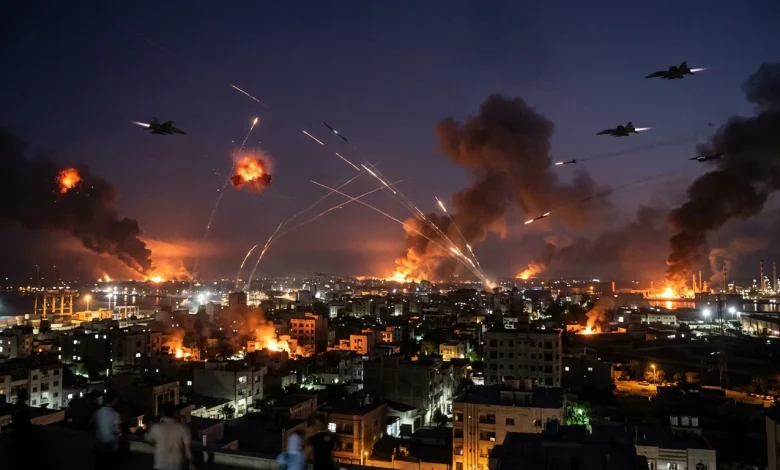
Table of Contents
US bombs Iran for an 11th consecutive night, cementing the return of high-intensity conflict to the Middle East as diplomatic efforts stall and global energy security hangs by a thread. This sustained aerial campaign, authorized by the White House and executed with precision by U.S. Central Command (CENTCOM), has systematically targeted military infrastructure across the Islamic Republic. Each wave of airstrikes further dismantles the remnants of a shaky regional ceasefire, which had temporarily halted months of intense combat. Prior to this rapid escalation, international negotiators had hoped to secure a durable diplomatic roadmap, but the current operational tempo indicates that military force has once again taken precedence. This latest round of strikes follows a highly coordinated series of actions over the past week. To trace the trajectory of this rapid escalation, one can look back to when the iran airstrikes enter 10th night, an event that dashed immediate hopes of a peaceful resolution. As U.S. and coalition forces continue their relentless bombardment, the strategic objective appears to be the total degradation of Iran’s offensive naval and aerial launch capabilities, forcing Tehran into a position where it can no longer threaten critical shipping routes.
US Bombs Iran for 11th Night as War Costs Soar
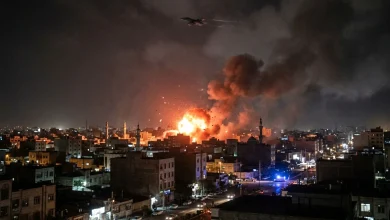
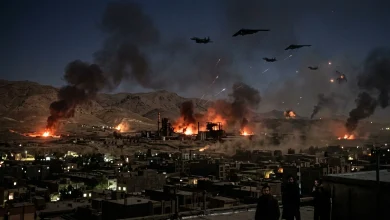
The 11th consecutive night of bombardment saw a significant expansion in both target variety and geographic distribution. According to eyewitness reports and military sources, explosions were heard in several major urban and coastal centers, including Shiraz, Isfahan, and Bandar Abbas. The night sky was illuminated by secondary explosions, indicating that U.S. munitions successfully penetrated deeply fortified weapons depots and fuel storage hubs. This level of sustained aerial pressure has not been seen since the onset of the conflict, and military analysts suggest that the logistical demand of keeping multiple carrier strike groups and land-based bomber wings active is putting immense pressure on both U.S. and allied forces. Security experts believe that the campaign’s long-term success depends heavily on the military’s ability to suppress local air defenses, which have been active but largely ineffective against advanced stealth assets like B-2 Spirit bombers and F-35 Lightning II fighters. Despite the active defenses, the coalition has maintained complete air superiority, executing complex flight paths to minimize risks to aircrews.
CENTCOM Confirms Key Targets in New Round of Strikes
U.S. Central Command released an official statement confirming the precise assets targeted during the latest wave of operations. CENTCOM stated that Tuesday night’s missions successfully neutralized aircraft hangars, drone storage facilities, and crucial logistics depots utilized by the Islamic Revolutionary Guard Corps (IRGC). These sites were identified through real-time intelligence as active launching pads for offensive operations. The systematic dismantling of these networks has been a core focus of the multi-day campaign. Observers note that the centcom strikes on iran enter ninth consecutive night laid the groundwork for these actions by successfully blinding early warning radars and neutralizing mobile air defense batteries. By the time the u s airstrikes against iran eighth night commenced, the coalition had already shifted its primary focus from passive defense to active degradation, taking out coastal anti-ship missile sites that directly threatened commercial shipping lanes. The cumulative impact of these operations has left the Iranian conventional military apparatus severely degraded, limiting their options to asymmetric warfare and proxy-led counter-attacks.
Defense Secretary Pete Hegseth Reveals Soaring War Costs
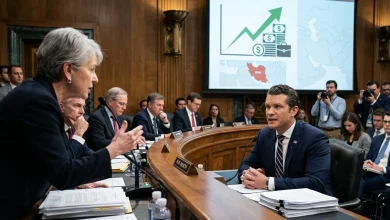
As the air campaign continues, the financial toll of the war has taken center stage in Washington. In a highly anticipated and at times combative hearing before the Senate Appropriations Committee, Defense Secretary Pete Hegseth revealed that the conflict has cost the United States an estimated $37.5 billion through the end of September. This disclosure came as Hegseth defended the administration’s massive request for nearly $88 billion in supplemental defense funding. Hegseth argued that the massive investment is crucial to ensure that American forces remain properly equipped and that depleted munition stockpiles are quickly replenished. However, some lawmakers were quick to point out that this number might represent only a fraction of the true economic cost, as it excludes base repairs, long-term healthcare for injured service members, and indirect regional stabilization efforts. The escalation of costs has been remarkably rapid; the financial toll has jumped by billions of dollars since the first week of the renewed campaign, largely driven by the high consumption rate of precision-guided missiles. Looking back to the period when the us military strikes iran for seventh night took place, the daily operational cost was already raising red flags among budget watchdogs, and the current pace of operations has only exacerbated those concerns.
Bipartisan Friction Over the Supplemental Funding Request
The Senate hearing highlighted deep bipartisan friction over the future of the military campaign. Democratic senators, led by Patty Murray of Washington, sharply questioned the administration’s strategic vision, warning that the U.S. is drifting into another costly, open-ended conflict without a defined exit strategy. Critics challenged the administration’s shifting explanations for the war, noting that initial objectives were framed around defending shipping lanes, whereas the current focus seems to have shifted toward comprehensive military degradation and potential regime destabilization. Senator Kirsten Gillibrand questioned why billions of dollars are being poured into offensive operations when domestic economic issues remain unresolved. In response, Hegseth and Chairman of the Joint Chiefs of Staff General Dan Caine maintained that the funding is a generational necessity to project power and deter a wider alignment of adversaries, including Russia and China, both of whom have provided subtle diplomatic and technological assistance to Tehran during this crisis.
President Trump Targets Pickaxe Mountain Nuclear Facility
In addition to the ongoing air strikes, geopolitical tensions were further inflamed by direct threats from President Donald Trump. Speaking to reporters in the Oval Office during a bilateral meeting with Lebanese President Joseph Aoun, Trump warned that the United States is prepared to target a suspected underground Iranian nuclear site known as “Pickaxe Mountain.” Trump stated that the military would be hitting the area “pretty soon, and very heavily,” and asserted that there was very little the Iranian regime could do to prevent such an attack. This represents a significant pivot in Washington’s public rhetoric, shifting the focus from neutralizing conventional threats to targeting highly sensitive nuclear-related infrastructure. Military analysts warn that a pre-emptive strike on a nuclear facility would permanently alter the nature of the 2026 iran war, potentially escalating the conflict from a localized maritime dispute into a full-scale regional conflagration with global security implications.
What is the Kuh-e Kolang Gaz La Under-Construction Site?
Pickaxe Mountain, officially known in Persian as Kuh-e Kolang Gaz La, is a highly fortified underground facility situated on the southern perimeter of the Natanz nuclear complex, roughly 140 miles south of Tehran. Unlike the older, more exposed enrichment facilities that were heavily damaged in prior military operations, Pickaxe Mountain is an under-construction complex buried nearly 100 meters deep within solid granite rock. The site features multiple pairs of reinforced tunnel entrances, designed to protect sensitive centrifuges and enrichment equipment from the most powerful conventional bunker-buster bombs, such as the U.S. GBU-57 Massive Ordnance Penetrator. Although the UN’s nuclear watchdog, the IAEA, has not been granted full access to confirm the exact nature of the installations inside the mountain, Israeli and Western intelligence reports suggest that Iran has successfully transferred thousands of advanced uranium-enrichment centrifuges into these deep chambers to preserve its nuclear capabilities in the event of an all-out attack.
Tehran Vows Massive Escalation Over Nuclear Site Threats
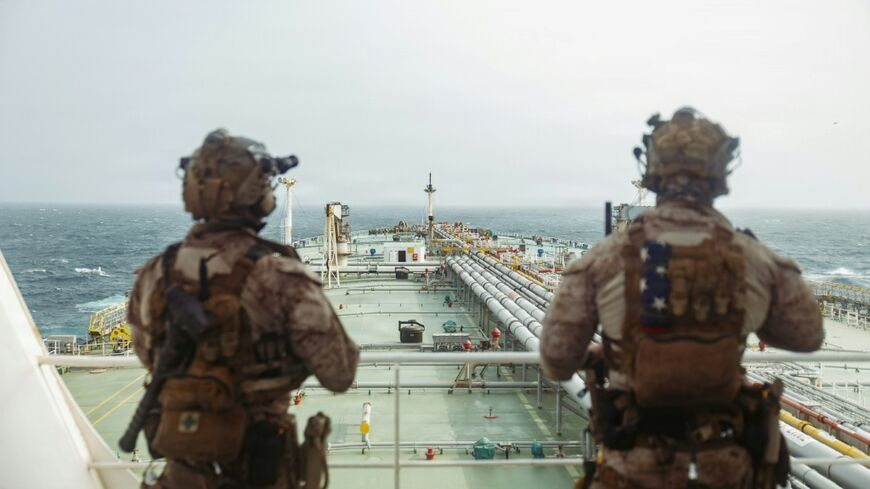
Tehran’s military command responded to the Oval Office warnings with immediate threats of its own. Operating through the Khatam al-Anbiya Central Headquarters, Iran’s joint military command declared that any strike against its nuclear or national defense facilities would result in a massive and unrestricted expansion of the war. Iranian state media carried statements warning that U.S. interests and any regional nations collaborating with Washington would face immediate, destructive retaliation. Hardline political groups in Tehran have urged the military to publish a target list of vital economic infrastructure in neighboring Gulf countries, specifically calling out the United Arab Emirates, Kuwait, and Bahrain, for pre-emptive or retaliatory strikes. There is also growing pressure within the Iranian parliament to formally withdraw from the Nuclear Non-Proliferation Treaty (NPT) and immediately declare a nuclear deterrent capability, a move that would completely shatter the existing global non-proliferation framework.
Geopolitical Impact on Middle East and Global Markets
The threat of an expanded war and potential attacks on critical regional infrastructure has sent shockwaves through global economic markets. Shipping lanes through the Persian Gulf remain highly contested, with commercial tankers facing severe operational risks and skyrocketing insurance premiums. The ongoing disruption of these critical trade corridors has caused massive volatility in global energy markets. Analysts note that brent crude oil prices defied 150 spikes in 2026 despite multiple attempts by international consortia to stabilize global supply lines. For everyday consumers, this instability has directly impacted household budgets, as domestic gasoline prices climb above 4 dollars per gallon across many major metropolitan regions in the West. All eyes remain on the strategic strait of hormuz, a vital choke point where even minor tactical miscalculations could lead to a complete suspension of energy transits, triggering a severe global recession.
Financial and Military Resource Comparison of the Conflict
The following table provides a detailed comparative summary of the financial, strategic, and regional parameters defining the ongoing military campaign.
| Operational Metric | Current Financial Cost | Primary Tactical Focus | Key Vulnerabilities & Choke Points |
|---|---|---|---|
| U.S. Cost to Date | $37.5 Billion | Air Superiority & Logistics Interdiction | Base Damage, Munitions Depletion |
| Supplemental Defense Request | $88 Billion Total ($67B Iran-focused) | Replenishing High-End Precision Munitions | Bipartisan Friction, Congressional Delays |
| Primary Air Strike Targets | Drone Sites, Aircraft Hangars, IRGC Depots | Conventional Degradation of Iranian Forces | Asymmetric & Cyber Retaliation |
| Threatened Nuclear Target | Pickaxe Mountain (Kuh-e Kolang Gaz La) | Deep Subterranean Uranium Enrichment | Hardened Granite Tunnels (100m Depth) |
| Global Economic Threat | Strait of Hormuz Disruptions | Securing Commercial Shipping Corridors | Extreme Oil Price Spikes ($150+ Brent) |