US airstrikes 2026: White House denies hitting civilian infrastructure
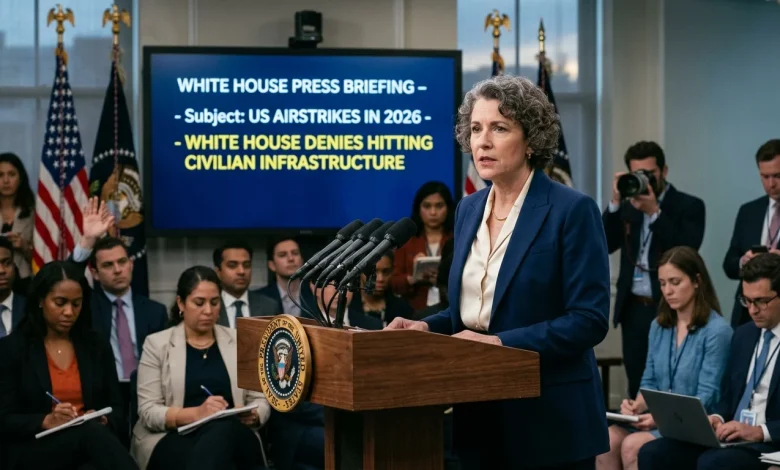
Table of Contents
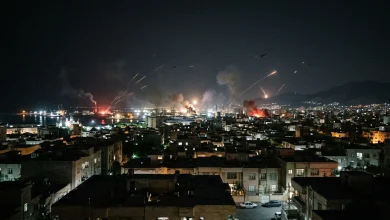
US airstrikes have intensified across southern Iran following the abrupt collapse of regional peace talks, plunging the Middle East into a deeper state of military escalation. As both Washington and Tehran exchange heavy fire, a contentious war of narratives has erupted. Iranian state media and provincial authorities in Hormozgan province allege that the latest waves of aerial bombardments have targeted civilian transport networks, including critical bridges, a train station, and a regional airport. Conversely, the White House has vigorously denied these claims, asserting that the military operation is designed strictly to target military assets and supply chains.
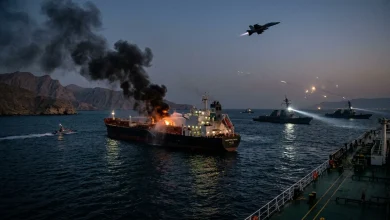
The situation represents a major escalation of the war that initially broke out on February 28, 2026. Over the last week, the United States has conducted multiple successive waves of strikes, intensifying its pressure on Tehran. These actions have been accompanied by a broader naval blockade on Iranian ports, bringing shipping lanes in the strategic Strait of Hormuz to a near-standstill. Despite several brief diplomatic breakthroughs like prisoner releases earlier in the year, the diplomatic framework has shattered, leaving both nations locked in a dangerous, destructive spiral of kinetic retaliation.
Background: From Peace Talks to Renewed Hostilities
The conflict, which began on 28 February 2026 with a series of coordinated U.S. and Israeli operations inside Iran, has evolved through several distinct phases. Following the initial strikes, which decapitated key leadership elements of the Islamic Republic, the conflict spread across the region, drawing in multiple neighboring countries. In an effort to curb the spreading devastation, diplomatic intermediaries in Switzerland facilitated a 60-day negotiation window beginning on June 22. Under this temporary framework, both sides engaged in back-channel discussions, bringing hope that a permanent ceasefire could be achieved.
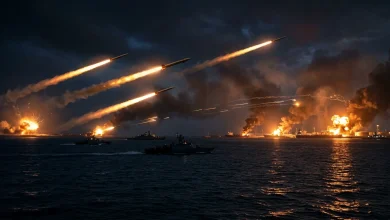
However, the fragile peace process fell apart in early July after disagreements over the blockade of Iranian ports and the terms of maritime navigation. Upon the collapse of these talks, the U.S. military resumed its operations, leading to six consecutive nights of aerial bombardments. By mid-July, the campaign had entered a seventh night of heavy strikes, using fighter jets, warships, and unmanned combat aerial vehicles. The renewed military campaign represents a systematic attempt by the U.S. and its partners to degrade Iran’s offensive capabilities, targeting naval radars, drone storage facilities, and missile assembly plants.
The Debate Over Targets: Military Logistics vs. Civilian Infrastructure
A central flashpoint in this current phase of the war is the classification of targeted structures. Iranian state-affiliated media agencies, including IRNA and IRIB, have accused the United States of intentionally destroying civilian-use transportation facilities. According to local officials, recent targets include the Iranshahr Airport in southeastern Iran, the railway junction station at Bandar Abbas, and at least six bridges in the coastal Hormozgan province. These transportation hubs, they argue, are vital for transporting food, medicine, and basic goods to isolated civilian populations.
In response to these accusations, a White House spokesperson told the BBC that the United States has “carried out strikes exclusively on military targets, including military logistics infrastructure”. U.S. Central Command (CENTCOM) reiterated this stance, explaining that its target selection is meticulously managed to avoid civilian harm. However, military analysts point out that many of these logistics networks serve a “dual-use” function. For instance, bridges and railway junctions used by civilian transit are often also utilized by the Islamic Revolutionary Guard Corps (IRGC) to transport missiles, munitions, and combat personnel to coastal launching sites. Under international humanitarian law, civilian objects can lose their protected status if they are actively utilized to support military operations.
| Reported Target Site | Location in Iran | U.S. / Coalition Stance | Iran / Local Authority Stance | Independent / External Verification |
|---|---|---|---|---|
| Gariveh Bridge | Hormozgan Province (West of Bandar Abbas) | Classified as military logistics infrastructure | Civilian bridge; 7 casualties reported near Bandar Khamir | Verified by BBC Verify; video evidence shows collapsed section |
| Iranshahr Airport | Sistan-Baluchestan Province | Tactical airfield utilized for drone deployment | Civilian regional airport; severely damaged by projectiles | Pending satellite confirmation; multiple explosions reported |
| Bandar Abbas Railway Junction | Hormozgan Province | Critical rail hub for military supply chain and heavy transport | Civilian infrastructure; two injuries reported at the junction | Confirmed rail line disruptions and local damage reports |
| Coastal Ports & Radar Towers | Strait of Hormuz Region | Direct strikes on military surveillance and naval radars | Attacks on commercial port facilities and civilian warning networks | Confirmed targeting of coastal and port infrastructures |
Independent Verification: The Destruction of Gariveh Bridge
Despite the official denials from Washington, independent open-source intelligence and investigative journalism have begun to verify the physical damage on the ground. Notably, BBC Verify and BBC Persian successfully authenticated video footage and satellite imagery showing substantial damage to the Gariveh Bridge, situated west of the major port city of Bandar Abbas. The bridge is a vital transit corridor connecting Bandar Abbas with Bandar Khamir and Lar, serving as a primary artery for local commerce and civilian movement.
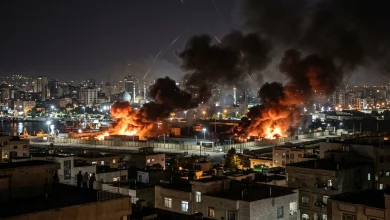
Geolocated night-time video footage captured a massive ball of fire erupting on top of the bridge during the bombardment. Subsequent daytime photography revealed a heavily crumbled stretch of road with chunks of reinforced concrete and rebar scattered across the surrounding dry riverbed. While CENTCOM’s official target lists did not explicitly mention bridges, the destruction of this key passage directly supports the Iranian government’s claims that vital infrastructure is being dismantled. The strikes on this corridor have reportedly caused severe localized blackouts, with adjacent power lines severed, and have impeded the flow of humanitarian aid to communities in southern Iran.
Regional Blowback and Iranian Retaliation
The escalation of hostilities inside Iran has triggered immediate, violent ripples across the broader Persian Gulf region. Operating under the doctrine of proportional retaliation, the IRGC has launched dozens of ballistic missiles and armed suicide drones at U.S. military bases and allied nations. Kuwait, Bahrain, Jordan, and Qatar have all found themselves directly caught in the crossfire. In Kuwait, local authorities reported that a major power and water desalination plant was struck by a hostile projectile, resulting in an intense fire and the deactivation of several vital power generation units.
Jordanian air defenses have also been heavily engaged, reportedly intercepting ten Iranian missiles over its airspace in a single night. Similarly, Bahrain claimed its defense systems successfully thwarted incoming drone attacks. The IRGC has openly declared that these strikes on regional states hosting American forces will persist until the United States halts its naval blockades and aerial campaigns. Additionally, the activities of Iranian-backed proxy networks in Iraq and Syria have surged, presenting a multi-front threat to U.S. personnel deployed across the Middle East.
Trump’s Policy of Maximum Pressure and Infrastructure Threats
President Donald Trump has maintained an aggressive posture throughout the conflict, leveraging a strategy of military coercion to force Tehran back to the negotiating table. Trump has repeatedly warned that if the Iranian leadership refuses to accept a comprehensive deal dismantling its nuclear program and regional proxy networks, the U.S. military will systematically target Iran’s domestic power stations and transit networks. This “maximum pressure” approach is intended to inflict severe economic pain, driving the Iranian government to capitulate under the weight of domestic unrest and economic paralysis.
This strategy has drawn sharp criticism from the international community and human rights organizations. Following Trump’s warnings, United Nations High Commissioner for Human Rights Volker Türk released a statement emphasizing that deliberately targeting civilians or vital civilian infrastructure is a war crime under international law. While the administration claims it is taking extraordinary precautions to limit non-combatant casualties, the targeting of dual-use bridges and transportation links inevitably impacts the civilian populace, compounding the humanitarian crisis. Trump’s focus remains aligned with his broader economic and strategic priorities, which favor swift, high-impact foreign interventions to secure favorable diplomatic positions.
The Humanitarian Cost and Strategic Implications of the War
The human toll of the renewed bombing campaign is mounting rapidly. According to data released by Iran’s Ministry of Health, the resumption of airstrikes has resulted in at least 38 deaths and more than 400 injuries, with significant casualties reported by Tehran over the past week alone. Among the dead are a child and three women, raising concerns about the accuracy of coalition precision guided munitions in densely populated coastal towns.
Beyond the immediate loss of life, the war is causing profound long-term damage to the region’s economy and infrastructure. The near-total closure of the Strait of Hormuz has triggered intense volatility in global energy markets, raising oil prices and disrupting commercial shipping routes. As both military forces dug in for an extended conflict, the potential for a catastrophic miscalculation grew daily. With the failure of the Swiss peace talks, the path to diplomatic de-escalation remains highly uncertain, and the residents of southern Iran continue to bear the devastating brunt of a highly volatile geopolitical struggle.