Strait of Hormuz: Cargo Ship Struck as US-Iran Talks Diverge 2026
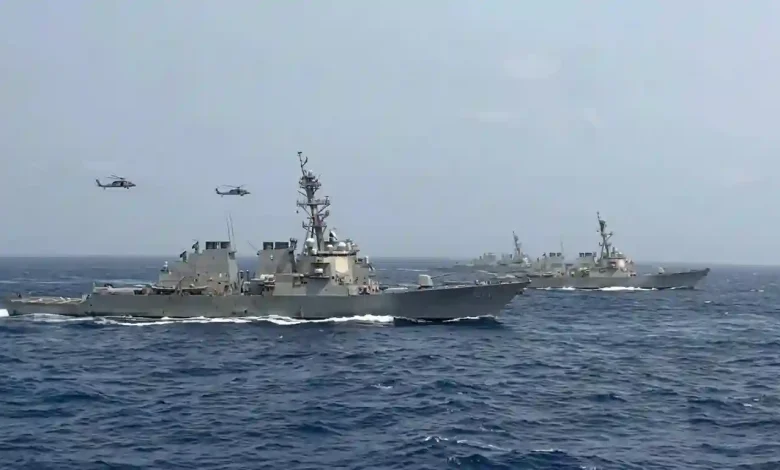
Table of Contents
Strait :Introduction: A Waterway Under Fire
Strait of Hormuz shipping lanes became the focal point of global panic early this morning after a cargo vessel lost power when hit by an unknown projectile, sparking fears of an unchecked regional escalatory spiral. The critical transit lanes of the strait of Hormuz have once again become the epicenter of a high-stakes standoff between Washington and Tehran. This latest maritime security incident occurs at an incredibly fragile moment, as the geopolitical landscape is defined by conflicting statements, backchannel negotiations, and direct military threats. While the White House remains bullish about a breakthrough, Iran denies Trump claims of bilateral progress, insisting that its focus remains squarely on localized maritime sovereignty. As a consequence, the region stands on a knife’s edge, caught between the threat of a full-scale military conflict and the complex maneuvers of shadow diplomacy.
Strait :The Attack on the Bulker Minoan Pioneer
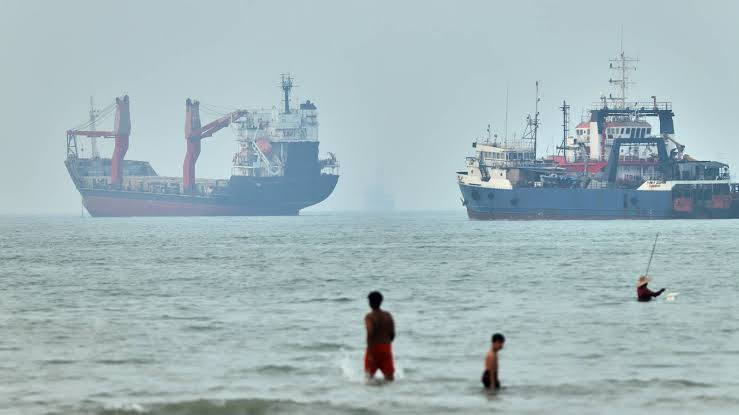
Early this morning, local time, the maritime security environment in the Persian Gulf deteriorated rapidly following a kinetic attack on a commercial vessel. According to the United Kingdom Maritime Trade Operations (UKMTO), a cargo vessel broadcasted a distress signal on VHF Channel 16, reporting that it had been struck by an unknown projectile off the Musandam Peninsula. The incident took place approximately 20 nautical miles northeast of Al Khasab, Oman, a strategic location that serves as the midpoint of the coastal channel heavily used by Gulf Cooperation Council (GCC) shipping interests.
Independent maritime security consultancies, including Vanguard Tech, quickly identified the targeted vessel as the Liberian-flagged bulk carrier, Minoan Pioneer. The projectile struck the ship directly in its engine room, immediately causing a catastrophic power failure and triggering a complete blackout. Almost simultaneously, a severe fire broke out within the crew’s accommodation quarters. Emergency response teams and neighboring vessels rushed to assist, but the situation remains highly unstable as crew members fight to contain the flames.
Strait :Technical Details and Missing Crew
The strike on the Minoan Pioneer has had devastating human and operational consequences. While the majority of the crew members survived the initial blast and are currently engaged in firefighting efforts, maritime authorities have confirmed that the vessel’s third engineer is missing. The Panama-flagged tanker Suriname Prosperity was among the first to receive the distress call and coordinate with regional search and rescue operations, but the presence of ongoing smoke and the risk of secondary explosions have severely hampered efforts.
This kinetic assault follows a series of near-miss incidents in the same sector. Only 24 hours prior, the Very Large Crude Carrier (VLCC) Egypt Prosperity and the Aframax tanker On Pride emerged unscathed from separate incidents involving nearby explosions and reported warning shots. These escalating attacks demonstrate a clear pattern of targeting merchant shipping to enforce local administrative control, turning the waterway into a dangerous hazard for international commerce.
Strait :Diplomatic Divergence: Trump’s Ultimatum vs. Iran’s Denial
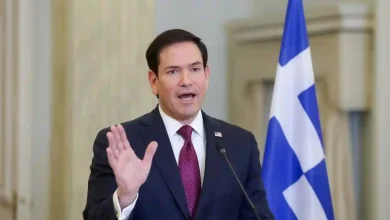
The military escalation in the Persian Gulf is mirrored by a massive diplomatic divide between Washington and Tehran. Speaking from the Oval Office, US President Donald Trump stated that active, direct negotiations are currently underway to resolve the maritime crisis. The administration has insisted that active negotiations with Iran are taking place behind closed doors, despite public denials from Iranian officials.
Trump has adopted a highly aggressive rhetorical posture, warning that the current diplomatic window represents Tehran’s “last chance” to sign a comprehensive deal before the United States authorizes massive retaliatory strikes. The President went as far as threatening what he described as “decapitation” actions against the Iranian leadership, stating that he has no time constraints on the talks but will not tolerate a prolonged closure of the strategic waterway. According to US Treasury officials, Washington is pushing for a two-phase resolution that would immediately reopen the strait before transitioning to discussions on Iran’s nuclear capabilities.
Strait :Trump’s “Last Chance” and the Threat of Decapitation Strikes
The White House’s strategy relies heavily on maximum pressure, combining devastating economic sanctions with the explicit threat of military force. President Trump has repeatedly claimed that regional powers, including Saudi Arabia, the United Arab Emirates, and Qatar, are backing the U.S. diplomatic effort. Trump asserted that Iranian negotiators have spent hours in secret discussions with American representatives, dismissing Tehran’s public denials as standard diplomatic posturing.
“They don’t like saying that they’re talking, but we are in talks,” Trump told reporters, adding that the goal is to have the Strait of Hormuz completely open within days. However, this unilateral optimism is not shared by military analysts. As military analysts assess the battlefield dynamics on iran war day 156, the maritime threat remains highly potent, and the threat of catastrophic miscalculation looms larger than ever.
Tehran’s Stance: No Direct Negotiations with Washington
Iran has swiftly and flatly rejected the U.S. President’s claims. In a series of official statements, the Iranian Foreign Ministry characterized Donald Trump’s assertions as entirely fabricated and designed for domestic political consumption. Instead of conceding to pressure, Iran bets on calibrated diplomatic and military moves to assert its sovereignty over the shipping channels.
Iranian Foreign Ministry spokesperson Esmaeil Baghaei clarified that Tehran is not participating in any direct or indirect talks with the White House. Consequently, Iran rejects Trump’s claims of sudden cooperative breakthroughs and maintains that no agreements will be signed under the duress of American military ultimatums. For Tehran, the primary objective is to dismantle the US-led naval blockade and secure long-term maritime and territorial rights. As a result, Iran denies peace talks are taking place directly with American envoys, pointing instead to bilateral discussions with regional mediators.
The Role of Oman: Temporary Maritime Arrangements
Rather than engaging with the United States, Iran has focused its diplomatic energy on Muscat. The government of Oman, a historical mediator in Middle Eastern conflicts, has been working tirelessly to establish a viable framework to prevent further military escalation. The key focus of Muscat’s efforts is to frame a strait of Hormuz deal that establishes temporary arrangements, lasting up to three months, where Tehran can exercise localized administrative control over specific shipping routes.
Under this proposed framework, Iran seeks to establish a “Persian Gulf Strait Authority” to oversee shipping traffic passing through the waterway. This temporary arrangement would require international merchant vessels to coordinate their transit paths with Iranian maritime authorities and pay administrative transit fees. While Oman has proposed a joint-management structure for the channels to balance regional security interests, Iran has insisted on unilateral oversight over its declared zones, viewing any shared control as an infringement on its sovereign rights.
What the Omani Mediation Hopes to Achieve
The primary goal of the Omani mediation is to defuse immediate military tensions and prevent the conflict from engulfing the entire region. By proposing a temporary, three-month administrative framework, Muscat hopes to provide a cooling-off period during which a more permanent diplomatic solution can be negotiated.
For Iran, these temporary arrangements serve a dual purpose. On one hand, they allow Tehran to de-escalate without appearing to capitulate to Washington’s threats. On the other hand, they solidify Iran’s physical and administrative control over the chokepoint, setting a new legal precedent for how navigation is managed. However, the United States and its European allies have strongly objected to any arrangement that compromises the principle of free navigation, arguing that the strait must remain an open international waterway.
Threats of Retaliation and Navigational Control
While diplomatic efforts continue in Muscat, Iran’s military command is adopting an increasingly defiant stance. Hardline military figures have made it clear that they possess both the capability and the political will to enforce their claims. Mohsen Rezaei, a senior military adviser to Iran’s Supreme Leader Mojtaba Khamenei, issued a direct warning to the United States and its partners, asserting that Iran will not stand idly by while its economy is strangled.
Rezaei specifically targeted American warships taking part in the blockade of Iranian ports, warning that any hostile actions would meet with a swift and decisive military response. He declared that the era of Western naval dominance in the Persian Gulf is over and that the Islamic Revolutionary Guard Corps (IRGC) is fully prepared to strike U.S. naval assets. This aggressive stance is backed by Iran’s extensive arsenal of anti-ship cruise missiles, smart mines, and swarming drone fleets, which present a formidable threat to any naval force operating in the narrow waters of the gulf.
Rezaei’s Warnings to the US Navy
The rhetoric coming out of Tehran is not merely theatrical; it reflects a deep-seated military strategy of horizontal escalation. By threatening American military vessels and targeting commercial shipping, Iran hopes to raise the insurance and operational costs of shipping to unsustainable levels, thereby forcing the international community to pressure Washington to lift its naval blockade.
Rezaei’s warnings have forced the US Fifth Fleet, headquartered in Bahrain, to raise its alert levels. While the Pentagon maintains that it is fully capable of protecting merchant shipping, the strike on the Minoan Pioneer highlights the vulnerability of commercial tankers in the narrow chokepoint. The risk of a miscalculation—where an accidental strike on a Western warship triggers a massive military retaliation—remains exceptionally high, threatening to expand the conflict beyond the borders of Iran.
Global Economic and Energy Consequences
The ongoing instability in the Strait of Hormuz has sent shockwaves through global energy markets and the broader international economy. According to a detailed assessment by the U.S. Energy Information Administration (EIA), the Strait of Hormuz is the world’s most critical oil transit chokepoint, with millions of barrels passing through daily. The threat of a prolonged closure or an escalation in kinetic attacks has caused crude oil prices to spike, straining household budgets and fueling global inflationary pressures.
Major maritime logistics companies have been forced to implement costly workarounds. Many shipping lines are now diverting their vessels around the Cape of Good Hope, a detour that adds thousands of miles and weeks of travel time to global supply chains. For countries in Asia and Europe that are heavily reliant on Middle Eastern crude, the blockade has raised serious concerns about energy security. While land bridges and bypass pipelines through Saudi Arabia and the UAE exist, they lack the capacity to fully replace the massive volume of oil that typically flows through the Strait of Hormuz.
Comparative Summary of US and Iranian Positions
The current crisis is defined by a fundamental disagreement over international law, maritime sovereignty, and regional security. The United States views the Strait of Hormuz as an international waterway governed by the principle of free navigation, while Iran asserts that its geographical proximity grants it the right to regulate and control traffic. Below is a detailed comparison of the divergent positions held by the primary actors in this geopolitical standoff:
| Strategic Dimension | United States Position | Iranian Position |
|---|---|---|
| Navigational Control | Rejects any Iranian administrative control; demands full restoration of pre-war free transit. | Asserts sovereign rights over the shipping lanes; wants vessels to use coastal channels and pay fees. |
| Diplomatic Talks | Claims active negotiations are currently taking place; offers “last chance” to avoid major decapitation strikes. | Denies any direct negotiations with the White House; rejects U.S. ultimatums. |
| Omani Mediation | Views backchannel diplomacy as a stepping stone to a broader nuclear deal and full reopening. | Pursues temporary arrangements (up to three months) to control the route while regional issues settle. |
| Maritime Safety | Condemns attacks on shipping; maintains naval presence to guard against blockades. | Threatens American ships taking part in port blockades; exercises administrative authority over routes. |
Conclusion: A Strategic Deadlock at the Chokepoint
In conclusion, the situation in the Strait of Hormuz represents a profound geopolitical impasse with no easy resolution. The kinetic strike on the Minoan Pioneer underscores the immediate physical dangers facing merchant mariners and the fragile nature of regional stability. As President Donald Trump continues to push his maximalist “last chance” rhetoric, and Tehran counters with absolute denials of direct talks and threats of military retaliation against the US Navy, the space for a peaceful resolution is rapidly shrinking.
The Omani mediation represents the only active diplomatic track, yet its proposal for temporary, three-month arrangements faces significant hurdles. Washington is highly unlikely to accept any framework that formalizes Iranian control over an international chokepoint, while Tehran is equally unlikely to back down without securing relief from the devastating economic blockade. Until these fundamental differences are addressed, the Strait of Hormuz will remain a volatile flashpoint, where a single spark could ignite a global economic and military catastrophe.