Iran war Day 158: Trump Issues ‘Last Chance’ Warning
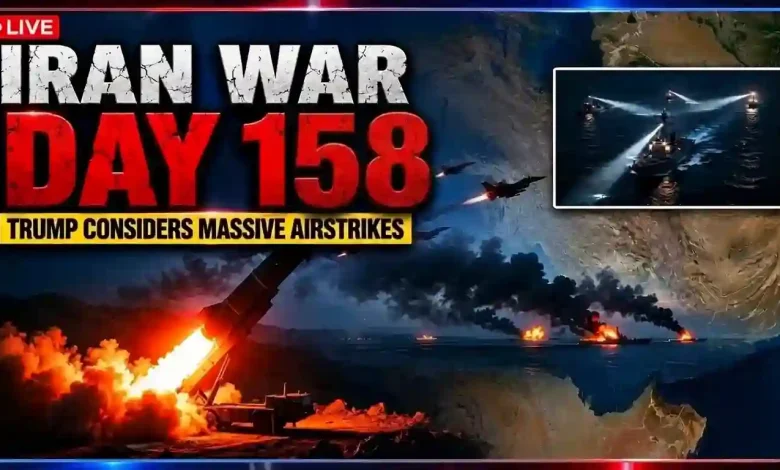
Table of Contents
Iran war developments have reached a critical new phase as of Day 158, with the strategic landscape of the Middle East poised on a knife-edge. Just days after the intense geopolitical standoff during Iran war Day 153, where regional dynamics shifted rapidly, the international community finds itself parsing conflicting narratives of war and peace coming from Washington and Tehran. While the Trump administration insists that a diplomatic breakthrough is imminent, military maneuvers on the water and in the air tell a much more volatile story.
This comprehensive operational update explores the diplomatic deadlock, the high-stakes battle over the Strait of Hormuz, and the cascading economic consequences that are rattling energy markets worldwide. Currently, there is no clear end to the conflict, and both sides continue to prepare for the possibility of further escalation.
The Diplomatic Standoff: Trump’s Ultimatum and Tehran’s Denial
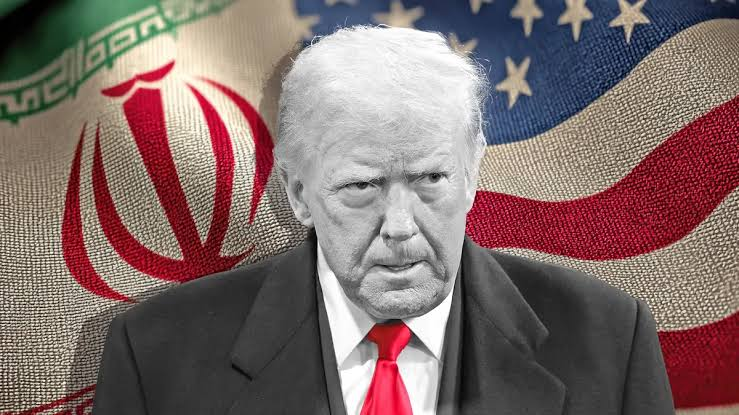
The diplomatic arena has been defined by sharp rhetorical clashes. Speaking on board Air Force One, President Donald Trump claimed that new bilateral negotiations to end the war were scheduled to begin. He framed the situation as Tehran’s “last chance” to sign a favorable agreement, warning that the alternative would be a massive “decapitation” strike aimed at the core of the Iranian regime. According to the Trump administration, previous strike plans were halted specifically to give diplomacy one final window of opportunity.
However, Tehran wasted no time in issuing public counters to these assertions. Iranian Foreign Ministry spokesman Esmaeil Baghaei issued strongly worded Iranian official statements rejecting any claims of direct negotiations with the United States. Baghaei clarified that no Iranian delegations would be dispatched and that the Islamic Republic remains steadfast against any format of direct U.S. mediation. This explicit refusal highlights the deep mistrust that has accumulated over more than five months of intense warfare, complicating any backchannel attempts at diplomatic negotiations with Iran.
The gap between Washington’s optimism and Tehran’s defiance suggests a pattern of posturing designed to influence global markets and domestic audiences. While U.S. officials present a deal as nearly finalized, Iranian leaders appear determined to project strength, refusing to appear as though they are negotiating under the direct threat of military decapitation.
The Battle for the Strait of Hormuz: Proposals and Disagreements
At the center of both diplomatic and military maneuvers is the closure of the Strait of Hormuz. The waterway, which typically handles around a fifth of the world’s petroleum liquids, has been entirely blocked to uncoordinated commercial traffic, creating an unprecedented bottleneck for global trade. In an attempt to resolve this gridlock, technical discussions have been taking place under the mediation of Oman.
An emerging framework proposed by Oman suggests a split-channel transit system. Under this technical blueprint, commercial vessels entering the Persian Gulf would utilize a deep-water channel controlled and secured by Iranian forces. Conversely, ships exiting the Gulf would travel through a parallel corridor under Omani jurisdiction. Iranian officials have supported this proposal, suggesting that a “service fee” would be levied on passing vessels to cover security staffing and environmental remediation. However, U.S. officials have rejected any model that requires Iranian permission or the payment of transit tolls, viewing such measures as an unacceptable concession to maritime extortion.
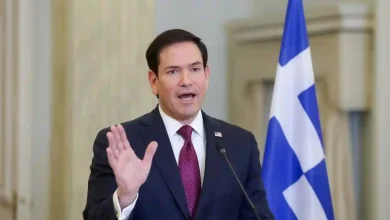
Despite these fundamental disagreements, some members of the U.S. cabinet have expressed cautious optimism. Secretary of State Marco Rubio noted that while progress has been made in the Omani-mediated talks, “finality” has not yet been achieved. Meanwhile, Treasury Secretary Scott Bessent suggested to financial networks that a localized agreement to reopen the Strait could materialize rapidly, a sentiment that briefly relieved pressure on global energy markets before being tempered by Tehran’s continued defiance.
Military Escalation: Strikes on U.S. Bases and Shipping Incidents
While diplomats wrangle over transit rules, the kinetic reality of the war continues to expand across multiple frontlines. The relative lull in direct U.S. airstrikes inside Iran has not stopped regional proxy forces and direct Iranian units from conducting aggressive counter-operations. The Islamic Revolutionary Guard Corps (IRGC) recently launched a coordinated drone assault targeting a U.S. military facility in Kuwait. Local security reports confirmed that at least three hostile drones were deployed, and subsequent heavy explosions were heard as far away as Iraq’s adjacent Basra province, indicating a highly active regional theater.
These retaliatory maneuvers represent a core component of Iran’s tactical retaliation strategies, which rely heavily on asymmetrical assets to disrupt allied infrastructure. By executing coordinated drone strikes against U.S. bases, Iran signals that its regional reach remains intact despite months of intense bombardment. Furthermore, the maritime domain saw a dangerous escalation overnight off the coast of Oman, where a dry bulk cargo vessel was struck by an unidentified projectile. The attack was severe enough to force the crew to abandon ship, leaving one seafarer missing and raising fears that commercial shipping remains entirely unsafe near the mouth of the Gulf.
Adding to the security friction, Yemen’s Houthi rebels claimed to have successfully targeted a sensitive airport facility in southern Saudi Arabia using long-range loitering munitions. Although Saudi authorities have not officially commented on the extent of the damage, the incident underscores the persistent threat of multi-directional attacks that continue to plague regional infrastructure.
Economic Shockwaves: Depleted Oil Inventories and Global Market Pain
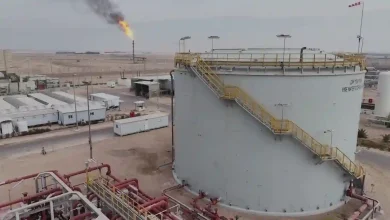
The prolonged closure of the world’s primary transit corridor has triggered unprecedented economic disruptions. Saudi Aramco CEO Amin Nasser issued a sobering assessment of the conflict’s toll, stating that the world has lost more than 2.6 billion barrels of oil since the outbreak of hostilities in late February. This staggering deficit is roughly equivalent to a full month of global crude production, placing massive structural pressure on international reserves.
Nasser warned that even if diplomatic agreements were to reopen the Strait of Hormuz immediately, replenishing the heavily depleted global inventories would require up to 18 months of continuous, high-volume shipping. This structural deficit has caused severe volatility in global Brent Crude prices, which briefly plunged to three-week lows on rumors of an imminent deal before rebounding to settle around $84.39 per barrel as doubts over the U.S.-Iran talks re-emerged. The shipping crisis has also exacerbated systemic vulnerabilities around the Bab-el-Mandeb, forcing logistics firms to bypass the Red Sea entirely and route vessels around the Cape of Good Hope, adding steep fuel and insurance costs to global supply chains.
In-Depth Operational Assessment of the Conflict’s Current Phase
From an operational standpoint, both militaries are facing severe sustainability constraints. Independent defense analysts note that the initial high-intensity phases of the conflict depleted a significant portion of the U.S. military’s advanced missile-defense interceptor inventories. Defending regional allies against waves of ballistic missiles and drone salvos has placed an unsustainable demand on high-end munitions, forcing U.S. commanders to carefully ration tactical air defense assets.
In Iran, the internal situation is equally fraught. In tandem with the external military campaign, the Iranian regime has intensified its domestic crackdowns. Human rights monitors, including Amnesty International, report a sharp rise in state executions targeting individuals connected to January’s nationwide economic protests. By utilizing broad national security charges such as espionage and collaboration with hostile states, Tehran seeks to suppress internal dissent and maintain absolute control as the economic strain of the blockade pushes inflation to record highs.
Comparison of Key Actors’ Stances and Strategic Objectives
To better understand the complex web of motivations driving the conflict on its 158th day, the following table summarizes the primary positions and strategic goals of the core participants:
| Key Actor | Primary Action/Stance | Strategic Goal |
|---|---|---|
| United States | Enforcing a strict maritime blockade; issuing “last chance” warnings while holding off major domestic strikes to leverage diplomatic pressure. | Secure the complete, unhindered reopening of the Strait of Hormuz and enforce a long-term denuclearization agreement. |
| Islamic Republic of Iran | Rejecting direct negotiations with Washington; seeking localized, technical agreements via Oman to generate transit revenue. | Lift economic sanctions, secure partial control of Gulf shipping lanes, and deter direct U.S. attempts at regime change. |
| Sultanate of Oman | Acting as a neutral mediator; drafting technical channel-sharing proposals to divide maritime control. | De-escalate the regional trade bottleneck and protect critical shipping channels from further kinetic disruptions. |
| Houthi Movement (Yemen) | Conducting long-range drone strikes on Saudi airports and targeting commercial cargo ships near strategic choke points. | Maintain regional leverage, support Iran’s geopolitical alignment, and challenge Western maritime supremacy. |
Future Projections and International Concerns
As the conflict grinds past its fifth month, the potential paths forward remain highly uncertain. Analysts point to two primary scenarios that could unfold in the coming weeks. The first is a partial diplomatic breakthrough mediated by Oman, wherein a temporary shipping channel is established to allow oil tankers to resume transit under strict, shared guidelines. While this would temporarily lower energy prices, it would likely fail to resolve the broader underlying issues of denuclearization and regional proxy warfare.
The second, more hazardous scenario involves a total breakdown of talks, followed by the resumption of high-intensity U.S. and Israeli airstrikes inside Iran. Given the depleted state of regional interceptor stockpiles and Iran’s demonstrated capacity for tactical retaliation, a return to active combat could easily ignite a wider regional conflagration. With no clear exit strategy in sight, the international community remains deeply concerned about the long-term stability of global trade and regional security.