Iranian Stance Rejects Trump’s Claims as Oman Shipping Talks Advance 2026
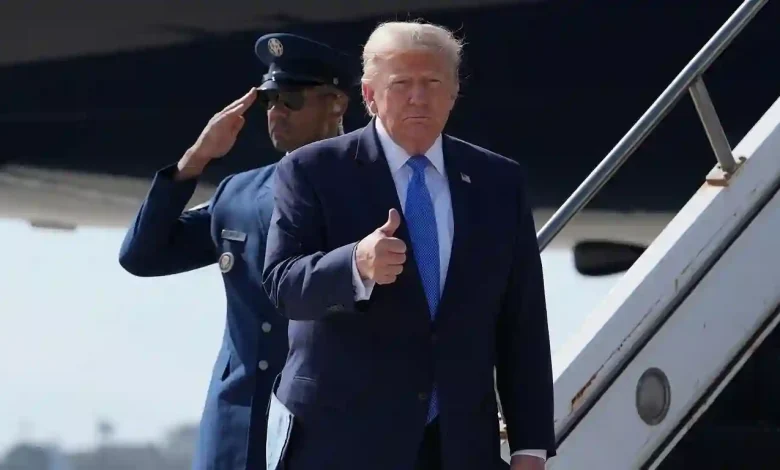
Table of Contents
Iranian diplomatic relations took a critical turn on August 3, 2026, as Foreign Ministry spokesperson Esmaeil Baghaei explicitly denied claims of an imminent direct dialogue with Washington. During his weekly press conference in Tehran, Baghaei clarified that despite optimistic rhetoric originating from the United States, there are currently no plans to receive a U.S. delegation or send an Iranian one to engage in bilateral talks. This statement directly contradicted remarks made by U.S. President Donald Trump, who announced over the weekend that a comprehensive agreement was nearly finalized and that formal negotiations were scheduled to begin on Monday afternoon. As regional tensions remain incredibly high, Iran accuses US forces and their regional allies of escalating hostilities, creating a volatile environment where technical shipping agreements are often conflated with broad diplomatic breakthroughs.
The contradiction highlights a deep-seated disconnect between Washington’s public posturing and Tehran’s strategic calculations. While the White House under President Trump has sought to project a narrative of swift diplomatic victories and successful “maximum pressure” tactics, Iranian officials remain highly skeptical of American intentions. Baghaei emphasized that the Islamic Republic operates strictly in accordance with its national security interests and will not be coerced by external political pressures or public statements. This diplomatic friction unfolds against a backdrop of prolonged military friction, economic blockades, and a series of complex maritime negotiations that have drawn the eyes of global energy markets and military strategists alike.
Deciphering Trump’s “Imminent Deal” Pronouncements
The latest round of diplomatic confusion began when President Trump, speaking to reporters aboard Air Force One late Sunday, claimed that a deal with Iran was “imminent.” According to Trump, negotiations to finalize the reopening of the strategic Strait of Hormuz and address long-standing disputes, including Iran’s nuclear program, were slated to commence on Monday. The U.S. President framed this potential breakthrough as a direct consequence of his administration’s willingness to hold off on devastating military strikes, which he asserted would have been “the biggest attacks since World War II.” However, this narrative of a pending diplomatic resolution contrasted sharply with Tehran’s immediate response. The reality on the ground shows that the threat of conflict is far from neutralized, as previous military assessments indicated deep-seated preparations for strikes on Iran planned by Pentagon officials, indicating that military options remain on the table despite Trump’s sudden shift to diplomatic rhetoric.
Tehran’s swift rejection of Trump’s claim serves as a reminder that public declarations of imminent deals are often part of a broader psychological and political strategy. Analysts suggest that the U.S. administration is attempting to secure a narrative win to pacify anxious international allies and domestic critics who fear an uncontrolled regional war. For Iran, engaging in direct talks without pre-established guarantees and relief from ongoing economic sanctions is viewed as a strategic non-starter. Consequently, Baghaei’s firm denial of any scheduled delegation exchange underlines Tehran’s determination to resist being drawn into a high-stakes public spectacle without tangible geopolitical concessions from the United States.
The Mechanics of the Proposed Iran-Oman Maritime Corridor
Rather than discussing direct negotiations with the United States, Baghaei steered the press conference toward the ongoing bilateral discussions with Muscat. He confirmed that Iran is actively negotiating with Oman to establish a new, temporary maritime traffic scheme through the Strait of Hormuz. This initiative is designed to allow commercial shipping to resume safely under highly regulated conditions. The strategic waterway has been heavily restricted since late February, leading to massive disruptions in global trade and highlighting the vulnerability of international logistics. Previous incidents, including a high-profile confrontation involving a Strait of Hormuz tanker, have made it clear that a coordinated, internationally recognized maritime routing system is desperately needed to avoid accidental military confrontations in the narrow corridor.
The proposed shipping mechanism is strictly technical and does not represent a broader political reconciliation. Baghaei explained that the talks with Oman are centered on institutionalizing cooperation between the two coastal states that border the strait. By developing a specialized management mechanism, both countries seek to assert their sovereignty over their respective territorial waters while establishing a clear protocol for merchant vessels. The focus is to build a reliable framework that can operate independently of external military interventions, particularly those led by the United States and its naval coalitions in the Persian Gulf.
Entry and Exit Lanes: Designating the New Intermediate Route
A key feature of the new maritime proposal is the creation of an intermediate, unified shipping route that features designated entry and exit lanes. According to Baghaei, the negotiations are focusing on a round-trip corridor rather than separate, disjointed paths. This route is intended to merge the southern route, which passes through Omani territorial waters, and the northern route, which runs through Iranian territorial waters, into a singular intermediate channel. This streamlined corridor would allow commercial ships to enter the Persian Gulf on one side and exit on the other under the joint monitoring of Iranian and Omani maritime authorities.
This technical separation scheme aims to eliminate navigation errors and minimize the risk of collisions or misunderstandings in a highly militarized zone. By defining clear “highway lanes” for commercial traffic, the coastal states can better monitor vessel identities, cargo types, and transit compliance. However, Baghaei made sure to emphasize that this intermediate route is envisioned as a temporary arrangement until a more permanent, comprehensive security framework is established. It represents a pragmatic, short-term solution to ease the economic stranglehold on shipping companies while preserving Iran’s strategic leverage in the region.
Oman’s Diplomatic Mediation and Regional Neutrality
Oman’s role in these negotiations highlights its long-standing status as the “Switzerland of the Middle East.” Muscat has historically maintained a delicate balancing act, maintaining cordial relations with Tehran while hosting critical Western military facilities and fostering ties with Washington. In this current crisis, Omani diplomats have worked tirelessly to bridge the gap and find practical solutions to prevent a total economic and military collapse in the Gulf. The Omani proposal seeks to respect the sovereignty of both nations while offering a structured mechanism that could potentially be supported by voluntary navigation fees paid by international shipping lines, a model inspired by successful historical arrangements in other critical global waterways like the Strait of Malacca, as highlighted in comprehensive analyses by Al Jazeera English.
This bilateral channel between Tehran and Muscat is treated with extreme seriousness by both sides. Iranian Foreign Minister Seyed Abbas Araghchi recently indicated that the technical agreements with Oman are in their final stages, suggesting that the launch of the new temporary shipping route could happen in the near future. Nonetheless, Iranian officials are careful to separate these technical discussions from any form of political submission. The strategic partnership with Oman is viewed as a legitimate exercise of regional diplomacy, demonstrating that regional actors are fully capable of managing their own security affairs without Western tutelage or military blockades.
Reopening the Strait of Hormuz: Why a Technical Deal is Not Enough
Despite the progress made in the bilateral talks with Muscat, Baghaei issued a stern warning that a technical agreement with Oman is not sufficient to fully reopen the Strait of Hormuz to its pre-war state. He emphasized that the current restrictions are not the result of administrative disagreements between Iran and Oman, but are a direct consequence of external actions. The geopolitical reality is heavily influenced by the ongoing Iran war Trump has overseen, characterized by intense economic blockades, asset freezes, and intermittent military exchanges that have made unrestricted navigation impossible.
According to the Iranian Foreign Ministry, the Strait of Hormuz will not return to its normal, pre-war status as long as the United States continues its hostile policies. Baghaei stated that the naval blockades and military posturing by Western coalitions remain the primary obstacles to regional stability. Consequently, while the intermediate Omani route may offer a temporary safety valve for specific commercial vessels, the strategic waterway remains a heavily fortified chokepoint. Iran intends to use its control over the northern half of the strait as a primary defensive shield and diplomatic bargaining chip against what it perceives as Western imperialism.
The Impact of U.S. and Israeli Military Actions
The roots of the current maritime closure date back to February 28, 2026, when joint U.S. and Israeli military strikes targeted Iranian military assets. In retaliation, Iran tightened its grip on the Strait of Hormuz, barring safe passage to vessels associated with or belonging to the United States and Israel. This retaliatory measure triggered a series of naval skirmishes, with the U.S. military launching multiple waves of airstrikes aimed at degrading Iran’s capability to threaten commercial shipping. Baghaei reiterated that Tehran views these actions as blatant violations of international law and sovereign rights, asserting that Iran’s defensive measures in the strait are fully justified under the doctrine of national self-defense.
The persistent threat of military confrontation has created an environment of extreme caution for global shipping companies. Insurers have raised premiums to astronomical levels, and many cargo operators have opted to bypass the region entirely, adding significant costs and delays to global supply chains. As long as Washington and Tel Aviv maintain their aggressive posture, Tehran maintains that a complete normalization of maritime traffic is impossible. The temporary route discussed with Oman is merely a localized crisis-management tool rather than a comprehensive resolution to the broader conflict.
Behind the Scenes: Pakistan, Qatar, and the Mediation Dynamics
While direct talks with the United States are officially off the table, Baghaei acknowledged that various regional third parties continue to facilitate communication and attempt to mediate specific issues. Countries like Pakistan and Qatar have played active, constructive roles in relaying messages between Washington and Tehran, hoping to prevent an all-out war. These diplomatic conduits are vital for managing miscalculations and ensuring that both sides understand each other’s red lines. However, Baghaei dismissed persistent media rumors that Beijing had stepped in as a major direct mediator in these specific maritime talks, clarifying that the current shipping negotiations remain strictly bilateral between Iran and Oman.
The involvement of regional mediators highlights the collective anxiety felt by neighboring states. Countries bordering the Persian Gulf and the Arabian Sea are acutely aware that a full-scale war would have catastrophic economic and environmental consequences for the entire region. Consequently, diplomatic efforts remain highly active behind closed doors. While these mediators assist in de-escalating immediate flashpoints, they face an uphill battle in bridging the fundamental ideological and strategic divide that separates the United States and the Islamic Republic.
Comparative Analysis: Washington vs. Tehran Positions
To better understand the current diplomatic impasse, it is useful to examine the stark contrast between the narratives presented by Washington and the official statements issued by Tehran. The table below outlines the core differences in their public assertions and strategic objectives as of August 3, 2026.
| Key Geopolitical Dimension | Washington’s Claims (Trump Administration) | Tehran’s Position (Esmaeil Baghaei) |
|---|---|---|
| Bilateral Negotiations | Direct talks are imminent, scheduled to begin on Monday afternoon to finalize a comprehensive deal. | Strictly denied; no plans to receive a U.S. delegation or dispatch an Iranian one. |
| Strait of Hormuz Status | An agreement is near for the “Immediate, Complete and Total” reopening of the waterway. | Technical talks with Oman are for a temporary intermediate route; full reopening requires an end to U.S. “aggression.” |
| Scope of the Agreement | Includes maritime safety, regional de-escalation, and the denuclearization of Iran. | Talks with Oman are purely technical and bilateral; nuclear issues are not currently being negotiated with the U.S. |
| Mediation Framework | Implied direct pressure and successful U.S.-led diplomatic coercion. | Bilateral cooperation with Oman, assisted by neutral regional partners like Pakistan and Qatar. |
This comparison underscores the severe lack of trust between the two administrations. While President Trump seeks to utilize public statements to build diplomatic momentum, Iran remains highly guarded, refusing to validate any narrative that portrays them as capitulating to American pressure. This structural deadlock ensures that any progress remains slow, localized, and highly vulnerable to sudden military disruptions.
Strategic Energy and Global Market Repercussions
The ongoing diplomatic dispute and the closure of the Strait of Hormuz continue to exert massive pressure on global energy markets. As one of the world’s most critical maritime chokepoints, the strait is the gateway for a significant portion of the globe’s liquefied natural gas and petroleum. The disruptions have forced international energy companies to seek alternative routes or absorb massive insurance costs, directly impacting fuel prices worldwide. The defense of Iranian energy assets and the preservation of export capability remain central pillars of Tehran’s economic survival strategy under the current sanctions regime.
With global supply lines stretched thin, the international community has watched the progress of the Omani shipping negotiations with intense interest. A functional intermediate route with clear entry and exit lanes could provide much-needed relief to global markets, stabilizing prices and ensuring a steady flow of resources. However, energy analysts warn that a partial, temporary solution is highly fragile. Any sudden military escalation or renewed airstrikes could shut down the intermediate corridor instantly, plunging energy markets back into a state of severe volatility. According to reports from the field on Iran war day 155, the strategic leverage provided by maritime control remains Iran’s strongest card in its ongoing economic standoff with Western powers.
The situation is further complicated by the highly volatile nature of political decision-making in Washington. Over the past few weeks, there have been multiple instances where a major escalation seemed unavoidable, only for sudden diplomatic pauses to take place. For instance, the news that Trump halts Iran attacks at the eleventh hour has occurred multiple times, creating a highly unpredictable security environment. While these halts prevent immediate devastation, they do not resolve the underlying causes of the conflict, leaving both militaries on high alert and shipping companies in a state of constant uncertainty.
Conclusion and Outlook on Regional Security
In conclusion, the conflicting statements from Washington and Tehran on August 3, 2026, highlight the extreme complexity of current Middle Eastern diplomacy. While President Trump’s optimistic claims of an imminent agreement suggest a desire to find a diplomatic exit ramp, Iran’s firm rejection of direct talks demonstrates that Tehran will not be rushed into a deal on American terms. The active bilateral negotiations with Oman to establish an intermediate shipping corridor with designated entry and exit lanes show a pragmatic willingness to address maritime safety, but this technical coordination remains distinct from a broader political settlement. As long as the fundamental issues of sanctions, sovereignty, and military aggression remain unaddressed, any hopes to see US-Iran hostilities ease permanently will remain elusive. The world must look past the optimistic headlines and focus on the complex, slow-moving technical discussions that represent the true state of regional diplomacy.