Uranium Handover: US Weighs $20B Deal to End Iran War
Uranium negotiations have reached a historic turning point in Washington and Tehran. Under a groundbreaking new proposal circulating within the highest echelons of the U.S. State Department and international mediating bodies, the United States is actively considering a staggering $20 billion cash-for-uranium deal with the Islamic Republic of Iran. The primary objective of this monumental diplomatic maneuver is to decisively end the ongoing regional war and definitively halt Iran’s march toward a nuclear weapon. The core terms being discussed are unprecedented in their directness and scale: the U.S. and its international allies would unfreeze $20 billion in Iranian assets currently trapped in foreign banks under stringent global sanctions. In direct exchange for this massive financial relief, Iran would be required to hand over its entire enriched uranium stockpile to an international regulatory body or a neutral third-party nation. Crucially, this massive transfer would include approximately 450 kilograms of uranium enriched to 60 percent purity—a technical threshold that sits perilously close to the 90 percent weapons-grade mark. This article provides a comprehensive analysis of the proposed deal, exploring the strategic, technical, economic, and geopolitical dimensions of what could be the most significant non-proliferation agreement of the century.
The Strategic Overview of the Cash-for-Uranium Deal
The strategic foundation of this cash-for-uranium proposal rests on a delicate balance of mutually assured de-escalation. For years, the international community has watched with growing alarm as Iran expanded its nuclear infrastructure, operating advanced centrifuges deep within heavily fortified underground facilities like Fordow and Natanz. The accumulation of enriched fissile material has consistently shortened the estimated breakout time—the period required to produce enough weapons-grade material for a single nuclear device—to a matter of mere weeks. By proposing a direct financial incentive to remove the material entirely, the Biden-Harris administration is attempting to shift the paradigm from containment to active disarmament.
This is not merely a non-proliferation effort; it is a holistic peace initiative. The unfrozen funds are positioned as a critical lever to force an end to the multi-front war that has engulfed the Middle East. By tethering economic survival to nuclear capitulation, Washington hopes to neutralize Iran’s most potent geopolitical bargaining chip. The sheer volume of the proposed deal highlights the urgency of the situation, suggesting that traditional sanctions-based coercion has reached the limits of its effectiveness, forcing a return to transactional diplomacy.
Mechanics of the $20 Billion Asset Unfreeze
Understanding the mechanics of the $20 billion unfreeze is essential to grasping the political friction surrounding this deal. These funds do not represent American taxpayer dollars; rather, they are Iran’s own sovereign wealth—predominantly revenue from historical oil sales—that has been impounded in international financial institutions in countries such as South Korea, Iraq, Japan, and various European nations. Under the architecture of the proposed agreement, this money would not be shipped to Tehran on pallets of cash. Instead, it would be transferred into highly restricted, rigorously monitored escrow accounts, likely managed by neutral arbiters such as Qatar or Oman.
The central contention lies in the fungibility of money. While the U.S. insists that the $20 billion will be strictly earmarked for humanitarian goods, agricultural products, and medical supplies, critics argue that such a massive influx of capital frees up domestic Iranian resources to fund its military apparatus and regional proxy networks. The intricate financial plumbing required to execute this unfreeze will involve specialized waivers from the U.S. Treasury Department’s Office of Foreign Assets Control (OFAC), establishing complex clearinghouses to ensure every transaction is audited. If successfully implemented, this financial lifeline could rescue Iran’s severely battered economy, which has suffered from hyperinflation, currency devaluation, and widespread domestic unrest.
The Technical Threat: 450kg of 60 Percent Enriched Uranium
At the heart of the security anxiety driving this deal is Iran’s staggering stockpile of highly enriched uranium (HEU). The inclusion of 450 kilograms enriched to 60 percent purity represents the highest stakes of the negotiation. In the physics of uranium enrichment, the effort required to go from natural uranium (0.71 percent) to low-enriched uranium (3.5 to 5 percent) accounts for the vast majority of the work. Once the isotope U-235 is concentrated to 60 percent, the leap to 90 percent weapons-grade material requires only a fraction of the time and energy.
International atomic experts estimate that 450kg of 60 percent enriched uranium, if further enriched to weapons grade, would be sufficient to fuel multiple nuclear warheads. By demanding the physical extraction of this stockpile from Iranian territory, the United States aims to forcefully roll back Iran’s nuclear clock by years. The 60 percent threshold is widely viewed as having no plausible civilian justification; commercial nuclear power plants typically operate on fuel enriched to around 3 to 5 percent. Therefore, the very existence of this stockpile is viewed by Western intelligence agencies as an implicit nuclear deterrent and a latent weapons program.
Logistics of the Stockpile Transfer and IAEA Oversight
If an agreement is formalized, the logistical execution of moving the stockpile out of Iran will be an unprecedented engineering and security challenge. Highly enriched uranium cannot simply be loaded onto commercial cargo planes. It requires specialized, heavily shielded Type B packaging designed to withstand extreme accidents, fires, and impacts without breaching containment. The transfer would likely be overseen by the International Atomic Energy Agency (IAEA), which would deploy teams of inspectors to independently verify the isotopic composition, weight, and sealing of every cylinder.
Historically, Russia played the role of the recipient nation for Iranian excess uranium under the 2015 JCPOA. However, given the current geopolitical rupture between Moscow and the West, it is more likely that a Western-aligned nation with robust nuclear infrastructure—such as France or perhaps even the United Kingdom—would take custody of the material. The material could either be down-blended back to commercial grade levels or secured in long-term military-grade repositories. Every step of this process would be monitored via real-time telemetry, tamper-evident seals, and continuous surveillance to prevent any diversion of the fissile material.
Regional Geopolitics and Resolving the Middle Eastern Conflicts
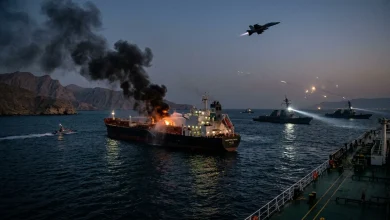
The ramifications of the cash-for-uranium deal extend far beyond non-proliferation; it is viewed as the linchpin for broader regional stability. The Middle East has been locked in a cycle of proxy wars, maritime disruptions, and missile exchanges. A comprehensive deal would theoretically compel Iran to leverage its influence over the Axis of Resistance to stand down. As tensions in crucial waterways remain high, resolving the nuclear issue is deeply intertwined with easing the Strait of Hormuz standoff.
Arab nations in the Gulf, particularly Saudi Arabia and the UAE, are watching these negotiations with cautious optimism mingled with profound skepticism. While they desire a denuclearized Iran, they fear that a sudden infusion of $20 billion could inadvertently finance a resurgence of regional militant activities. Consequently, the deal being discussed in Washington reportedly includes unwritten, collateral understandings regarding Iran’s ballistic missile deployments and drone exports, attempting to package nuclear concessions with broader security guarantees.
Israeli Calculus and the Mossad Strategy
No nation views the Iranian nuclear program with more existential dread than Israel. The Israeli government has consistently maintained that it will not allow Iran to become a nuclear-armed state, retaining the right to take preemptive military action if diplomatic efforts fail or are deemed insufficient. A $20 billion cash injection is highly controversial in Jerusalem, where officials argue that economic rewards only embolden radical elements within the IRGC.
However, the physical removal of 450kg of 60 percent enriched uranium undeniably alters the military equation. By eliminating the immediate breakout threat, the deal would buy Israel crucial strategic time. This diplomatic window aligns with the Iran nuclear standoff Mossad post-war strategy, which emphasizes covert sabotage, cyber warfare, and intelligence penetration over overt military strikes against subterranean facilities. If the fissile material is removed, Israel’s immediate need for a complex, high-risk aerial bombardment of Iranian nuclear sites is substantially diminished.
U.S. Domestic Politics and Congressional Resistance
Within the United States, the proposal faces a gauntlet of fierce domestic political opposition. Lawmakers on Capitol Hill, deeply suspicious of Tehran’s intentions, have already begun drafting legislative roadblocks. Under the Iran Nuclear Agreement Review Act (INARA) of 2015, Congress retains the right to review any comprehensive nuclear agreement reached with Iran. Opponents argue that unfreezing $20 billion constitutes appeasement, likening it to a ransom payment that violates the core tenets of U.S. counter-terrorism policy.
The administration must carefully navigate these political minefields, likely structuring the cash-for-uranium transfer not as a formal treaty requiring Senate ratification, but as a series of executive branch sanctions waivers. This approach, while legally permissible under the President’s foreign policy powers, virtually guarantees immense political blowback, especially in a charged election cycle. The optics of releasing billions to an adversary while global conflicts rage will require a masterful public relations campaign to emphasize the existential necessity of securing the 60 percent enriched material.
Diplomatic Backchannels and International Mediators
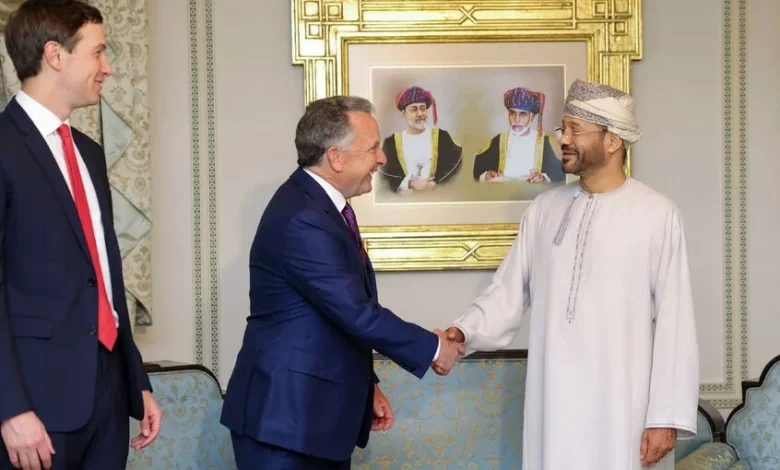
The complexity of these negotiations dictates that the U.S. and Iran cannot engage in direct, face-to-face bilateral talks. Instead, a complex web of backchannel diplomacy has been established. The Sultanate of Oman, long recognized as the Switzerland of the Middle East, has hosted multiple rounds of proximity talks where U.S. and Iranian delegations sit in separate rooms, passing proposals through Omani mediators. Qatar has also played a pivotal role, particularly concerning the structuring of the financial clearinghouses necessary to manage the $20 billion.
More recently, specialized military and intelligence backchannels have emerged to iron out the regional security aspects of the deal. The involvement of regional military leaders has been crucial in aligning the nuclear concessions with broader ceasefire frameworks. The active role of figures who can bridge the gap between Western intelligence and the Iranian establishment, akin to instances where Asim Munir brokers US-Iran truce agreements, demonstrates the reliance on trusted third-party guarantors to overcome decades of entrenched mutual hostility.
Comparative Analysis: Historic Nuclear Pacts vs. 2026 Proposal
To fully grasp the magnitude of the current negotiations, it is instructive to compare the proposed 2026 cash-for-uranium framework with the original Joint Comprehensive Plan of Action (JCPOA) signed in 2015. The evolution of Iran’s nuclear capabilities over the last decade has necessitated a dramatically different approach.
| Feature | JCPOA (2015) | 2026 Proposed Cash-for-Uranium Deal |
|---|---|---|
| Max Enrichment Level Allowed | 3.67% | Complete removal of all stockpiles (0% domestic retention of HEU) |
| Existing Stockpile Limitation | Capped at 300kg of low-enriched uranium | Total handover of the 450kg of 60% purity stockpile |
| Financial Relief Mechanism | Broad, phased sanctions lifting across multiple economic sectors | Immediate, targeted $20 Billion unfreeze via strictly monitored escrow |
| Verification and Oversight | IAEA Additional Protocol implementations | IAEA oversight combined with direct third-party physical extraction |
| Scope of Agreement | Focus purely on nuclear non-proliferation | Tethered directly to ending regional proxy wars and kinetic conflicts |
As the table illustrates, the 2026 proposal is inherently more transactional and immediate than the long-term, phased trust-building architecture of the JCPOA. It is a crisis-management tool designed for immediate risk mitigation rather than a foundational normalization of relations.
Global Economic Impact and Energy Markets
The global economic implications of releasing $20 billion and de-escalating the Middle Eastern conflict are profound, particularly concerning the energy sector. Iran remains one of the world’s largest potential producers of crude oil. While the current deal does not explicitly remove all secondary sanctions on Iranian petroleum exports, a successful nuclear de-escalation implicitly reduces the geopolitical risk premium currently baked into global energy prices.
Commodity analysts forecast that finalizing the uranium handover would stabilize the volatile Brent crude markets. Furthermore, freeing up $20 billion for humanitarian and agricultural imports will create significant ripples in global commodities markets, particularly for grain, pharmaceutical, and medical equipment exporters who have struggled to navigate the complex compliance landscape of Iranian trade. Consequently, while the deal is fundamentally about nuclear weapons, its economic shockwaves will be felt from Wall Street trading desks to agricultural hubs in Europe and South America.
Future Outlook for the Non-Proliferation Regime
The ultimate success or failure of this $20 billion cash-for-uranium initiative will likely define the future of the global non-proliferation regime. If the United States can successfully purchase its way out of a nuclear crisis, it sets a controversial but potentially life-saving precedent. It demonstrates that financial leverage, when applied surgically and overwhelmingly, can compel sovereign states to surrender their most guarded strategic assets.
However, the risk remains that the deal is merely a temporary palliative. As discussions continue about whether Iran weighs abandoning its uranium enrichment program permanently, skeptics warn that Tehran preserves the institutional knowledge and scientific expertise required to rebuild the program once the diplomatic winds shift. The world now watches with bated breath as diplomats race against the clock, knowing that the physical removal of 450 kilograms of 60 percent enriched uranium is the single most critical step toward pulling the Middle East back from the precipice of a devastating regional conflict.