Alexander Zverev Cruises Into US Open Quarterfinals 2026
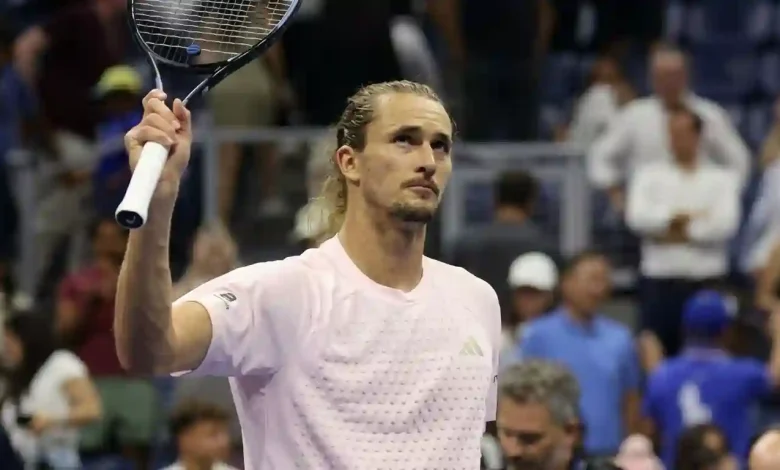
Table of Contents
Alexander Zverev has firmly established himself as a dominant force at the 2026 US Open, putting his sluggish start behind him with a masterful fourth-round victory.
Introduction: The Arthur Ashe Night Shift Comfort
The electric atmosphere of New York under the lights has always been a supreme test of nerve, and the fourth round of the 2026 US Open was no exception. Alexander Zverev, the German top seed and reigning French Open champion, stepped onto Arthur Ashe Stadium facing not just a dangerous opponent in Italy’s Luciano Darderi, but also the weight of his own exhausting tournament journey. Prior to this match, Zverev had been locked in marathon battles, spending over eleven hours on court across the first three rounds. However, his performance on Monday night signaled a massive turning point, demonstrating that his championship aspirations are burning brighter than ever as the tournament reaches its business end.
While other sections of the draw have seen shocking upsets and unexpected twists, Zverev has quietly solidified his status as the man to beat. The contrast in styles on display was fascinating: Zverev’s massive, imposing baseline game against the explosive, high-energy counterpunching of the 21st-seeded Darderi. For tennis purists, the match was a masterclass in tactical adaptation. While players like Carlos Alcaraz dominates their early rounds with flamboyant shot-making, Zverev’s victory was a testament to clinical efficiency, tactical discipline, and a lethal serve that gave his opponent absolutely no room to breathe.
Breaking the Midnight Curse
One of the most notable storylines of Zverev’s 2026 campaign has been his reluctant tenancy of the late-night slot. Having played four consecutive night sessions, Zverev was starting to feel like a permanent fixture of the early morning hours. His opening matches had pushed deep into the night, forcing him to adapt his recovery, sleep, and preparation schedules to accommodate finishes past 2:00 AM. Thus, wrapping up his victory over Darderi before midnight felt like an absolute luxury for the 29-year-old German.
Zverev showcased his trademark humor during his post-match on-court interview, lifting his wrist to look at his watch and drawing laughs from the packed crowd. “To be honest, I don’t know what to do with myself because it is before midnight,” Zverev joked with a wide smile. “I might go back to the practice court, I might go out to a bar, I don’t know yet… Unfortunately, that was a joke, so relax.” Behind the humor lies a serious athletic reality: finishing matches quickly is essential for conserving physical energy and mental focus, especially when preparing for the brutal physical demands of the second week of a Grand Slam.
Analyzing the Match: Zverev vs. Darderi Set by Set
The match began under perfect conditions, with the humidity levels dropping slightly and the Arthur Ashe court playing fast. Zverev set the tone from the very first game, striking his groundstrokes with extreme depth and precision. Luciano Darderi, playing in the biggest match of his career, appeared visibly nervous. The Italian struggled to find his rhythm on serve, throwing in double faults and leaving his second serves vulnerable to Zverev’s aggressive backhand returns.
Zverev capitalised on this hesitation immediately, breaking Darderi in the first game and repeating the feat shortly after to race into a commanding 3-0 lead. When dissecting the key match incidents of this opening set, Zverev’s ability to absorb Darderi’s heavy forehands and redirect the pace with interest was outstanding. Darderi tried to adjust by coming to the net, but Zverev’s passing shots were too sharp, wrapping up the first set 6-2 in just over thirty minutes.
Dominating the Opening Sets
The second set followed a nearly identical script. Zverev’s serve was an impenetrable fortress, as he won an astonishing 86% of his first-serve points. Darderi tried desperately to inject energy into his game, at one point even pouring himself a hot cup of coffee on the changeover in an attempt to spark a physical revival. Whether the caffeine helped or not, the Italian simply had no answers for the sheer weight and consistency of Zverev’s groundstrokes.
Another early double-break allowed Zverev to storm to another 3-0 lead. The German was playing with a level of confidence and aggression that we hadn’t seen in his first two five-set matches. His movement was fluid, his decision-making was impeccable, and he was taking the ball exceptionally early. He comfortably held his serve to close out the second set 6-2, putting himself in complete control of the match and silencing any doubts about his physical condition after his earlier marathon sessions.
The Third-Set Battle and Tight Tiebreak
Just when it seemed like a routine procession, Luciano Darderi showed the grit and resilience that has made him one of the most exciting young players of the season. In the third set, the Italian began to take massive risks, flattening out his forehand and going for broke on his service games. Suddenly, the Arthur Ashe crowd was treated to highly entertaining, high-velocity baseline exchanges, with Darderi playing to the spectators and feeding off their energy.
The climax of the set came in a dramatic eleventh game that lasted an incredible 11 minutes and 33 seconds. Zverev had multiple break point opportunities to serve for the match, but Darderi saved every single one of them with fearless tennis, eventually holding to lead 6-5. The set inevitably headed into a tiebreak. Here, Zverev’s extensive big-match experience proved decisive. He secured an early mini-break, fired a spectacular forehand winner into the corner to stretch his lead to 5-2, and sealed the victory on his first match point with his 13th ace of the night, taking the tiebreak 7-3.
The Grind of the 2026 Tournament
Zverev’s journey to the quarterfinals has been a grueling test of endurance. In his opening round against Lorenzo Sonego and his second-round clash with Quentin Halys, Zverev spent a combined nine hours and twenty-six minutes on court. Both matches went to five sets and tested his resolve, forcing him to win “ugly” when his best tennis was elusive. Winning under such challenging circumstances is the hallmark of a true champion.
The physical demands of professional tennis are immense, with players executing explosive movements, sliding on hard courts, and maintaining concentration over several hours. The relentless nature of these matches is comparable to the high-intensity endurance required in professional women’s basketball, where athletes must continuously transition between sprint intervals and technical execution without losing focus. Zverev’s ability to recover from these physical trials and raise his level of play against Darderi is a promising sign for his title hopes.
Historical Context: A Golden Path Without Top 20 Opponents
As the tournament progresses, tennis analysts have pointed out a highly unusual statistical anomaly in Zverev’s draw. Due to a series of major upsets and early-round withdrawals, including that of second seed Jannik Sinner, Zverev has the opportunity to reach the US Open final without facing a single opponent ranked inside the world’s Top 20. This is an incredibly rare occurrence in modern men’s tennis, but one that is not entirely foreign to the German.
Zverev previously reached the 2020 US Open final and won the Roland Garros 2026 title earlier this year under remarkably similar circumstances. If he achieves this feat again, he will solidify a historic and curious record of reaching three Grand Slam finals without defeating a Top 20 player along the way. While some critics may point to this as a fortunate draw, others recognize that you can only play who is in front of you. Navigating a Grand Slam draw requires immense consistency and mental strength, especially as the US Open continues to grow into one of the most prestigious, high-profile entertainment spectacles in the sporting world.
Strategic Analysis: Serving Performance and Baseline Dominance
From a tactical standpoint, Zverev’s service game was the bedrock of his success against Darderi. He consistently hit his targets, mixed up his speeds, and avoided the double-fault issues that have occasionally plagued his career. Winning 86% of first-serve points allowed him to play with immense freedom on his return games, putting constant pressure on Darderi’s serve and forcing the young Italian into uncomfortable defensive positions.
The biomechanical precision of Zverev’s service motion is a marvel of modern sports engineering. The coordination of his toss, knee bend, and explosive upward drive represents the kind of technological precision on a global scale that coaches and biomechanics experts analyze to optimize athletic performance. This clinical execution prevented Darderi from ever establishing a foothold in the match, restricting his ability to dictate play with his aggressive forehand.
Facing Botic van de Zandschulp in the Quarterfinals
With his fourth-round victory secured, Zverev now turns his attention to an intriguing quarterfinal matchup against the unseeded Dutchman Botic van de Zandschulp. Van de Zandschulp has enjoyed a fairytale run of his own, culminating in a grueling five-hour fourth-round victory that showcased his fighting spirit and exceptional counterpunching abilities. Although Zverev will enter the match as the heavy favorite, he cannot afford any complacency against an opponent with nothing to lose.
Van de Zandschulp’s journey represents the romantic side of Grand Slam tennis, where lower-ranked players rise to the occasion and challenge the established elite. The unseeded Dutchman will step onto the court fueled by the same passion and drive that inspires athletes chasing their champions league dreams, ready to put everything on the line for a historic semifinal spot. Zverev must maintain his clinical serving and baseline depth to avoid an upset.
Looking Ahead: The Quest for Another Grand Slam Title
For Alexander Zverev, the 2026 US Open is about unfinished business. Having come agonizingly close to winning his first Grand Slam title here in 2020—losing a two-set lead to Dominic Thiem in a heartbreaking five-set final—the German has spent years chasing redemption in New York. With his triumph at Roland Garros earlier this year, the mental barrier of winning a Major has been shattered, and he now plays with the calm authority of a Grand Slam champion.
The tennis world is often dominated by administrative discussions, regulatory changes, and off-court international sports federation disputes, but the magic of a Grand Slam quarterfinal reminds us why we fell in love with the sport. In an era where global news is filled with complex geopolitical tensions, the pure, unscripted drama of elite athletic competition offers a powerful unifying force. As Zverev prepares for the final week in Flushing Meadows, his eyes remain firmly fixed on the ultimate prize: hoisting the US Open trophy and cementing his legacy among the greats of the modern game.
Overview of Zverev’s 2026 US Open Journey
To fully appreciate Zverev’s progression through the tournament, the table below highlights his match statistics, opponents, and durations during his campaign in New York:
| Round | Opponent | Opponent Rank | Match Score | Duration |
|---|---|---|---|---|
| Round 1 (1R) | Lorenzo Sonego (ITA) | No. 89 | 6-4, 3-6, 6-7(7), 7-5, 6-4 | 4 hours, 45 mins |
| Round 2 (2R) | Quentin Halys (FRA) | No. 52 | 6-4, 7-5, 6-7(7), 6-1, 6-4 | 4 hours, 41 mins |
| Round 3 (3R) | Alejandro Tabilo (CHI) | No. 28 | Straight Sets | 2 hours, 15 mins |
| Round 4 (4R) | Luciano Darderi (ITA) | No. 21 | 6-2, 6-2, 7-6(3) | 2 hours, 31 mins |