Mourinho Denies Champions League Pressure in Shock Real Madrid Return 2026
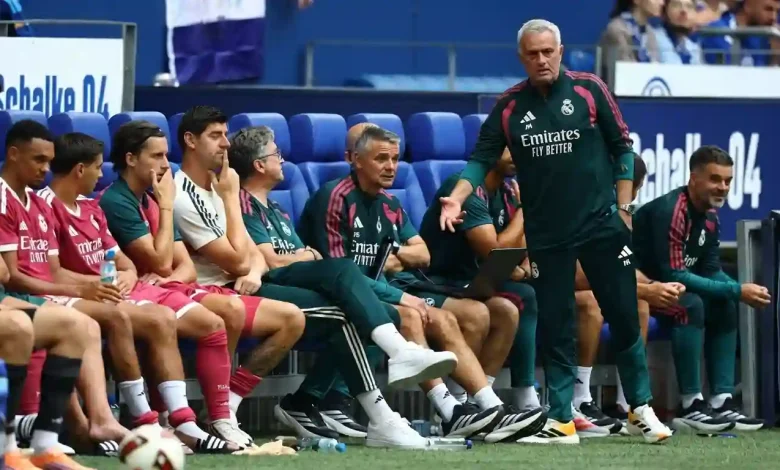
Table of Contents
Mourinho has firmly dismissed suggestions of added pressure as he prepares to guide Real Madrid into a brand-new UEFA Champions League campaign. Speaking ahead of a highly anticipated opening match against Serie A champions Inter Milan on Tuesday at the Santiago Bernabeu, the legendary Portuguese tactician made it clear that his focus is entirely on the future rather than correcting historical missteps. The Champions League remains the single major trophy that eluded him during his initial, highly dramatic tenure at the club between 2010 and 2013. His return to the Spanish capital represents one of the most high-profile returns in modern sports history, generating massive interest across global footballing communities. Returning to a stadium as demanding as the Bernabeu brings immediate expectations. However, the manager emphasized that his maturity and past successes shield him from the intense anxiety often manufactured by external commentators. He noted that handling championship pressure is a prerequisite for anyone operating at this elite level, drawing comparisons to how veteran performers in various demanding disciplines maintain their composure under immense scrutiny. The atmosphere in Madrid is electric, with local sports enthusiasts drawing parallels between the manager’s relentless pursuit of perfection and the dominant competitive drive displayed by local tennis icon Carlos Alcaraz on the international court. Despite the feverish anticipation, the manager is treating the upcoming clash against Inter Milan as the beginning of a long journey rather than a personal redemption arc.
Mourinho Rejects the Weight of Undone Business at Real Madrid
During his press conference at Valdebebas, the manager faced a barrage of questions regarding his relationship with Europe’s premier club competition. He pointed out that while winning the tournament is always the ultimate objective for a club of Real Madrid’s stature, it should not be viewed as an obsession that clouds daily preparation. In his view, treating any match as an existential crisis only serves to disrupt tactical discipline and squad harmony. He explained that his second stint in the capital is defined by a desire to build a sustainable, winning project rather than chasing individual milestones. This analytical, pragmatic approach is designed to insulate the dressing room from the sensationalized narratives that frequently dominate sports media coverage today. By removing the emotional weight from the Champions League campaign, he hopes to cultivate a more resilient squad capable of navigating the inevitable low points of a long European season. The squad has responded positively to this calm demeanor, with senior players expressing confidence in the manager’s ability to guide them through high-pressure scenarios without adding unnecessary psychological burdens.
The Historical Context of the Special One’s European Mission
To fully understand the narrative surrounding this match, one must examine the manager’s historic relationship with both clubs. Between 2010 and 2013, he managed a powerhouse Real Madrid team that successfully broke Barcelona’s domestic dominance, winning La Liga with a record-shattering 100 points. Yet, despite establishing one of the most devastating counter-attacking sides in modern football history, the Champions League trophy proved frustratingly elusive. His legacy in Madrid remains highly debated, fitting into broader historical discussions regarding legendary athletic legacies and how they are evaluated by fans and historians alike. For many, his first stint was an unqualified success that laid the groundwork for the club’s subsequent European dominance, while others view the lack of a Champions League title as a significant omission.
The Heartbreak of the Three Semifinals (2011–2013)
During those three intense seasons, Real Madrid reached the semi-finals of the Champions League three consecutive times, only to fall at the penultimate hurdle. In 2011, a highly controversial and ill-tempered tie against rivals Barcelona ended in disappointment. The following year, in 2012, a dramatic penalty shootout loss to Bayern Munich at the Bernabeu left fans heartbroken, particularly after a season of domestic dominance. Finally, in 2013, a stunning four-goal performance by Borussia Dortmund’s Robert Lewandowski in the first leg proved too steep a mountain to climb. Each exit added to the feeling that Europe was a puzzle the manager could not quite solve during his time in Spain, despite his previous Champions League triumphs with Porto and Inter Milan.
A Tactical Comparison of First and Second Spells
The tactical landscape of European football has evolved dramatically since the manager’s departure in 2013. During his first spell, the team relied heavily on a structured 4-2-3-1 formation that capitalized on explosive transitional phases led by Cristiano Ronaldo. Today, the manager has adapted his tactical approach to suit a highly technical and versatile midfield. Rather than relying solely on rapid transitions, the current setup emphasizes positional flexibility, fluid passing sequences, and a more controlled build-up play. While some critics argue that these changes represent a departure from his classic counter-attacking style, others view them as necessary adjustments to counter modern high-pressing systems. In preparation for the opener, the manager is known for implementing surprising strategic shifts to neutralize opposition tactics, showing that his tactical ingenuity remains as sharp as ever.
Inter Milan: The Poetic Opening Adversary
There is a poetic irony in the fact that the manager begins this campaign against Inter Milan, the club where he achieved his greatest European triumph. In 2010, he led the Nerazzurri to an unprecedented historic treble, winning Serie A, the Coppa Italia, and the Champions League in a single season. His connection with the Inter faithful remains incredibly strong, making this opening match an emotional affair for both sides. However, the modern Inter Milan is a formidable opponent in its own right, entering the match as the reigning Serie A champions with a highly disciplined squad capable of punishing any defensive lapse. While bookmakers and prediction market forecasts heavily favor a deep run for the Merengues, the manager has warned his players that Inter’s tactical sophistication poses a significant threat to their opening night plans. The match promises to be a fascinating chess match between two tactical heavyweights.
| Club / Era | Domestic League Titles | Domestic Cups Won | Champions League Finish | Primary Tactical Philosophy |
|---|---|---|---|---|
| Real Madrid (First Spell, 2010–2013) | 1 (La Liga 2011–12, Record 100 points) | 1 Copa del Rey (2011), 1 Supercopa (2012) | 3 consecutive Semifinal exits | Ultra-rapid counter-attack & high verticality |
| Inter Milan (Treble Era, 2008–2010) | 2 (Serie A 2008–09, 2009–10) | 1 Coppa Italia (2010), 1 Supercoppa (2008) | Winners (2009–10) | Low-block defensive rigidity & ruthless transition |
Managing Modern Superstars and Tactical Evolutions
The modern dressing room at the Bernabeu presents a different challenge compared to the squad of a decade ago. Managing elite talents today requires a delicate balance of tactical instruction, psychological management, and media navigation. The club’s financial health and squad value, often compared to high-growth corporate entities scrutinized in market valuation projections, mean that only silverware will satisfy stakeholders. The manager has adapted his man-management style to connect with a younger generation of players, emphasizing collective responsibility and tactical intelligence. By fostering a culture of mutual respect and clear communication, he has managed to create a cohesive unit that looks capable of competing on all fronts. His ability to keep high-profile players motivated and aligned with the club’s objectives will be crucial as the season progresses.
Integrating Youth and Experience in the New Era
A key component of the manager’s current strategy is the integration of promising young talents with seasoned veterans who understand what it takes to win at the highest level. This balanced squad dynamic has allowed the team to remain competitive during transitional phases. The manager has placed significant trust in academy graduates and young signings, giving them opportunities to prove themselves in high-stakes environments. This approach not only secures the long-term future of the club but also provides tactical flexibility, allowing the team to adapt to different opponents and match situations throughout the arduous Champions League campaign.
Analysis of Group Stage Expectations and Media Narratives
As the group stage gets underway, the media narratives surrounding Real Madrid’s European campaign are sure to intensify. Analysts will scrutinize every tactical decision, substitution, and post-match comment made by the manager. However, the squad remains focused on their immediate objectives, refusing to be distracted by the external noise. The manager’s pragmatic approach has trickled down to the players, who understand that the group stage is about building momentum and securing qualification rather than making grand statements. By focusing on one match at a time, Real Madrid hopes to navigate the early stages of the tournament smoothly, setting a solid foundation for the high-intensity knockout rounds that lie ahead.
Conclusion: The Ultimate Test of Legacy
Ultimately, the manager’s second spell at Real Madrid will be judged by his ability to deliver the Champions League trophy that eluded him before. While he may publicly downplay the pressure, there is no doubt that adding a third Champions League title with a third different club would solidify his status as one of the greatest managers in football history. The journey begins on Tuesday night against a familiar and respected foe in Inter Milan. As the famous Champions League anthem echoes around the Santiago Bernabeu, all eyes will be on the dugout to see if the Special One can finally guide Real Madrid to the European glory that has so far escaped his grasp in Spain.

One Comment