Venice Film Festival Sparks Structural Gender Equality Debate in 2026
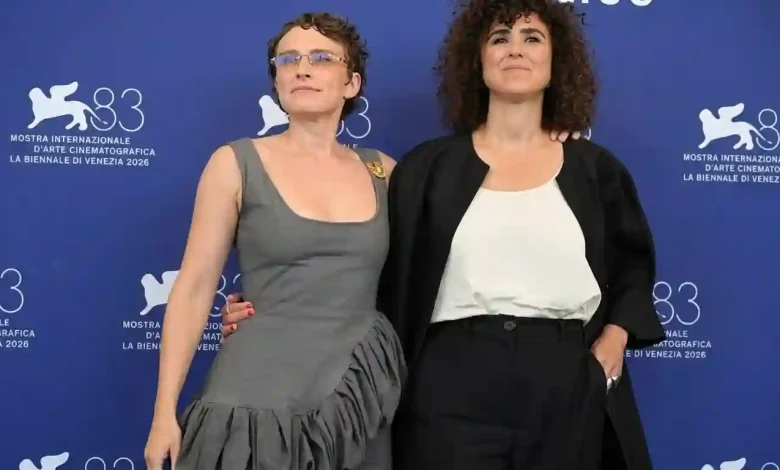
Table of Contents
Venice Film Festival delegates, media critics, and global filmmakers have descended upon the Lido for the 83rd edition of the world’s oldest film showcase, yet a persistent shadow hangs over the celebrations: the stark lack of gender equity in the main competition. Danish-Egyptian filmmaker May el-Toukhy sparked a major industry conversation on Sunday during the press conference for her historical drama Woman Unknown (Kvinde ukendt). Standing as the sole woman directing a fiction film among the twenty-one contenders vying for the prestigious Golden Lion award, el-Toukhy addressed what she described as a deeply entrenched structural problem within global filmmaking systems. With the festival’s lineup featuring only one other female creator—co-director Rachel Szor for the documentary NAZA—the debate surrounding representation has reached a critical boiling point.
The conversation around systemic exclusion is far from new, but the current statistics have shocked even veteran industry observers. Just a year prior, six out of twenty-one competition slots were filled by female directors. The drop to a single solo female director represents a historic low in recent festival memory. While artistic director Alberto Barbera defended the selection process by pointing to an overall drop in female-directed submissions, critics and creators argue that festival statistics are merely the symptom of a far more complex disease. This structural failure extends across development, financing, and marketing, creating an uneven playing field that systematically disadvantages marginalized voices from film school to the red carpet.
Underrepresentation in the Golden Lion Spotlight
The competitive lineup of the Venice Film Festival has long been viewed as a kingmaker for awards season and international distribution. Vying for the Golden Lion is a career-defining opportunity that can transform an indie filmmaker into a household name. However, when the selection is overwhelmingly male, the pipeline of recognized talent remains severely skewed. This year’s competition features celebrated veterans such as Werner Herzog, Paul Schrader, Nanni Moretti, Martin McDonagh, and Danny Boyle. In contrast, the absence of diverse perspectives in this elite circle limits the types of narratives that receive global acclaim, reinforcing an echo chamber of male-centric storytelling.
During her address, el-Toukhy emphasized that this exclusivity is not a reflection of artistic quality, but rather of access. Festival organizers often shift the responsibility onto the submission pool. For instance, Alberto Barbera noted that women directed only 24 percent of submitted films this year, down from 30 percent in the previous cycle. Yet, this defense ignores how women are shut out of the production phase long before they can submit a finished project. Without systemic interventions at the financing stage, the number of completed films by women will inevitably continue to dwindle, directly impacting their representation at elite showcases like the Venice Film Festival.
Structural Barriers: Beyond the Festival Submissions
The journey of a feature film begins years before it arrives on the Lido, and it is here that women face their most significant hurdles. El-Toukhy shared her own personal struggles, noting that it took her six to seven years to secure backing for her debut feature after graduating from film school. In contrast, her male peers transitioned into directing roles much more rapidly. This discrepancy is not an isolated incident; it represents a global trend of skepticism toward female directors, who are often deemed “risky” investments by traditional financiers. When funding is scarce, decision-makers default to established norms, which historically favor male creators.
The structural barriers are intimately tied to the scale of budgets. Female directors are disproportionately relegated to low-budget, niche, or documentary projects, whereas high-budget genre films and epic dramas are overwhelmingly handed to men. This capital disparity restricts the production values, casting potential, and marketing reach of women’s films. It creates a self-fulfilling prophecy where women are blamed for a lack of commercial viability because they were never given the capital to build an international blockbuster. This systemic hesitation mirrors independent film production issues that plague the entire creative industry, where financial insecurity disproportionately affects vulnerable or underrepresented creators.
The Film in Focus: May el-Toukhy’s “Woman Unknown”
May el-Toukhy’s Woman Unknown is a fierce, meticulously executed historical drama that serves as both an artistic masterpiece and a thematic mirror to the structural issues she champions. Set in the immediate aftermath of World War II, the narrative centers on Marie (portrayed with harrowing precision by Mathilde Arcel), a young nanny and housemaid in Copenhagen. Marie is preparing to marry her wealthy, older employer Christian (Carsten Bjørnlund), an executive who owns a prosperous glove factory. However, Marie harbors a dark, dangerous secret: during the Nazi occupation of Denmark, she had an intimate relationship with a German soldier, resulting in a pregnancy and a child who did not survive.
As post-war Denmark descends into a chaotic mix of liberation and vigilante justice, Marie’s past catches up with her. She becomes the target of blackmail from Karl (Thorbjørn Hedegaard), a young man who knows of her wartime associations. During this period, Danish women who fraternized with German soldiers were publicly humiliated, their heads shaved, and their bodies subjected to physical violence. El-Toukhy uses this historical reality to explore what she calls the ‘invisibility of women.’ Marie’s struggle is a battle against complete objectification, societal erasure, and voicelessness—a theme that directly echoes the historic struggle of women to claim ownership of their narratives, a motif reminiscent of debates over artistic expression and music history.
Comparing Representation Metrics Across Major European Festivals
Analyzing the gender distribution across Europe’s “Big Three” film festivals—Venice, Cannes, and Berlin—reveals a troubling pattern of inconsistency. While some years show a promising uptick in representation due to targeted initiatives or highly vocal jury panels, these gains are rarely sustained. The year 2026 has witnessed a noticeable regression, raising questions about whether the institutional promises made during the height of the #MeToo movement were merely superficial gestures rather than permanent structural changes.
| Festival (2026 Edition) | Total Competition Films | Sole Female Directors | Female Co-Directors | Percentage of Total Selection | Jury President |
|---|---|---|---|---|---|
| Venice Film Festival | 21 | 1 (May el-Toukhy) | 1 (Rachel Szor – Co-Dir) | 9.5% | Maggie Gyllenhaal |
| Cannes Film Festival | 22 | 4 | 0 | 18.1% | Greta Gerwig |
| Berlin Film Festival | 20 | 6 | 1 | 35.0% | Lupita Nyong’o |
The table clearly demonstrates that while the Berlin Film Festival has made strides toward structural equity, Venice remains severely lagging. This disparity is particularly stark given that the main jury at Venice this year is chaired by Maggie Gyllenhaal, a vocal advocate for gender parity in cinema. Gyllenhaal and her fellow jurors are tasked with evaluating a body of work that almost entirely excludes the female perspective, placing a heavy burden of representation on el-Toukhy’s shoulders alone.
The Post-MeToo Regression and Institutional Accountability
The regression in representation at Venice highlights a broader, more alarming trend: the gradual roll-back of progress achieved during the #MeToo movement. Following the global reckoning of 2017, the entertainment industry made numerous pledges to dismantle systemic bias, establish equity funds, and diversify executive boards. However, as the initial public pressure has waned, old habits have resurfaced. El-Toukhy warned that the industry is quietly reverting to its historical status quo, a phenomenon that requires immediate and active resistance from all industry stakeholders.
This regression is not unique to cinema; it reflects broader global entertainment dynamics where young talents are often subjected to rigid executive pressures and systemic marginalization. When institutions treat diversity as a temporary public relations campaign rather than a fundamental restructuring of power, long-term progress is impossible. To prevent a complete rollback of representation, film festivals and production companies must implement binding equity standards, transparent selection criteria, and dedicated funding pipelines for underrepresented directors.
The “Cult of Genius” and Media Narratives
Another profound barrier identified by el-Toukhy is the enduring “cult of male genius” that dominates film criticism and media coverage. In her address, she noted a stark disparity in how directors are discussed in the press: “I’ve never ever read an article where a female director is promoted as a genius… All of us are responsible for changing that discourse.” This linguistic bias has serious material consequences. When male directors are consistently framed as visionary “geniuses” and “auteurs,” they are granted greater creative freedom, larger budgets, and multiple opportunities to fail and recover.
Conversely, female directors are often viewed through a hyper-critical lens. A single box-office failure or critical misstep can prematurely end a woman’s directing career, whereas male directors frequently receive multiple chances to redeem themselves. This discrepancy in media narratives shapes the way audiences, financiers, and festival programmers perceive artistic value. It echoes the historical biases found in the media narratives of tragic figures, where complex individuals are reduced to simple, often punitive, archetypes. To dismantle this cult of genius, film critics and journalists must actively reevaluate the gendered language they use to describe creative talent.
Financing Obstacles: The Deep-Rooted Economic Chasm
At its core, filmmaking is an industry driven by capital, and the lack of representation at prestigious festivals is directly linked to the unequal distribution of financial resources. Securing independent film financing is an incredibly grueling process, and women are routinely locked out of private equity networks, venture capital, and institutional grants. This economic exclusion makes it nearly impossible for female-directed projects to compete on equal terms with heavily funded studio productions.
Furthermore, this financial struggle is exacerbated by broader economic trends. Women-led projects are often the first to be defunded when macroeconomic constraints tighten the pockets of key film financiers. At the same time, physical film sets are grappling with rising production overhead costs and supply chain disruptions. In this high-risk financial environment, conservative investors choose to back established male names, viewing female-led projects as unnecessary financial hazards. This financial conservatism ensures that the upper echelons of cinema remain an exclusive playground for male directors, while women are left to compete for scraps in the underfunded indie sector.
Restructuring the Future of Cinema
Overcoming the structural problems in the film industry requires a comprehensive, multi-faceted approach that goes beyond symbolic guest lists or superficial panel discussions. It demands a fundamental reallocation of capital. If major production studios, streaming giants, and public funding bodies do not actively commit to financing female-led projects, the pipeline will remain dry. This effort is akin to modern global business initiatives that have implemented mandatory diversity quotas to drive institutional innovation and long-term sustainability.
While veterans like Ridley Scott command massive studio backing, often reflected in high-profile coverage of Ridley Scott’s upcoming projects, independent female creators must be afforded similar developmental pathways. International film festivals like Venice must also look inward and reevaluate their selection committees. By ensuring that the programmers themselves represent diverse backgrounds and perspectives, festivals can actively counter the unconscious biases that have kept female directors on the periphery for decades. Only through systemic accountability, radical financial restructuring, and a collective refusal to accept the status quo can the global film industry hope to achieve true, lasting equality.





2 Comments