Belgium Rejects Infantino’s FIFA Presidency Bid Over Balogun 2026
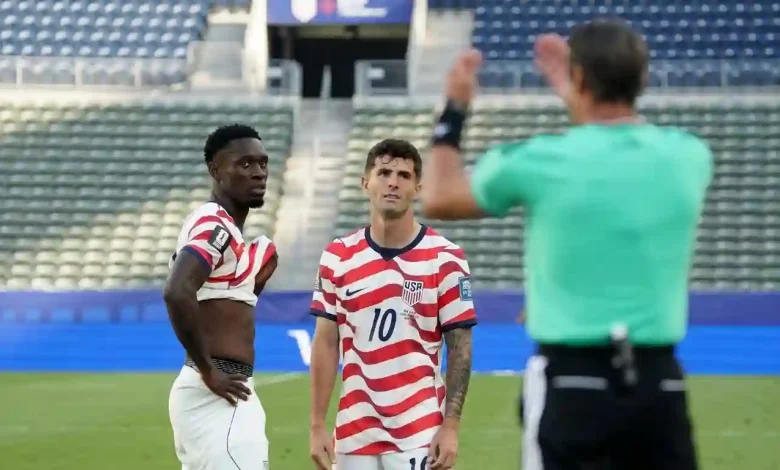
Table of Contents
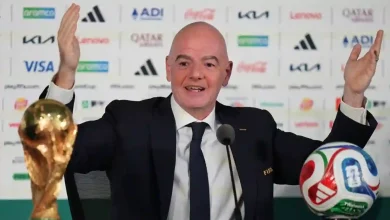
Belgium has officially declared its decision to withhold support for Gianni Infantino’s upcoming re-election bid as FIFA President, sparking a major political and administrative crisis within world football’s governing body. The Royal Belgian Football Association (RBFA) made the announcement on Monday, citing a severe lack of transparency and systemic governance issues that have tarnished the integrity of the sport. At the heart of Belgium’s defiance is the highly controversial handling of U.S. striker Folarin Balogun’s red-card suspension during the 2026 FIFA World Cup, alongside the secretive and aborted commercial venture known as the FIFA Forward Enterprise (FFE). By taking this public stand, the RBFA has positioned itself at the forefront of a growing European rebellion against Infantino’s autocratic leadership style.
The dispute centers on a series of unprecedented executive interventions that the RBFA argues directly violate the game’s core competitive rules. This detailed analysis examines the structural, legal, and political dimensions of the conflict, demonstrating why the Belgian federation has chosen to draw a line in the sand ahead of the 2027 FIFA presidential elections.
The Core of the Dispute: A World Cup Controversy Reopens
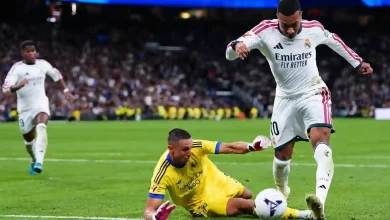
The catalyst for the current breakdown in relations between the RBFA and FIFA is the unprecedented disciplinary u-turn involving United States men’s national soccer team (USMNT) striker Folarin Balogun during the knockout stages of the 2026 World Cup. Balogun had received an automatic direct red card in a high-stakes round-of-32 victory against Bosnia-Herzegovina for a severe foul on Tarik Muharemović. Under all standard FIFA protocols, a direct red card warrants an immediate, non-negotiable one-match ban, which would have ruled Balogun out of the critical Round of 16 match against Belgium.
However, in a move that stunned the global football community, FIFA’s Disciplinary Committee intervened to suspend the enforcement of the ban, rendering Balogun eligible to face the Belgian squad. While Belgium ultimately triumphed on the pitch with a resounding 4-1 victory, the RBFA argues that the integrity of the tournament was heavily compromised. While sport fans celebrate the on-field brilliance of top-tier athletes, such as the striking performance of international players, administrative scandals often overshadow these competitive achievements. The Belgian federation has repeatedly demanded a formal, comprehensive explanation of the exact legal mechanisms used to clear the American striker, but FIFA has met these inquiries with stone-faced silence.
Political Interference Allegations: The Trump-Infantino Phone Call
What transforms this sporting dispute into an international geopolitical scandal is the direct involvement of the White House. It was revealed that United States President Donald Trump personally phoned Gianni Infantino multiple times to urge him to review the disciplinary action against Balogun. Trump’s direct intervention and his subsequent public acknowledgment of the call have raised serious ethical questions regarding the independence of FIFA’s judiciary organs. Critics have argued that allowing geopolitical leverage to dictate disciplinary decisions sets a dangerous precedent, reminiscent of how global superpowers exercise diplomatic leverage and economic policies to coerce foreign entities.
The controversy showcases Donald Trump’s political influence over major international entities, proving that diplomatic power plays can alter on-field competitive environments. This political maneuver has further alienated European football executives who already felt uneasy after notable internal shifts, such as Kevin Lamour’s departure from FIFA, which signaled deeper administrative rifts. Such intercontinental diplomatic pressure, often drawing involvement from the highest administrative offices up to the U.S. Vice President, blurs the lines between sovereign interest and independent sports arbitration. The geopolitical gravity of this case mirrors delicate discussions often held in high-level diplomatic circles, akin to agreements forged through bilateral international relations.
The Legal Breakdown: Article 27 vs. Article 66.4
To justify the deferral of Balogun’s suspension, FIFA’s Disciplinary Committee pointed to Article 27 of the FIFA Disciplinary Code. This article allows the governing body to suspend the implementation of certain disciplinary sanctions under specific probationary conditions. However, the RBFA has vehemently challenged this interpretation, citing a blatant contradiction with other governing regulations. Specifically, Article 66.4 of the same Disciplinary Code explicitly mandates that a sending-off automatically triggers an immediate ban for the team’s subsequent match. This rule has been universally applied to every other red card issued throughout the tournament’s history without exception.
Rule interpretations are critical here. Article 10.5 of the FIFA World Cup Competition Regulations reaffirms this automatic penalty. The RBFA has argued that the arbitrary application of Article 27 to override Article 66.4 represents a direct threat to the rule of law within global football. Governance experts have pointed out that in any standard sport discipline—whether on the soccer pitch or during a high-profile sports arbitration—rules must be absolute and blind to the status of the participants. The Belgian federation’s legal team is currently evaluating a potential appeal to the Court of Arbitration for Sport (CAS) to seek a definitive ruling on this dangerous precedent.
Financial Governance Under Fire: The FIFA Forward Enterprise Plan
The Folarin Balogun scandal is not the only source of friction between the RBFA and FIFA. Belgium’s decision to withdraw its endorsement of Infantino is equally motivated by the controversial FIFA Forward Enterprise (FFE) proposal. Under this secretive initiative, FIFA leadership proposed to sell lucrative stakes in the World Cup’s commercial rights to private equity firms for an estimated $4.2 billion. The plan was prepared with virtually no consultation with member nations or European football’s governing bodies. It was abruptly withdrawn on August 1 following an intense and immediate public backlash.
The RBFA argues that the FFE proposal demonstrates a fundamental lack of democratic transparency. The Belgian federation has publicly stated that a number of important decisions and assessments regarding the FFE have not been sufficiently substantiated by adequate justifications. Belgium remains firmly committed to a sustainable, independent, and transparent model for international football that prioritizes sporting merit over speculative private investments. The attempt to commercialize international tournaments without open dialogue has deeply damaged the trust between FIFA and its most established member associations.
Global Fallout: European Football Standing in Solid Opposition
The RBFA’s defiance highlights a structural debate within global sports administration regarding the consolidation of power in the hands of a few select executives. By refusing to rubber-stamp Infantino’s re-election, Belgium has catalyzed a broader movement across European football. The continent’s most influential national associations are increasingly vocal about their concerns regarding FIFA’s centralized decision-making processes, which often neglect the voices of local federations and continental governing bodies.
UEFA’s Hardline Stance Against FIFA Leadership
UEFA, the governing body of European football, has taken an increasingly adversarial position against Infantino’s administration. UEFA executives have openly expressed their dissatisfaction with how FIFA has handled both geopolitical interventions and commercial restructuring. The European body has threatened to boycott upcoming FIFA tournaments if transparency is not restored, signaling a potential schism that could disrupt the global football calendar. UEFA’s leadership believes that FIFA’s recent actions have consistently undermined the authority of regional confederations.
The Escalating Pushback from National Football Associations
Following Belgium’s announcement, several other prominent European nations have initiated their own internal reviews regarding Infantino’s upcoming presidential bid. The English Football Association (FA) and several Scandinavian federations have reportedly reconsidered or outright withdrawn their support. These national associations agree with the RBFA that a football governing body cannot function effectively when its disciplinary decisions are perceived to be vulnerable to political lobbying or backroom commercial deals.
The Road to the 2027 FIFA Presidential Elections
Despite the growing opposition, Gianni Infantino has confirmed his intention to stand for another term in office, which would extend his presidency through 2031. Having assumed the role in 2016 following the corruption scandals of the Sepp Blatter era, Infantino has consistently sought to expand his global influence. However, the combined weight of the Balogun red-card controversy and the FFE fallout presents the most significant challenge to his leadership to date. The coming months will be critical as member associations debate whether to demand a new direction for the world’s most popular sport.
Analytical Summary of Key RBFA Grievances
To better understand the core grievances of the Royal Belgian Football Association, the following table summarizes the conflict between standard FIFA protocols and the actions taken during the recent World Cup and financial negotiations:
| Governance Area | Standard Protocol / Regulation | Applied Decision / Action | RBFA Core Objection |
|---|---|---|---|
| Red-Card Disciplinary Ban | Article 66.4 of the FIFA Disciplinary Code mandates automatic one-match suspension for a direct red card. | FIFA suspended Folarin Balogun’s ban under Article 27, allowing him to play against Belgium. | Undermines competitive fairness and the standard rules applied to all other tournament participants. |
| Political Neutrality | FIFA Statutes demand complete independence from political influence and government interference. | U.S. President Donald Trump personally phoned Infantino to request a disciplinary review. | Allows political leverage and diplomatic pressure to dictate sporting outcomes. |
| Commercial Stake Sale (FFE) | Democratic consultation with member associations on commercial rights and long-term financial structures. | A unilateral $4.2 billion private equity deal was proposed and then hastily withdrawn on August 1. | Complete lack of operational transparency, democratic oversight, and adequate justifications. |
Without definitive, transparent answers regarding these specific points, the RBFA remains firm in its stance. The Belgian soccer federation has made it clear that “business as usual” is no longer acceptable. The future of sports governance depends on rebuilding trust, enforcing rules consistently, and ensuring that no national president or political office can bypass the established regulations of the game.