Blue Origin Targets Weekly New Glenn Rocket Launches by 2030
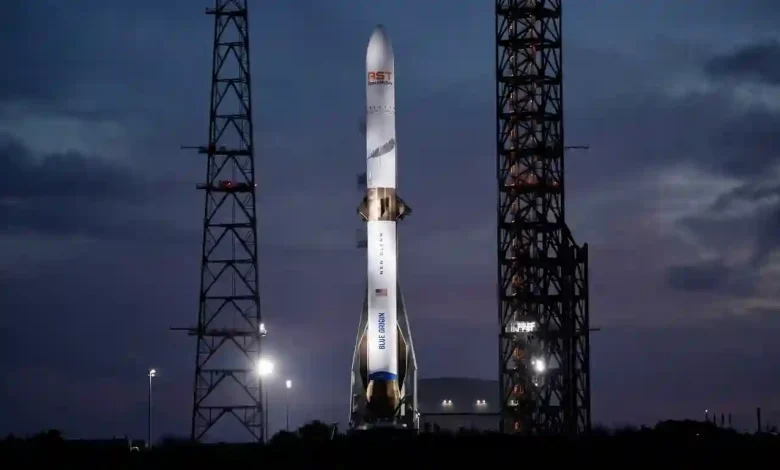
Table of Contents
Blue Origin is embarking on an unprecedented operational expansion, setting an ambitious goal to achieve multiple flights per week of its massive New Glenn rocket by the end of the current decade. The announcement, delivered by senior executive Ian Richardson, underscores a pivotal turning point for Jeff Bezos’ spaceflight enterprise as it pours billions of dollars into scaling its Florida manufacturing and launch footprint. Facing immense pressure to establish a reliable alternative to market leader SpaceX, Blue Origin’s strategy relies on building out dual launch sites, expanding upper-stage production facilities, and rapidly recovering from an explosive setback that sidelined its flagship orbital vehicle earlier this year.
Blue Origin Outlines Aggressive Multi-Flight Weekly Vision
The strategic roadmap laid out by company leadership represents a monumental escalation in commercial space operations. To achieve a flight frequency measured in multiple launches per week, Blue Origin is re-engineering its operational workflow from the ground up. Rather than treating orbital launches as bespoke aerospace events, the enterprise aims to transform heavy-lift spaceflight into a streamlined, high-cadence transportation system capable of supporting commercial, defense, and deep-space exploration manifests simultaneously.
Scaling to several launches weekly requires massive structural redundancy and continuous manufacturing output. To match the operational rhythms of competitors seeking SpaceX infrastructure capital, Blue Origin is laying the groundwork for high-throughput assembly lines capable of fabricating rocket hardware at unprecedented speeds. Standardizing rocket production while maintaining rigorous safety protocols remains the core imperative for the company as it ramps up its long-term investments in Florida.
Massive $330 Million Florida Infrastructure Expansion
The heavy-lift New Glenn rocket represents Blue Origin’s flagship entry into the commercial orbital market, standing 322 feet tall and engineered to deliver massive payloads into Earth orbit and beyond. To support an accelerated flight schedule, the company has already invested over $3 billion into its sprawling 31-acre manufacturing and integration complex located at Cape Canaveral Space Force Station. Operating with a dedicated workforce of roughly 5,000 personnel in Florida, the enterprise is preparing for its next evolution by adding a $330 million expansion slated for operational completion by mid-2027.
This multi-phase capital deployment is specifically designed to accommodate the next-generation heavy-lift variant, known internally as the New Glenn 9×4. Featuring nine powerful BE-4 engines on its first stage and four upper-stage engines, the 9×4 variant offers significantly increased payload capacity compared to the baseline 7×2 model. The expanded manufacturing footprint will house specialized tooling, automated welding cells, and expanded cleanrooms necessary to process multiple orbital boosters concurrently.
New Glenn Capabilities and Facility Overview
To contextualize Blue Origin’s infrastructure scaling and technical specifications relative to industry benchmarks, the table below outlines key operational parameters for the New Glenn family and its Florida facilities:
| Operational Metric | New Glenn (7×2 Baseline) | New Glenn (9×4 Heavy) | SpaceX Falcon Heavy |
|---|---|---|---|
| First Stage Propulsion | 7x BE-4 Engines | 9x BE-4 Engines | 27x Merlin 1D Engines |
| Upper Stage Propulsion | 2x BE-3U Engines | 4x BE-3U Engines | 1x Merlin Vacuum Engine |
| Target Flight Cadence | 12-24 launches / year | Multiple launches / week | 10-15 launches / year |
| Florida Infrastructure Footprint | 31 Acres (Cape Canaveral) | Expanded 31+ Acre Complex | LC-39A / SLC-40 Pads |
| Annual Upper Stage Production | ~20-30 units | Up to 150 units | Proprietary high throughput |
Overcoming the May Launchpad Explosion at Complex 36
The aggressive growth plan comes on the heels of a severe operational crisis that temporarily halted Blue Origin’s momentum. In May 2026, during a routine pre-flight static fire test at Launch Complex 36A (LC-36A), a catastrophic failure involving a BE-4 main oxygen valve resulted in a massive explosion. The blast completely destroyed the third New Glenn booster, named “No, It’s Necessary,” and inflicted severe structural damage on the company’s sole operational launchpad. Acoustic sensors detected ultra-low-frequency sound waves over a thousand miles away, illustrating the sheer force released during the blast.
The grounding forced a complete halt to orbital operations for the remainder of the year, compelling engineers to conduct exhaustive root-cause evaluations alongside federal regulators. Learning from past industry setbacks, including historical engine static fire test failures, Blue Origin’s engineering leadership has turned the aftermath of the accident into an opportunity to overhaul its launch infrastructure. Rather than simply repairing LC-36A, the company is constructing LC-36B—a dedicated pad tailored for the heavier 9×4 variant—while adding additional landing pads across Florida’s Space Coast.
Challenging SpaceX’s Heavy-Lift Launch Monopoly
The primary commercial driver behind Blue Origin’s massive capital expenditure is the need to challenge SpaceX’s virtual monopoly over orbital transportation. For over a decade, SpaceX has dominated commercial, defense, and civil launch services through its workhorse Falcon family, maintaining an enviable SpaceX Falcon 9 launch operational cadence. Blue Origin’s executive team recognizes that gaining meaningful market share requires more than technological capability; it demands operational availability.
By establishing multi-pad redundancy and a robust upper-stage inventory, Jeff Bezos’ firm aims to position New Glenn as the primary commercial alternative for satellite operators, defense agencies, and international partners seeking assured access to space. Achieving launch parity with SpaceX requires relentless operational execution and rapid launch vehicle turnaround times, both of which are central goals of the ongoing Florida facility expansion.
Upper-Stage Manufacturing and 150-Unit Annual Scale
A critical bottleneck in orbital spaceflight is the production of upper stages, which are typically expendable or require highly complex recovery architectures. Ian Richardson highlighted that Blue Origin’s new $330 million facility expansion will enable an annual production capacity of up to 150 upper stages for New Glenn. This industrial output represents a dramatic shift from traditional low-volume aerospace manufacturing to high-rate assembly line dynamics.
Standardizing upper-stage manufacturing allows Blue Origin to maintain a continuous reserve of second stages ready for integration. Coupled with reusable first-stage boosters designed for up to 25 flights, this assembly-line model is engineered to keep pace with the demanding launch schedule required by commercial megaconstellations and deep-space science initiatives.
Amazon Leo Satellites and Defense Mission Commitments
A primary driver for New Glenn’s manifest is Amazon’s massive Project Kuiper broadband constellation, also referred to as Amazon Leo. Under multi-launch contract agreements, Blue Origin is obligated to launch hundreds of low-Earth orbit satellites to build out Amazon’s global internet grid. High launch reliability and rapid flight turnaround are essential to meet federal deployment deadlines mandated for the constellation.
Beyond commercial megaconstellations, Blue Origin plays a central role in NASA’s deep-space exploration ambitions, including Artemis III lunar lander development. With national security missions demanding dedicated heavy-lift options, securing a multi-launch weekly cadence ensures Blue Origin can fulfill its dual commitments to commercial clients and national defense space programs.
Navigating FAA Regulatory Approvals and Public Audits
Expanding launch operations to multiple flights per week requires extensive environmental and regulatory coordination with federal agencies. The Federal Aviation Administration (FAA) is currently evaluating Blue Origin’s request to dramatically increase its permitted launch license at Cape Canaveral from 12 flights annually to up to 50 launches per year at Complex 36 alone. Public review periods and virtual community hearings are underway to assess environmental assessments, sonic boom impacts, and local airspace management.
The financial investments supporting these regulatory and infrastructure initiatives illustrate broader aerospace economic exposures that extend across the entire space technology supply chain. From specialized metallurgy suppliers to advanced avionics developers, thousands of sub-contractors rely on Blue Origin’s sustained capital output as it navigates the complex regulatory pathways toward high-cadence launching.
The Decade-End Vision for Orbital Infrastructure
As Blue Origin works through its return-to-flight protocols following the May explosion, the broader commercial space industry is watching closely. The convergence of commercial space industry developments and government contracts creates a high-stakes ecosystem where operational execution is paramount. If Blue Origin successfully realizes its multi-pad infrastructure expansion and achieves its targeted weekly flight rate by 2030, it will permanently alter the economics of spaceflight.
This transition toward routine, high-frequency space access marks the beginning of a new era in global spaceflight infrastructure. Through deep integrations with NASA commercial launch partnerships and private satellite networks, Blue Origin’s ambitious trajectory reflects a future where orbital space is a continuous operational frontier for commercial innovation.