SpaceX Falcon 9 Launches International Crew to ISS for Science
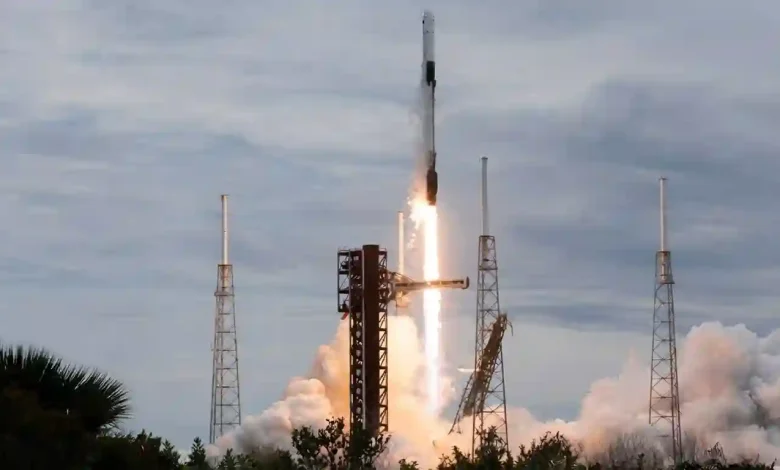
Table of Contents
SpaceX Falcon 9 operations marked another pivotal chapter in commercial spaceflight as the vehicle roared into the skies above Cape Canaveral, delivering a multinational expedition bound for the International Space Station (ISS). Rising through the early atmosphere with pristine precision, the mission bridges government agencies and commercial aerospace capabilities, sending two American astronauts, one Canadian astronaut, and a Russian cosmonaut into microgravity for an exhaustive series of scientific experiments focused on the limits of human physiology in space. As space agencies gear up for long-duration deep-space endeavors, the data harvested during this expedition will serve as a foundational benchmark for future expeditions beyond low Earth orbit.
SpaceX Falcon 9 Launches Historic ISS Expedition
The dawn launch from Cape Canaveral Space Force Station illuminated the Florida coastline as nine Merlin 1D engines generated more than 1.7 million pounds of thrust. The two-stage booster lifted cleanly off Space Launch Complex 40, arcing northeast along the orbital trajectory designed to sync with the moving laboratory traveling at 17,500 miles per hour overhead. This milestone underscores how deeply integrated commercial launch services have become within government programs, mirroring recent breakthroughs covered in our reporting on NASA commercial crew architecture and sustained operational readiness.
Spectators lining Jetty Park and Cocoa Beach witnessed the controlled staging sequence just over two and a half minutes into the flight. The booster separated gracefully, executing its flip maneuver to return toward the autonomous spaceport drone ship stationed downrange in the Atlantic Ocean, while the second stage vacuum engine ignited seamlessly to push Crew Dragon into its initial parking orbit. Ground controllers confirmed orbital insertion nominal, clearing the autonomous capsule for its 24-hour phasing sequence toward the orbiting outpost.
The Four-Member Multinational Crew
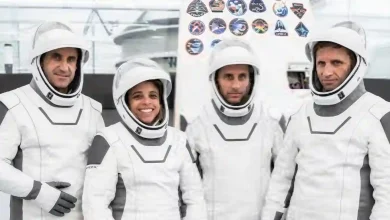
Reflecting the collaborative spirit that has defined low Earth orbit operations for more than two decades, the crew represents three space agencies operating side by side. Commanding the Crew Dragon capsule is a veteran NASA astronaut who previously logged months aboard the station during earlier orbital tours. Sitting alongside is an American mission specialist with extensive military aviation and medical flight research experience, charged with overseeing primary physiological data collection while in orbit.
Joining them is an astronaut from the Canadian Space Agency (CSA), serving as a flight engineer and robotics specialist. The mission marks an important milestone for Canada’s space program, demonstrating its sustained commitment to space biology and advanced robotics, while also reflecting wider global aerospace trends examined in our analysis of Italy’s space industry developments. The fourth crew member is an experienced Russian cosmonaut from Roscosmos, flying under the seat-sharing integrated flight agreements that maintain balanced contingency operations aboard the ISS, a program that has withstood shifting terrestrial dynamics.
Flight Trajectory and Cape Canaveral Ascent
The ascent trajectory chosen for this mission maximized safety margins across multiple transatlantic abort zones while ensuring an optimal orbital rendezvous window. The Falcon 9 first stage executed an entry burn and precision landing burn, sticking the drone ship deck with hallmark stability. This launch reuses a flight-proven booster that previously lofted national security payloads and commercial communications assets, reaffirming the structural resilience of modern launch hardware similar to our ongoing coverage of SpaceX Falcon 9 launch cadence and fleet reuse.
Inside the pressurized cabin, telemetry verified that automated environmental control and life support systems (ECLSS) stabilized cabin pressure, oxygen partial pressure, and internal temperature profiles immediately upon reaching orbit. The four crew members quickly stowed ascent gear and initiated the initial sequence of onboard systems checkouts, preparing for orbital operations that mirror the rigorous standards seen throughout modern spaceflight infrastructure.
Orbital Health and Human Performance Research
The primary mandate of this expedition centers directly on microgravity human physiology. Over the course of their half-year mission, the crew will participate in over 200 distinct scientific investigations, with primary focus given to the degradation of bone mineral density, neuro-ocular changes, and the acceleration of cardiovascular remodeling in weightlessness. Such physiological stress tests are vital for identifying countermeasures before crews embark on years-long missions to Mars, complementing recent studies into molecular cellular integrity highlighted in our report on eight-letter genetic structures and synthetic biology applications.
Key experiments include 3D bioprinting human vascular networks using station hardware, testing the efficacy of targeted pharmaceuticals in microgravity conditions, and evaluating deep-space nutritional regimens designed to mitigate oxidative stress. In-flight health data will be integrated with real-time biometric tracking to map autonomic nervous system responsiveness during high-stress EVA (extravehicular activity) simulations, yielding practical insights that feed back into ground-based medicine as well.
Crew Dragon Autonomous Flight and Reusability
Operating completely on autonomous flight algorithms, the Crew Dragon vehicle requires zero pilot input for nominal maneuvers, although manual flight controls remain fully accessible via touchscreen flight computers should contingencies arise. The guidance, navigation, and control (GNC) algorithms rely on an array of optical cameras and star trackers, supplemented by real-time laser rangefinder telemetry as the spacecraft approaches within the 200-meter keep-out sphere surrounding the ISS.
The engineering validation of this autonomous suite showcases the maturing landscape of commercial aerospace manufacturing, which has witnessed widespread adoption across allied aerospace defense programs, as documented in our review of Saab space defense architectures. SpaceX engineers have refined capsule heat-shield tiles and parachute deployment mechanics based on years of recovery data, resulting in a mature platform capable of weathering the extreme heat of hypersonic re-entry when this expedition concludes next autumn.
Mission Specifications and Technical Data
The operational specifications of the launch illustrate the precision engineering demanded by modern human orbital transport. From propulsive lift-off to stage separation and ultimate docking, every threshold is calculated to minimize mechanical stress on the human occupants while ensuring rapid abort availability at every step of the launch profile.
| Parameter | Value / Specification | Operational Significance |
|---|---|---|
| Launch Vehicle | SpaceX Falcon 9 Block 5 | Two-stage reusable liquid-propellant rocket |
| Spacecraft | Autonomous Crew Dragon | Pressurized human capsule with docking nose cone |
| Launch Site | Cape Canaveral SLC-40 | Primary Atlantic launch corridor |
| Orbital Inclination | 51.6 degrees | Co-planar with International Space Station |
| Crew Complement | 4 (2 US, 1 CA, 1 RU) | Multinational expedition team |
| Mission Duration | ~180 Days | Long-duration science and maintenance tour |
| Primary Payload | Microgravity Health Lab Suite | Human performance and cellular biology hardware |
| Landing Target | Atlantic Ocean Drone Ship | Full booster recovery and refurbishment profile |
International Spaceflight in a Complex Geopolitical Era
The collaborative presence of an international crew aboard a single spacecraft represents an enduring diplomatic anomaly. Even as geopolitical friction reshapes commercial alliances and terrestrial diplomatic accords—themes regularly analyzed in our coverage of Greenland defense deal negotiations and multinational defense frameworks—space programs have continued to prioritize mutual safety and institutional stability in orbit.
The integrated crew agreement between NASA and Roscosmos ensures that at least one crew member from each partner agency remains aboard the station at all times to operate the respective orbital segments. This system redundancy prevents any unilateral operational failure from rendering the multibillion-dollar complex uncrewed. As commercial platforms begin to replace government-built modules late in the decade, these international agreements establish valuable protocols for how commercial and sovereign entities will coexist in future space stations.
Implications for Long-Duration Lunar and Deep-Space Exploration
Data gathered during this expedition will directly inform planning for deep-space missions under the Artemis and lunar base programs. Human physiological vulnerabilities—such as muscle atrophy, immune dysregulation, and neuro-vestibular disorientation—remain significant obstacles to prolonged voyages, matching the scientific hurdles detailed in our exploration of the Prithvi lunar model and extraterrestrial outpost logistics.
Moreover, the integration of autonomous medical diagnostics and automated telemetry aboard Crew Dragon demonstrates how future spacecraft will function when round-trip communication delays with Earth make real-time Mission Control assistance impossible. From deep space navigation to advanced in-situ life support, the technologies proven during this launch ensure that low Earth orbit remains an indispensable proving ground for humanity’s eventual steps toward deep space settlement.
As the Falcon 9 booster returns to port for subsequent missions and Crew Dragon completes its final docking approach, this mission reaffirms that the future of orbital spaceflight is grounded in reliable reuse, international teamwork, and a relentless focus on biological preservation in the hostile expanse of space.