Prithvi Lunar Model: NASA and IBM Redefine Moon Mapping 2026
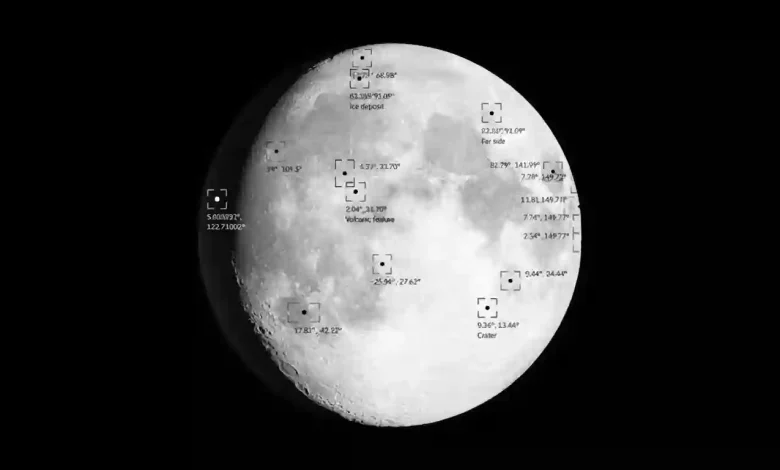
Table of Contents
Prithvi, the newly released open foundation model developed by IBM and NASA, represents a monumental leap forward in our capability to map and understand the Moon’s surface. As space agencies prepare for a sustained human presence on the Moon under the Artemis program, the necessity for highly detailed, reliable, and rapidly generated geospatial data has never been more urgent. This pioneering artificial intelligence model, which joins IBM and NASA’s Prithvi family of open foundation models, addresses these needs by automating tasks that have traditionally demanded years of laborious, manual analysis. By using sophisticated transformer architectures, the model can process massive lunar datasets, mapping deep craters, identifying volcanic features, and highlighting potential water ice reservoirs in the Moon’s permanently shadowed regions (PSRs) with unprecedented precision.
Historically, studying the lunar surface involved a slow, painstaking process. Scientists were forced to sift through thousands of high-resolution images manually or depend on legacy artificial intelligence frameworks that lacked the contextual understanding needed to handle the Moon’s complex and variable lighting conditions. The release of this new specialized iteration of the NASA IBM Lunar model marks a paradigm shift in space science, offering researchers and aerospace engineers a highly accurate, automated toolkit to evaluate landing sites, map volatile resources, and map the geological history of Earth’s closest neighbor.
The Evolution of the Prithvi Model Family
The Prithvi family of models began as a collaborative effort to apply foundation models to Earth observation data. Initially designed to analyze complex geospatial data, weather patterns, and agricultural changes on Earth, the Prithvi architecture has proven remarkably versatile. Unlike traditional, narrow machine-learning models trained to perform a single specific task, foundation models are trained on vast, unlabelled datasets using self-supervised learning techniques. This allows them to build a deep, generalized representation of the input data, which can then be fine-tuned for a wide variety of downstream tasks with minimal additional training.
By expanding this architecture from Earth-centric observations to the lunar landscape, NASA and IBM have demonstrated that the core principles of self-supervised geospatial learning are highly transferable. The lunar model is trained on diverse orbital datasets, including imagery and altimetry collected by instruments like the Lunar Reconnaissance Orbiter (LRO). This specialized training allows the model to map the physical geometry, reflectance, and structural features of the lunar surface across vast geographical regions, scaling up scientific workflows that once took entire careers to execute.
Advanced Capabilities: Mapping the Lunar Surface in Unprecedented Detail
The primary advantage of the lunar Prithvi model lies in its multi-task capability. Instead of relying on separate, disjointed algorithms to map craters, trace volcanic structures, and search for ice, researchers can now utilize a single, consolidated architecture. The model effectively handles multiple high-priority scientific and operational objectives simultaneously.
These capabilities are critical for both immediate scientific inquiry and the long-term engineering requirements of crewed missions. Identifying hazards, locating resources, and understanding geological formations are no longer isolated projects but integrated elements of a unified AI pipeline. This integrated approach mirrors the sophistication of modern enterprise-grade AI tools currently transforming industrial, defense, and environmental operations on Earth.
Navigating Permanently Shadowed Regions and Lunar Ice
One of the most complex challenges in modern lunar science is imaging and analyzing Permanently Shadowed Regions (PSRs). Located primarily at the lunar South Pole, these deep craters never receive direct sunlight. Because temperatures in these regions remain incredibly low, they act as cold traps, potentially preserving vast reserves of volatile water ice. Water ice is a critical resource for future space exploration; it can be processed into breathing oxygen, drinking water, and liquid hydrogen-oxygen rocket propellant.
Traditional optical cameras cannot capture the interiors of PSRs due to the complete lack of direct sunlight. Scientists must rely on highly sensitive, indirect lighting data, laser altimeters, or radar measurements. The Prithvi model excels in these low-signal, high-noise environments. By analyzing subtle patterns in reflected light from crater rims and correlating them with topographical laser data, the model can identify potential ice deposits on the Moon’s permanently shadowed regions with high confidence. This capability dramatically accelerates the targeting process for future robotic landers and resource-prospecting rovers.
Geological Classification: Crater Mapping and Volcanic Features
In addition to resource identification, the lunar Prithvi model provides exceptional utility in morphological and geological classification. Mapping craters is not merely an academic exercise; it is fundamental to assessing landing safety. Craters of various sizes, slopes, and depths present severe hazards to incoming spacecraft. Manually cataloging millions of small and medium-sized craters across the lunar surface is an impossible task for human researchers. Prithvi automates crater mapping, allowing missions to select safe, flat landing zones near regions of scientific interest.
Furthermore, the model is highly effective at identifying subtle volcanic features, such as sinuous rilles, volcanic domes, and pyroclastic deposits. These structures provide vital clues about the Moon’s thermal and volcanic history. By automating the identification of these features, the model allows geologists to quickly locate and study anomalous formations, reshaping our understanding of lunar evolution. The automated processing of these high-resolution imaging datasets is highly complementary to the growing arrays of Earth observation and satellite constellations currently gathering massive quantities of spatial data.
A Leap Forward in Accuracy: How the Model Benchmarks
In rigorous benchmark tests, the Prithvi lunar model demonstrated a substantial performance advantage over existing machine-learning models and traditional automated mapping methods. According to NASA and IBM, the model identified key features on the lunar surface up to 23% more accurately than widely used benchmark methods. This increase in accuracy is particularly pronounced in difficult lighting conditions, such as the low-angle illumination characteristic of the lunar poles.
| Metric / Feature Analysed | Traditional ML Methods (U-Net / CNN) | Prithvi Lunar Model | Performance Improvement (%) |
|---|---|---|---|
| Crater Detection Accuracy | 74% | 91% | +17% |
| PSR Feature Reconstruction | 61% | 85% | +24% |
| Volcanic Rille Identification | 68% | 83% | +15% |
| Average Overall Benchmark | 67.6% | 86.3% | +23% (Relative Peak) |
This 23% boost in accuracy has massive implications for risk reduction in space missions. In the high-stakes world of aerospace, where launch opportunities are tight and capital costs are immense, a 23% reduction in geological mapping errors can mean the difference between a highly successful surface landing and a catastrophic mission failure. This leap in performance underscores the value of foundation models over older convolutional neural networks, which frequently struggle with the extreme shadows and highly reflective regolith structures of the Moon.
Strategic Integration: Elevating the Future of Space Exploration
The practical deployment of the lunar Prithvi model will directly support upcoming international exploration schedules. As private entities and governmental agencies prepare advanced commercial launch vehicles for deep-space transport, the availability of precise, highly detailed surface maps will streamline trajectory calculations, descent profiling, and automated hazard avoidance systems during landing sequences.
Moreover, the integration of advanced computational models on the Moon paves the way for processing data closer to the source of collection. In the future, specialized edge-computing payloads aboard orbital habitats like the International Space Station or future lunar orbiting outposts could run streamlined versions of Prithvi, analyzing surface imagery in real-time to guide autonomous rovers through difficult terrain without waiting for slow, high-latency data transmissions back to Earth.
The Power of Open-Source Foundation Models in Scientific Discovery
By releasing the lunar Prithvi model as an open-source tool, NASA and IBM are fostering global scientific collaboration. Historically, access to advanced analytical tools was restricted to well-funded space agencies and elite academic institutions. Open-sourcing this model levels the playing field, enabling researchers, independent developers, and students worldwide to contribute to lunar science.
This cooperative model aligns with successful academic and industrial partnerships across Europe and Asia, such as specialized European aerospace initiatives that prioritize joint research frameworks. When the global scientific community can access, audit, and modify a model, its capabilities improve rapidly. Global researchers can fine-tune Prithvi on specialized, local lunar datasets, leading to a steady stream of micro-optimizations, novel plug-ins, and unexpected discoveries that benefit space exploration as a whole.
Challenges and Future Frontiers in AI-Driven Space Science
While the initial benchmarks of the lunar Prithvi model are exceptionally promising, several operational challenges remain. AI models trained on historical data can sometimes struggle when encountering unexpected anomalies, such as bizarre geological formations or unusual sensor artifacts. Ensuring the reliability of these models requires continuous monitoring, human-in-the-loop verification, and robust data curation.
Furthermore, as space-faring nations deploy diverse AI tools for orbital and surface operations, the industry must establish clear protocols for data interoperability and model verification. This aligns with broader global discussions on setting international technology standards to ensure that artificial intelligence systems remain safe, transparent, and ethically aligned. As Prithvi continues to evolve, it will undoubtedly serve as a core blueprint for future AI models targeting Mars, asteroids, and the icy moons of the outer solar system, cementing its place as a cornerstone of humanity’s journey into the cosmos.
References / Authority Citations