Iran Military Response: Broader Strikes Planned as US Talks Falter 2026
Table of Contents
Iran military response planning has shifted into high gear as defense planners in Tehran formulate an extensive and forceful retaliatory doctrine should Washington initiate a fresh wave of large-scale military assaults. While senior Iranian diplomats continue to participate in multilateral diplomatic engagements across regional capitals, defense insiders and high-ranking security sources acknowledge privately that the probability of these discussions achieving a breakthrough remains negligible. This severe dichotomy reveals a profound strategic shift: Tehran views its concurrent diplomatic overtures primarily as an effort to exhaust peaceful channels, all while fully anticipating that military conflict will supersede negotiated settlements.
The current strategic baseline inside the Supreme National Security Council reflects an uncompromising consensus: any renewed offensive operation carried out by the United States cannot be countered with symbolic or measured responses. Unlike previous exchanges marked by carefully timed warnings or calibrated missile salvos designed to minimize casualties while preserving deterrence, future retaliatory maneuvers are engineered to impose maximum operational, logistical, and economic costs. Despite ongoing public statements concerning the Iran ceasefire proposal, hardline military strategists within the Islamic Revolutionary Guard Corps (IRGC) have convinced leadership that restraint is increasingly interpreted by Washington as tactical weakness.
Operational Readiness and Tehran’s Escalation Calculus
Tehran’s newly refined military doctrine operates under the principle that deterrence has eroded significantly following sporadic exchanges and naval engagements over recent months. In response, the armed forces have updated their operational playbooks to emphasize velocity, asymmetric dispersion, and simultaneous multi-domain strikes. Central command authorities have reportedly decentralized launch authority across several underground missile complexes, often referred to as missile cities, buried deep beneath the Zagros mountain range.
By dispersing command-and-control apparatuses to semi-autonomous regional sectors, Iranian military planners aim to mitigate the risk of decapitation strikes targeting top leadership. The strategic intent is clear: ensure that even if central communications are jammed or command nodes dismantled during initial strikes, individual batteries retain the mandate to execute pre-assigned target lists. Such preparations indicate that Tehran no longer envisions a contained, single-cycle retaliation, but rather a protracted sequence of offensive maneuvers intended to alter Washington’s risk-reward calculation permanently.
Diplomatic Initiatives vs Strategic Pessimism
Publicly, Iran’s diplomatic corps remains engaged in frantic shuttling between regional intermediaries, particularly in Muscat, Doha, and Baghdad. Yet inside the corridors of the Foreign Ministry, senior officials candidly acknowledge the structural stalemate that paralyzes these diplomatic efforts. The fundamental gap between Washington’s comprehensive containment mandates and Tehran’s insistence on unconditional sanctions relief and regional security sovereignty has made meaningful compromise virtually unattainable.
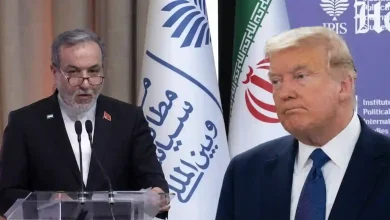
Iranian diplomats are operating under rigid marching orders. While they present alternatives to prevent regional destabilization, they are fully aware of the skepticism voiced by American leadership, as highlighted when Trump warns Iran at UN forums. Security analysts indicate that Iranian negotiators maintain the dialogue primarily to rally international backing from neutral parties, isolate Washington rhetorically, and preemptively deflect blame for any subsequent conflict. The prevailing sentiment across Tehran’s political landscape is that diplomacy is no longer a tool for genuine resolution, but rather a tactical shield utilized to buy critical mobilization time.
Retaliatory Mechanisms and Target Vectors
Should large-scale strikes materialize, military observers expect Iran to expand its target matrix beyond peripheral naval targets or isolated forward positions. Previous conflicts demonstrated the lethality of Iran’s layered ballistic missile arsenal, but the emerging posture integrates solid-fueled medium-range ballistic missiles (MRBMs) equipped with maneuverable reentry vehicles (MaRVs) alongside massive waves of loitering munitions.
The objective of these swarm tactics is straightforward: systematically overwhelm advanced integrated air and missile defense (IAMD) systems deployed throughout the Persian Gulf. By deploying hundreds of delta-wing Shahed-series drones simultaneously with high-speed ballistic and land-attack cruise missiles (LACMs), Iran seeks to saturate sensor networks and exhaust costly interceptor stocks. As military planners assess potential flashpoints, historical precedents remind analysts of when Iran vows devastating retaliation during regional flashpoints, underscoring the shift toward unrestrained defensive-offensive doctrine.
Comparative Analysis of Escalation Postures
To understand the magnitude of the present strategic shift, it is essential to compare the traditional engagement posture maintained by Tehran with the newly formulated operational framework currently awaiting authorization.
| Strategic Dimension | Traditional Retaliatory Framework | Emerging Forceful Escalation Doctrine |
|---|---|---|
| Target Selection | Isolated military outposts, uninhabited perimeters, tactical radar sites | Primary logistical hubs, forward operational bases, critical maritime checkpoints |
| Weapons Deployment | Calibrated ballistic missile volleys; limited drone numbers | Synchronized multi-tier saturation strikes with MaRV-equipped missiles and drone swarms |
| Maritime Strategy | Harassment patrols, discrete vessel inspections, shadow fleet maneuvering | Comprehensive denial of maritime trade corridors and active mine-laying preparations |
| Allied Proxy Role | Decoupled proxy messaging, deniable skirmishes | Fully synchronized multi-front offensive maneuvers across the Axis of Resistance |
| Diplomatic Linkage | Direct mediation aimed at swift de-escalation | Performative negotiations run concurrently to mobilize international political cover |
Regional Proxy Mobilization and Chokepoint Control
A fundamental component of Iran’s broadened operational plan involves activating partner networks throughout the region simultaneously. Instead of localized actions, commanders in Tehran envision a combined offensive coordinated across multiple geographical theaters. In southern waterways, regional partners are positioned to strangle international maritime commerce, reminiscent of when Houthis blockade US transit corridors in the Bab el-Mandeb.
Simultaneously, maritime doctrine around the Arabian Gulf remains centered on the strategic lever of economic chokepoints. With ongoing tensions centered around the strategic narrow strait, Iranian naval components have reinforced readiness protocols along the shipping lanes. Maritime experts monitoring shipping trends observe how vulnerabilities around Iran Strait of Hormuz transit channels represent an immediate liability for energy-dependent global powers. Tehran’s clear messaging has tied maritime freedom of navigation directly to regional sovereignty, asserting that if Iranian commerce is suffocated, global trade routes will face identical disruptions.
This linkage is further reinforced by diplomatic rhetoric concerning commercial shipping passage. As seen during recent high-stakes talks regarding Iran’s conditions reopen maritime channels, commercial guarantees remain fragile and contingent upon complete security exemptions. Should renewed US strikes materialize, proxy networks in Iraq, Syria, and Lebanon are expected to execute coordinated strikes against American positions, creating an intolerable operational burden that exhausts Western air defense capabilities across thousands of square miles.
US Deterrence Posture and Persian Gulf Friction
In response to intelligence reports detailing Iran’s broadened contingency plans, the United States has augmented its regional force posture. Carrier strike groups, advanced expeditionary fighter squadrons, and missile defense batteries have surged into forward locations across the Persian Gulf, Red Sea, and Eastern Mediterranean. The objective is to establish an unassailable deterrence umbrella that dissuades Tehran from executing its pre-planned retaliatory options.
However, this heavy military buildup has inadvertently escalated tactical friction. The constant proximity of armed naval vessels and airborne surveillance assets creates immense risk of miscalculation. American naval planners have frequently operated under conditions influenced by the lingering US blockade on Iran, where interdictions of contraband and enforcement of strict unilateral sanctions fuel daily confrontations. Military analysts caution that in an environment defined by zero strategic trust, even an ambiguous radar blip or minor navigational error could trigger the exact spiral of massive retaliation both capitals claim they wish to avoid.
Economic Fallout and Global Energy Markets
The global economic implications of an expanded Iranian military response cannot be overstated. A wider conflict would instantaneously disrupt the transit of approximately twenty percent of the world’s petroleum and liquefied natural gas (LNG). Financial institutions and commodity desks are already factoring in geopolitical risk premiums, knowing that any direct strike on Iranian infrastructure or reciprocal strikes against regional processing plants could push oil prices well beyond sustainable thresholds.
International supply chains, already vulnerable to persistent macroeconomic shocks, would experience violent supply chain contractions. Insurance underwriters for maritime shipping would immediately spike war-risk premiums to prohibitive levels, effectively halting tanker traffic through vital straits even before a single missile is fired. The resulting inflationary pressure on energy and transportation costs would radiate globally, destabilizing emerging economies and complicating the monetary policies of central banks worldwide.
Long-Term Strategic Implications for Middle East Stability
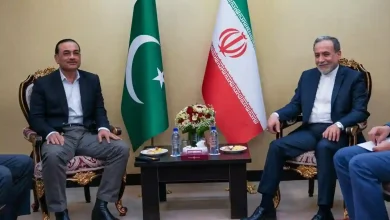
The trajectory of US-Iran confrontations reflects an unraveling of traditional crisis management frameworks. When backchannel mediators like Pakistan previously attempted interventions—such as when ceasefire talks Asim Munir meets Ghalibaf in Tehran signaled diplomatic promise—both sides managed to maintain narrow off-ramps. Today, the internal political dynamics in both Washington and Tehran have hardened considerably, severely restricting the latitude of leaders to accept compromises without appearing politically compromised.
For Tehran, the domestic political imperative dictates that any national humiliation or unchecked military strike on its soil must be answered with disproportionate vigor to maintain domestic control and regional deterrence. For Washington, displaying hesitance or absorbing strikes without crushing retaliation undermines global credibility and alienates strategic allies. As military assets assume high-readiness alerts and diplomatic backchannels increasingly function merely as mechanisms for posturing, the margin for error has diminished to its narrowest point in decades.