Ancient DNA Confirms American Cheetah Was More Like a Puma 2026
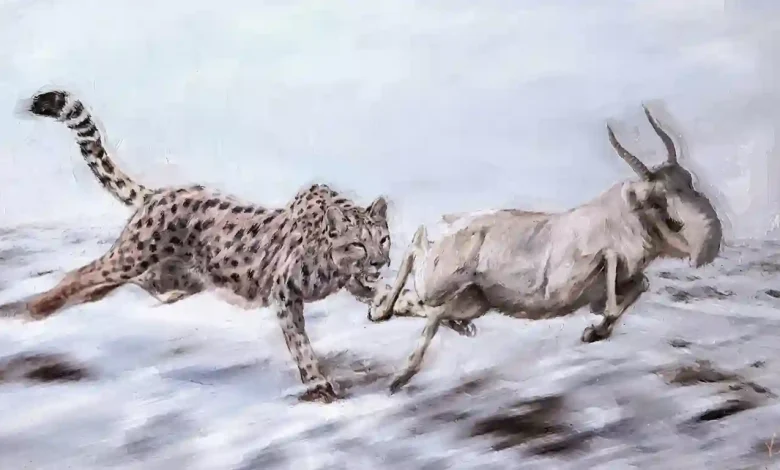
Table of Contents
Ancient DNA extracted from Pleistocene fossil specimens has officially shattered one of paleontology’s most enduring assumptions about North America’s prehistoric landscapes. For decades, researchers believed that the plains of the Pleistocene epoch were stalked by a sleek, hyper-specialized sprinter known colloquially as the ‘American cheetah’ (Miracinonyx trumani). First identified in the 1970s, this magnificent carnivore was thought to be a close relative of modern African and Asiatic cheetahs, sharing their slender frame, elongated limbs, and massive nasal cavities. However, a groundbreaking study published in the journal Current Biology has definitively rewritten the natural history of this elusive cat. By mapping the most complete genetic datasets to date, scientists have confirmed that Miracinonyx trumani was not a true cheetah at all, but rather a highly adaptive sister species to the modern puma (Puma concolor).
This scientific pivot highlights the dangers of relying solely on skeletal morphology to understand extinct ecosystems. Retrieving fragile DNA from thousands of years of permafrost is a meticulous process, comparable in precision to the historic swift observatory rescue of delicate satellite systems. Through this rigorous molecular rescue, paleogenomicists have shown that the physical similarities between the American cheetah and modern cheetahs are the result of parallel evolutionary forces rather than direct kinship.
The Illusion of Speed: Convergent Evolution Explained
To understand why Miracinonyx trumani was misclassified for so long, one must look at the mechanics of cursorial (running) adaptation. The fossilized skeletons of M. trumani possess features that seem almost copy-pasted from the modern African cheetah (Acinonyx jubatus). These include long, lightweight forelimbs, a flexible spine that allows for an extended stride, reduced claws, and enlarged nasal cavities that facilitate rapid oxygen intake during high-speed chases. It was widely theorized that these traits evolved to hunt the pronghorn (Antilocapra americana), whose astonishing speed—unmatched by any living North American predator—was thought to be an evolutionary arms race legacy of escaping the swift Miracinonyx.
However, the latest genomic findings prove that these physiological adaptations were the result of convergent evolution. Both lineages independently developed slender, aerodynamic bodies to navigate and hunt in open, expanding grassland environments. Just as astrobiologists study microbes on the space station to understand life’s extremes, paleogenomicists decode Pleistocene fossils to map adaptational thresholds. In this case, the expansion of grasslands during a period of rapid cooling approximately 2.6 million years ago forced the ancestors of Miracinonyx to adapt to open-plains hunting, mirroring the ecological pressures that shaped true cheetahs millions of years prior in the Old World.
The Molecular Family Tree: Pumas vs. Cheetahs
The genetic analysis led by Molly Cassatt-Johnstone of the University of California, Santa Cruz, compared the ancient genomes of four M. trumani individuals against nine modern feline species. The results were stark. Rather than clustering with the genus Acinonyx, the ‘American cheetah’ nested firmly within the puma lineage. This discovery adds a new level of complexity to our understanding of felid evolution in the Americas.
According to the molecular clock calibrated by the team, the lineages of Miracinonyx trumani and Puma concolor diverged from a common ancestor roughly 2.6 million years ago. In contrast, the common ancestor shared by the puma-Miracinonyx group and the modern African cheetah lived approximately 4.7 million years ago. This timeline means that M. trumani is a closer relative to the cougar walking the mountains of North America today than to any cheetah in the Serengeti. The sleek, high-speed biomechanics of Miracinonyx have even inspired modern robotics developers; as the industry expands and a company’s unitree stock surges 460 percent due to advancements in quadrupedal agility, biology remains the ultimate blueprint for efficient terrestrial locomotion.
Expanding the Geographic Range to the Arctic Yukon
One of the most startling discoveries of the study was the realization that Miracinonyx trumani roamed far outside its previously assumed geographic boundaries. Historically, fossils of the species had been recovered primarily from temperate, southern, and central regions of North America, such as Natural Trap Cave in Wyoming and various sites in Florida. However, three of the specimens analyzed in the new study were recovered from Canada’s icy Yukon territory—more than 20 degrees of latitude farther north than researchers believed the species could survive.
These northern specimens had originally been misidentified as modern pumas because of their unexpected geographical location. It was only through sequencing their ancient DNA that scientists realized they had found M. trumani in the heart of Beringia, the ancient land bridge that once connected Asia and North America. Modern advances in genomic sequencing run parallel to the soaring technology seen in the commercial space launch industry, allowing scientists to decode ancient genomes with unprecedented accuracy. This discovery firmly integrates Miracinonyx into the rich, well-studied Beringian mammoth steppe ecosystem.
A Mind-Blowing Dietary Shift: From Pronghorn Hunters to Salmon Fishers
Perhaps the most dramatic revelation of the study centers on the dietary habits of the northern Miracinonyx populations. Because pronghorns do not live in the Arctic, researchers sought to determine what these northern cats were consuming to survive. They conducted stable isotope testing of carbon and nitrogen preserved in the fossils’ bone collagen—a sophisticated method that reveals an animal’s primary food source over its lifetime.
The results, generated at the Alaska Stable Isotope Facility, left researchers ‘mind-blown.’ While the Wyoming individual exhibited an isotopic signature typical of a terrestrial generalist predator feeding on grassland herbivores, the three Yukon specimens, which lived centuries apart, showed a massive reliance on aquatic prey. Specifically, they were subsisting almost entirely on anadromous fish, such as prehistoric salmon. This transition from a high-speed terrestrial hunter to an aquatic specialist represents an unprecedented level of ecological plasticity. Foraging for fish in the freezing rivers of the Yukon carried a high metabolic toll, presenting a unique balancing act of health benefit cost for these ice-age predators, yet it was highly successful.
Methodology: Inside Stable Isotope and Genotyping Analysis
The scientific breakthrough was made possible through a multi-disciplinary effort combining advanced paleogenomics and isotopic biochemistry. Extracting clean DNA from fossils is notoriously difficult because organic materials degrade over time, contaminated by environmental bacteria and fungi. Transporting rare Pleistocene bone specimens across borders often requires complex regulatory compliance, akin to securing a commercial import license for sensitive biological materials.
Once safely in the lab, researchers utilized high-throughput sequencing technologies. To analyze such vast genomic datasets, paleogenomicists rely on advanced processing units, reminding us of the tech sector where hardware pioneers like etched valued at astronomical sums are revolutionizing high-throughput calculations. The nitrogen and carbon isotope values in the amino acids of the bone collagen provided a highly detailed trophic map. The high nitrogen-15 levels in the Yukon fossils perfectly matched those found in modern marine-influenced carnivores, such as coastal wolves and orcas, proving beyond doubt that salmon was a dietary staple for these northern big cats.
The Survival Paradox: Extinction Without Signs of Inbreeding
The study also shed light on the demography and ultimate demise of Miracinonyx trumani. Often, species sliding toward extinction exhibit severe genetic bottlenecks, characterized by high rates of inbreeding and a sharp decline in genetic diversity, similar to modern endangered species like the Iberian lynx. Surprisingly, the genetic data for M. trumani did not show these classic signs of genetic decay.
Instead, the population maintained a relatively healthy and stable genetic pool for a significant duration, despite living through dramatic climatic shifts. While biological labs in California lead these discoveries, international research networks thrive under growing global technology shifts, similar to the recent rise in high-tech vietnam investment corridors. This suggests that low genetic diversity alone did not doom the ‘American cheetah.’ Rather, their extinction was likely a slow, complex process driven by the rapid environmental changes at the end of the last Ice Age, which disrupted both the grasslands of the south and the aquatic pathways of the north.
Evolutionary and Ecological Comparison
To better understand how Miracinonyx trumani bridges the gap between modern pumas and cheetahs, we can compare their evolutionary, physical, and ecological characteristics:
| Characteristic | American Cheetah (Miracinonyx trumani) | Modern Puma (Puma concolor) | African Cheetah (Acinonyx jubatus) |
|---|---|---|---|
| Closest Living Relative | Modern Puma (diverged ~2.6 Ma) | Miracinonyx trumani (extinct) | Acclimatized Old World felids (diverged ~4.7 Ma) |
| Primary Habitat | Temperate grasslands to Arctic Yukon tundra | Highly adaptable (forests, mountains, deserts) | Open savannas and arid environments |
| Dietary Profile | Highly varied: terrestrial herbivores (Wyoming) and anadromous fish (Yukon) | Generalist carnivore (deer, elk, small mammals) | Strictly terrestrial cursorial hunter (gazelles, impalas) |
| Physical Build | Slender, elongated limbs, enlarged nasal cavities, semi-retractile claws | Muscular, robust limbs, compact skull, fully retractile claws | Ultra-slender, highly flexible spine, semi-retractile claws |
| Locomotion Adaptation | High-speed running (convergent evolution) | Ambush hunting, jumping, climbing | Extreme high-speed sprinting (cursorial specialist) |
Conclusion: What Miracinonyx Teaches Us About Modern Mammalian Adaptations
The reassessment of Miracinonyx trumani serves as a powerful reminder of how much we still have to learn about Pleistocene ecology. By moving past morphological assumptions and embracing molecular tools, scientists have transformed a cartoonish ‘pronghorn-chaser’ into a highly adaptable, geographically diverse apex predator. The ability of a cat built for high-speed running to successfully pivot to a diet of fish in the sub-Arctic is a testament to the incredible behavioral flexibility of the felid lineage.
As researchers continue to analyze fossils from across North America, the story of Miracinonyx will undoubtedly continue to evolve. For now, we must bid farewell to the ‘American cheetah’ and welcome a fascinating, fish-eating, cold-tolerant, sprinting sister of the puma—a true master of adaptation in a rapidly changing ancient world.