SpaceX Starbase Louisiana: Inside the $100B Spaceport
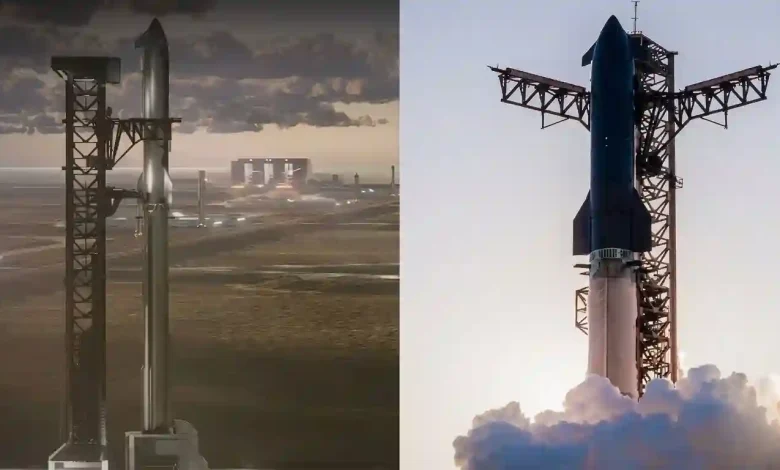
Table of Contents
SpaceX, the private aerospace giant, has officially unveiled plans for its largest rocket launch complex yet: Starbase Louisiana. Representing a staggering $100 billion investment, this monumental development aims to transform 125,000 acres (50,585 hectares) of coastal wetlands on Pecan Island in Vermilion Parish into a state-of-the-art base for Starship operations and advanced artificial intelligence satellite networks. This massive expansion signals a dramatic shift in how commercial spaceflight, heavy payload launches, and global satellite communication infrastructures will be executed in the coming decades.
By securing a vast coastal footprint in southern Louisiana, the company is positioning itself to dramatically increase launch frequency and support thousands of flights annually. The project has earned the enthusiastic backing of state leadership, who view it as a once-in-a-generation economic catalyst. However, the proposal has also sparked intense discussions regarding environmental preservation, regulatory oversight, and the long-term impact on the region’s fragile ecosystems.
Introduction to Starbase Louisiana
The announcement of Starbase Louisiana marks a pivotal expansion of Starship launch operations beyond the company’s existing test facility in Boca Chica, Texas, and those currently operating or planned for Cape Canaveral, Florida. While Cape Canaveral and Vandenberg currently support the bulk of orbital activity, including the highly successful SpaceX Falcon 9 launch schedules, Starbase Louisiana is designed from the ground up to support the sheer physical scale and massive thrust of the fully reusable Starship vehicle.
This multi-billion-dollar project signals a paradigm shift in the global commercial space launch industry. As next-generation heavy-lift systems become operational, they require massive buffer zones and dedicated infrastructure that traditional, state-managed space centers simply cannot accommodate. Starbase Louisiana is engineered to resolve these capacity bottlenecks, transforming the Gulf Coast into the primary gateway for interplanetary travel and deep-space commercial exploration.
The Massive Scale of the $100 Billion Pecan Island Facility
The chosen site on Pecan Island, previously owned by the oil giant ExxonMobil, is a low-lying, sparsely populated region located south of Lafayette, Louisiana. Its 125,000-acre footprint makes it one of the largest aerospace installations on Earth, dwarf-housing the facilities in Texas and Florida combined. This expansive footprint provides a natural safety buffer essential for launching rockets of Starship’s unprecedented size and energy capacity.
Financially, the $100 billion commitment represents a level of infrastructure spending rarely seen in the commercial sector. This capital footprint marks one of the most high-value manufacturing announcements in recent years, comparable to the massive market interest shown in events like the Shein Hong Kong IPO. By committing to such a colossal scale, the firm ensures it will maintain an unassailable lead in launch capacity, lowering orbital delivery costs to unprecedented levels.
Breaking Down the Five Launch Complexes
At full buildout, Starbase Louisiana is planned to house five distinct launch complexes. Each of these complexes will feature two individual launch pads, meaning the entire facility will house 10 operational launch pads. This dual-pad design allows for rapid turnaround times, enabling back-to-back launches and orbital propellant transfers, which are vital for human missions to the Moon and Mars.
Each complex will also be equipped with its own massive propellant farm, designed to store hundreds of thousands of tons of liquid methane and liquid oxygen (methalox). The proximity of multiple pads ensures that even if one pad is undergoing maintenance or post-launch refurbishment, flight schedules can proceed uninterrupted. This level of operational redundancy is completely unprecedented in modern rocketry.
Critical Infrastructure: From Power to Shipping
To support thousands of launches a year, Starbase Louisiana will be a completely self-sustaining spaceport. In addition to launch pads, the facility will include high-capacity vehicle processing facilities, on-site propellant production plants, a dedicated power generation grid, and even a private airport for transporting personnel and sensitive equipment. Deep-water shipping capabilities will also be integrated along the coast, allowing massive rocket stages and components manufactured elsewhere to be barged directly to the assembly buildings.
The sheer computational power required to coordinate thousand-launch flight paths aligns closely with the advanced physical models described by legendary figures like Dr. Frank Wilczek, whose work continues to guide modern aerospace telemetry, complex fluid dynamics, and environmental simulation modeling. This integration of raw power, complex physics, and heavy infrastructure makes Pecan Island a masterpiece of modern engineering.
| Feature | Starbase Texas (Boca Chica) | Starbase Louisiana (Pecan Island) | Cape Canaveral (Florida) |
|---|---|---|---|
| Acreage | Approx. 1,000 acres | 125,000 acres | Leased pads (SLC-40, LC-39A) |
| Launch Pads | 1-2 active Starship pads | 10 launch pads (5 complexes) | Multiple Falcon pads, active Starship buildout |
| Primary Focus | Development, testing, early orbital flights | High-frequency commercial & AI satellite launches | National security, crewed spaceflight, interplanetary |
| Investment Size | Multi-billion development base | $100 billion committed campus | Federal & joint commercial leasing |
Economic Windfall: Jobs and Industrial Growth in Vermilion Parish
The economic impact of Starbase Louisiana on Vermilion Parish and the wider state of Louisiana cannot be overstated. According to the Louisiana State Government, the project is expected to create 3,000 direct, high-paying jobs over the next decade, with an average annual salary exceeding $92,600. Furthermore, state economists estimate that the spaceport will generate over 8,100 indirect jobs in construction, supply chain logistics, hospitality, and engineering services.
This diversification is highly welcomed by local business groups, particularly as traditional energy markets fluctuate and oil prices slip over the coming decade. Transitioning the local workforce from oil and gas extraction to high-tech aerospace manufacturing allows Louisiana to leverage its existing industrial talent in metal fabrication, heavy machinery, and marine logistics. The state has offered a competitive incentives package, including recruitment assistance through LED FastStart, to ensure local workers are prioritized.
Environmental Controversies and Ecological Preservation
Despite the immense economic promise, the scale of the Starbase Louisiana development has raised serious red flags among local environmental advocates and conservation groups. Pecan Island and its surrounding wetlands are high-value habitats for migratory waterfowl, shorebirds, and unique coastal wildlife. Activists argue that the intensive noise, light, and physical footprint of a mega-spaceport could permanently alter these fragile ecosystems.
The economic projection of this regional transformation has already become a hot topic on predictive platforms like the Kalshi prediction market, where traders and analysts speculate on how environmental litigation, permitting delays, and state interventions will impact the construction timeline. Striking a balance between rapid technological progress and rigorous ecological stewardship remains one of the most critical challenges of this project.
Balancing Coastal Erosion with Massive Construction
To address environmental pushback, the developer has committed to several coastal restoration projects. The Vermilion Parish shoreline is currently eroding at an alarming rate of up to 23 feet per year. As part of its development plan, the company intends to partner with federal and state conservation agencies to build coastal protective barriers, slow down land loss, and actively restore wetlands bordering the facility’s active zone.
By confining actual launch infrastructure to a localized percentage of the total 125,000-acre site, the company aims to leave the vast majority of the wetlands untouched, allowing migratory birds and native fauna to coexist with the spaceport. Similar ecological patterns have been observed at Kennedy Space Center in Florida, where wildlife refuges continue to thrive alongside active rocket complexes.
Regulatory Frameworks and Community Concerns
Local residents have expressed mixed emotions, with some welcoming the influx of jobs and capital, and others fearing the loss of their peaceful, rural lifestyle. Permit approvals from the Federal Aviation Administration (FAA), the Environmental Protection Agency (EPA), and the U.S. Army Corps of Engineers will be closely monitored. Ensuring safety zones are clear during launches while minimizing disruptions to local commercial fishing and hunting activities will require a highly complex regulatory balancing act.
Strategic Launch Trajectories and Global Space Dominance
The geography of southern Louisiana provides exceptional advantages for orbital launches. Positioned on the Gulf Coast, rockets launching from Pecan Island can fly directly over open water, allowing for a wide range of safe and efficient trajectories. This geographic freedom is essential for deploying massive constellations of communications and imaging satellites into precise orbits.
With space becoming a crucial frontier for data and security, maintaining satellite dominance is essential for the AI race with China. The ability to quickly replace, upgrade, and scale space-based AI processors and communication nodes will determine who controls the global flow of information. Starbase Louisiana provides the raw launch capacity needed to keep Western satellite networks far ahead of any global competitors.
Integrating Next-Generation Starship and AI Satellites
The core objective of Starbase Louisiana is to support the rapid-fire deployment of the next generation of satellites. These are not typical communication satellites; they are heavy, complex, AI-enabled spacecraft designed to provide real-time, high-bandwidth processing directly from orbit. Launching these gargantuan systems requires the unprecedented payload capacity of Starship.
As scientific organizations launch instruments like the Nancy Grace Roman Space Telescope to study dark energy and map the cosmos, commercial entities are focused on building a dense orbital layer of intelligence. By building a dedicated mega-spaceport, the developer ensures that heavy payloads can be put into orbit continuously, bypassing the scheduling conflicts that plague shared federal facilities.
The Timeline: From Construction to First Liftoff
According to current state filings and company announcements, construction on Starbase Louisiana is slated to begin in 2027. The development of the 10-pad facility, propellant production plants, and shipping channels will take place in phases to allow environmental assessments and coastal restoration efforts to proceed hand-in-hand with engineering work.
If all goes according to plan, the first Starship launch from the Louisiana coast is targeted for as early as 2029. By the early 2030s, Starbase Louisiana is expected to achieve full operational capability, hosting thousands of launches annually and securing its place as the busiest, most advanced spaceport on Earth.