Iran Refutes Donald Trump’s Hormuz Claim: Waterway Stays Closed 2026
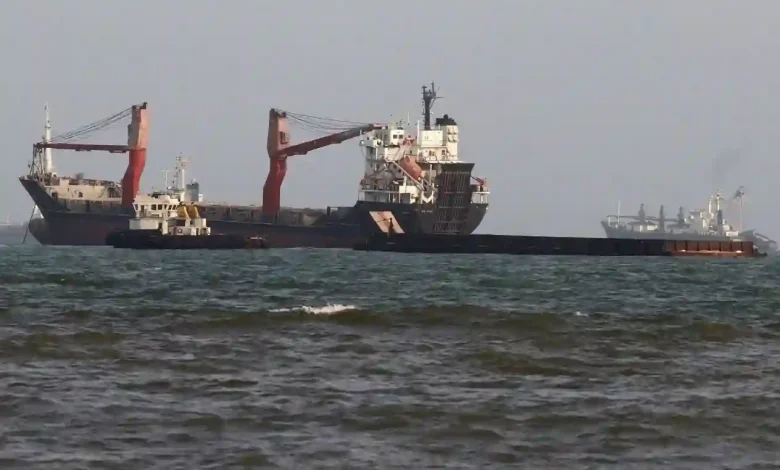
Table of Contents
Iran refutes Donald Trump’s Hormuz claim that Washington has obtained “total control” of the Strait of Hormuz, asserting that the strategically vital waterway will remain firmly closed to international commercial traffic until the United States changes its hostile policies and accepts Tehran’s explicit demands. This dramatic escalation in the ongoing ongoing 2026 Iran war marks a hardening of positions on both sides, casting severe doubt over the prospects of an immediate diplomatic breakthrough.
According to reports from the semi-official Tasnim news agency, the newly appointed head of Iran’s Supreme National Security Council, Mohsen Rezaie, communicated this uncompromising stance directly to China’s ambassador to Tehran, Cong Peiwu, on Tuesday. Rezaie’s public dismissal of the White House’s declarations underscores a complex geopolitical chess match where global energy security, military posturing, and backchannel mediation are colliding in the Persian Gulf.
The Core Dispute: Refuting “Total Control”
The latest war of words erupted after President Donald Trump boasted to reporters that American military forces had established complete hegemony over the shipping lanes in the Gulf. However, Iranian officials wasted no time in dismantling this narrative. Mohsen Rezaie stated unequivocally that the U.S. does not dictate navigation in the strait and that Tehran maintains the sovereign leverage to keep the chokepoint shut. This refutation comes at a time when the confrontational policy under Trump has pushed bilateral relations to their lowest point in decades, effectively rendering previous interim truce frameworks obsolete.
By framing the closure of the Strait of Hormuz as a natural defensive response to American economic and military pressure, Iran is signaling that it will not back down under the threat of force. Security experts point out that the strategic depth and tactical capability of the Iranian military, particularly its asymmetric naval warfare units and anti-ship missile installations, make a total foreign occupation of the strait practically impossible without an all-out land invasion.
Mohsen Rezaie Speaks to Chinese Envoy Cong Peiwu
During his high-profile meeting with Ambassador Cong Peiwu in Tehran, Mohsen Rezaie laid out Iran’s terms with absolute clarity. “As long as America does not change its behaviour and does not accept Iran’s conditions, the Strait of Hormuz will not be opened,” Rezaie was quoted as saying. He accused the United States of being the primary source of regional instability, claiming that Washington has endangered the safety of international waters by imposing an “illegal war” on Iran.
Cong Peiwu, for his part, reaffirmed China’s commitment to Iran’s national sovereignty and territorial integrity. The meeting served as a powerful platform for Tehran to demonstrate that it is not diplomatically isolated, utilizing its strategic partnership with Beijing to counter Washington’s efforts at imposing a total economic quarantine.
The Roots of the Strait of Hormuz Closure
The current maritime crisis began earlier this year when Iran restricted access to the Strait of Hormuz following intense military engagements and the implementation of a U.S. naval blockade. The strait is a vital artery for the global economy, historically facilitating the transit of approximately one-fifth of the world’s petroleum and liquefied natural gas (LNG). By shutting down this chokepoint, Iran has successfully leveraged its geographic position to inflict severe economic pain on Western allies and disrupt global supply chains.
While the United States has repeatedly attempted to break the blockade and secure safe passage for commercial vessels, Tehran has held firm, insisting that naval transit is a privilege that will only be restored once its sovereignty is respected and its economic grievances are addressed. Efforts to resolve this deadlock through backchannel negotiations with Iran have repeatedly stalled due to the deep-seated mutual distrust between the two administrations.
Regional Context: Gaza and Lebanon Links
Crucially, Iran has tied the reopening of the Strait of Hormuz to broader regional dynamics. In his discussions with the Chinese envoy, Rezaie made it clear that the strait will remain closed unless the United States brings an end to the devastating conflicts raging in the Gaza Strip and Lebanon. This linkage represents a significant escalation in Tehran’s diplomatic strategy, transforming a bilateral maritime dispute into an overarching regional bargaining chip.
By demanding an end to regional wars as a prerequisite for opening the strait, Iran hopes to pressure the international community, particularly Western powers sensitive to oil prices, to force a ceasefire on Israel. This calibrated approach highlights how interconnected the Middle Eastern conflict theater has become in 2026, where events in Levant directly dictate the security of shipping lanes thousands of miles away in the Persian Gulf.
The Blockade and Naval Confrontations
In response to the closure of the strait, the United States launched a strict naval blockade of Iranian ports, aiming to starve the Islamic Republic of oil export revenues. Despite the presence of formidable U.S. carrier strike groups, several commercial vessels have attempted to run the blockade. This has led to dangerous encounters, including direct missile engagements and the boarding of suspicious tankers.
The U.S. military has deployed advanced surveillance and drone technology to monitor the Persian Gulf, but the sheer size of the waterway and the proximity of Iranian coastal defense batteries make total containment an elusive goal. The persistent tension has turned the Gulf of Oman into a volatile militarized zone, where a single miscalculation could trigger a wider regional conflagration.
Trump’s Rhetoric vs. Reality on the Ground
President Donald Trump’s assertions of “total control” represent a stark contrast to the intelligence assessments and physical realities of the Gulf. Trump’s declaration that “we own it” was designed to project strength to domestic voters and reassure jittery financial markets. However, military analysts warn that such bravado does not reflect the complex tactical environment where Iranian mines, fast attack craft, and subterranean missile silos pose a constant threat to foreign naval vessels.
While the U.S. possesses unmatched blue-water naval power, maintaining “total control” over a highly contested, narrow chokepoint like the Strait of Hormuz requires a level of maritime dominance that is virtually impossible to sustain without neutralizing Iran’s entire coastline. Consequently, Trump’s claims are viewed by many international observers as political theater aimed at maintaining a maximum-pressure stance while actual negotiations remain deadlocked.
The Joint Base Andrews Address
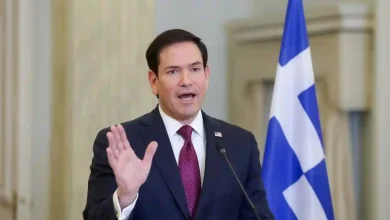
Speaking to reporters at Joint Base Andrews outside Washington, D.C., President Trump painted an optimistic picture of the conflict, asserting that Iran’s economy was in freefall and that the U.S. military was in a “very good position”. “We have total control over the Hormuz Strait right now. They do not have control, we have control, we own it,” Trump insisted. He went on to describe Iran as “the bully of the Middle East” that had finally been reined in.
Trump also reiterated his deep-seated skepticism of the Iranian regime, stating, “I do not trust Iran. I am the last person to trust Iran. They lied to me constantly”. This aggressive rhetoric has made finding common ground extremely difficult, as both capitals are locked in a public battle of wills where any sign of compromise is viewed domestically as a sign of weakness.
The Disabling of a Panama-Flagged Vessel
The volatile nature of the conflict was laid bare just hours before Trump’s address, when the U.S. Navy fired upon a Panama-flagged cargo vessel in the Gulf of Oman. The ship was reportedly attempting to bypass the U.S. blockade and enter an Iranian port. According to Pentagon statements, U.S. missile strikes targeted and disabled the vessel’s engine room, bringing it to a complete halt.
While the Pentagon declined to release casualty details, this direct kinetic action serves as a stark reminder of the lethal stakes involved. It also illustrates that while the U.S. can intercept and disable individual commercial ships, it cannot prevent the broader closure of the strait by Iranian forces, who continue to restrict outgoing shipping from regional partners like Iraq and Kuwait.
Strategic Alliances and Mediation Efforts
As the military standoff continues, both nations are actively engaging in diplomatic maneuvers to secure their interests. Iran has sought to strengthen its ties with Eurasian powers, utilizing its membership in the Shanghai Cooperation Organization (SCO) and the BRICS bloc to build an economic shield against Western sanctions. At the same time, regional mediators are working feverishly behind the scenes to draft an elusive Strait of Hormuz deal that could prevent a catastrophic escalation.
These mediation tracks are highly complex, with some discussions focusing purely on localized maritime transit corridors, while others attempt to address the core geopolitical grievances of the 2026 war. The success or failure of these diplomatic channels will ultimately determine whether the global economy faces a prolonged energy crisis.
| Geopolitical Actor | Key Demands & Claims | Strategic Actions Taken |
|---|---|---|
| United States | Claims “total control” of the Strait; demands Iran end regional proxy support and accept strict maritime passage rules. | Enforces a naval blockade of Iranian ports; disables vessels violating restrictions; threatens military responses. |
| Iran | Demands U.S. end the “illegal war”; unfreeze blocked assets; halt conflicts across Gaza and Lebanon. | Maintains closure of the Strait of Hormuz; rejects U.S. claims of “control”; prepares asymmetric retaliatory options. |
China-Iran Strategic Partnership
Iran’s reliance on China as a primary diplomatic partner has become more pronounced as the war has dragged on. During their meeting, Mohsen Rezaie expressed deep appreciation for Beijing’s consistent opposition to what he termed “illegal anti-Iran resolutions” at the United Nations Security Council. He emphasized that the 25-year strategic agreement between the two nations remains highly stable and constructive.
China’s economic interests are heavily tied to the stability of the Persian Gulf, as it relies on Middle Eastern crude to fuel its massive industrial base. Consequently, Beijing has adopted a delicate balancing act, opposing unilateral American military actions while encouraging both sides to find a peaceful resolution that would allow the resumption of normal shipping through the strait.
Pakistani and Qatari Mediation Efforts
While public statements from both Washington and Tehran remain highly hostile, quiet diplomacy is being conducted by third parties. Pakistan’s Defense Minister Khawaja Asif recently stated that the U.S. and Iran are “close to some sort of arrangement” over the Strait of Hormuz, suggesting that a framework for peace is still within reach. Pakistani Interior Minister Mohsin Naqvi has also been actively delivering messages from Prime Minister Shehbaz Sharif and Army Chief Field Marshal Asim Munir to the Iranian leadership to facilitate a breakthrough.
In parallel, Qatar has been hosting advanced negotiations focusing on a potential agreement between Iran and Oman. Under the proposed Omani transit framework, incoming vessels would travel along a northern route through Iranian waters, while exiting ships would navigate a southern route through Omani territorial waters. However, Mohsen Rezaie clarified that any localized Omani agreement would remain entirely separate from a full reopening of the strait, which is strictly contingent upon the U.S. meeting Iran’s broader political demands.
Economic Implications for Global Energy Markets
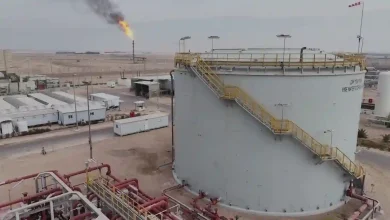
The prolonged closure of the Strait of Hormuz has sent shockwaves through global energy markets, highlighting the fragile nature of international oil infrastructure. Prior to the outbreak of the war, the strait was the world’s most critical oil transit chokepoint, handling over 20 million barrels of crude per day. The sudden removal of this supply has forced energy traders to seek expensive alternative routes and has triggered sharp price spikes.
Even though brief windows appeared where certain strikes on Iran were paused, the persistent threat of maritime interdiction has kept insurance premiums for commercial vessels at record highs. Many shipping conglomerates have chosen to bypass the Middle East entirely, opting for the lengthy and costly detour around the Cape of Good Hope, which has severely disrupted global just-in-time supply chains.
The possibility of a strategic Iranian retaliation plan targeting regional infrastructure has also kept markets on edge. Energy analysts warn that if the standoff persists through the winter, global oil stockpiles could dwindle to critical levels, potentially triggering widespread fuel rationing and economic recessions in import-dependent nations. This has put immense pressure on the Trump administration to find a viable off-ramp, even as it continues to project a posture of unyielding military control.
Furthermore, Iran’s willingness to pursue a strategy of calibrated regional escalation suggests that Tehran is prepared to absorb significant economic pain to achieve its long-term strategic objectives. By refusing to yield to U.S. pressure, Iran hopes to demonstrate that the costs of Washington’s confrontational approach will ultimately be borne by the global economy, forcing a eventual reassessment of American policy in the Middle East.