Childhood Vaccine Schedule: 5 Alarming Changes in Trump’s Order
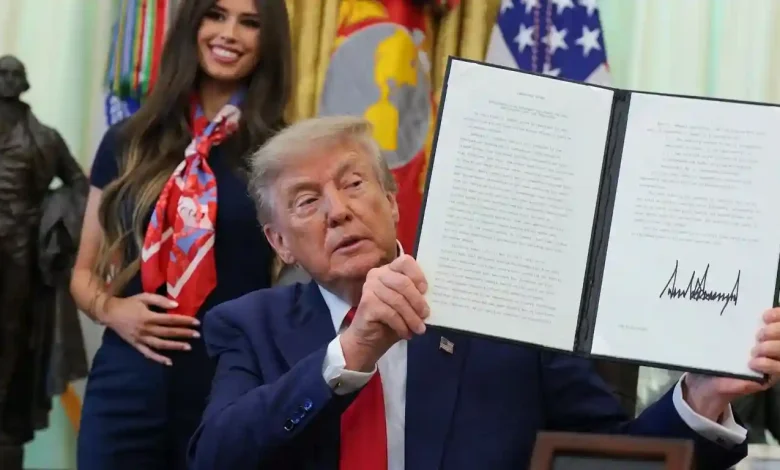
Table of Contents
Childhood vaccine schedule guidelines have officially been altered by President Donald Trump’s new executive order, marking a major turning point in national immunization policies. Issued on Monday, August 10, 2026, the directive represents a significant effort to override judicial resistance and codify the health reform vision of Health and Human Services (HHS) Secretary Robert F. Kennedy Jr. Earlier this year, Kennedy’s sweeping changes to the recommended childhood vaccine schedule were blocked in federal court, triggering a prolonged administrative gridlock. This new executive order revives those contested reforms, recommending a reduction in the number of universally recommended childhood vaccines from 18 diseases down to 11.
Instead of blanket federal recommendations for all children, the remaining seven immunizations will be shifted to “shared clinical decision-making” or reserved primarily for high-risk cohorts. While the Trump administration presents this policy as a major win for parental liberty and choice, the scientific and medical communities have raised alarms over the potential erosion of herd immunity. The administrative shift has sparked immediate debates across the country, producing an immediate fallout of federal changes that is currently rippling through pediatric offices, school boards, and state public health offices.
Introduction to the Executive Order
The newly signed executive order seeks to upend decades of established public health guidelines. Historically, the federal government—via the Centers for Disease Control and Prevention (CDC)—has maintained a comprehensive list of recommended vaccinations to shield children from dangerous pathogens before they enter school. Under the new directive, the administration is shifting its official stance, arguing that the volume of routine shots in the United States is unnecessarily high compared to other developed nations.
While the administration emphasizes that the order does not constitute a legal ban on any vaccine, it fundamentally changes the federal stamp of approval. By removing several vaccines from the universally recommended list, the administration is effectively changing how insurance providers, state health systems, and school districts interface with childhood immunization requirements. Critics warn that this will introduce unprecedented fragmentation into a system that has historically relied on standardized national guidelines to control infectious diseases.
Behind the Decoupling of the Immunization Schedule
To understand the rationale behind this historic shift, one must analyze the broader battle over federal administrative authority. For years, critics of the federal healthcare apparatus have argued that agencies like the CDC and the Food and Drug Administration (FDA) have grown too insulated from public scrutiny and too aligned with pharmaceutical interests. Upon taking office, Health Secretary Robert F. Kennedy Jr. vowed to disrupt these agencies, focusing heavily on what he terms the “chronic disease epidemic” and its purported, though scientifically disputed, links to childhood vaccinations.
The executive order relies heavily on an HHS scientific assessment completed in early 2026, which argued that the United States recommends more childhood vaccine doses than almost any peer nation. Proponents of the order argue that streamlining the schedule is a common-sense measure to align American medicine with global standards. However, this dismantling of institutional norms is viewed by opponents as a politically driven disruption, reminiscent of other unilateral executive decisions implemented during the Trump presidency to bypass traditional agency consensus.
Transitioning from Universal Recommendations to Shared Decision-Making
At the center of the executive order is the transition of multiple childhood immunizations from the “universally recommended” category to “shared clinical decision-making.” In public health terms, shared clinical decision-making indicates that a vaccine is no longer advised as a default for every individual in a specific demographic. Instead, the decision to vaccinate is left entirely to the discretion of parents in consultation with their pediatricians, based on a customized assessment of the child’s lifestyle, health history, and localized risk factors.
The administration asserts that this shift honors the doctor-patient relationship by removing the coercive pressure of federal mandates. Kennedy expressed that parents should have the freedom to customize their children’s healthcare without feeling compelled by a monolithic federal standard. Conversely, pediatricians argue that removing the universal recommendation will lead to confusion, leaving parents to navigate complex immunological choices without clear, unambiguous guidance from the nation’s leading medical experts.
The Demoted Vaccines: Which Shots Are Affected?
The executive order specifies that vaccines for six major diseases, along with certain monoclonal antibody preventatives, will lose their universally recommended status. These vaccines include immunizations against COVID-19, rotavirus, seasonal influenza, hepatitis A, hepatitis B, and meningococcal disease (bacterial meningitis). Under previous guidelines, these vaccines were integrated into the routine milestone visits for infants and young children.
For example, the hepatitis B vaccine has long been routinely administered to newborns within their first 24 hours of life to prevent transmission of a highly contagious virus that can cause chronic liver damage. Under the new “Gold Standard” recommendations, this vaccine will only be routinely suggested for children deemed to be at high risk. Similarly, common preventatives like the rotavirus vaccine—which protects infants from severe diarrheal illness—and the annual flu shot will now be subject to individual medical consultations. This systemic downgrading represents what many public health experts describe as a strategic dead end for public policy aimed at maintaining population-wide pathogen control.
| Status Under New Executive Order | Diseases & Biologics Protected Against | Clinical Application & Protocol |
|---|---|---|
| Universally Recommended (11 Diseases) | Measles, Mumps, Rubella, Polio, Pertussis, Tetanus, Diphtheria, Hib, Pneumococcal, HPV, Varicella | Routine administration recommended for all healthy children according to standard age milestones. |
| Shared Decision-Making / High-Risk (7 Diseases/Biologics) | COVID-19, Rotavirus, Influenza, Hepatitis A, Hepatitis B, Meningococcal, RSV (monoclonal antibodies) | No longer universally recommended; administered based on doctor-parent consultation or specific risk profiles. |
| Structural & Administration Changes | MMR (Measles, Mumps, Rubella) combination split; visit spacing guidelines | Recommends splitting combined MMR into three separate single-disease shots administered at separate visits. |
Kennedy’s Vision for “Parental Choice”
HHS Secretary Robert F. Kennedy Jr. has long positioned himself as a champion of medical freedom, campaigning extensively against what he characterizes as an over-vaccinated population. Since his appointment, he has focused on reshaping HHS to prioritize personal autonomy and transparency. During the Oval Office signing, Kennedy reiterated his long-standing skepticism regarding the volume of vaccines given to infants, claiming that a more spaced-out, limited schedule is safer and more natural.
Although mainstream medical bodies have repeatedly pointed out that extensive clinical trials have proven the safety of the combined immunization schedule, the administration is forging ahead. The White House emphasizes that the new executive order is not a ban and does not limit insurance coverage for parents who still wish to seek these vaccines. Instead, it is framed as an effort to democratize health information, allowing families to evaluate global healthcare trends and make customized, pressure-free medical choices for their children.
The Shift in Legal and Institutional Mandates
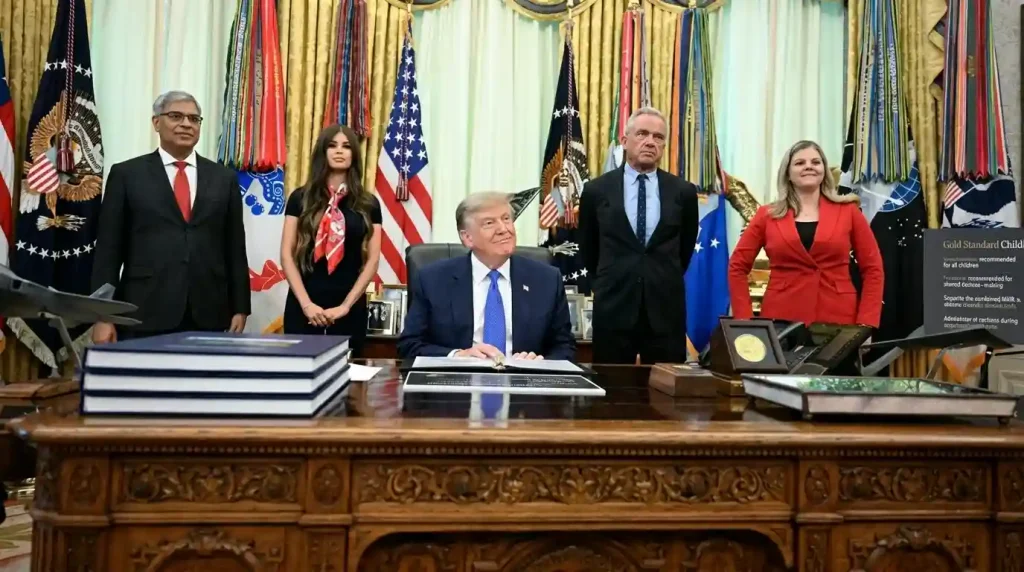
While federal vaccine recommendations are not technically laws, they carry massive institutional weight. State governments, school districts, and early childhood daycare centers rely heavily on the CDC’s recommendations when crafting their own enrollment immunization requirements. Many states have laws that automatically update school entry mandates based on changes to the federal schedule.
By officially scaling back the federal recommendations, the executive order is designed to trigger a cascading effect at the local level. The order advises states to reconsider their mandatory school vaccinations and to expand access to religious, philosophical, and medical exemptions. If states choose to follow this advice, it could result in a highly fragmented system where immunization requirements vary wildly from one county or state to another. This shift will fundamentally alter how commercial healthcare operations, corporate medical groups, and local school districts coordinate wellness programs.
Medical Community Reacts: Safety and Herd Immunity Concerns
The reaction from the scientific, medical, and pediatric communities has been overwhelmingly critical. Prominent health experts have warned that dismantling the universally recommended schedule could invite the return of preventable diseases that have been kept at bay for decades. Herd immunity requires a high percentage of the population to be vaccinated, and even minor drops in coverage can lead to localized outbreaks.
Epidemiologists warn that diseases like rotavirus and meningococcal meningitis can spread rapidly in childcare environments. If these vaccines are no longer standard, overall vaccination rates are expected to drop. Medical experts argue that looking to other countries for policy justification is misleading, as those nations operate under different socio-economic structures. This debate has highlighted the challenges of applying international administrative models to the decentralized, market-driven healthcare system of the United States.
The American Academy of Pediatrics Speaks Out
The American Academy of Pediatrics (AAP), representing over 67,000 pediatricians across the country, issued a strong statement condemning the executive order. The organization labeled the move as dangerous, unscientific, and detrimental to childhood health. The AAP emphasized that the pre-existing childhood vaccine schedule was developed through years of rigorous, collaborative clinical research involving thousands of medical specialists.
Dr. Andrew Racine, a leading pediatric expert, strongly challenged President Trump’s remarks regarding vaccine volumes, clarifying that the actual immunological load of today’s vaccines is incredibly small. The AAP concerns extend to the practical burdens the order will place on parents, who may find themselves pressured to make complex clinical decisions without clear institutional backing, potentially resulting in fewer children receiving life-saving protection.
Comparing U.S. Vaccine Guidelines Globally
A key defense of the executive order presented by the White House is that the United States is an outlier compared to other developed countries. The administration points to nations like Sweden, Norway, and the United Kingdom, which do not routinely administer certain vaccines—such as those for rotavirus or hepatitis B—to all infants, reserving them instead for targeted populations or older children.
However, public health experts emphasize that these comparisons omit critical details. Most European countries have universal, state-funded healthcare systems that allow for meticulous, long-term monitoring of children’s health. Additionally, these countries often feature robust parental leave policies, allowing families to care for sick children at home without facing job loss or severe financial strain. Attempting to replicate elements of European vaccine schedules without their accompanying social safety nets is viewed by many U.S. health experts as a highly risky experiment.
The MMR Split: Logistical and Financial Realities
One of the most complex and logistically challenging aspects of the new executive order is the recommendation to split the combined Measles, Mumps, and Rubella (MMR) vaccine into three separate, single-disease shots. The order also recommends administering these shots during separate medical visits, rather than during a single consultation. This is a practice that President Trump has long supported, arguing that spreading out shots is safer for developing immune systems.
From a manufacturing standpoint, this directive faces major obstacles. Currently, single-antigen vaccines for measles, mumps, and rubella are not available on the U.S. market, as manufacturers shifted entirely to the combined MMR formulation decades ago to maximize efficiency and minimize medical visits. Overhauling manufacturing lines to produce separate shots would require massive capital investments and years of regulatory approval, complicating the integration of modern medical technology and supply chains. Pediatricians also warn that requiring multiple doctor visits for separate shots will increase healthcare costs, place a heavy logistical burden on working parents, and lower overall vaccination completion rates.
Legal Hurdles and the Road Ahead for Vaccine Policy
The signing of the executive order is set to trigger an intense legal showdown. Earlier this year, a coalition of medical organizations successfully sued to halt HHS’s initial attempts to revise the childhood vaccine schedule. A federal judge agreed that the administration had violated statutory administrative procedures by bypassing the established, evidence-based recommendations of the CDC’s advisory panels.
By using an executive order, President Trump is attempting to utilize his constitutional authority to bypass these procedural hurdles. However, legal scholars expect immediate challenges from state attorneys general and medical advocacy groups. The upcoming legal battle will likely focus on whether the executive branch has the authority to unilaterally redefine federal public health standards and bypass established administrative processes. As the litigation unfolds, healthcare providers and families will likely face a confusing period of shifting guidelines and conflicting legal rulings.
Conclusion: The Uncharted Path of American Public Health
The new executive order represents an unprecedented challenge to the modern public health framework in the United States. By reducing the universally recommended childhood vaccine schedule from 18 to 11 diseases and advocating for split MMR injections, the Trump administration is steering the nation into uncharted territory. According to official resources on the Centers for Disease Control and Prevention website, routine immunizations remain one of the most effective tools for preventing childhood disease, yet the administration’s new stance introduces a philosophy focused heavily on individual parental choice over uniform federal mandates.
As states, schools, and healthcare systems decide how to respond to these new recommendations, the responsibility of navigating this fragmented landscape will fall squarely on parents and their local pediatricians. Whether this bold policy shift succeeds in rebuilding public trust or instead leads to a resurgence of preventable childhood illnesses remains a critical and highly consequential question for the future of American public health.