Nick Kyrgios Suspended After Positive Cocaine Test in Mallorca 2026
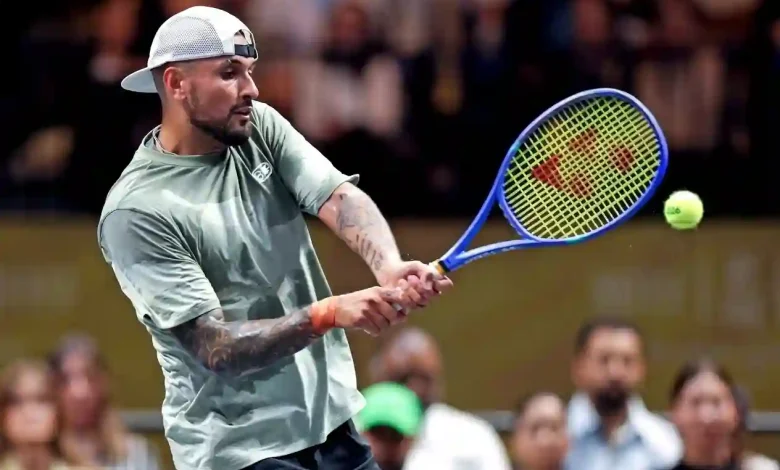
Table of Contents
Nick Kyrgios, the volatile Australian tennis star and former Wimbledon finalist, has been provisionally suspended from professional tennis after testing positive for cocaine during an ATP tournament in Mallorca. This shocking development has sent shockwaves through the sporting community, bringing a highly complex and controversial career to another unexpected crossroad. Under the stringent guidelines of the International Tennis Integrity Agency (ITIA), the 31-year-old was served with a provisional suspension following the identification of benzoylecgonine, a prominent metabolite of cocaine, in a urine sample submitted in June 2026.
The news was confirmed by both the ITIA and the player himself on social media. Kyrgios, who made a historic run to the 2022 Wimbledon singles final where he was defeated by Novak Djokovic, has struggled with injuries and inconsistent play over the past few seasons. This recent suspension, starting on August 4, 2026, marks one of the most critical threats to his professional career as he faces the latter stages of his active years on the tour.
The Shocking Provisional Suspension of Nick Kyrgios
The announcement from the International Tennis Integrity Agency (ITIA) on Wednesday has officially sidelined one of tennis’s most polarizing and electrifying figures. This provisional suspension is mandatory under the Tennis Anti-Doping Program rules when an in-competition test returns a positive result for a non-specified substance of abuse like cocaine. While the provisional ban began on August 4, 2026, the details only came to public light this week when Kyrgios decided to address the matter directly with his global fanbase.
While under provisional suspension, Kyrgios is strictly prohibited from playing, coaching, or even attending any professional events organized or sanctioned by the ATP, WTA, Grand Slam tournaments, ITF, or national tennis associations. This complete restriction from the sport poses an immediate risk to his remaining corporate sponsorships and public engagements during this critical period.
| Event / Milestone | Date | Key Details |
|---|---|---|
| Mallorca Open ATP 250 Sample Collection | June 22, 2026 | Sample provided during tournament play |
| WADA Laboratory Confirmation | July 17, 2026 | Confirmed presence of benzoylecgonine (cocaine metabolite) |
| Provisional Suspension Imposed | August 4, 2026 | Mandatory suspension takes effect quietly |
| Official Public Announcement | August 19, 2026 | Kyrgios releases Instagram statement; ITIA confirms |
What Happened in Mallorca? The Testing Timeline Explained
To comprehend how Nick Kyrgios reached this juncture, it is crucial to analyze the testing schedule that transpired over the summer of 2026. The Australian tennis star participated in the ATP 250 Mallorca Championships in Spain, a grass-court warm-up event preceding the prestigious Wimbledon championships. On June 22, 2026, during his active competitive run, anti-doping officials selected Kyrgios for a standard in-competition drug screening. He provided a urine sample, which was subsequently shipped to a World Anti-Doping Agency (WADA) accredited laboratory for extensive chemical evaluation.
The laboratory conducted rigorous tests and formally validated the presence of cocaine metabolites on July 17, 2026. Interestingly, because of the standard processing timelines, Kyrgios was permitted to compete at Wimbledon last month in the doubles tournament, where he was awarded a wildcard alongside partner Alexander Bublik. The duo ultimately lost in the first round. However, once the positive result was confirmed and verified, the ITIA had no choice but to enforce a mandatory provisional suspension under current anti-doping guidelines, effectively barring him from all professional tennis activities starting August 4, 2026.
Understanding Benzoylecgonine: The Science of the Positive Test
The positive result returned by the WADA-accredited lab did not identify active cocaine directly, but rather its primary biological footprint: benzoylecgonine. When a person consumes cocaine, the liver rapidly metabolizes the drug, converting it into benzoylecgonine, which is excreted through urine and can be detected for several days, and sometimes up to a week, depending on the dosage and individual metabolic rates. Because benzoylecgonine is incredibly stable, it serves as the definitive biomarker for cocaine use in athletic and forensic drug testing.
In professional sports, achieving an unbiased and scientifically rigorous analysis requires analytical assessments of high pressure situations and strict sample custody protocols. Because benzoylecgonine has no natural or therapeutic presence in the human body, its detection represents an unequivocal violation of anti-doping policies. WADA maintains that the presence of this metabolite in an in-competition sample constitutes an adverse analytical finding, triggering immediate suspension and launching a comprehensive disciplinary investigation.
The Public Apology: Nick Kyrgios Takes Full Responsibility
Following the formal disclosure of the test results, Nick Kyrgios bypassed traditional public relations channels and delivered a direct, candid apology on his personal Instagram account. In his statement, he owned up to his actions, expressing deep contrition and acknowledging the negative example he has set for the next generation of tennis players and sports enthusiasts worldwide.
“I recently failed a drug test in Mallorca after testing positive for cocaine. I made a huge mistake and I take full responsibility for it,” Kyrgios posted. “I’m sorry to my fans, my family, my sponsors and everyone close to me. Above all, I’m sorry to the kids who follow me. I know the example this sets and I’m deeply disappointed in myself.” The raw transparency of his apology resonated with many, though it has done little to mitigate the severe regulatory challenges he now faces as the ITIA prepares to prosecute the anti-doping violation.
The Mental and Physical Toll of a Declining Career
The broader context of this incident is rooted in the immense pressure and psychological strain that Kyrgios has openly discussed throughout his career. Transitioning from a highly celebrated Wimbledon finalist in 2022 to a player sidelined by multiple debilitating injuries has been an arduous journey. Kyrgios admitted that his recent off-court behavior was heavily influenced by his personal struggles, which have frequently placed him under intense public scrutiny and mental health struggles.
In his social media confession, Kyrgios explained that the physical toll of his injuries had deeply affected his mental stability. Over the past two years, he has played very little singles tennis, causing his official world ranking to drop to 919th. This dramatic fall from grace has been challenging to process for an athlete who once regularly defeated the top players in the world. Kyrgios noted that the sheer frustration of a body failing to meet the expectations of his mind drove him to a dark place, culminating in the lapses of judgment that led to his positive test in Mallorca.
Persistent Injuries and the Struggle of Letting Go
Nick Kyrgios’s career has been plagued by complex knee and wrist injuries that required multiple surgeries and extensive periods of rehabilitation. The constant cycle of recovery and setbacks can lead to severe psychological fatigue, raising long-term health risks associated with stress and substance use. For professional athletes, the realization that their physical prime may be slipping away often triggers profound grief and professional loss.
“I’m not going to make excuses, but I do want to give some context about where I’ve been,” Kyrgios wrote. “The last couple of years of injuries have taken a huge toll on me, both physically and mentally. My body hasn’t been able to do what my mind expects it to do, and coming to terms with being near the end of my career has been harder than I ever imagined.” This admission highlights the immense emotional and mental burden that elite sports competitors face when their athletic identity is threatened by physical limitations.
WADA Prohibited List: Classification of Cocaine in Sport
Under the World Anti-Doping Agency (WADA) framework, cocaine is strictly categorized as a non-specified stimulant and is classified as a “substance of abuse”. The distinction between general performance-enhancing drugs and substances of abuse is critical within the modern regulatory environment of global sports development. WADA recognizes that substances like cocaine, cannabis, heroin, and MDMA are frequently used in society outside the context of sport, and their presence does not necessarily indicate an intent to enhance athletic performance.
However, because cocaine is a powerful central nervous system stimulant, it is strictly prohibited in-competition. When taken during or close to a competition, it can theoretically increase alertness, reduce fatigue, and heighten confidence, which represents an unfair competitive advantage. Consequently, an in-competition positive test carries severe consequences, and the burden of proof rests heavily on the athlete to demonstrate that the ingestion occurred out-of-competition and was unrelated to athletic performance.
In-Competition vs. Out-of-Competition Sanctions
The Tennis Anti-Doping Program establishes highly specific rules regarding the timing of substance use. If an athlete can establish that the substance of abuse was used out-of-competition and was completely unrelated to sport performance, the standard period of ineligibility can be significantly reduced. In such cases, the suspension may be reduced to three months, or even down to one month if the athlete successfully completes an approved substance treatment program.
However, because Kyrgios’s positive test occurred during an active ATP event, establishing an out-of-competition defense will require complex legal navigating. The ITIA will scrutinize the exact concentration levels of benzoylecgonine detected in his sample to determine the approximate timeline of ingestion. If they determine that the drug was consumed in-competition, Kyrgios could face a standard ban of up to four years, akin to the heavy legal complications and indictments that arise in high-profile sports and entertainment cases when regulatory boundaries are crossed.
What Lies Ahead: Potential Sanctions and Appeal Options
As of Wednesday, the ITIA confirmed that Kyrgios has not appealed his provisional suspension, though he retains the legal right to do so before an independent tribunal. Over the next 28 days, Kyrgios has stated that he plans to step away completely from social media and public life to focus entirely on his mental recovery and rehabilitation. This period of isolation will likely be used to formulate his defense and determine whether he will contest the findings or seek a plea for a reduced sentence based on mitigating circumstances.
For Kyrgios, who is 31 years old, a multi-year ban could effectively end his professional playing career. Many players at this age find it incredibly difficult to return to the tour after prolonged periods of inactivity. Should the ITIA hand down a maximum sentence, Kyrgios may be forced to officially retire from the limelight of professional tennis. However, his willing cooperation and public admission of guilt could work in his favor, paving the way for a more lenient sanction that allows him one final chapter on the court.
Public and Professional Reaction to the Bombshell Announcement
The tennis world has reacted with a mixture of sadness, frustration, and inevitability to the news. Kyrgios has long been known as one of the sport’s most naturally gifted yet volatile performers, capable of beating anyone on a given day but frequently undone by emotional outbursts, fines, and off-court drama. His struggles mirror several historic tragic downfalls in entertainment where immense talent was overshadowed by personal demons and systemic pressures.
Many of his peers on the ATP tour have offered words of support, emphasizing the need for better mental health infrastructure within the grueling professional circuit. Critics, however, argue that professional sports must maintain zero-tolerance policies toward recreational drug use to preserve the integrity of the game. For more details on anti-doping programs and regulations, you can read the official policies outlined by the International Tennis Integrity Agency. As the legal proceedings unfold, the tennis community will watch closely to see if Nick Kyrgios can turn this painful wake-up call into a story of genuine redemption or if it marks the quiet end to a uniquely chaotic and mesmerizing career.





One Comment