ICC Condemns New U.S. Sanctions on President Tomoko Akane 2026
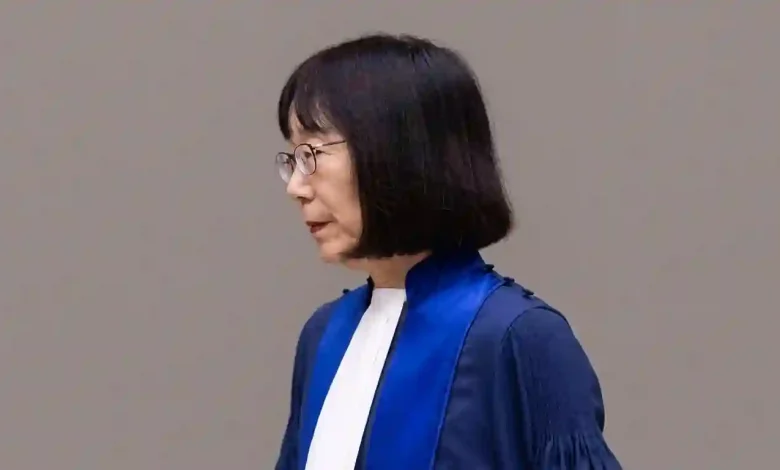
Table of Contents
ICC (International Criminal Court) officials are facing an unprecedented diplomatic storm after the United States government announced severe financial sanctions against its highest-ranking leaders. The Hague-based court strongly condemned the move on Wednesday, calling it a ‘flagrant attack’ on the global tribunal’s independence and promising to persist in its mission of holding perpetrators of heinous crimes accountable. The executive actions from Washington target the court’s president, Japanese Judge Tomoko Akane, and senior trial lawyer Abdoulaye Seye, freezing any assets they might hold in U.S. jurisdictions and locking them out of the foundational mechanisms of the global financial system. The treaty that established the court, the Rome Statute, was signed in 1998 and went into effect in 2002, designed to prevent impunity for genocide, war crimes, and crimes against humanity. However, as global tensions intensify alongside escalating defense expenditures and the rising cost of warfare, the institutional friction between sovereign states and international courts has reached an absolute boiling point. This conflict represents a pivotal moment in international law, questioning whether a supranational court can effectively function when the world’s preeminent superpower actively seeks to dismantle its operational capabilities.
Introduction to the ICC-U.S. Diplomatic Standoff
The announcement of the sanctions has sent shockwaves through the corridors of international justice. The International Criminal Court has long occupied a delicate position in global governance, relying on the cooperation of member states to enforce its arrest warrants and carry out its mandates. When the United States, utilizing the unparalleled reach of its Treasury Department, chooses to penalize individual judicial officers, it directly challenges the viability of multilateral accountability. This latest standoff is not merely a technical legal dispute; it is a profound philosophical clash over whether international law is subordinate to national sovereignty. For the court, the threat is existential, as the financial and personal lives of its leadership are targeted in an effort to deter investigations into actions by U.S. personnel and their close international partners.
The New Targets of U.S. Sanctions: President Tomoko Akane and Abdoulaye Seye
The unilateral measures announced by the U.S. State Department specifically home in on two crucial figures within the Hague’s legal machinery. By implementing these sanctions under a previously signed executive order, Washington has initiated financial measures that prevent U.S. individuals and entities from transacting with the targeted officials. This effectively bars them from accessing standard credit facilities, personal bank accounts, and global transfers, disrupting the international activities of designated individuals and triggering broader economic consequences and U.S. economic shockwaves within international judicial financing. It highlights the profound power of the U.S. Treasury, which can leverage the domination of the U.S. dollar to paralyze the daily lives and operations of international civil servants, even when they reside thousands of miles away in Europe.
Who is Tomoko Akane?
Tomoko Akane of Japan, who assumed the presidency of the court, represents a respected jurist whose career has been dedicated to international legal cooperation. As the first Japanese national to head the International Criminal Court, her appointment was seen as a major milestone for Tokyo’s diplomatic efforts to promote the global rule of law. Throughout her tenure, Akane has been a staunch defender of the court’s neutral mandate, repeatedly asserting that judicial processes must remain entirely insulated from geopolitical pressures. The targeting of Akane has deeply troubled diplomatic circles, given Japan’s standing as a critical G7 ally of the United States and one of the primary financial contributors to the ICC’s annual operating budget.
The Role of Senior Trial Lawyer Abdoulaye Seye
Beside the president stands Abdoulaye Seye of Senegal, a prominent senior trial lawyer within the Office of the Prosecutor. Seye has been a key figure on the legal team tasked with investigating and prosecuting alleged war crimes committed during the conflict in Gaza. His work has included direct involvement in seeking arrest warrants for Israeli Prime Minister Benjamin Netanyahu and former Defense Minister Yoav Gallant. By targeting Seye, Washington is sending a direct message to the prosecution’s staff, seeking to disrupt the ongoing legal proceedings surrounding the Gaza war and to make the personal cost of pursuing such high-profile cases prohibitively high for individual lawyers.
The Cumulative Toll: Half the Judges Now Under Sanctions
To understand the depth of this diplomatic war, one must look at the collective toll the U.S. campaign has taken on the court. The Trump administration has now slapped sanctions on nine of the ICC’s 18 judges, both of its deputy prosecutors, its former chief prosecutor Karim Khan, and another high-ranking prosecution staffer. This sweeping approach means that half of the court’s bench is now technically blacklisted by the United States government. The court expressed profound alarm at this systematic pressure, warning that targeting judicial actors for executing their legal mandates places the entire global legal framework at risk. Legal scholars suggest that these sanctions are not merely symbolic gestures but are part of a coordinated strategy to force a structural collapse of the court’s operations. The aggressive campaign is aligned with broader global strategies, which critics view as a continuation of discussions regarding Trump’s massive diplomatic strikes against multilateralism. By restricting the personal lives and professional movements of half the judiciary, the U.S. is signaling that any international judicial body attempting to exercise jurisdiction over its allies or its own personnel will face severe institutional and personal consequences.
Washington’s Stance: Marco Rubio Denounces Supranational Overreach
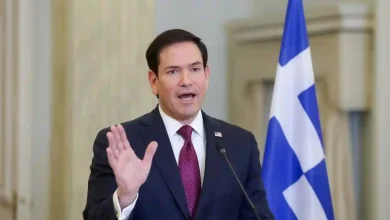
On the other side of this diplomatic divide, Washington argues that its actions are a necessary defense of national and allied sovereignty. U.S. Secretary of State Marco Rubio defended the sanctions in a sharp statement, branding the ICC as a ‘corrupt and fatally politicized supranational court that has maliciously abused its authority and exceeded its mandate.’ According to the State Department, the court has overstepped its legal bounds by attempting to investigate and prosecute officials from nations that never signed or ratified the Rome Statute, specifically pointing to the United States and Israel. This perspective is heavily influenced by the aggressive foreign policy stances under the Trump administration, which view supranational organizations with deep suspicion. The administration contends that the ICC is behaving as an unaccountable political actor rather than an impartial judicial forum. This confrontational perspective mirrors other complex geopolitical disputes where nations refute Trump’s claims, reflecting a broader trend where Washington relies heavily on unilateral economic pressure to enforce its foreign policy objectives and shield its allies from international oversight.
Sovereignty Versus Supranationalism
At the core of the U.S. argument is the concept of state consent. Under traditional Westphalian principles of international law, sovereign states are only bound by treaties to which they have explicitly consented. Because the United States and Israel chose not to join the ICC, Washington argues that any attempt by the court to exercise jurisdiction over their citizens is a violation of their national sovereignty. From this perspective, the ICC is attempting to establish a form of global judicial supremacy that overrides the democratic institutions of individual nations. This view has gained significant traction within conservative political circles in the United States, leading to a bipartisan consensus that the court must be actively resisted whenever its investigations touch upon American or allied interests.
Allied Backlash: Tokyo and Amsterdam Protest Washington’s Measures
This escalation has not occurred in a vacuum; it has triggered a massive wave of pushback from some of the United States’ closest global partners. Japan’s Foreign Ministry released a statement calling the sanctions against President Tomoko Akane ‘very unfortunate’ and ‘deeply regrettable,’ emphasizing that Tokyo has long been a robust financial and political supporter of the court. Japan’s diplomatic reaction is particularly notable given its usually cautious approach to public disagreements with Washington. Concurrently, the Dutch government, which hosts the ICC in The Hague, expressed its clear disapproval of the U.S. actions. Dutch Foreign Minister Tom Berendsen condemned the sanctions publicly, reiterating that international tribunals must be allowed to perform their duties without coercion, and invited President Akane to discuss continued host-state support. This response highlights a significant rift between Washington and its European counterparts, marking a growing wave of criticism from European allies who fear that dismantling the ICC will severely weaken the rules-based international order that has governed global security since the end of the Second World War.
Japan’s Dilemma: Balancing Alliance and Multilateralism
For Japan, the sanctions on President Akane present a delicate diplomatic challenge. Tokyo prides itself on being a steadfast supporter of the international rules-based order and has consistently advocated for peaceful dispute resolution through judicial bodies like the ICC and the International Court of Justice. At the same time, Japan relies heavily on its security alliance with the United States to deter regional security threats. The targeting of a high-profile Japanese jurist forces Tokyo to walk a fine line, attempting to defend its commitment to global justice without causing a major rupture in its security relationship with its most important ally.
European Disapproval and the Defence of the Rule of Law
European nations have been far more outspoken in their condemnation of the U.S. measures. European Union officials and individual foreign ministries have repeatedly stressed that judicial independence is a non-negotiable pillar of international society. They argue that if powerful nations can simply sanction judges whose rulings they dislike, the entire concept of the international rule of law becomes meaningless. This European backlash reflects a broader philosophical divide across the Atlantic, with Europe championing a multilateral approach to global challenges while the current U.S. administration pursues an unapologetically unilateral ‘America First’ strategy.
Strategic Context: The Trump Administration’s Unilateralist Campaign
To fully comprehend the current crisis, one must trace its origins to previous disputes over the court’s investigations into alleged war crimes committed by U.S. military personnel during the war in Afghanistan. The United States has consistently maintained that its own military justice system is fully capable of investigating and prosecuting any wrongdoing, rejecting any external intervention. The historical tension between Washington and the court dates back to these initial investigations into military conduct, where issues of geopolitical casualties and reports of U.S. troops killed first triggered intense American hostility toward the court’s prosecutor office. Over the years, this hostility has transformed from quiet diplomatic resistance into active administrative warfare. Domestic political support for these measures remains highly polarized in Washington, reflecting shifting narratives as public figures reverse their positions on international law depending on whether the target is an adversary or a close ally. This inconsistency has fueled accusations of double standards, with critics arguing that the U.S. supports international justice when it targets rival nations but subverts it when its own interests or those of its partners are scrutinized.
Summary of the Clash: Key Differences in Legal Perspectives
At the heart of this confrontation lies a fundamental disagreement on the nature of international law. The United States champions a strictly consent-based system, arguing that international treaties cannot bind or impact states that have not signed them. In contrast, the ICC and its 125 member states operate under the principle that the court has jurisdiction over any war crimes, genocide, or crimes against humanity committed on the territory of a member state, regardless of the nationality of the perpetrator. This means that if a non-member’s military operates on the territory of an ICC member state (such as Palestine or Afghanistan), their actions fall under the court’s jurisdiction. The table below outlines the core differences in perspective between the two sides of this debate.
| Core Aspect | United States Position | ICC & Allied Member States Position |
|---|---|---|
| Jurisdiction over Non-Members | Believes the court has zero authority over nationals of non-signatory states like the U.S. and Israel. | Asserts territorial jurisdiction over crimes committed on the territory of member states, regardless of suspect’s nationality. |
| Sovereignty vs. Multilateralism | Views the court as a corrupt, politicized, supranational entity that threatens national sovereignty. | Regards the court as an independent, impartial judicial body of last resort under the Rome Statute. |
| Financial and Travel Restrictions | Uses aggressive sanctions to freeze assets and deny visas to shut down ICC investigations. | Condemns sanctions as a flagrant attack on judicial independence and a threat to the global legal order. |
| Allied Diplomatic Impact | Prioritizes shield-like protection for its military personnel and key allies (e.g., Israel). | Sponsors international justice, creating deep diplomatic friction between Washington and partners like Tokyo or Amsterdam. |
Conclusion: The Future of Global Accountability
The current showdown between the United States and the International Criminal Court is more than a simple legal dispute; it is a battle over the future of global accountability. By deploying the full weight of its financial hegemony against the court’s leadership, the Trump administration has placed the international legal order under immense strain. Whether the ICC can successfully withstand these aggressive measures depends on the resilience of its member states and their willingness to provide political, financial, and logistical support in the face of American opposition. As President Tomoko Akane and her colleagues vow to continue their work, the conflict underscores a stark reality: in the modern geopolitical arena, the pursuit of international justice remains deeply entangled with the raw exercise of state power.