Space startup revives balloon tech to cut satellite launch costs 2026
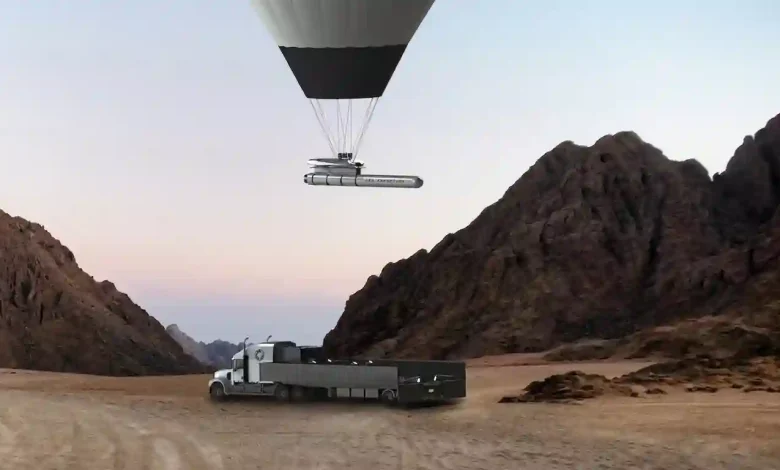
Table of Contents
Space startup pioneers are redefining the economics of orbit access by looking backward in time to disrupt the modern space industry. In the race to dramatically lower the financial barriers of reaching orbit, B2Space—a joint UK-Spanish aerospace pioneer founded in 2016—is dusting off a concept that actually predates the official dawn of the Space Age. By using a giant, high-altitude stratospheric helium balloon to lift a multi-stage solid-fuel rocket into the upper atmosphere before launching it into space, the venture hopes to democratize orbital access for small-scale satellite operators. As capital-intensive programs push corporations toward establishing robust financial partnerships and venture funds, nimble aerospace enterprises are demonstrating that low-cost innovation is often born from combining historic theories with cutting-edge manufacturing.
The Return of the ‘Rockoon’ Concept
The concept of the “rockoon”—a hybrid word combining rocket and balloon—is not a novel invention. Its origin dates back to 1949, when space pioneers Lee Lewis, G. Halvorson, S.F. Singer, and the famous astrophysicist James Van Allen conceived the idea during rocket testing cruises aboard the USS Norton Sound. Throughout the 1950s, scientists successfully utilized these balloon-lofted systems to conduct atmospheric soundings and study cosmic rays at altitudes that ground-launched vehicles could not easily reach with the limited propulsion technology of the era. This historic precedent is frequently celebrated in historic aerospace technology exhibits around the world, showcasing how early researchers bypassed structural limitations through sheer atmospheric ingenuity.
While the advent of high-thrust, liquid-fueled ground launchers sidelined the rockoon for decades, the current explosion of the small satellite sector has sparked a massive revival of the technology. Modern rockoon startups are taking the core mechanics of the 1950s and pairing them with carbon-fiber structures, autonomous stabilization, and advanced trajectory modeling software to construct an optimized path to Low Earth Orbit (LEO).
How the B2Space Launch Platform Operates
The operational profile of the B2Space launch platform is elegant yet technically precise. At the heart of the system is the “Colibri” launcher, a customized multi-stage rocket optimized for near-vacuum ignition. The entire system operates in three distinct phases:
- The Ascent Phase: A colossal, stratospheric balloon filled with helium or hydrogen lifts the rocket platform slowly and steadily from the ground. This ascent does not consume any rocket fuel, relying entirely on natural buoyancy.
- The Positioning Phase: The balloon ascends to an altitude of approximately 35 kilometers (roughly 115,000 feet). At this height, the system has passed through 99.9% of the Earth’s atmospheric mass, resting in the near-vacuum of the stratosphere.
- The Launch Phase: An automated, self-stabilizing platform suspended below the balloon aligns the rocket to the correct trajectory. Once stabilized, the rocket is ignited, firing directly into orbit.
Because these operations rely on highly complex remote telemetry, securing communications is paramount. Modern developers utilize advanced threat intelligence networks to safeguard telemetry signals, preventing cyber disruptions or unauthorized interception during the delicate ascent phase.
Physics and Engineering Advantages of Stratospheric Launch
Launching a rocket from 35 kilometers up provides massive physical advantages over ground launches. For traditional rockets, the densest layers of the atmosphere present two severe hurdles: aerodynamic drag and structural stress (Max Q). Ground-launched rockets must expend a massive portion of their initial fuel purely to push through this heavy air blanket. By launching from the stratosphere, the rocket bypasses the densest layers entirely. Gaining altitude via a balloon means skipping the highest density part of the atmosphere, where aerodynamic drag is reduced by over 95%.
This lack of atmospheric resistance allows engineers to design incredibly lightweight rocket structures. Traditional launchers must be heavily reinforced to withstand the vibro-acoustic and aerodynamic loads of supersonic flight through thick air. Without these forces, a rockoon’s structural weight is minimized, maximizing the payload-to-weight ratio. Additionally, rocket engines can be optimized purely for vacuum expansion, avoiding the performance compromises inherent in sea-level engine nozzles. Furthermore, ground-based spaceports are heavily constrained by local weather and geography, and can be rendered useless by sudden regional disruptions or geopolitical and logistical blockades. In contrast, B2Space’s mobile platform can be deployed from various offshore or coastal locations, dodging geographical and geopolitical bottlenecks.
Overcoming Technical and Operational Challenges
Despite its theoretical simplicity, the rockoon concept presents distinct engineering challenges. The most critical hurdle is wind drift. Because unpiloted balloons cannot be steered, they drift with the shifting wind currents of the troposphere and stratosphere. B2Space addresses this by utilizing real-time meteorological models, wind tracking systems, and satellite observations. By calculating precise ascent trajectories, they can safely launch from zones where the landing and flight corridors remain completely clear of human settlements.
Another major challenge is stabilizing the launch platform at high altitudes. At 35 kilometers, the air is too thin for traditional aerodynamic fins to provide control. To solve this, the startup has engineered an automated, computerized platform that dynamically calculates its spatial orientation and uses thrust vectoring or micro-thrusters to align the rocket perfectly before ignition. The secure coordination of these automated guidance computers requires robust cloud-based data networks and fraud-prevention systems to monitor system health and telemetry. Additionally, because specialized composites and high-altitude electronics are difficult to obtain, developers must proactively navigate global supply chain vulnerabilities to ensure a steady stream of aerospace-grade materials for testing.
Comparative Operational Metrics
To fully understand the disruptive potential of this technology, it is useful to compare B2Space’s stratospheric rockoon system directly with a traditional ground-launched micro-rocket. The structural and financial advantages of bypassing the lower atmosphere are clear when comparing fuel consumption, structural load, and capital expenditure.
| Metric Parameter | Traditional Ground Launcher | B2Space Stratospheric Rockoon |
|---|---|---|
| Launch Altitude | Sea Level (0 km) | Stratosphere (35 km) |
| Atmospheric Drag Loss | 100% (High resistance) | < 5% (Near-vacuum) |
| Propellant Savings | Baseline (0%) | 70% to 80% Reduction |
| Structural Stress / Max Q | Extremely High | Negligible |
| Launch Infrastructure Cost | Very High (Fixed spaceports) | Extremely Low (Mobile platform) |
| Nozzle Optimization | Compromised (Dual-regime) | Vacuum-optimized (High efficiency) |
The Environmental Case: Greener Access to LEO
In addition to financial efficiency, the environmental footprint of space flight has become a major concern. Traditional ground-launched rockets burn hundreds of tons of kerosene, solid propellants, or toxic hypergolic fuels directly in the lower atmosphere, leaving a trail of soot and carbon dioxide. A stratospheric balloon launch completely alters this equation. The first 35 kilometers of the journey—which typically requires the highest energy expenditure—is completed with zero emissions, utilizing the natural physics of buoyancy.
Once in the stratosphere, the rocket is ignited in a near-vacuum environment. Because the launcher is significantly smaller than a ground-based equivalent, it requires a fraction of the fuel, drastically reducing the net release of greenhouse gases per launch. As governments globally enforce stricter environmental limits, this green-aligned methodology offers a highly appealing alternative for commercial entities looking to improve their corporate sustainability profiles.
Commercial Impact on the Global Small Satellites Market
The small satellite market (ranging from 10 kg cubesats to 250 kg micro-satellites) is growing at an exponential rate. These small spacecraft are critical for Earth observation, agriculture, weather forecasting, and global communications. However, under the current market dynamics, small satellite operators are often forced to “rideshare” on larger rockets like SpaceX’s Falcon 9. This means they are secondary payloads, subordinate to the primary customer’s schedule and orbital destination. If the primary customer faces delays, the small satellites are stuck on the ground.
By providing a dedicated, low-cost launch system, B2Space offers customized orbital placement at a fraction of the price of a dedicated ground micro-launcher. This democratized access is particularly crucial for academic institutions, research labs, and emerging economies that have historically struggled under heavy economic pressures and market sanctions. In addition to orbital launches, these balloon platforms can also be utilized directly for near-space testing, atmospheric research, and high-altitude surveillance operations without ever igniting a rocket engine, adding a second high-value revenue stream to the company’s business model.
Future Horizons and Operational Milestones
B2Space’s roadmap is rapidly progressing from theory to orbital reality. In November 2025, the startup achieved a major technical milestone by successfully completing a test flight of its integrated rockoon system from Valle Gran Rey in the Canary Islands. The test balloon carried a solid-fuel rocket to an altitude of 21.5 kilometers, successfully validating the rail alignment, autonomous ignition, and system telemetry under real-world stratospheric conditions.
Looking ahead, B2Space is preparing for a repeat test with a larger rocket scheduled for April 2026, with the ultimate goal of breaching the Kármán line (the internationally recognized boundary of space at 100 km) shortly thereafter. By utilizing off-the-shelf, space-qualified rocket motors to construct their commercial orbital-class vehicle, the company’s engineers are focusing their capital on refining the balloon deployment and stabilization platform. This pragmatic approach proves that in the modern space race, the most innovative way forward is sometimes found by looking back to the basics of flight physics.