Iran Refuses U.S. Deal as 60-Day Negotiation Period Expires 2026
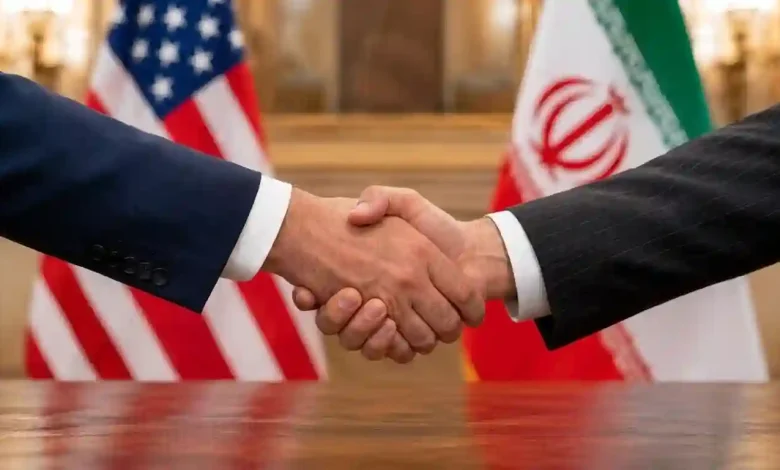
Table of Contents
Iran remains at the absolute center of a rapidly evolving global crisis as diplomatic, military, and economic developments crash together. In late August, as Tehran rejects U.S. overtures, the probability of a diplomatic resolution has dwindled to its lowest point in months. On Monday, August 17, 2026, President Donald Trump’s son-in-law and special envoy Jared Kushner told Fox News that the Islamic Republic has shown absolutely ‘no interest’ in negotiating a deal that could be considered reasonable or beneficial for the United States. His comments coincided with the official expiration of the 60-day negotiation period established under a bilateral memorandum of understanding (MoU) signed earlier this summer.
Kushner’s media appearance highlighted the widening gulf between Washington’s demands and Tehran’s regional posturing. According to the special envoy, President Trump remains laser-focused on implementing a ‘maximum pressure’ doctrine. The administration’s stated goal has not wavered: to squeeze Iran’s economy to its breaking point and to guarantee under all circumstances that the nation does not acquire a nuclear weapon. Kushner reiterated that the ongoing Iran-U.S. conflict is fueled by the core issue of nuclear non-proliferation, insisting that any deal must protect American security interests and those of its key global allies.
Introduction
The geopolitical landscape of the Middle East has entered an incredibly volatile phase following the collapse of the latest round of diplomatic talks between the United States and Iran. For sixty days, a fragile memorandum of understanding provided a window for diplomats from both nations to seek a compromise and avoid an all-out military escalation. However, as that period expired on Monday with no tangible progress, the situation has quickly reverted to open strategic confrontation. Washington is aggressively turning up the heat, whilst Tehran shows no willingness to cave to American pressure. This impasse has triggered a chain reaction that is now reverberating far beyond the borders of the Middle East, directly affecting military alliances in East Asia and forcing major global partners to reassess their defense posturing.
Jared Kushner’s Assessment on Fox News
Appearing on Fox News, Jared Kushner gave a sobering report on his diplomatic efforts. Serving as a crucial envoy for the Trump administration, Kushner confirmed that although backchannel communications between Washington and various levels of the Iranian government have been historically robust, they have failed to yield any meaningful policy shifts. Kushner noted that while President Trump is willing to negotiate a ‘win-win’ agreement that could theoretically benefit the citizens of Iran, the current leadership in Tehran is simply unwilling to make the core concessions necessary for such a deal to succeed.
Trump remains steadfastly committed to his maximum pressure campaign, applying crippling economic pressure to deprive the Islamic Republic of resources. Kushner clarified that Trump’s primary objectives are simple: a complete and verifiable end to Iran’s nuclear weapons program and an end to the state-sponsored funding of regional militancy. Without these foundational elements, Kushner made it clear that the United States has no interest in lifting sanctions or normalizing relations. Instead, the U.S. will continue to isolate the Iranian regime diplomatically and financially on the world stage.
The Expiration of the 60-Day MoU Negotiation Window
Monday’s expiration of the 60-day negotiation window marks a dangerous turning point. The memorandum of understanding, signed in mid-June, was meant to freeze hostilities and establish a structured pathway toward a comprehensive regional agreement. Throughout the last two months, international observers held on to a sliver of hope that a major conflict could be avoided. However, those hopes have evaporated as the deadline passed without any progress on key files, such as uranium enrichment levels or the lifting of Western trade restrictions. This leaves the diplomatic channel virtually dead and increases the threat of immediate physical confrontation.
The Origins of the June Provisional Agreement
The temporary ceasefire achieved in June was seen by many as a tactical pause rather than a sincere step toward peace. From the beginning, security analysts expressed deep skepticism, noting that neither side was willing to alter its core demands. Indeed, as the 60 days progressed, the temporary truce began to buckle under the weight of escalating maritime incidents and heated rhetoric. This occurs as the strategic Strait of Hormuz tension increases, leaving the maritime corridor highly militarized. The failure of the MoU confirms that a deep-seated lack of trust continues to undermine all diplomatic avenues, leaving both states locked in a dangerous standoff.
The Geopolitics of the Strait of Hormuz and Threats to Oman
Adding to the volatility of the post-MoU environment is the escalating war of words surrounding the Strait of Hormuz, a critical maritime choke point through which a fifth of the world’s petroleum flows. On Monday, President Trump escalated the situation by threatening to bomb Oman if it ‘gets in the way’ of U.S. objectives in the region. This warning came as Muscat and Tehran engaged in high-level discussions regarding joint maritime navigation arrangements in the strait. Trump’s aggressive posture indicates that Washington is prepared to take unilateral control of shipping lanes if necessary, even floating the idea on social media that the Strait of Hormuz should be treated as U.S. territory.
This aggressive rhetoric has raised alarms globally, with Washington policymakers preparing for an imminent war with Iran if negotiations fail. The threat to Oman, historically a neutral diplomatic mediator in the Middle East, represents a significant shift in U.S. regional policy. If Oman is forced to choose sides or face military action, the delicate diplomatic equilibrium of the Gulf region could completely disintegrate, raising the stakes for global energy security and shipping.
Trump’s Sudden Scaling Back of South Korea Military Drills
In a surprising development that has shocked the international community, President Trump announced on Sunday that he would ‘substantially reduce’ joint military exercises with South Korea. The annual Ulchi Freedom Shield drills, designed to maintain military readiness against North Korean threats, were scheduled to begin on Monday. Trump justified his decision by stating that South Korea had recently declined a direct request to assist the United States in its campaign to denuclearize Iran. According to Trump, when asked to participate, Seoul responded with a polite but firm ‘No thanks!’
Trump expressed his frustration with long-standing allies who, in his view, do not contribute sufficient military or financial support to joint security efforts. He also utilized the moment to praise his relationship with North Korean leader Kim Jong Un, stating that the military exercises with South Korea send an ‘inappropriate and hostile’ signal to Pyongyang. This sudden policy shift has left South Korean military planners scrambling, as they consider these annual drills vital for maintaining defensive capabilities in a highly volatile region.
The Strange Linkage Between Seoul and Tehran
Linking the security dynamics of the Korean Peninsula to the denuclearization of Iran is a highly unorthodox diplomatic maneuver. Military intelligence indicates that any potential Iranian retaliation plan could target key regional hubs, and Washington’s attempts to recruit global allies like South Korea highlight the strained state of U.S. resources. Lawmakers in Washington have criticized Trump’s decision as impulsive, arguing that punishing an ally in East Asia over a Middle Eastern conflict damages America’s credibility. Nonetheless, the administration remains firm: those who do not support the U.S. in its struggle against Tehran cannot expect full military cooperation in their own backyards.
Japan and Regional Allies React to Trilateral Shifts
The sudden scaling back of U.S.-South Korea military exercises has caused deep concern in Tokyo. Japanese Defense Minister Shinjiro Koizumi, speaking during a diplomatic visit to Canberra, Australia, emphasized that trilateral cooperation between Japan, the United States, and South Korea is ‘critical’ to regional peace and stability. Facing an increasingly complex post-war security environment, Tokyo is highly alarmed by any signs of U.S. disengagement or the weakening of defensive alliances in East Asia.
Japan’s concerns are compounded by the fact that the U.S. military has redeployed significant naval assets, including aircraft carriers, from the Indo-Pacific to the Middle East to support operations against Iran. This shift leaves a security vacuum in Asia that adversaries like North Korea and China could exploit. Japanese officials are quietly urging Washington to maintain its security commitments, warning that a failure to demonstrate resolve in Asia could embolden hostile actors across the Pacific.
Analysis: The Intertwined Nature of East Asian and Middle Eastern Security
The current crisis underscores how modern global security is deeply interconnected. A conflict centered in the Middle East has directly undermined a cornerstone alliance in East Asia, with security experts warning that the region is on the precipice of a devastating conflict that could disrupt global supply chains. The Trump administration’s attempt to build a global coalition against Iran has forced allies to make difficult choices, often pitting their regional security interests against Washington’s geopolitical priorities.
For South Korea, participating in a conflict against Iran is seen as a strategic distraction that could provoke North Korea, especially given Pyongyang’s close historical ties with Tehran. For Japan, the priority is securing energy routes in the Persian Gulf while maintaining a robust defensive shield in the Pacific. As Washington continues to prioritize the Middle East, its Asian allies are left to navigate a highly unstable environment with diminished American military backing.
Comparative Summary of Diplomatic and Security Shifts
To better understand the diverging priorities of the key global actors involved in this complex crisis, the following table outlines their main objectives, recent actions, and primary security concerns:
| Actor | Primary Objective | Recent Action / Stance | Key Security Concern |
|---|---|---|---|
| United States | Prevent a nuclear Iran; maintain global deterrence. | Allowed the 60-day MoU to expire; scaled back South Korea military drills. | Nuclear proliferation; safety of the Strait of Hormuz. |
| Iran | Resist U.S. sanctions; maintain regional influence. | Rejected nuclear concessions; engaged in maritime talks with Oman. | Economic collapse; domestic stability; military invasion. |
| South Korea | Deter North Korean aggression. | Declined to assist in the U.S. anti-Iran campaign; prioritized peninsula defense. | North Korean military escalation; weakening of the U.S. alliance. |
| Japan | Maintain regional stability; secure energy imports. | Stressed the critical nature of Japan-U.S.-South Korea cooperation. | U.S. military abandonment; North Korean missile threats. |
Conclusion and the Road Ahead
The expiration of the 60-day negotiation window has left the United States and Iran on a direct collision course. With Jared Kushner confirming that Tehran has no interest in a deal that satisfies Washington’s core demands, the path of diplomacy appears blocked for the foreseeable future. President Trump’s focus on economic pressure, combined with his unpredictable decisions regarding Asian allies, has introduced a high degree of uncertainty into global affairs. As the standoff intensifies, the international community must prepare for the wide-ranging consequences of a prolonged conflict that spans from the Persian Gulf to the Korean Peninsula.