Iran war Day 169: Escalation in the Strait of Hormuz and Economic Fallout
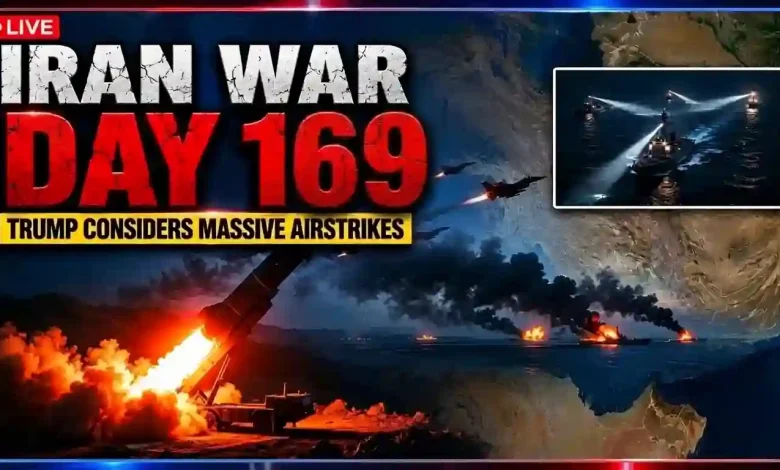
Table of Contents
Iran war dynamics have entered a high-stakes phase as the conflict approaches day 169. What began as localized tensions surrounding nuclear negotiations has escalated into an all-out war with Iran, involving global superpowers and regional coalitions. Over nearly half a year, military strategies have evolved from high-intensity aerial bombardments to a grinding war of economic attrition. The complex Iran-US conflict has dramatically restructured the political landscape of the Persian Gulf, raising major international concerns about global stability. As the strategic parameters change, both sides find themselves locked in a battle where economic pressure is weaponized just as fiercely as precision missiles.
Introduction to Day 169 of the 2026 Iran War
As of mid-August 2026, the geopolitical landscape in the Middle East is dominated by the ongoing warfare. While the opening weeks of the conflict saw massive kinetic actions, Day 169 has brought a distinct shift toward maritime blockades, infrastructure targeting, and psychological warfare. Looking back at the timeline, the intense clashes of the Iran conflict on day 145 signaled a transition from high-intensity air raids to asymmetric marine tactics. Today, the focus has settled on maritime choke points, particularly the Strait of Hormuz, where the economic costs of this war are measured daily in lost shipping tonnage and soaring insurance premiums. Regional observers are monitoring the situation closely as the potential for unchecked escalation remains a critical worry for global defense ministries.
The Geopolitical Standoff: Control Over the Strait of Hormuz
The strategic focal point of the current military theater remains the critical transit corridor of the Strait of Hormuz. As one of the world’s most critical oil shipping routes, any disruption here has an immediate ripple effect across international markets. Over the last several months, Iran’s Revolutionary Guard Corps (IRGC) has enforced strict blockades, mined shipping lanes, and engaged in direct intercept operations against Western-aligned vessels. This blockade has effectively choked off the passage of energy reserves, triggering a severe energy security crisis that is felt in every major economy. Command structures on both sides are continuously adjusting their tactical postures to gain leverage over this narrow, vital waterway.
Trump’s Territorial Claims and Strategic Warnings
In recent remarks, U.S. President Donald Trump has injected fresh volatility into the crisis by threatening to declare the Strait of Hormuz a U.S. territory “pretty soon” once military objectives are achieved. Trump’s administration has argued that international waters must remain free from hostage-taking and blockades, suggesting that a permanent U.S. presence is required to stabilize the shipping routes. Furthermore, the administration has leveled threats against regional actors, including warning Oman that it must cooperate with American maritime directives or face military action. These statements have heightened diplomatic friction and complicated the mediation efforts spearheaded by regional partners.
Tehran’s Defiance: ‘Cannot Be Seized with a Tweet’
Tehran has reacted with fierce rhetorical and military defiance. Iranian Deputy Foreign Minister Kazem Gharibabadi responded directly to Washington’s warnings, declaring that the strategic waterway is sovereign territory and “cannot be seized with a tweet or an aircraft carrier”. Gharibabadi emphasized that Iran’s armed forces are fully prepared to maintain their blockade and counter any direct incursions. Compounding the threat matrix is Iran’s warning to regional powers regarding the potential hosting of foreign assets, signaling that any nation offering bases to the coalition will be treated as an active combatant. This hardline stance indicates that Tehran is ready to sustain a long, attritional struggle to defend its regional influence.
The Economic Reality of a Prolonged Naval Conflict
The economic fallout of this prolonged confrontation is echoing through financial hubs worldwide. What was initially conceived as a swift aerial campaign has mutated into a global economic crisis. Global financial systems have taken an immense hit due to the severe economic fallout of the conflict, dragging down market indices across Asia and Europe. Supply chains for critical electronic components, agricultural fertilizers, and petrochemicals have stalled, forcing multinational corporations to seek expensive alternative shipping routes around the Cape of Good Hope, bypassing the Middle East entirely.
Collapse of Maritime Traffic to Seventeen Percent
Recent shipping trackers and reports from the UK Maritime Trade Operations (UKMTO) indicate that commercial maritime traffic through the Strait of Hormuz has plummeted to just 17% of its pre-war average. Only 151 vessels successfully navigated the passage over a recent seven-day period, compared to the hundreds of cargo ships and ultra-large crude carriers that typically transit the strait weekly. Over 56 commercial ships have suffered varying degrees of damage from drone strikes, sea mines, or precision missiles since the war began on February 28. This collapse in traffic represents the most severe maritime trade disruption in modern history.
Energy Sector Disruptions and Global Inflation Risks
With approximately one-fifth of the world’s seaborne oil and liquefied natural gas (LNG) shut in, global energy markets are in a state of high anxiety. The dramatic supply chain shocks have caused global fuel prices climb to unprecedented multi-year records. Oil and gold are testing key resistance levels as traders price in the risk of a long-term blockade. This sustained spike in energy costs is driving inflationary pressures across importing countries, threatening to trigger a deeper global recession unless a diplomatic or military breakthrough is achieved in the near term.
| Conflict Metric / Aspect | Status as of Day 169 | Strategic Impact |
|---|---|---|
| Strait of Hormuz Traffic | Reduced to 17% of normal levels (151 ships/week) | Extreme disruption to global oil and LNG transport |
| Commercial Shipping Safety | 56 vessels damaged; high threat of sea mines and drones | Prohibitive maritime insurance rates; routing around Africa |
| U.S. Military Posture | Operation Epic Fury; naval blockade; territory threats | High readiness for tactical strikes; domestic political debate |
| Iranian Defense Strategy | Asymmetric attrition; proxy coordination; sovereign claims | Denial of passage to coalition partners; economic leverage |
| Global Economic Impact | Sustained energy price spikes; stock market volatility | Rising inflation; supply chain re-routing costs |
Key Phases and Strategic Evolution of the Conflict
To understand how the conflict reached this state of grinding stalemate on Day 169, it is necessary to examine its key developmental phases. The conflict has progressed from an explosive, centralized campaign to a highly decentralized, multi-theater proxy war. This evolution shows that neither side was able to achieve a quick, decisive victory, forcing both Washington and Tehran to continuously adapt their tactical doctrines to avoid complete exhaustion while keeping pressure on their opponent.
Operation Epic Fury and the Air War Phase
The hostilities commenced on February 28, 2026, with a massive combined offensive dubbed Operation Epic Fury by the United States and its allies. Prior to the stalemate, repeated heavy coalition airstrikes against Iran targeted drone facilities, ballistic missile launchpads, and naval barracks. The initial rounds of precision U.S. strikes on Iranian targets degraded initial command-and-control capabilities but did not completely neutralize Tehran’s deep underground assets. Iran responded with a decentralized defense strategy, launching ballistic missile salvos against regional coalition bases and deploying thousands of suicide drones, demonstrating that its defensive infrastructure was highly resilient.
The Islamabad Ceasefire Collapse and Resumed Hostilities
Diplomatic efforts briefly bore fruit in April 2026 when Pakistan mediated a two-week ceasefire, which was later extended. However, this temporary lull, known as the Islamabad Memorandum, collapsed in July after mutual accusations of truce violations. Following the collapse of the ceasefire, both sides resumed active combat operations, with the U.S. re-imposing its strict naval blockade and Iran retaliating by reinforcing its closure of the Strait of Hormuz. The failure of this major diplomatic attempt highlighted the deep distrust between the warring parties, leading directly to the current attritional phase of the war.
Regional Spillover and Coalition Engagements
The geographic scope of the war has expanded far beyond Iran’s borders. Neighboring countries have been drawn into the fray, either as active combatants or as unwilling hosts to military operations. Iraq, Yemen, and Lebanon have become secondary fronts, with local groups launching attacks on coalition interests. Israel has maintained active ground operations in southern Lebanon to establish a buffer zone, while Yemen’s Houthi forces have targeted merchant vessels in the Red Sea. This widespread regional involvement has turned the conflict into a highly complex, multi-theater crisis that defies easy resolution.
Diplomatic Gridlock and Future Outlines
As the war approaches its sixth month, diplomatic channels remain virtually frozen. Indirect talks previously held in Qatar have stalled, with Iran insisting on complete sanctions relief and an end to the naval blockade as pre-conditions for any formal negotiations. Meanwhile, the U.S. administration shows no sign of relaxing its pressure, with President Trump ruling out any unilateral concessions. With both sides dug into their strategic positions, the risk of further escalation remains high, and the international community faces the sobering prospect of a prolonged conflict with no clear end in sight.